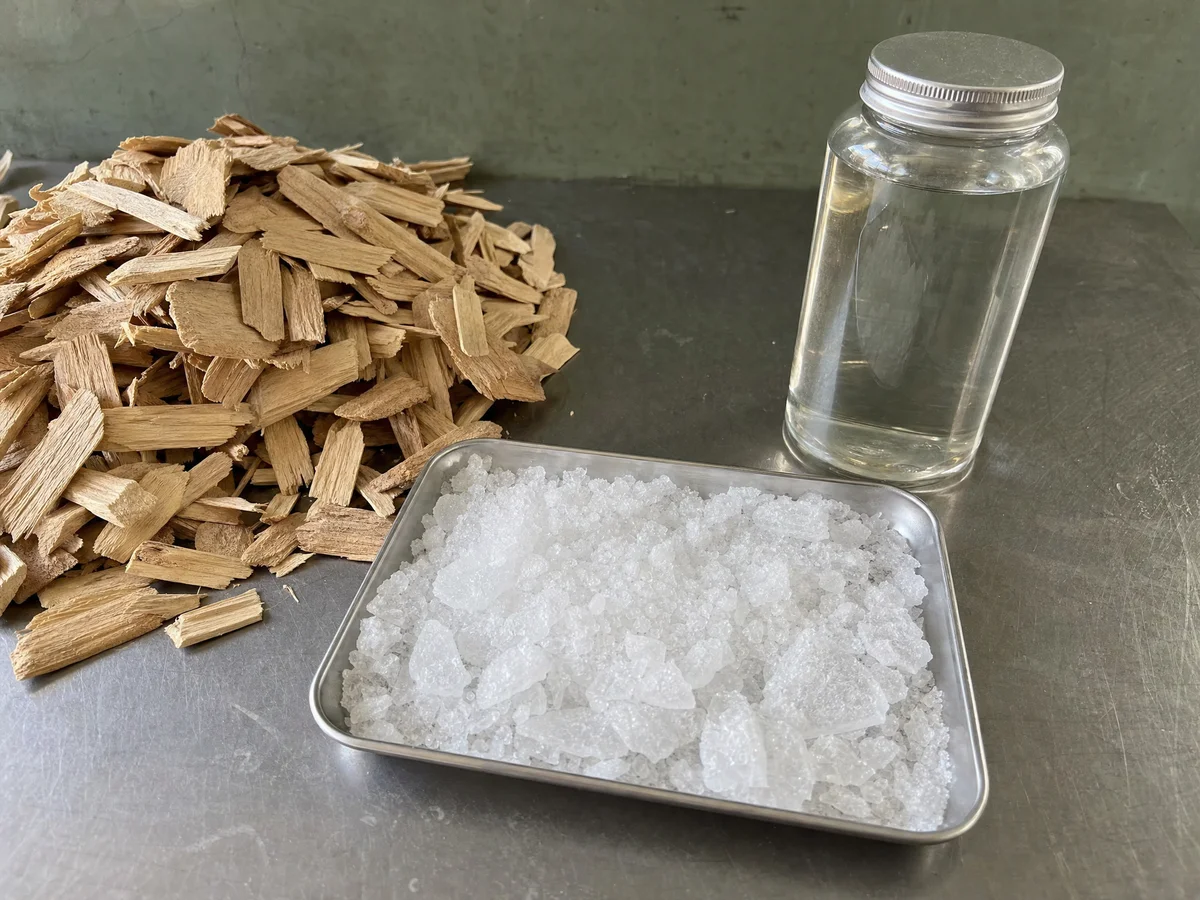
Camphor Oil on the Scalp: Ground Rules First
Search for camphor oil and hair and you will find plenty of enthusiasm. We sell camphor oil for its aroma, that sharp, cooling, crystalline note over a dry woody base, and we make no hair claims for it. What we can do is walk you through what is actually known about camphor and the scalp, so you can make your own call with the facts in hand.
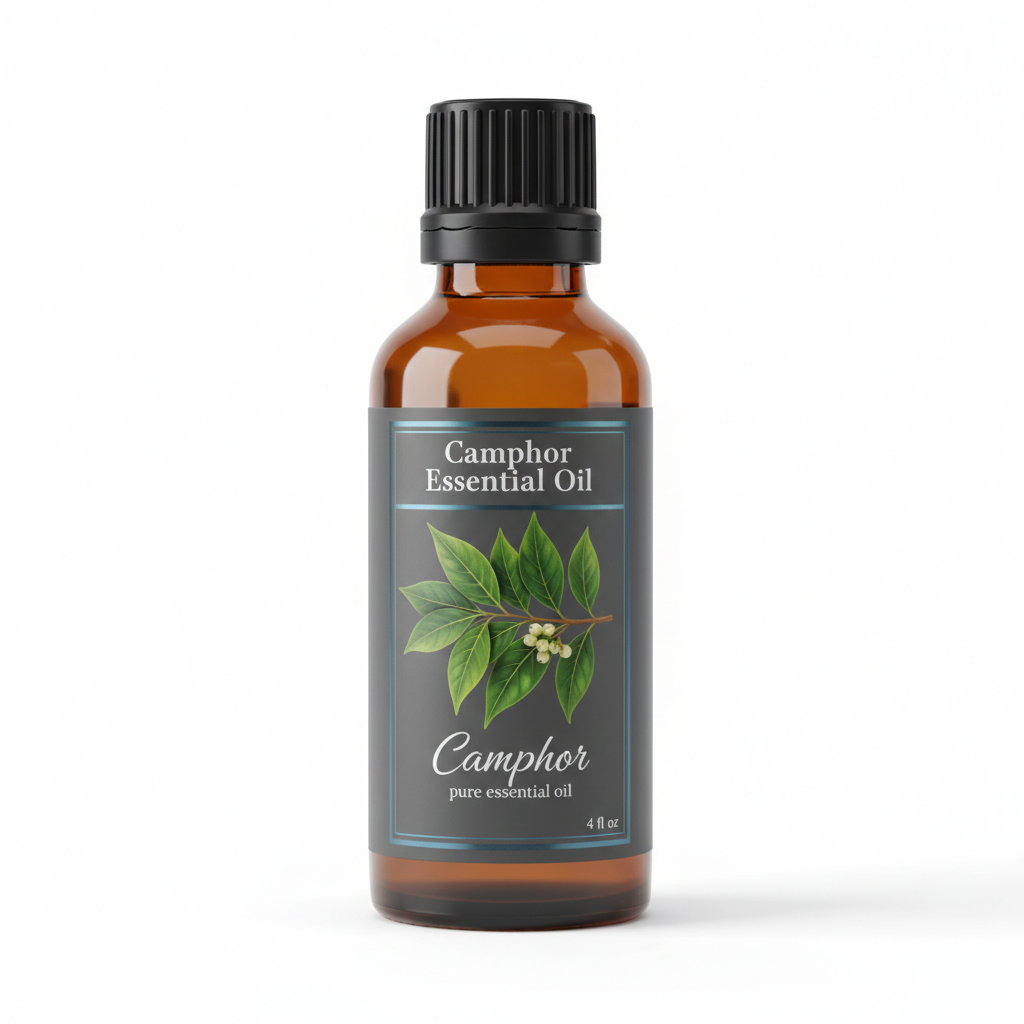
Camphor Essential Oil
Our own Camphor Essential Oil, in sizes from 0.5 oz to bulk.
From $9.99
Shop Now →Where the hair talk comes from
Most of the buzz is borrowed from rosemary. The research that exists on essential oils and scalp hair centres on rosemary, and even there a 2024 review of rosemary and six other plant remedies for androgenetic alopecia concluded that more research is needed to establish efficacy (Bin Rubaian et al., 2024). If you are weighing the two oils against each other, our camphor versus rosemary comparison goes through it.
If your real concern is thinning, shedding, itching or flaking, a dermatologist is the person who can tell those patterns apart. No essential oil can do that sorting, ours included.
Why the scalp is a special case
Camphor passes through skin. The Royal Children's Hospital Melbourne poisoning guideline says so plainly, while noting that most toxic exposures come from swallowing it, and it gives no skin dose that could be called safe (RCH Melbourne, updated June 2020).
The scalp is also better at absorbing things than most of the body. A 2022 review of human skin studies found that in the four studies comparing scalp with abdominal skin, the scalp was the more permeable one every time, and that body location mattered more than the chemistry of the substance tested, which the authors link mainly to hair follicle density (Feschuk et al., 2022). Camphor was not one of the substances studied, so this is context rather than a camphor result. Our reading of it is practical: a dilution that feels comfortable on a forearm should not be carried over to the head without thought, and a scalp massage spreads oil over a large, follicle-rich area.
Camphor has a way of being persuasive in print. It smells clean, it feels cool, and it appears in so many familiar jars that it seems like it must be good for everything. A bottle of essential oil is a different thing from those jars, and it is worth keeping that distinction in your head when you read enthusiastic posts about hair.
Ground rules if you reach for it
For skin in general, we recommend diluting camphor oil to 0.5% to 2% in a carrier oil, patch testing first, and keeping it well away from the eyes. For the scalp, treat that as the ceiling and start lower. Because this is a leave-on, head-to-toe sort of question, check the current IFRA standards for camphor in your product category before settling on a number for your own formulation. Carrier oils are a job for a craft supplier or pharmacy, since we sell only the essential oil.
A safety data sheet cited in an EFSA opinion for a white camphor oil lists it as a skin and eye irritant and a skin and respiratory sensitiser (EFSA FEEDAP Panel, 2022). That was a Taiwan cineole type, not ours, but it is a fair reminder that this is a strong-minded material. Our patch test guide shows how to check your own skin properly, and we would skip a scalp that is cut, scratched, sunburned or inflamed.
If you want the scent near your hair
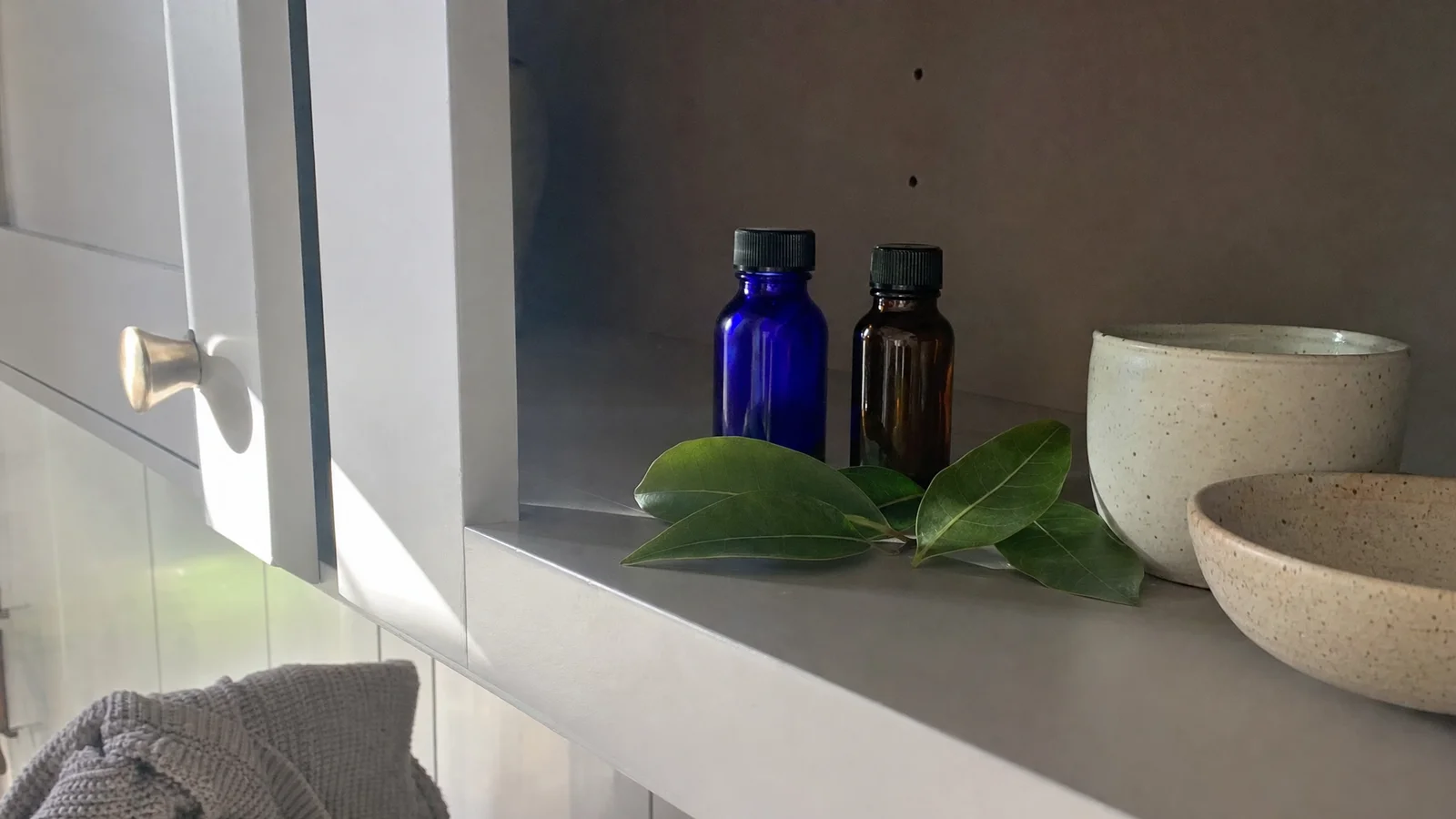
If what appeals to you is the idea of a cool, clean smell around your hair things, there are gentler ways to enjoy it. A drawer or cupboard where you keep towels and bathroom supplies can carry a faint camphor note on a cotton pad in a holder, kept off anything that touches your head. You'll notice the scent when you open the drawer, and that is all you need.
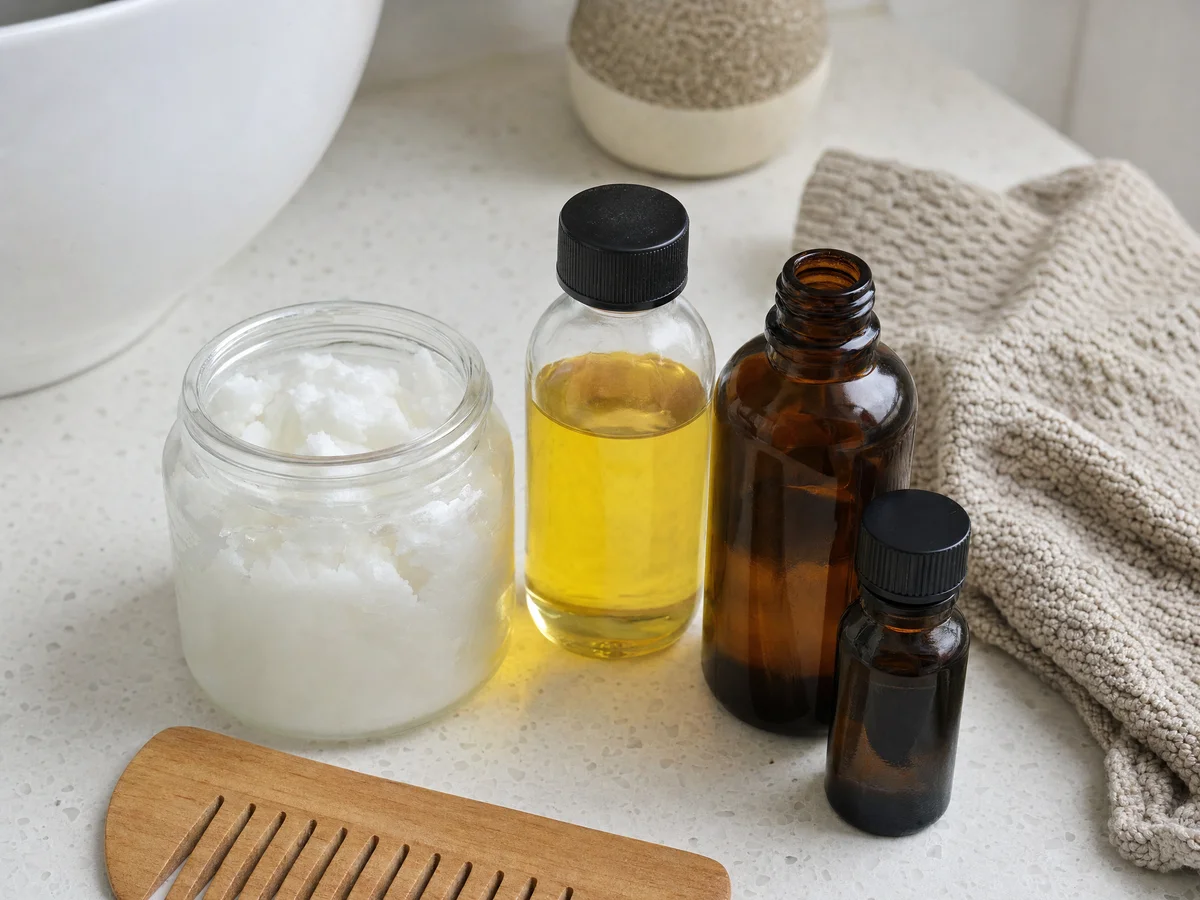
Whatever you choose, keep the oil away from the hairline, the ears and the eyes. A drop that wanders is hard to wipe off, and camphor is not something you want in the eyes.
A word on patience
Hair routines are slow by nature, and it is easy to try one new thing after another when you are worried. Changing one thing at a time, and speaking to a dermatologist early if something is bothering you, will get you answers much faster than an ever-growing shelf of bottles.
Who should leave it alone
- Infants and young children. Camphor stays away from a child's head and face, and that includes a child held against a freshly scented scalp. See camphor oil and children.
- Anyone with a seizure history, unless a physician says otherwise.
- Pregnant or breastfeeding people, unless an OB/GYN or midwife agrees. Our pregnancy article sets out what is known.
- Anyone with a scalp condition or reactive skin, or who has reacted to camphor rubs before.
- Households with pets, who should read our pet safety piece first.
Camphor oil is never for swallowing. The wider picture is in Is Camphor Oil Safe?
Camphor does its best work at a little distance, in a closet, a drawer or the corner of a blend, where that clean top note can do its thing and a drop goes a long way.
Camphor Essential Oil
Camphor Essential Oil from our own shop, in sizes from 0.5 oz to bulk.
From $9.99
Shop Now →Sources & Further Reading
- Bin Rubaian NF et al., 2024. Plant-based remedies for androgenetic alopecia: a review
- Royal Children's Hospital Melbourne, Camphor poisoning clinical practice guideline
- Feschuk AM et al., 2022. Regional variation in human skin permeability, J Toxicol Environ Health B
- EFSA FEEDAP Panel, 2022. White camphor oil as a feed additive