Camphor Oil in the Closet: A Safe Scenting Guide
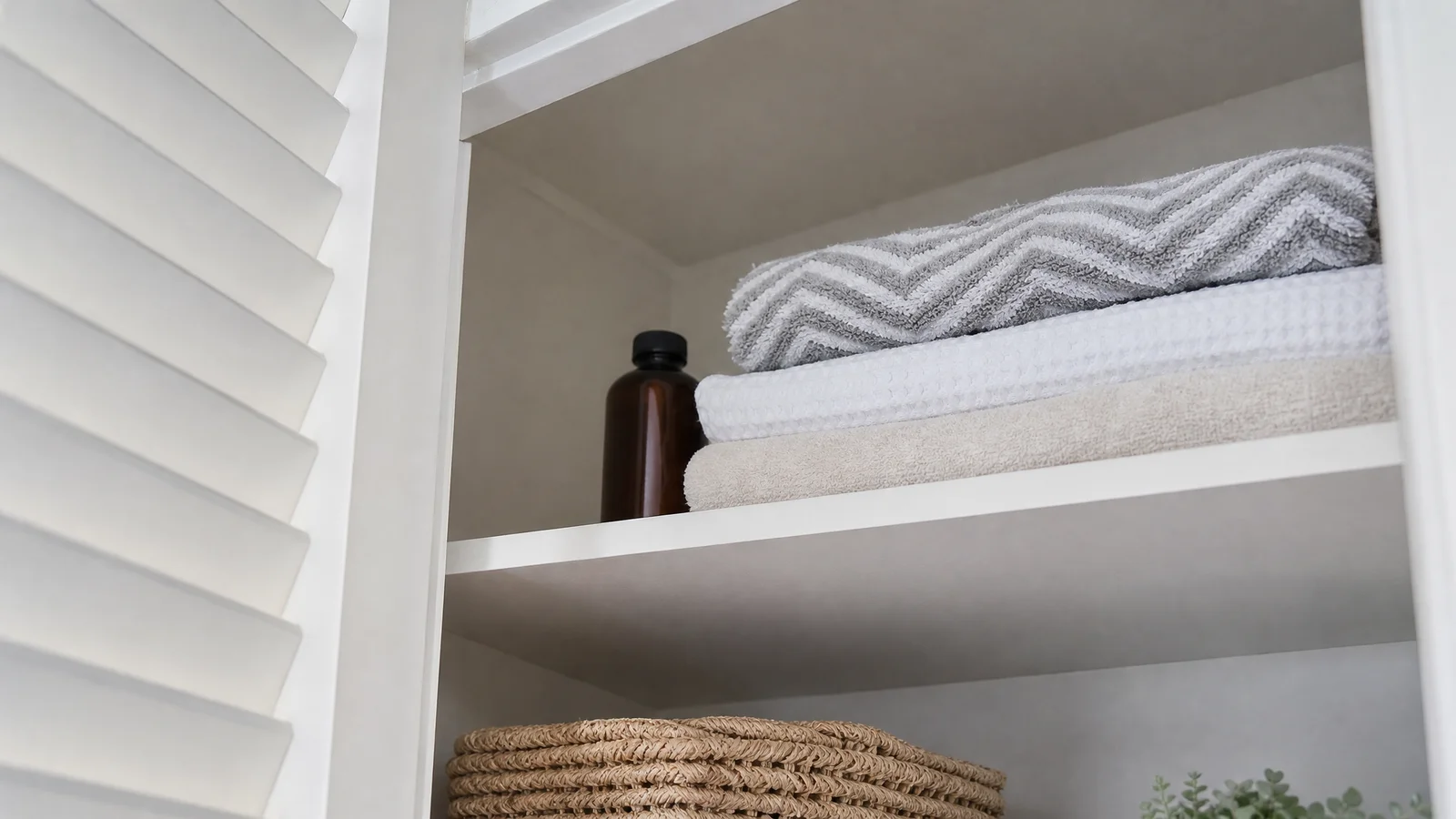
Picture a spare-room wardrobe that smells stale after a damp season, and the plan to fix it with a few drops of camphor oil. That can work nicely as a scent job, and the details that matter are where the oil sits and who shares the space. This walk-through follows the wardrobe from empty shelves to a closed door.
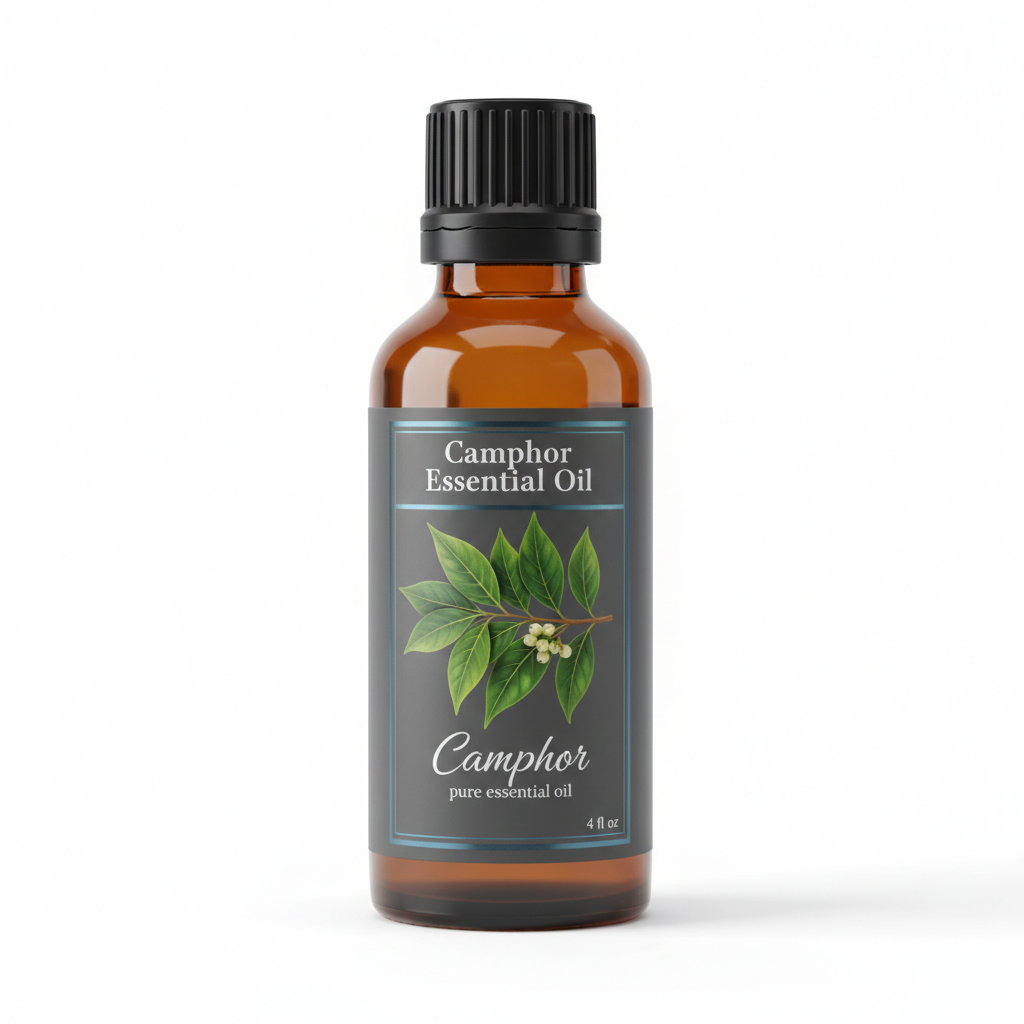
Camphor Essential Oil
Our own Camphor Essential Oil, in sizes from 0.5 oz to bulk.
From $9.99
Shop Now →Decide what the job is
"Freshen the closet" hides two different jobs. One is aroma, a space that reads crisp and clean. The other is protecting stored wool from insects. Camphor oil suits the first. For the second, the Pacific Northwest insect management handbook lists washing or dry-cleaning woolens before storage, containers with tight lids, tightly fitting cedar chests, and a cold treatment of 72 hours at -20 degrees F, and notes that soiled cloth is more likely to be infested than clean cloth. Camphor is not on that page. Our view: cleaning and sealing do the protecting, and the oil does the smelling. We make no moth claim for it, and camphor and moths covers the evidence.
Empty, clean, dry
Take everything out. Launder or dry-clean what can be, vacuum the shelves and corners, and let the space dry completely. A damp wardrobe will smell stale again whatever you add, and that handbook note about soiled cloth is the reason to launder before storing. The scent decision comes last.
Keep liquid oil off the cloth
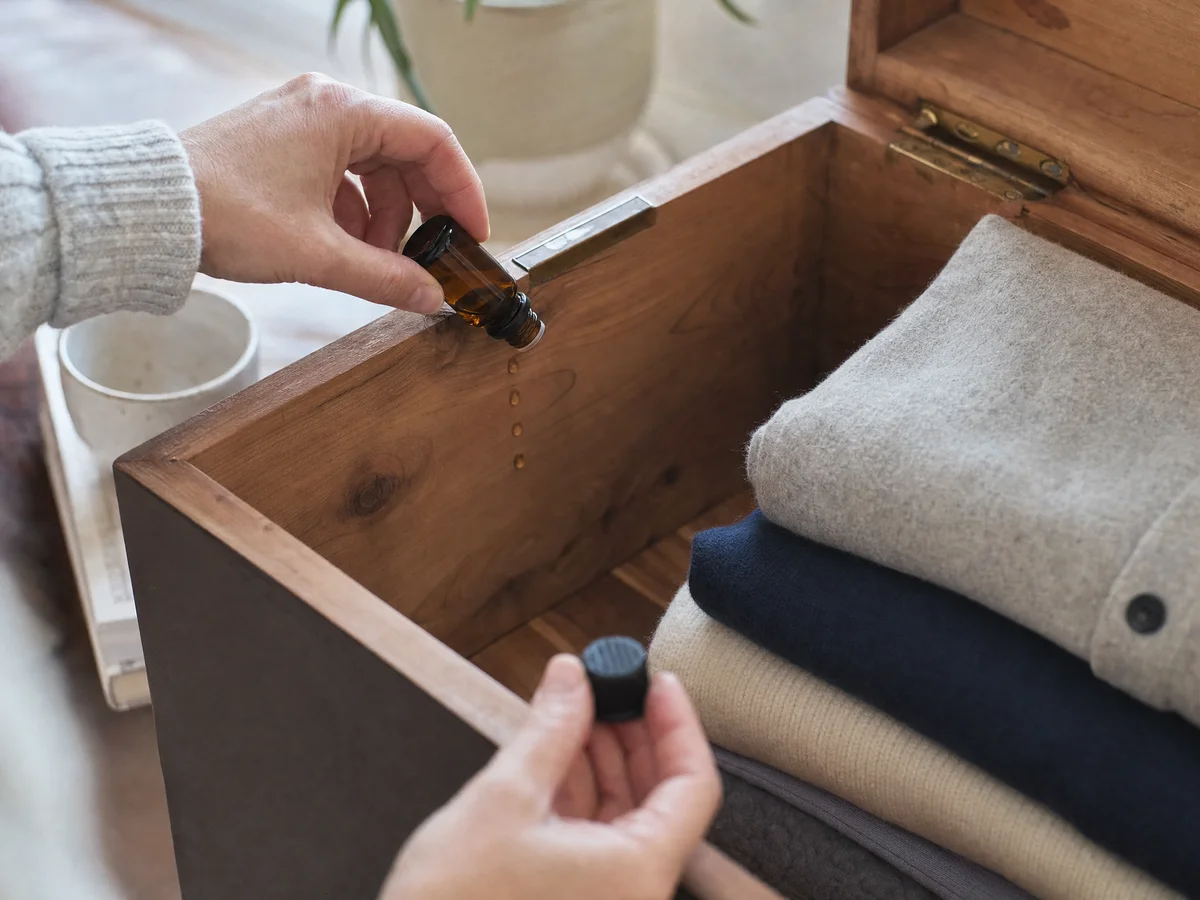
The usual instruction is to put drops on a cotton ball or straight onto a hanger. We prefer a cotton ball in a holder, for two reasons. Oil on cloth can leave a mark, which is simply the nature of oils. And oil that lingers in laundry can become a fire concern if the laundry is heated in a dryer; Great American Insurance Group's loss-control guidance says oil-soaked linens can ignite in a dryer or in storage even after washing, which is why our laundry guide keeps camphor out of the dryer. If a stored garment does pick up oil, wash it warm before it goes near heat.
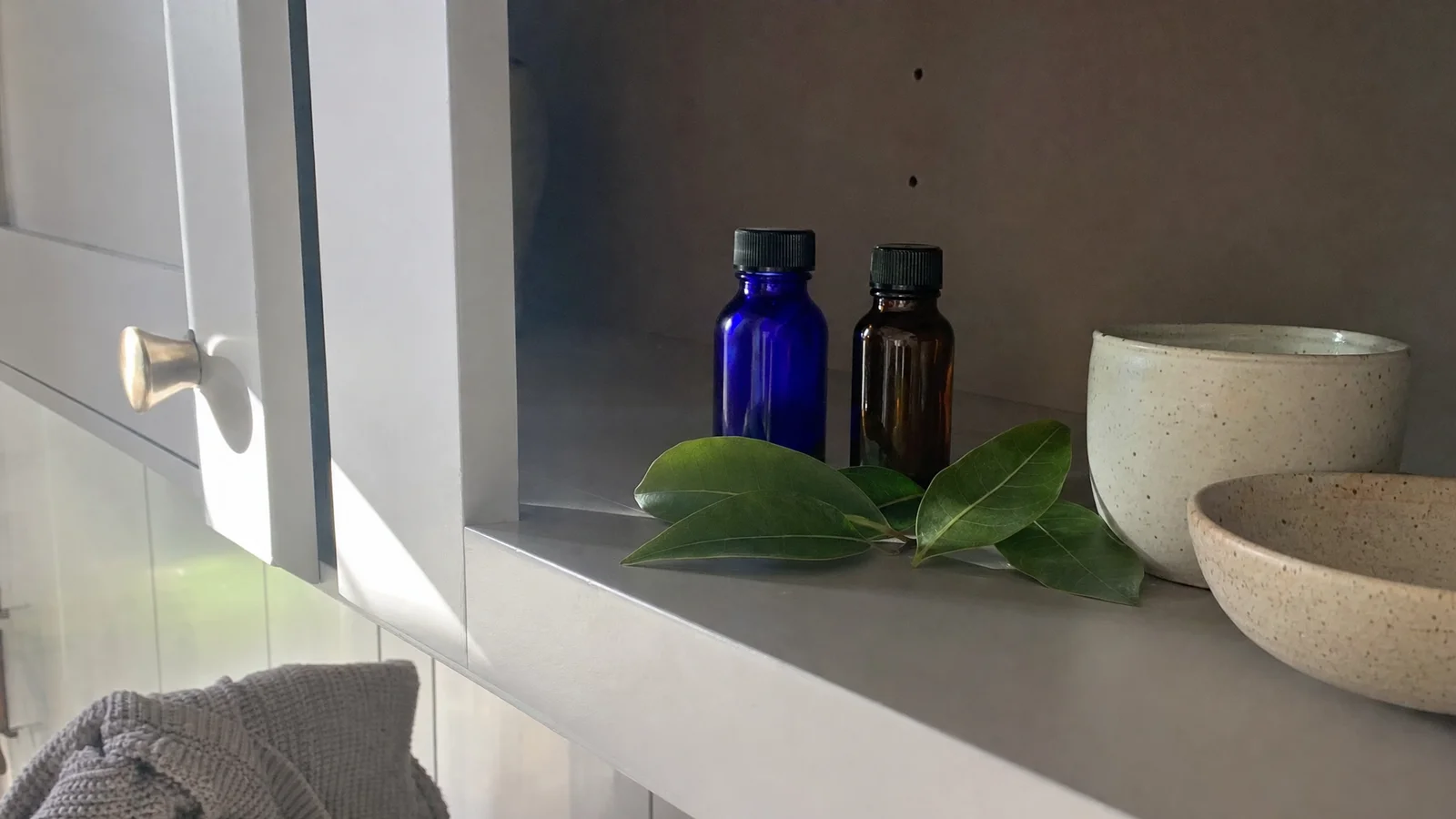
A small open tin, a cotton pad in a mesh bag, or an unvarnished piece of wood on a shelf all work, with nothing touching the clothes. Hang the bag or set the tin at least a hand's width from stored items.
Count drops, then use fewer
Camphor oil is thin and volatile, so a little fills a small space quickly. The Tisserand Institute's three drop-weighing studies (1999, 2000, 2016) found 20 drops averaged 0.66 g, with a millilitre equal to 20 to 40 drops depending on the dropper, so a drop is a loose unit. Starting with two or three drops on a pad is a sensible reading of that: wait a day, and add one at a time if the closet is large. You want a faint cool note when the door opens, not a smell that follows you into the bedroom. Refresh when it fades rather than saturating the pad on day one.
Who shares the space
This is the step the lifestyle articles skip, and it is where we would stop some readers.
- A nursery or child's room: leave it out. Camphor is contraindicated for infants and young children, and topical use near a small child's face has caused serious harm. A closet in that room shares the same air.
- Pets: Pet Poison Helpline says camphor is toxic to dogs and cats, absorbed readily through skin, and linked to vomiting, diarrhea and, in larger amounts, seizures. A pad on a high shelf behind a door a cat can open is not risk-free; see camphor and pets.
- Asthma, a seizure history, or a past reaction to camphor products: ask a physician or allergist first. The NIOSH Pocket Guide for synthetic camphor lists headache, dizziness and convulsions among exposure symptoms, and the American Academy of Allergy, Asthma and Immunology describes case reports of allergic reactions to camphor-containing products.
If any of those apply, a cedar block or a well-sealed container does the same storage work without camphor.
Drawers, boxes and shoe racks
The same logic scales down. In a drawer, a small mesh bag with a scented pad behind the stack works, while a soaked paper liner presses oil against the fabric above it. In a sealed storage box the vapor stays concentrated, so use one drop or less and air the box out before wearing what is inside. On a shoe rack, a pad on the shelf above is plenty; keep oil out of the shoes themselves, where it meets skin.
What a good closet smells like
It is worth deciding in advance what you are aiming for. A good wardrobe smells like clean fabric first, with perhaps a faint cool note in the background that you catch as the door swings open and then lose again. If you can smell it across the room, it is too much. If you only notice it when you lean in and look for it, you have probably got it right.
Close the door and check back
After a week, smell the closet as you open the door, not after standing in it. If the note is too strong, take the pad out for a few days. If it has faded, add a drop. For scenting a whole room instead, a ventilated diffuser session (see how to diffuse camphor oil) or a spray (see the room spray guide) are the usual routes, each with its own limits.
Our camphor oil typically keeps 2 to 3 years tightly capped in a cool, dark place, so one bottle goes a long way for a closet. The Certificate of Analysis we publish for one batch lists density, refractive index and optical rotation but no compound percentages; if you want a lot report, ask us in writing through the contact page.
Clean the closet, seal what needs protecting, hold the oil on a pad away from cloth, use fewer drops than you think, and leave camphor out of any space shared with a baby or a pet.
Camphor Essential Oil
Camphor Essential Oil from our own shop, in sizes from 0.5 oz to bulk.
From $9.99
Shop Now →