How Camphor Oil Is Made: From Tree to White Fraction
Camphor oil is a story of cuts, not of a single distillation. The same still produces camphor crystals, a camphor-free oil, and then several fractions that are sold under different colour names. It is a more interesting tale than most oils have, and it explains a lot about what ends up in a bottle.
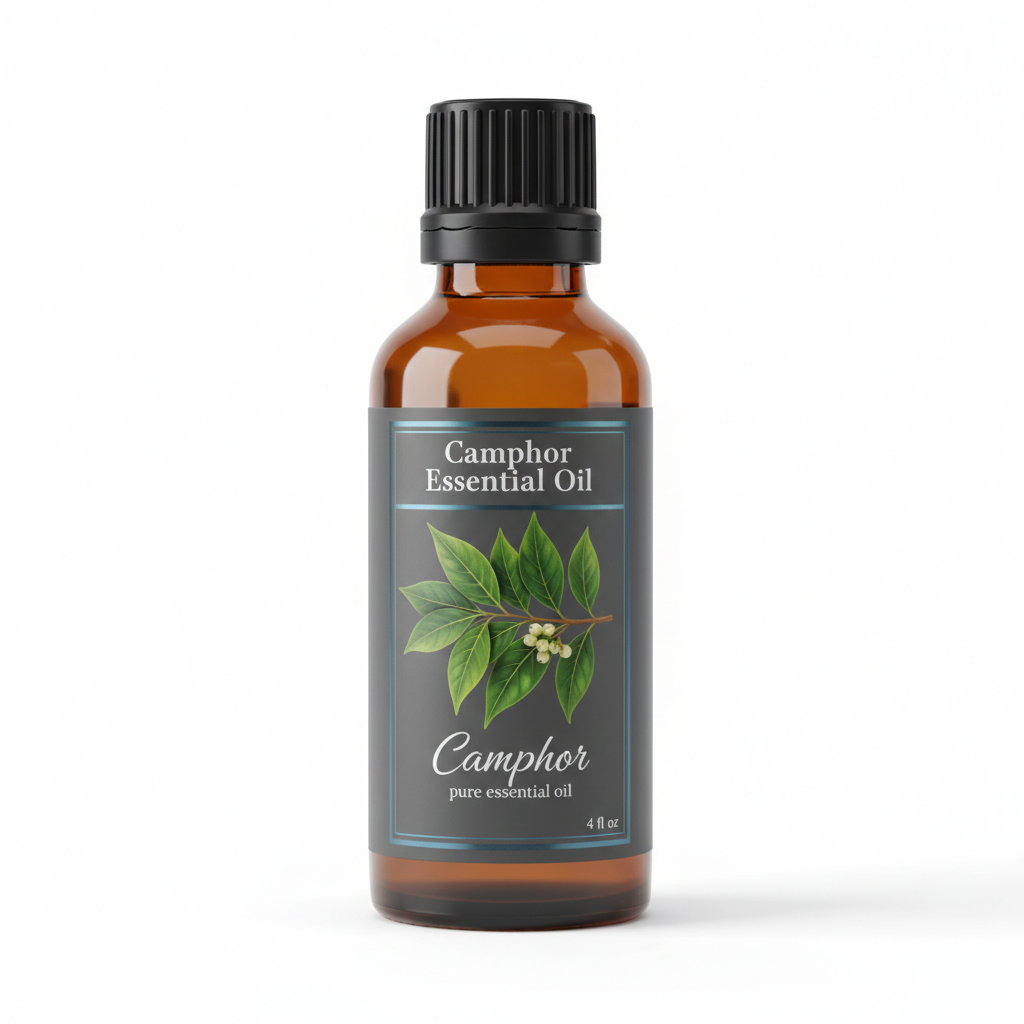
Camphor Essential Oil
Our own Camphor Essential Oil, in sizes from 0.5 oz to bulk.
From $9.99
Shop Now →First, who does what
We do not run a still. Splitting crude camphor oil into fractions is continuous vacuum distillation in a tower, an industrial job run by a small number of houses, and our oil is distilled and fractionated in China. What we bring is the choosing and the checking: we sell the white fraction only, with no blending with heavier cuts, no carrier and no dilution. Everything below about the process itself is general, from published references.
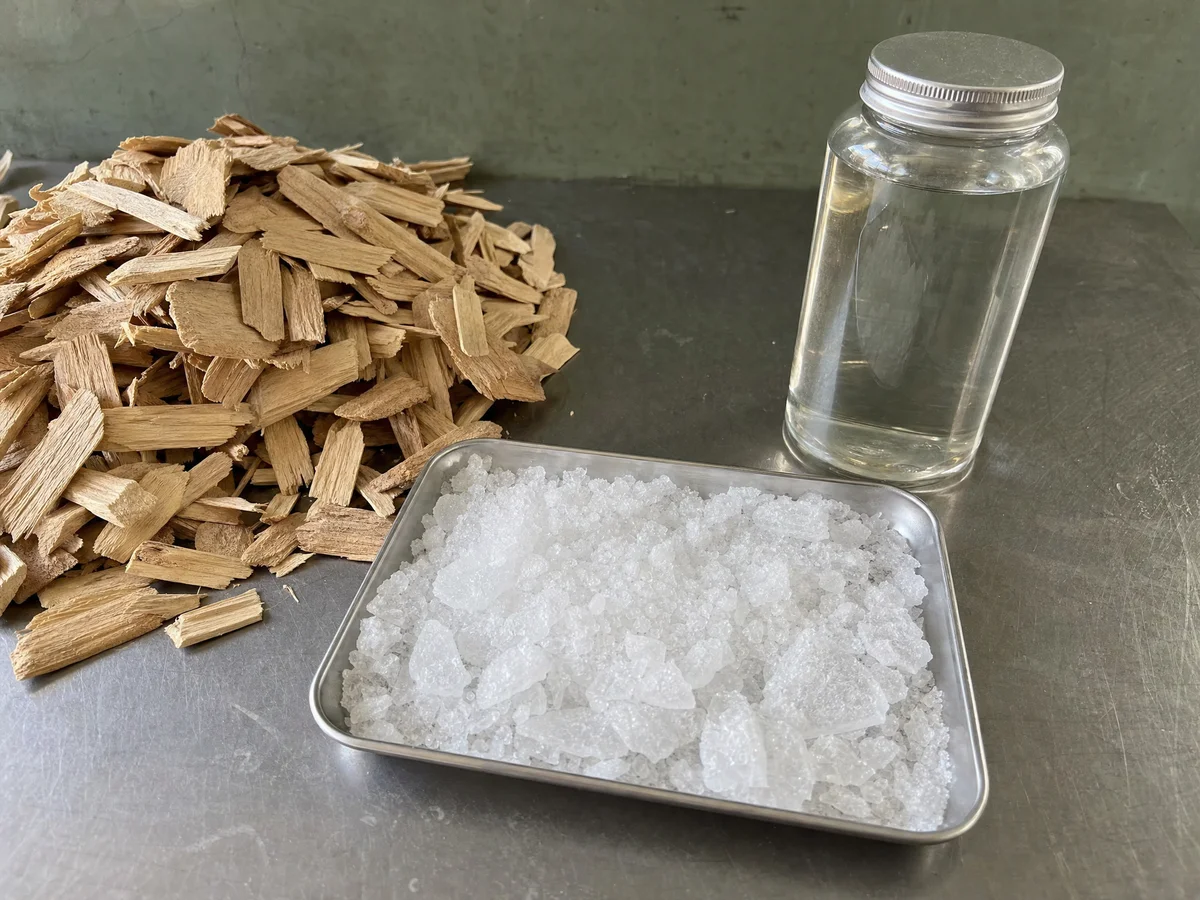
Step one: chips and steam
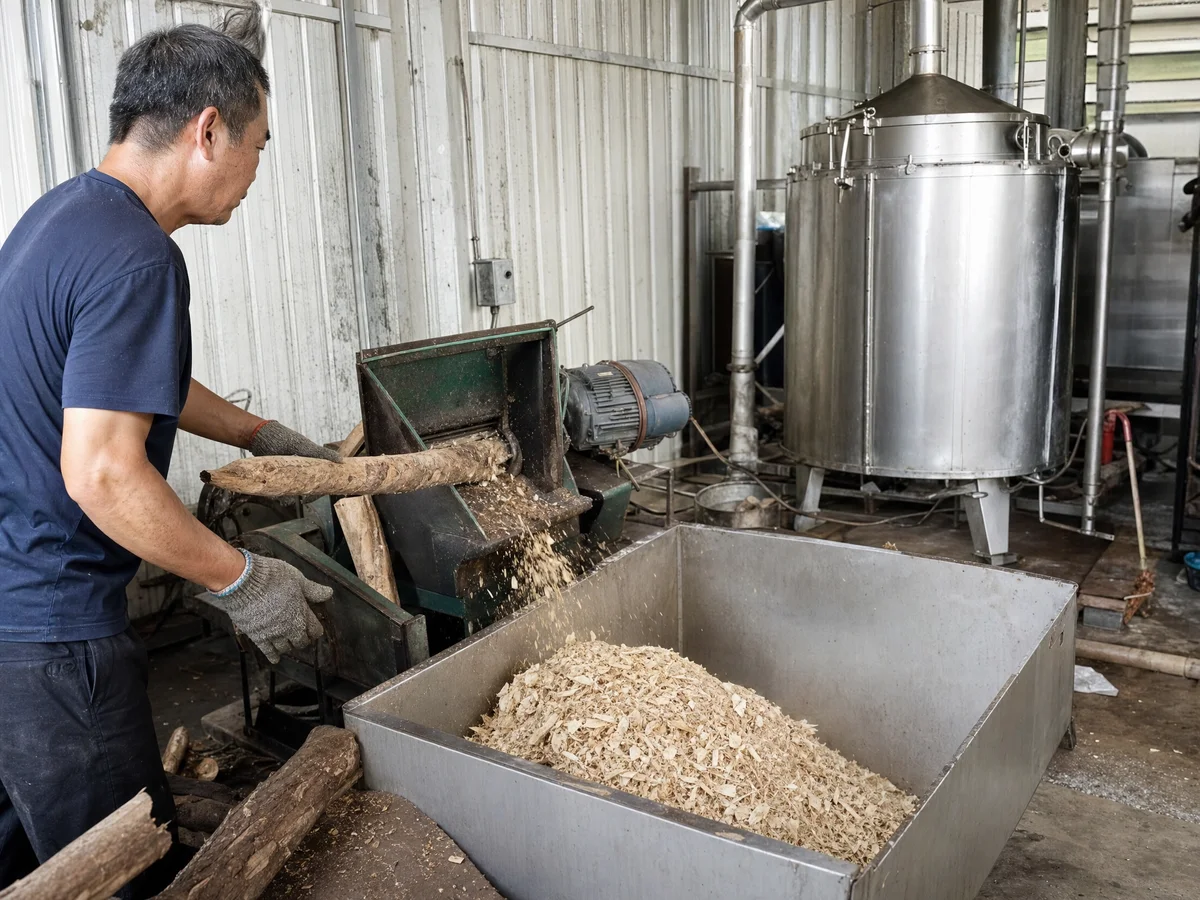
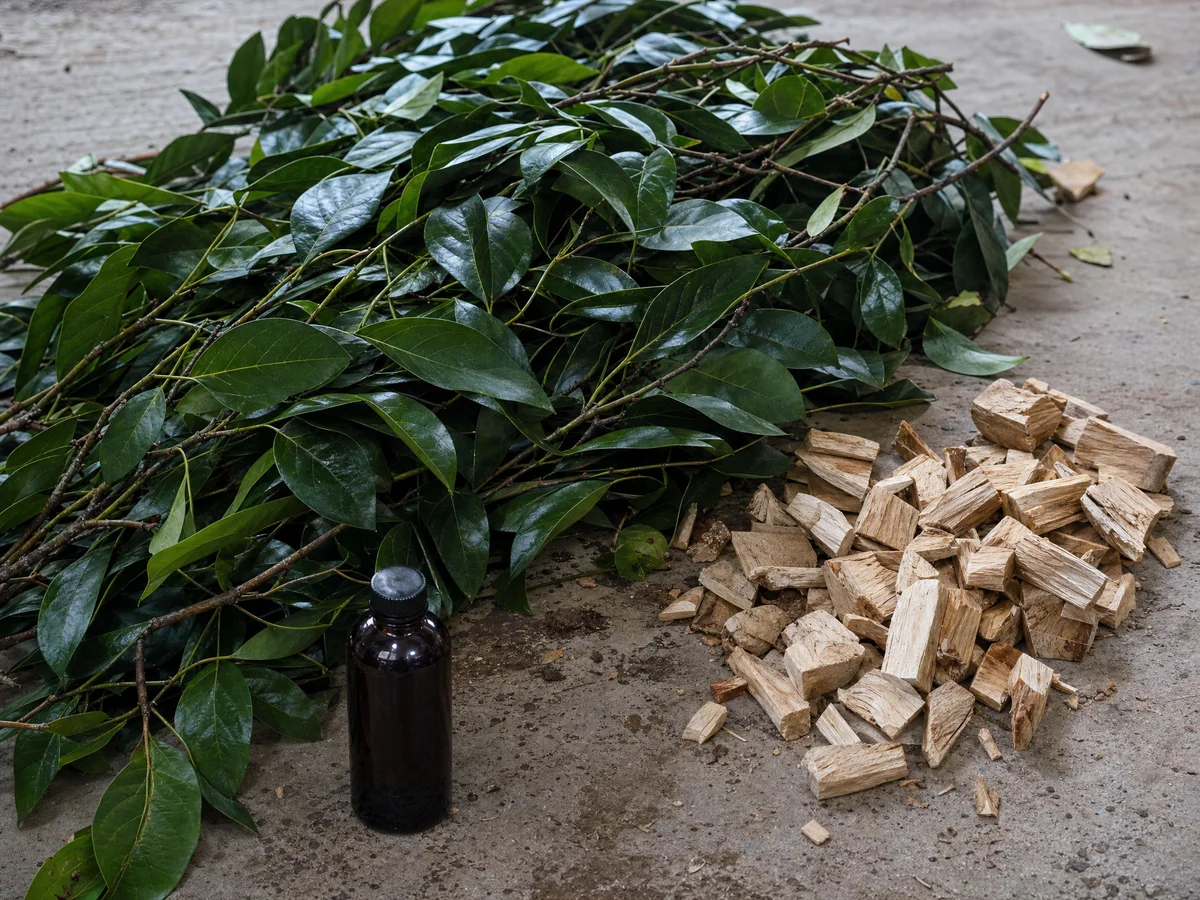
The Cinnamomum camphora tree is a single species with many personalities. The Tisserand Institute notes that camphor, ho wood and ravintsara oils all come from it, as different chemical types (Tisserand Institute); our ravintsara comparison and ho wood comparison follow that thread. A study of 974 trees in 13 Chinese provinces found five main types, led by trees rich in eucalyptol, nerolidol, camphor and linalool, with leaf oil yields ranging from 0.01% to 3.46% (Zhang et al., 2023). The traditional route, as the PROSEA handbook describes it, was chipping the wood and steam distilling it; distilling leaves came later (Windadri and Rahayu, 1999).
Step two: the crystals come out
Camphor itself is a solid at room temperature and crystallises out of the distillate. PROSEA says the crystals were filtered off and the remaining oil vacuum rectified, giving a further crop of camphor plus a camphor-free oil. The consequence surprises people: the oils sold afterwards come from material that has already given up most of its camphor. That is why the Tisserand Institute says the fractions hold no more than "up to 9%, more typically 3%". If you want camphor crystals, that is a different product from ours, and our natural versus synthetic camphor article explains the choices.
Step three: cutting the colours
The camphor-free oil is then vacuum distilled into cuts, and this is where the colour names come from. According to PROSEA, the white fraction comes off first, about 20% of the camphor-free oil, and its chief constituent is 1,8-cineole, which is the eucalyptus-type compound. Brown is the next medium-heavy cut at 20 to 22%, and it is about 80% safrole. Yellow is the residue after safrole is extracted and blue is the heaviest of all, with a faint sesquiterpene scent. The Tisserand Institute adds that the yellow and brown fractions are high in safrole and not usually sold on the open market, and that blue is not sold at all.
That makes the white cut the one made for fragrance and craft work, which is the one we sell, and why our sharp, cooling, crystalline aroma leans on that first light fraction. Our white versus brown camphor oil guide goes deeper on the buying side.
Why safrole is the reason to care about the cut
Safrole is the concern in the heavier cuts. IARC's 1976 review reports liver tumours in mice and rats given safrole by mouth, with no human case reports or epidemiology available to the working group (IARC Volume 10), and US regulations treat foods carrying added safrole or oil of sassafras, which is about 80% safrole, as adulterated (21 CFR 189.180). Nothing here is a statement about the number in any particular bottle. If the safrole result for a lot matters to you, ask us in writing through the contact page and we will tell you what we can provide, and our guide to reading a GC/MS report shows what to look for when it arrives.
Why we like knowing the story
We find the cut-by-cut story one of the nicest things about camphor oil. Most oils have a simple plot: plant goes in, oil comes out. Camphor has crystals, a camphor-free oil and a set of colour names, which gives you something to talk about every time you open a bottle. Knowing it makes you a better shopper, and it makes the scent more interesting too.
A brief history of the trade
PROSEA says that before the First World War most traded camphor came from natural stands in Taiwan, that plantations followed in Taiwan and later Japan, and that Japan's output, once several thousand tonnes a year, fell as synthetic camphor took over. Large Chinese plantations date from the 1990s, and the handbook notes that no comprehensive trade data exist. For the tree itself, see the tree behind camphor oil.
What to do when you open the bottle
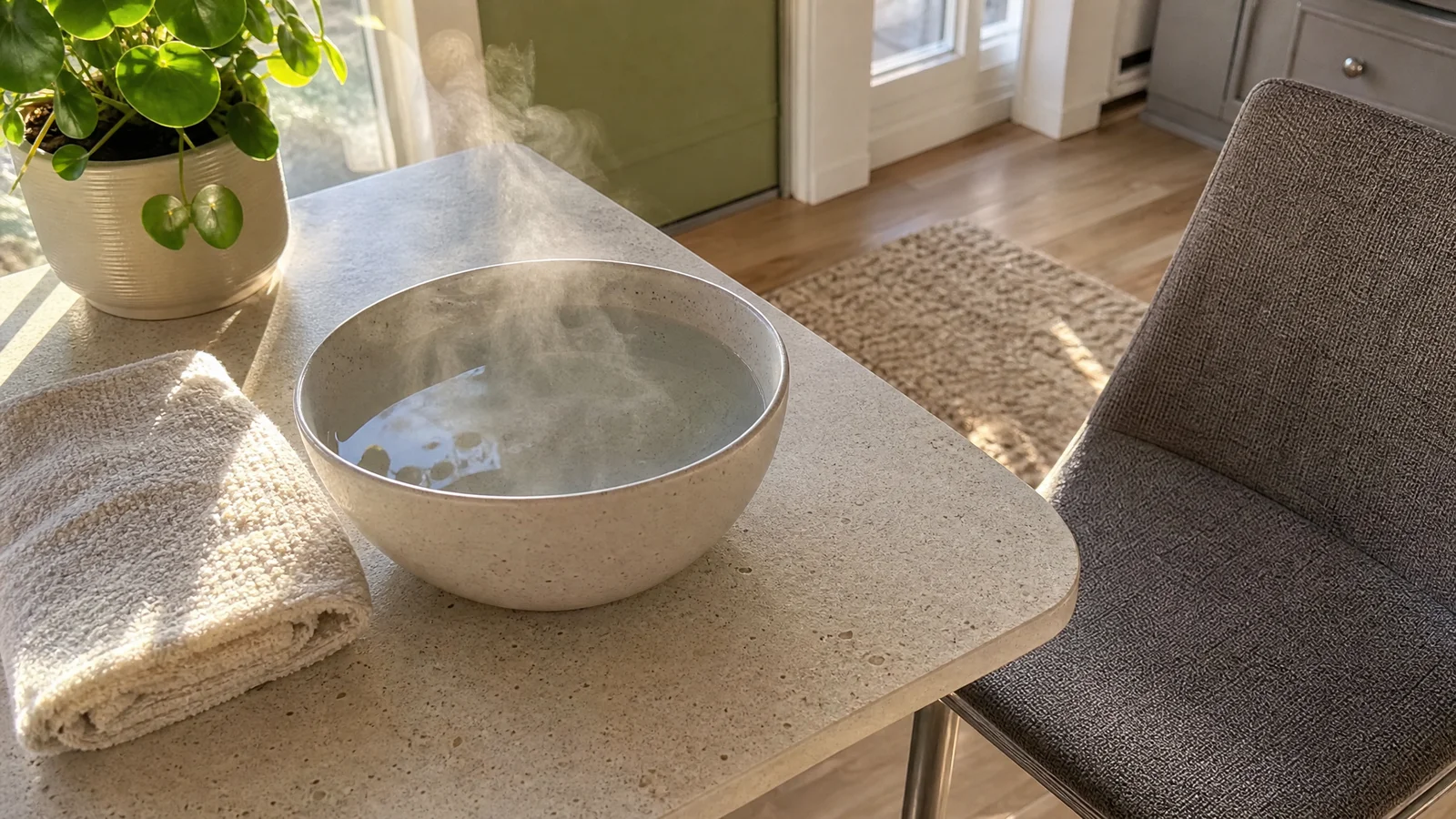
Put one drop on a paper strip and smell it at arm's length. Our oil reads sharp and cooling, with a dry woody base underneath, and you will notice the sharpest part is the first to fade. If you see fine crystals in the bottle on a cool day, that is a normal characteristic of the oil. Set the closed bottle in a bowl of warm tap water and it returns to a clear liquid.
The short version is that a colour name is a cut, someone with a tower makes the cut, and the lot report tells you what you have. That is how we would explain it across a counter.
Camphor Essential Oil
Camphor Essential Oil from our own shop, in sizes from 0.5 oz to bulk.
From $9.99
Shop Now →Sources & Further Reading
- Windadri FI, Rahayu SSB, 1999. Cinnamomum camphora, PROSEA Handbook 19
- Tisserand Institute. Cinnamomum camphora: names and chemotypes
- Zhang T et al., 2023. Chemical variation of Cinnamomum camphora, Molecules 28(3):973
- IARC, 1976. Safrole, isosafrole and dihydrosafrole, Monographs Volume 10
- 21 CFR 189.180, Safrole