Can You Scent Candles With Camphor Oil? Cold Throw Tips
Open a jar of a freshly poured candle and the first thing you meet is cold throw, the scent a cooled candle gives off before you light it. Camphor oil is a fascinating candidate for it, with a sharp, cooling, crystalline top note, and a tricky one, because thin, volatile oils tend to burn off fast. Here is what candle suppliers publish, applied to this oil with a clear head.
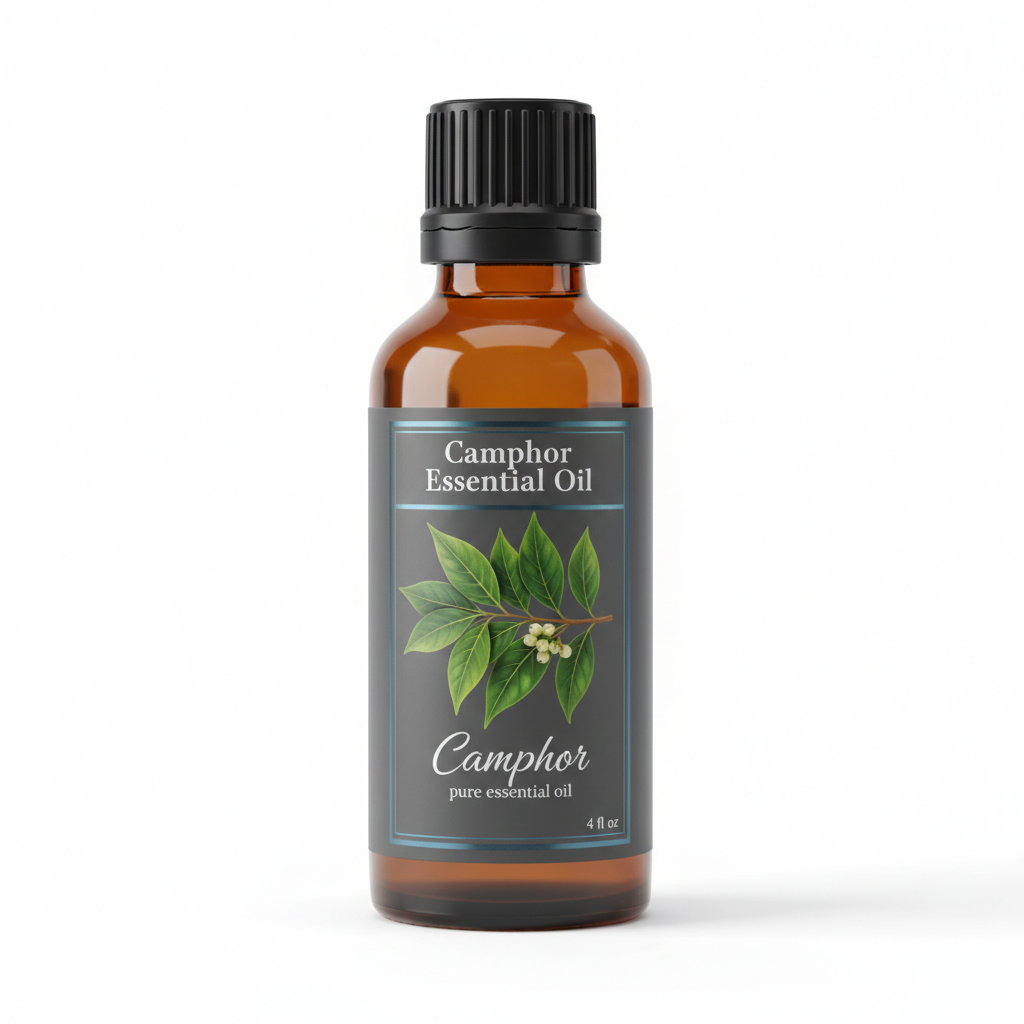
Camphor Essential Oil
Our own Camphor Essential Oil, in sizes from 0.5 oz to bulk.
From $9.99
Shop Now →First, should this oil be burned at all?
A diffuser or a closet pad releases oil near room temperature. A candle heats it to the temperature of molten wax and puts combustion products into the room. Our position is simple: we would not burn a camphor-scented candle in a small closed room, in any room with an infant, toddler or pet, or for anyone with a seizure history or asthma. The CDC NIOSH Pocket Guide gives camphor a workplace exposure limit of 2 mg/m3 averaged over eight hours and lists headache, dizziness and convulsions among the symptoms of overexposure (NIOSH Pocket Guide). That is for the compound and for adult workers, but it is why we treat camphor differently from, say, vanilla. Our burning camphor at home piece goes through what is known, and Is Camphor Oil Safe? covers who should avoid it.
If the candle is for sale or a gift, scent safety is governed by IFRA documentation for each ingredient. Check the current IFRA standard for camphor in the candle category with your wax supplier or a candle safety adviser before you settle on a load, rather than relying on a blog post, including this one.
What the wax makers say about load
These figures apply to any scented candle and come from supplier pages. Candle Shack says most soy waxes accept 8 to 10% fragrance oil by weight, and warns that going past a wax's maximum risks oil seeping to the surface (Candle Shack). CandleScience gives no universal maximum. It says to check each wax's own listed limit and to start 1 to 2% below it (CandleScience). Both are written for fragrance oils built for candles. A fragrance oil is a blend a supplier has already worked out in wax, and a single essential oil has no such record. So for camphor oil we read 8 to 10% as a ceiling for the wax, not a target, and we would begin with a much smaller amount.
What you control
CandleScience lists what shapes hot throw: fragrance load (more is not always better), melt pool size, container diameter, wax type, thorough mixing, weighing rather than measuring by volume, and the room's ceiling height, humidity and drafts. Paraffin throws strongest, and soy needs more testing, more fragrance or wider containers. Sort those out first before blaming the oil.
Here is where our own reasoning comes in. Camphor oil is thin and volatile, so we would expect it to fade from a cooled candle faster than a heavy base note would, and to give a quiet scent rather than a loud one. If a strong cold throw is the goal, a candle may not be the best home for this particular oil.
The process, step by step
- Weigh, do not measure by volume. Weigh the wax, then work out the oil from the percentage you chose.
- Add the oil at your wax's recommended temperature. CandleScience gives 185 degrees F, up to 190 for dense fragrance oils, but check your own wax's data sheet. A volatile oil added to hotter wax loses more to evaporation, so ventilate and do not lean over the pot.
- Stir thoroughly, since mixing is one of the throw factors.
- Let it rest. CandleScience says soy and other natural waxes need at least 1 to 2 weeks and paraffin 3 to 5 days. Candle Shack says at least 48 hours before a burn test, with throw improving over 7 to 14 days. Testing early gives a falsely weak result.
- Burn test the whole system of wick, container and wax, and retest after any change.
If you go ahead, a sensible first batch is one small candle in a wide, heat-safe container, with the oil weighed to the hundredth of a gram and written on the label. Smell it cold after its full resting time and burn it briefly in a large, ventilated room with no children or pets. Stop at any headache or dizziness, and change one variable at a time afterwards. That is our reasoning from the supplier pages above.
A note on patience
Candle making rewards people who wait. It is tempting to sniff the jar the next morning and judge the whole project, but a cooled candle changes over days. Label the jar with the date you poured it, put it somewhere cool and out of reach of children and pets, and come back at the end of the resting time. When you lift the lid, hold it a little away from your nose and notice whether the sharp, cooling top note is still there, or whether it has quietly slipped away.
Either result is useful information. Write it down, along with the load and the wax, and your next batch starts from something real.
Where this oil may shine more
For a cool, crisp candle that is ready to go, a candle fragrance supplier sells blends already worked out in wax, and our white camphor oil versus camphor fragrance oil post explains the difference. We sell the essential oil only, so wax, wicks and jars come from a craft supplier. For a long, quiet crispness, a closet sachet is a simpler home for camphor oil, and our closet and wardrobe guide shows how. If you need a lot-specific report, you can ask us in writing through our contact page.
Camphor is happiest where its bright top note can drift slowly, and a closed drawer or a cedar-lined closet suits it better than a flame.
Camphor Essential Oil
Camphor Essential Oil from our own shop, in sizes from 0.5 oz to bulk.
From $9.99
Shop Now →