Camphor Oil and Children: Why Storage Matters Most
Most scented things in a home are harmless if a toddler gets into them. Camphor is the exception. It is one of the few aromatic materials with a long medical record of seizures in very small children, which is why we treat this oil as something for adults only.
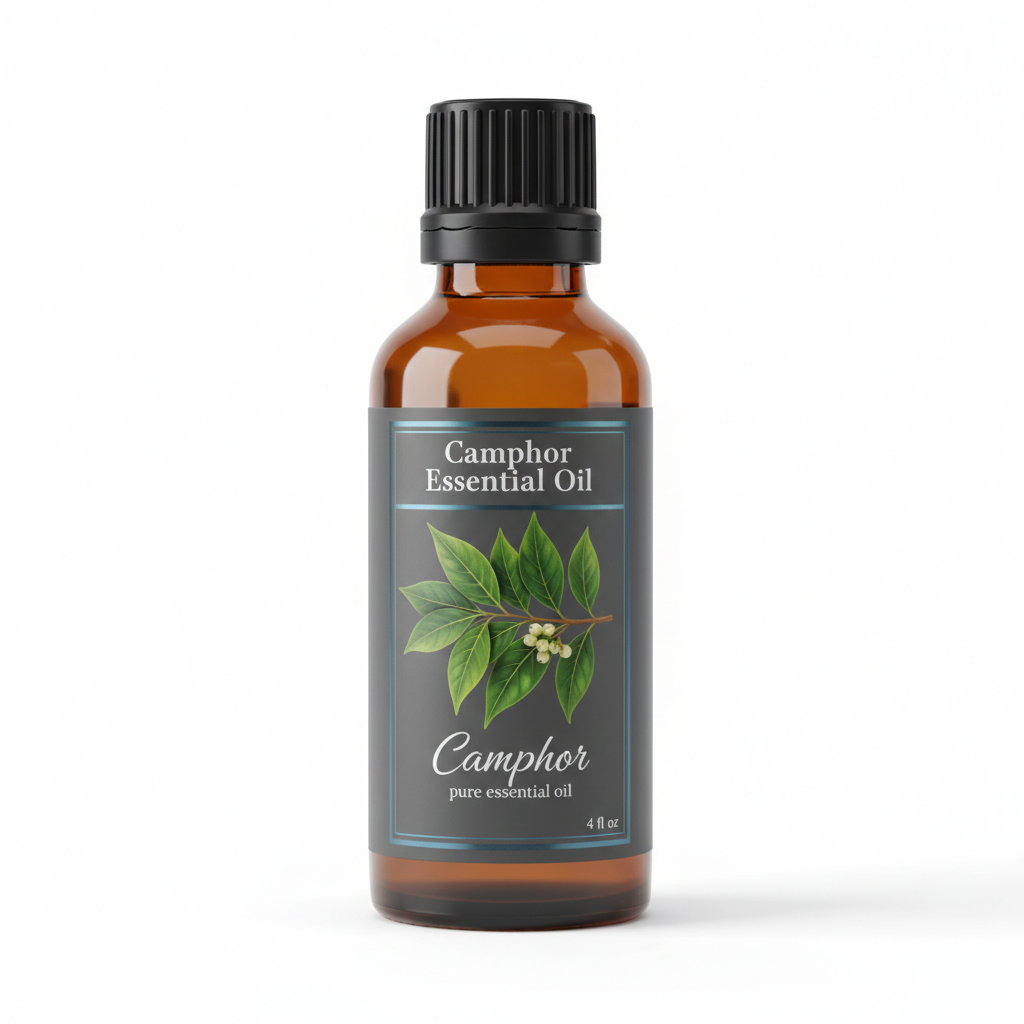
Camphor Essential Oil
Our own Camphor Essential Oil, in sizes from 0.5 oz to bulk.
From $9.99
Shop Now →The arithmetic of a small body
Poison centers think in milligrams per kilogram of body weight, and that is the whole story in miniature. The Royal Children's Hospital in Melbourne says camphor is highly toxic, that gastrointestinal irritation and nervous system effects can begin above 10 mg/kg, and that serious toxicity has been reported above 30 mg/kg. For a ten kilogram toddler, 30 mg/kg is 300 mg. One milliliter of the batch on our Certificate of Analysis weighs about 0.88 g, or 880 mg, because its relative density is 0.878. Those figures are not a safe dose and they are not a dose for our oil, whose camphor content the certificate does not report. They simply show how little liquid it takes before a child's body is outmatched.
The same hospital guideline says symptoms can start within 5 to 15 minutes of swallowing, and that seizures usually occur within 90 minutes. Fast onset is part of why this is an emergency and not a wait-and-see situation.
How it really reaches children
The published cases are rarely about a parent carefully measuring something. They are about camphor turning up where nobody expected it. A 2025 case report described a one-year-old who had seizures after exposure to camphor in a cultural remedy. A 2006 national guideline from the American Association of Poison Control Centers begins from the observation that poison centers were handling roughly 10,000 camphor ingestion exposures a year. And the Royal Children's Hospital names the usual suspects: chest rubs, inhalers and some mothballs.
The pattern is about access. A bottle left on a bathroom shelf, a balm in a handbag, an unlabeled jar from a relative. That is useful, because access is something you can control.
Seeing your home the way a toddler does
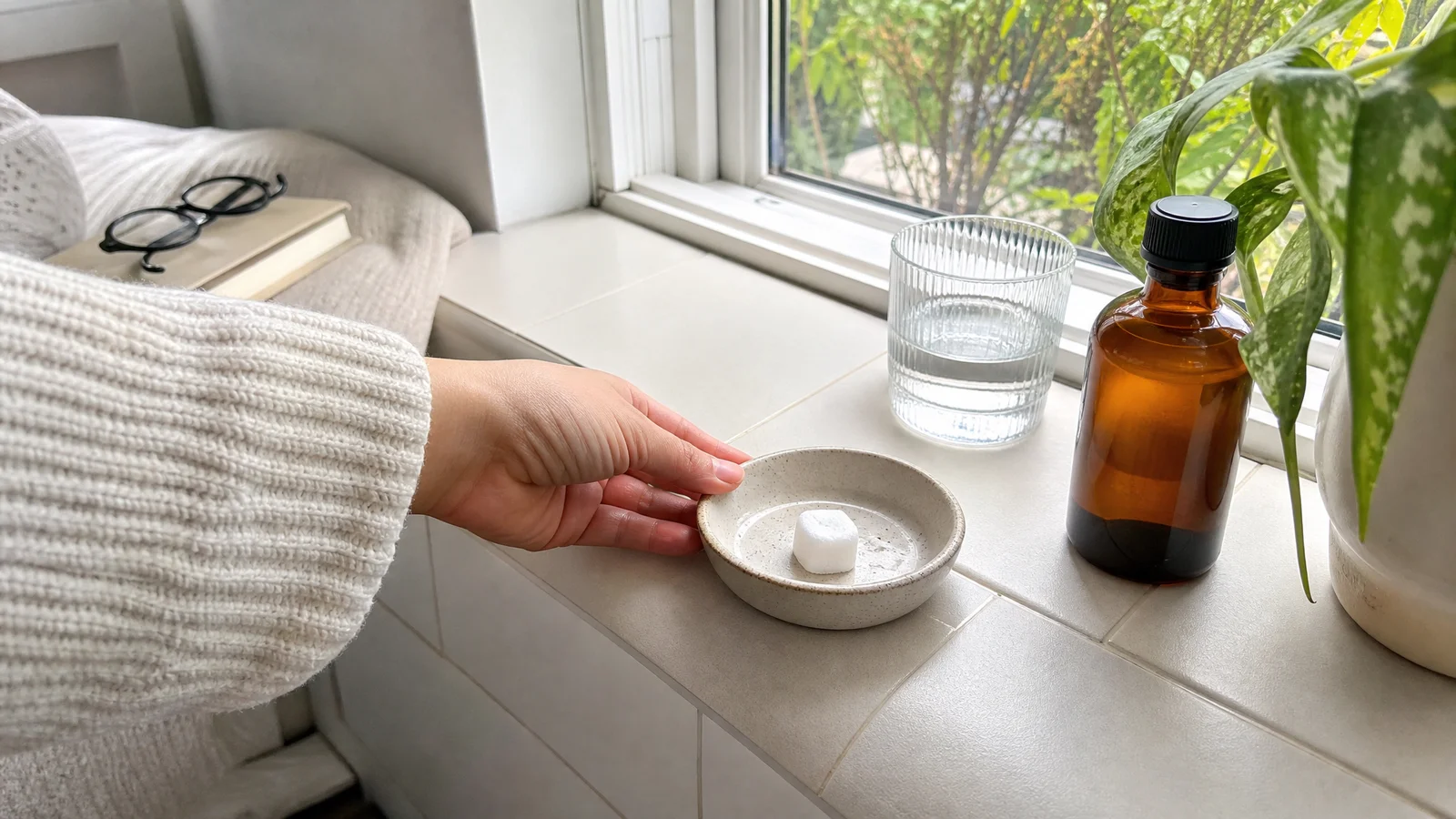
One useful exercise is to get down on your hands and knees and look around. Toddlers do not see a "cabinet" or a "shelf". They see handles, knobs, and anything shiny or interesting at eye level. A little amber glass bottle with a dropper-style cap is exactly the kind of object that gets picked up, shaken and carried around the house.
Walk the route a small child would take: the bathroom, the bedside table, the bag by the front door, the drawer where you keep craft supplies. Wherever a bottle might end up after you've used it, that is where you need a plan. The best habit is the dullest one: use it, cap it, put it away, every single time.
Keeping a bottle out of reach
- Store it high, tightly capped and out of sight, ideally in a closed cabinet with a latch. A shelf that looks too high to a parent is a climbing project to a three-year-old.
- Decant only what you need into a small container for a task, and put the main bottle away before you start, not after.
- Wipe spills and drips at once. Camphor is readily absorbed through skin, so a damp towel left on the floor is not harmless.
- Tell visitors and sitters that the oil lives in a closed place and why.
- Check what else in the house already contains camphor, such as rubs and inhalers, before adding another source.
Our own guidance for the oil is to dilute it to 0.5% to 2% in a carrier before any skin contact, patch test first, keep it away from the eyes, and keep it out of reach of children and pets. We do not suggest it for use on children, and for anything involving a child's skin, room air or health, a pediatrician or pharmacist is the right person to ask. We sell an external cosmetic oil, not a remedy.
It is also worth deciding in advance where the Poison Control number lives. Put it in your phone's contacts and on the fridge, so that nobody has to search for it in a hurry. Having it ready costs nothing and takes the guesswork out of a bad moment.
If a child is exposed
Do not wait for symptoms. In the United States, call Poison Control at 1-800-222-1222, or 911 if there is a seizure, trouble breathing, or the child cannot be woken. Have the container and the child's weight ready. Our full walk-through is in camphor poisoning symptoms and what to do first, and the bigger safety picture is in is camphor oil safe? If you are still deciding whether a household needs this oil at all, who should avoid camphor oil is worth reading first.
Talking to the other adults in the house
A plan only works if everyone shares it. If you live with a partner, relatives or a babysitter, tell them where the bottle lives and that it stays there. A friendly sticker on the cabinet door does a lot, and so does a short conversation. Grandparents in particular may remember camphor as a harmless household staple, and it is kind to explain why you do things differently now.
A house with small children can still be a house with a bottle of camphor, but only if the bottle is treated like the strongest thing in the cabinet. If that sounds like more fuss than a scent deserves, that is a perfectly good reason to leave it on the shelf at the store.
Camphor Essential Oil
Camphor Essential Oil from our own shop, in sizes from 0.5 oz to bulk.
From $9.99
Shop Now →Sources & Further Reading
- Royal Children's Hospital Melbourne: Camphor poisoning clinical guideline
- Manoguerra AS et al. Camphor poisoning: an evidence-based practice guideline for out-of-hospital management (2006)
- Salcedo et al. Case report of camphor toxicity in a one-year-old, BMC Pediatrics (2025)
- Poison Control (National Capital Poison Center)