Is Camphor Oil Safe During Pregnancy or Nursing?
If you are pregnant or nursing, our advice on camphor oil is simple: set it aside and ask your OB-GYN or midwife before it comes anywhere near you. Nobody has measured what small skin or aroma exposures do in pregnancy, and the one clear fact in the literature is that camphor reaches the baby.
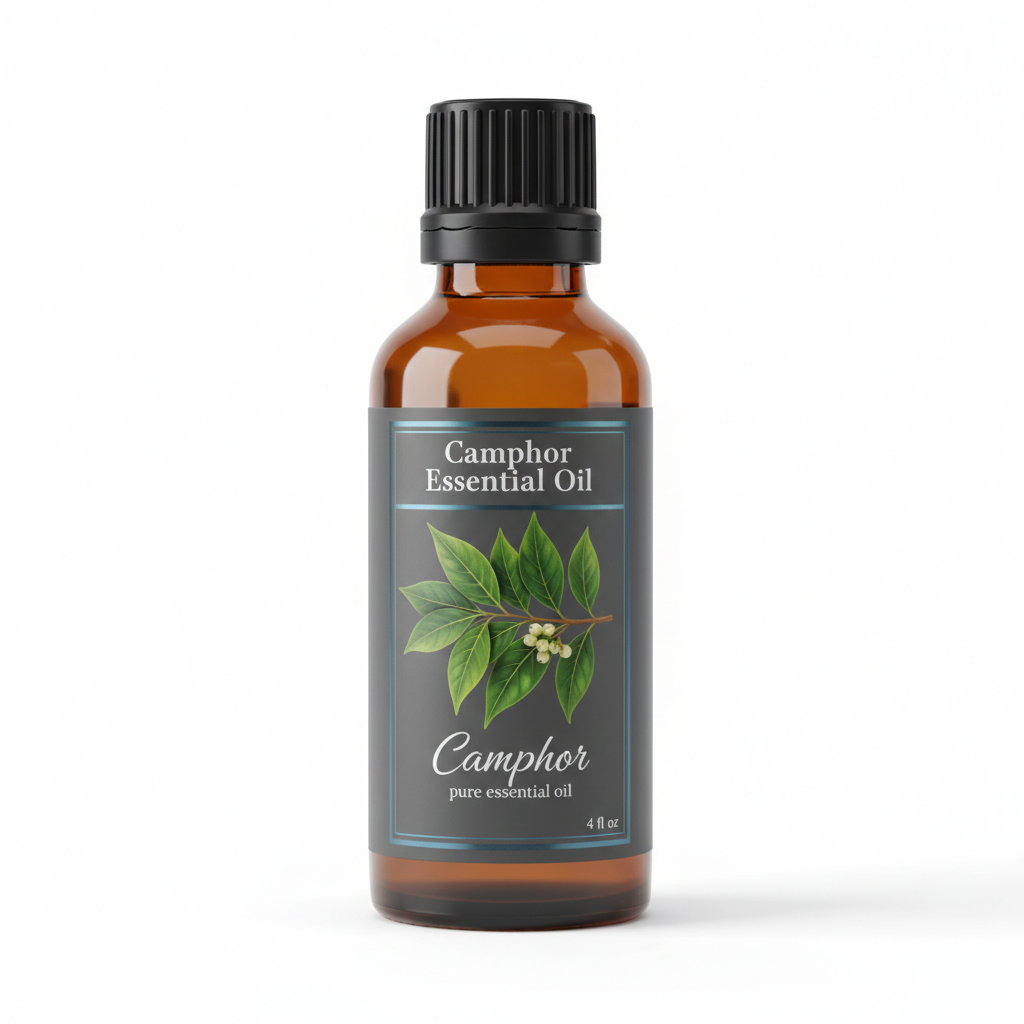
Camphor Essential Oil
Our own Camphor Essential Oil, in sizes from 0.5 oz to bulk.
From $9.99
Shop Now →What the poison monograph says
The most useful single document is the poison information monograph on camphor from the World Health Organization's chemical safety program, peer reviewed in 1989. It states that camphor crosses the placenta, has been implicated in fetal and neonatal death, and has been used to induce abortions. It records four poisonings in pregnancy, and in every one the cause was the same: camphorated oil mistaken for castor oil. For breastfeeding it reports no data at all.
It also says that the topical use of camphorated oil in pregnancy was not associated with birth defects. That sentence is brief and gives no numbers, so we read it as an absence of a warning signal, not a green light.
The pattern that matters: mix-ups
Look at how those cases happened. Nobody was inhaling a diffuser. A bottle was confused with a different one, and someone swallowed it. The same story runs through camphor history. A 2009 report of three toddlers with seizures in one New York hospital notes that the US Food and Drug Administration restricted the camphor content of some medicinal products to under 11% in 1982, after a series of accidental ingestions. For a household with a pregnant person, the practical lesson is to keep every camphor product labeled in plain words, stored up high, and far from anything that looks like food, oil or medicine.
Skin and air: the honest gap
Camphor is absorbed through skin, according to the Royal Children's Hospital Melbourne clinical guideline, though most toxic exposures come from swallowing. What nobody has pinned down is how much reaches the bloodstream from a diluted oil or from a room scented with it, and for how long a baby would be exposed. We could find no camphor-specific pregnancy study that supports a "safe" dilution, so we do not offer a number. Where the central unknown is that big, we would rather say so than hand you false precision on someone else's behalf.
The same goes for confident advice online, such as a trimester rule or a very low percentage presented as the pregnancy-safe level. Good sources say which exposure was studied, in whom and at what dose. For camphor, the sources we could verify cover swallowing, and they support caution.
On not having to figure it all out
Pregnancy comes with an avalanche of advice, and a good deal of it contradicts itself. It is perfectly reasonable to decide that a sharp, strong oil is simply not worth the mental effort right now. Putting the bottle in a drawer for a while costs you nothing, and the scent will still be there afterward.
If other people in your household like to use oils, you can ask them to keep their projects in another room and to cap everything when they are done. You do not have to explain or apologise; "my midwife suggested I keep things simple" is plenty.
Nursing parents
The WHO monograph reports no data on camphor in breast milk. We would add one practical thought from common sense: an infant's mouth meets skin. Anything on the chest, hands or face is something a baby may touch and taste, and camphor's record in small children is serious enough that we would keep it off those areas. Our guide to camphor and children collects the age points in one place.
If camphor is already in your home
Camphor turns up in moth blocks and some chest rubs as well as oils, and the Melbourne guideline lists mothballs and rubs among the common sources. Check what you own. Keep bottles sealed and out of reach, and ask someone else to handle them if you would rather. If anyone swallows camphor, do not wait for symptoms: call Poison Help at 1-800-222-1222, or 911 for seizures, trouble breathing or someone who cannot be woken. Tell your OB-GYN or midwife afterward. Our page on camphor poisoning symptoms and what to do first has the details.
A tidy habit for the weeks ahead: collect every scented product in the house into one box, and look at the ingredient labels together. Rubs, balms, moth blocks and oils may all be in there. Seeing them in one place makes it much easier to decide what stays and what goes.
Questions to bring to your appointment
Ask whether any camphor exposure is acceptable at your stage, whether the rubs, moth blocks and oils already in your home should go, and what to do if a child or pet gets into one. Bring the ingredient lists with you. For the wider safety picture, see our camphor safety guide and side effects and who should avoid it.
When the time is right and your doctor agrees, camphor will still be the same crisp, cooling, woody note it always was. In the meantime, there are plenty of other pleasures to enjoy.
We sell an external cosmetic oil, and nothing here is medical advice. It is a pleasure to answer questions about the oil itself; for pregnancy decisions, your midwife or doctor is the right voice.
Camphor Essential Oil
Camphor Essential Oil from our own shop, in sizes from 0.5 oz to bulk.
From $9.99
Shop Now →