Camphor vs Rosemary Oil: Why They Smell Related
Here is a small surprise for anyone who has sniffed both bottles and thought they smelled related. They are. Rosemary can make camphor itself, and depending on where a rosemary was grown, the oil can be rich in camphor, rich in 1,8-cineole, or somewhere in between.
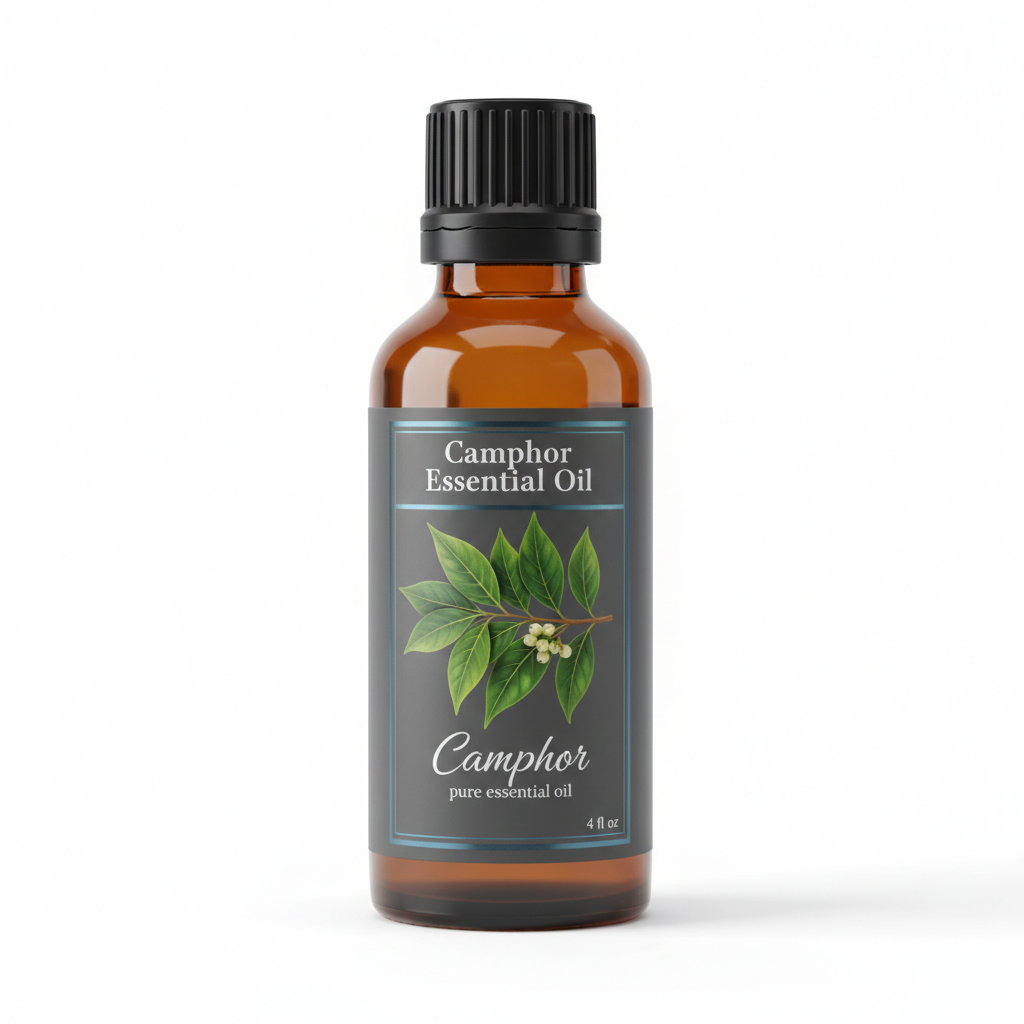
Camphor Essential Oil
Our own Camphor Essential Oil, in sizes from 0.5 oz to bulk.
From $9.99
Shop Now →Why "rosemary oil" is not one thing
A study of 71 rosemary leaf oil samples from Algeria found camphor ranging from 0.3 to 31.0 percent and 1,8-cineole from 9.7 to 70.2 percent. The researchers sorted the oils into groups by those two compounds (plus verbenone, which showed up only in samples from one province). Put plainly, two bottles that both say "rosemary" can smell noticeably different, one sharp and camphoraceous, the other fresher and more eucalyptus-like.
That is the first thing worth knowing if you are choosing a rosemary oil to sit next to camphor. The label usually names the plant, not the chemistry. If it matters to you which side of the family you are buying, ask the seller for a GC/MS report for the lot.
Where white camphor oil fits
White camphor oil sits on the cineole side of that family, which surprises people who expect it to be mostly camphor. The crystalline camphor is filtered out of the tree's distillate first, and the white fraction that remains holds only up to 9 percent and more typically about 3 percent camphor, per the Tisserand Institute. A white fraction is led by 1,8-cineole, and PubChem's reference descriptions call the odor of that molecule "camphor-like." Camphor itself is described as "fragrant and penetrating."
So the two oils overlap on 1,8-cineole and camphor but arrive there by different roads. Rosemary brings a green, herbal character along with it. Our camphor oil is sharp, cooling and crystalline with a dry woody base, and the overall feel is dry and woody rather than green and herbal.
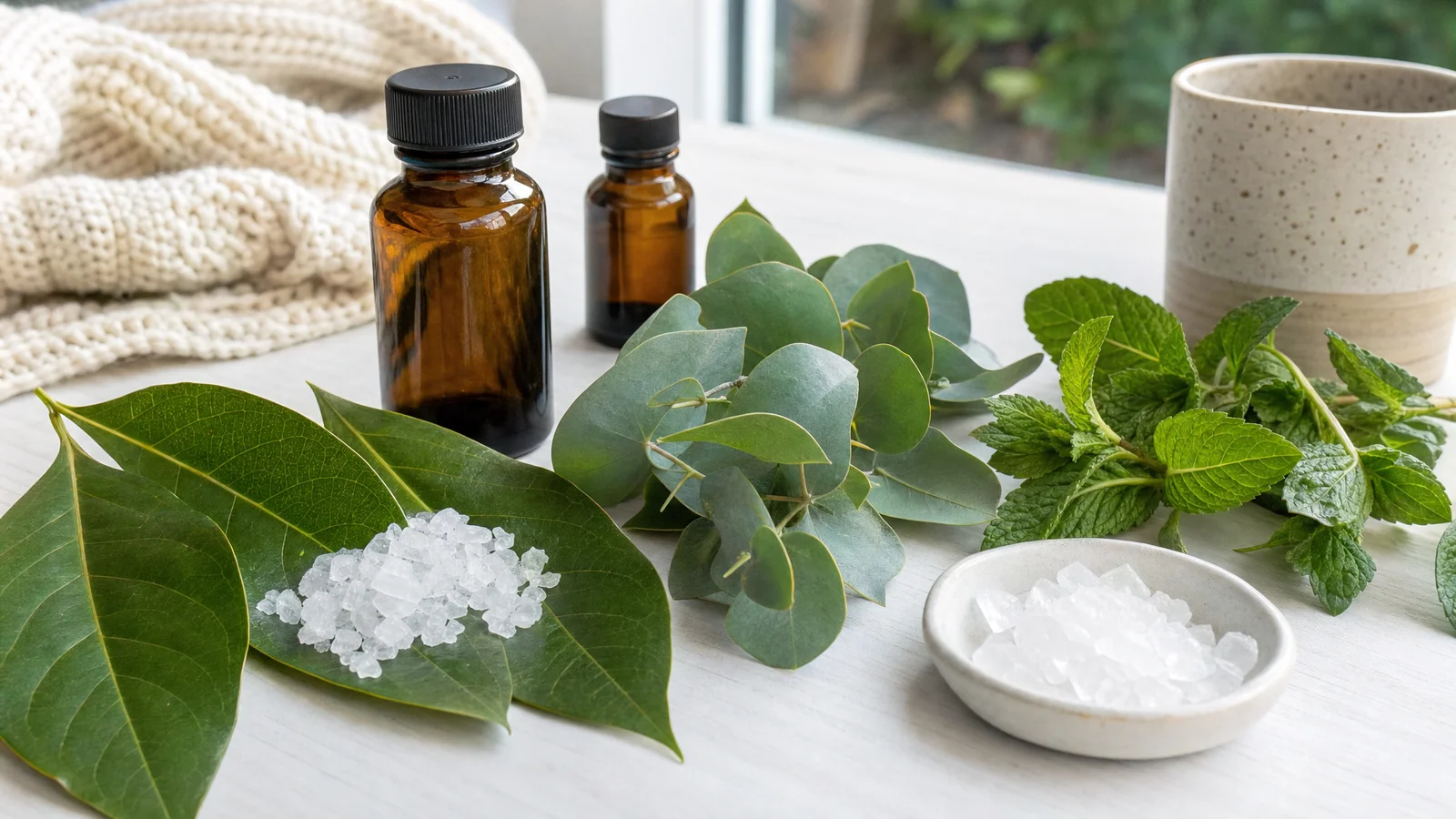
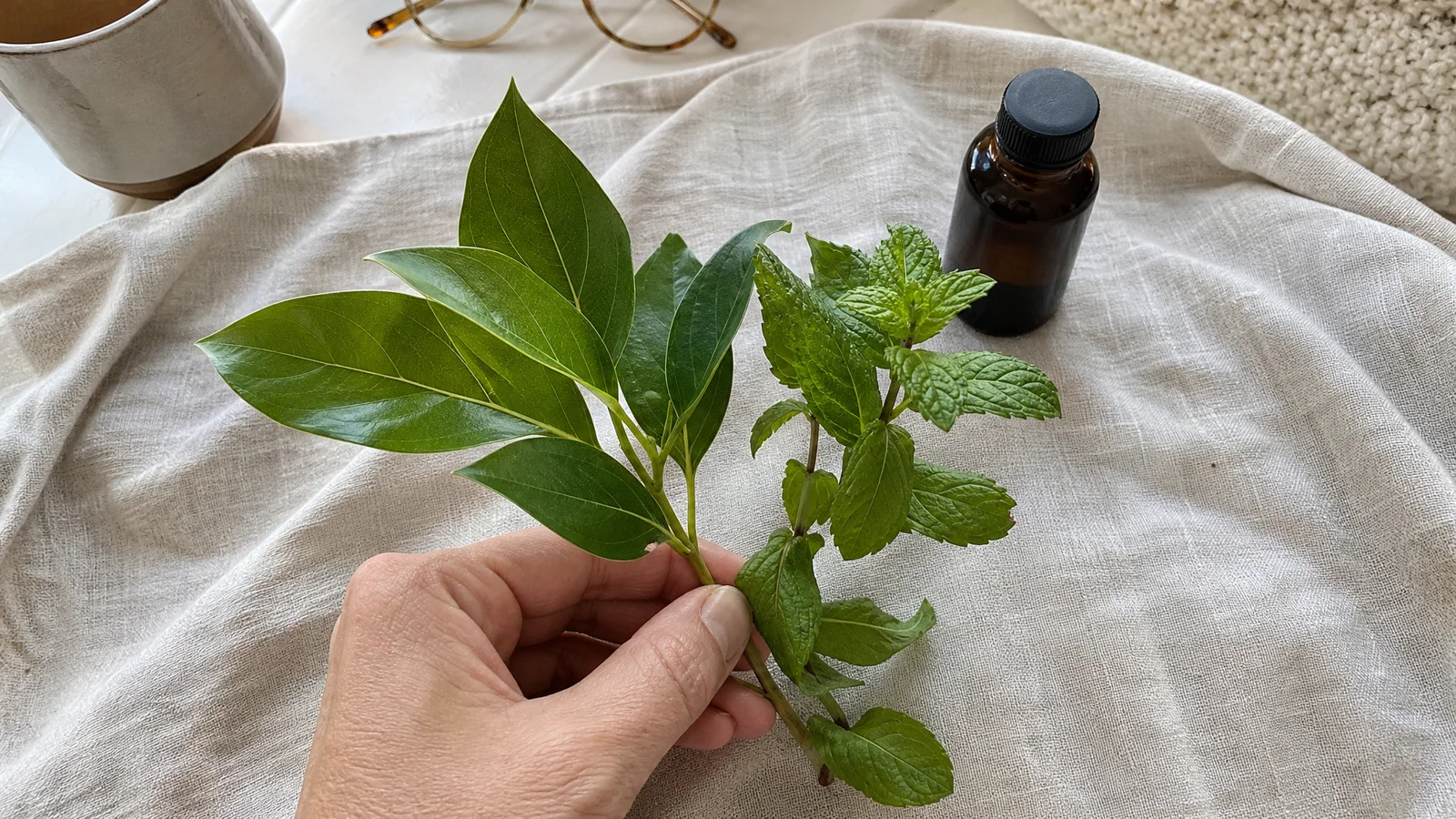
If you have a bottle of each at home, try the simplest experiment there is. Open them one at a time and breathe in gently from a few centimeters away. Rosemary tends to arrive green and herbal, like a cut sprig on a kitchen counter. Camphor is drier and sharper, more like cool, clean air over a woody base. The shared backbone is obvious, and so are the differences.
Putting them together
Because they share a backbone, rosemary and camphor oil blend easily, and they are among the pairings we like for fresh, herbal blends. A drop of camphor oil acts as an accent: it tends to sharpen rosemary rather than compete with it. Add it by the drop on a scent strip, since the thin, volatile character of camphor oil makes it easy to overshoot. Our pairing guide lists other oils that suit it.
One sensible consequence of that chemistry is that a camphor-rich rosemary oil deserves the same care you would give camphor oil. That is reasoning from composition rather than a published rule, but it is a good reason to know what is in your bottle.
Using either one in a scented scalp oil
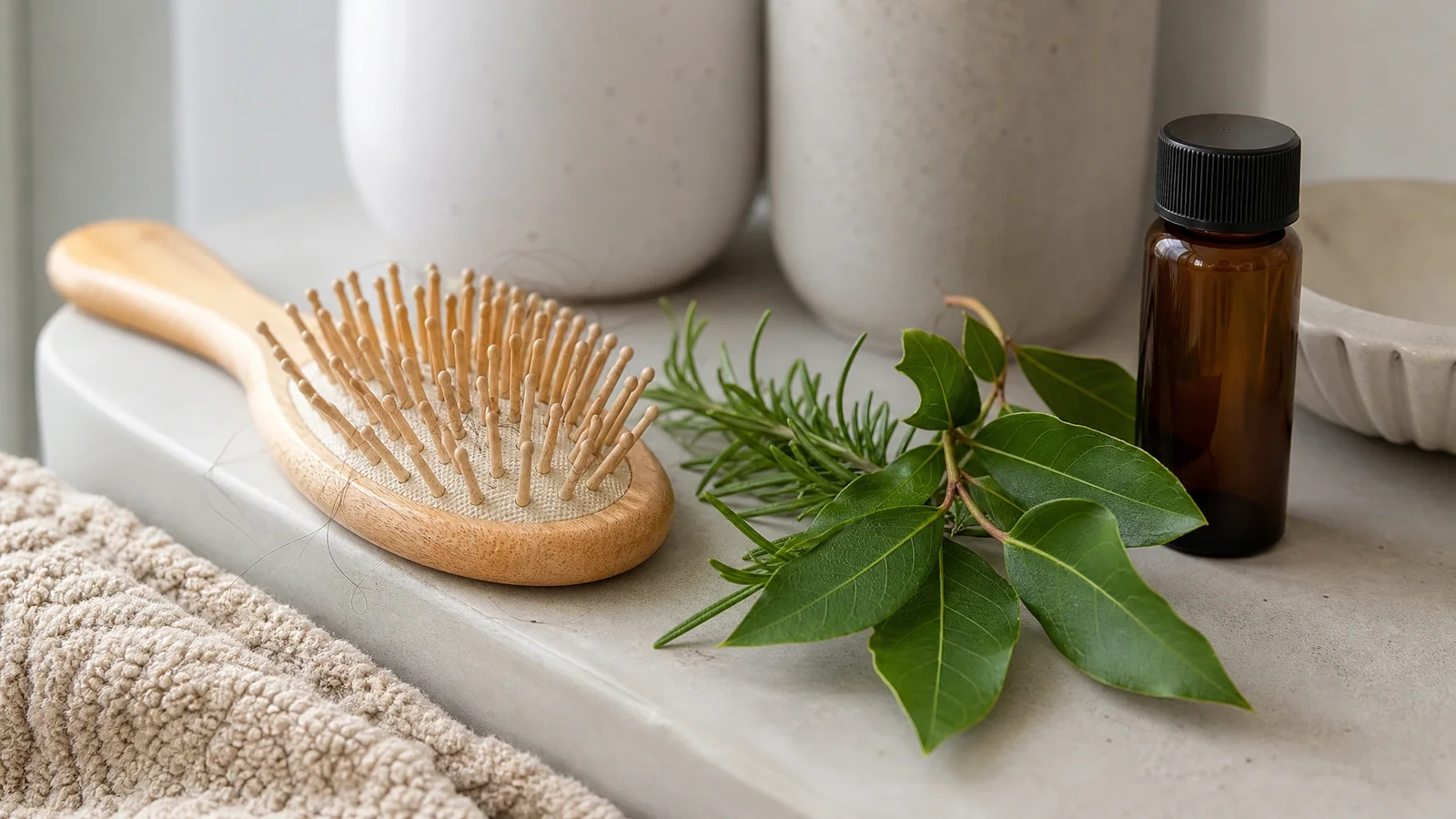
Some people like a scalp or hair oil that smells fresh and herbal, and either oil can supply that scent. We do not make claims about either oil changing hair, and for questions about hair loss the right person is a dermatologist. For scent, here is how we would approach it:
- Dilute first. Our guidance for camphor oil is 0.5% to 2% in a carrier oil.
- Patch test on a small area before using it more widely, and keep it away from eyes. The scalp is skin like any other.
- Keep camphor oil away from infants and young children, for whom it is contraindicated.
Carrier oils come from a craft or grocery shop; we sell only the essential oil. Our scalp scenting article, carrier oil guide and patch test steps walk through the practical side.
Building a small herbal accent
For a fresh, herbal blend, think of rosemary as the main voice and camphor as a seasoning. Start with your usual rosemary drops on a strip, add a single drop of camphor, and compare it with the strip that has none. You will notice whether the blend gains a crisp, dry edge or tips too far into cold. If it tips, the answer is less camphor, not more rosemary.
Keep notes of what you try, even short ones. A line like "rosemary 4, camphor 1, a little sharp" saves you from guessing the next time you want to repeat a blend you liked.
Which to choose
If you want a green, herbal freshness, rosemary is the oil for you, ideally with a GC/MS report so you know which chemotype you are getting. If you want the dry, crystalline, woody edge, camphor oil is the one. And if you love the overlap, use a little of each and let them play off one another.
Nothing teaches this as quickly as a scent strip with one drop on each. The family resemblance is hard to miss.
Camphor Essential Oil
Camphor Essential Oil from our own shop, in sizes from 0.5 oz to bulk.
From $9.99
Shop Now →Sources & Further Reading
- Bekhechi A et al., 2024. Chemical variability and anti-inflammatory activity of Rosmarinus officinalis leaf essential oil from the Algerian Sahara. pubmed.ncbi.nlm.nih.gov/38388803
- Tisserand Institute. Cinnamomum camphora: its many names and chemotypes. tisserandinstitute.org
- PubChem. Camphor and 1,8-cineole compound records (odor descriptions). pubchem.ncbi.nlm.nih.gov/compound/2758