Camphor Oil FAQ: Straight Answers Before You Order
Camphor oil is a distillate, not liquid camphor. The white cut is the one used for fragrance and craft, and it deserves a bit more care around children, pets and skin than its crisp, pleasant aroma hints at. These are the questions we would expect from someone deciding whether to buy.
Camphor Essential Oil
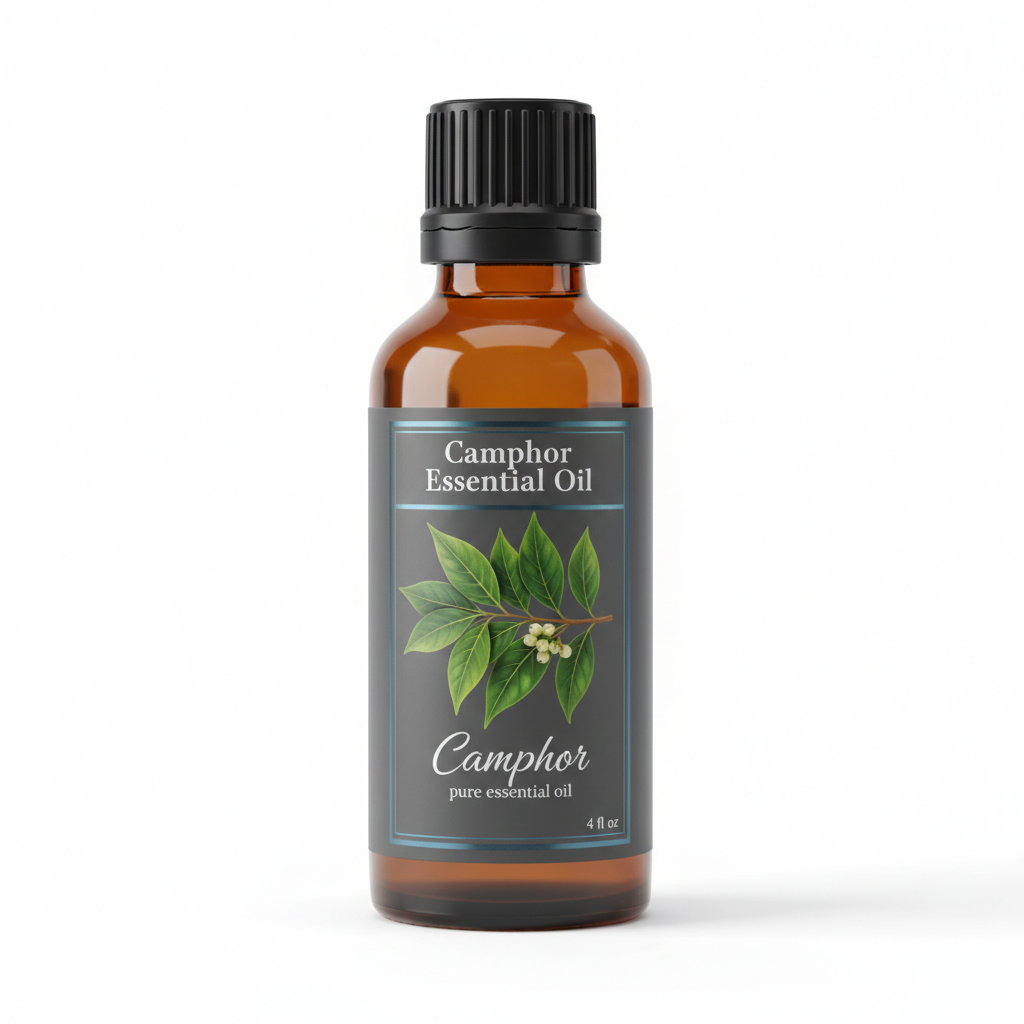
Our own Camphor Essential Oil, in sizes from 0.5 oz to bulk.
From $9.99
Shop Now →What you are buying
What is camphor oil?
It is a liquid distillate of the camphor laurel, Cinnamomum camphora, sold as white, yellow, brown and blue cuts. PROSEA's handbook explains that the camphor crystals are taken out of the distillate first, and the oils come from the camphor-free remainder. We sell one product, the white fraction, undiluted. The Certificate of Analysis we publish for one batch lists appearance, smell, relative density 0.878, refractive index 1.467 and optical rotation +5.80 degrees at 20 C. It has no GC/MS, so it does not show what percentage of the oil is camphor. The longer version is in What Is Camphor Oil?
Is it a true essential oil?
In everyday terms, yes: it is a steam-distilled aromatic material from a plant. The Tisserand Institute does describe the white, yellow and brown materials as fractions rather than true essential oils, because they are cuts of a distillate. The practical point is that two bottles with the same name can be cut differently, so for a particular lot, ask for its GC/MS report.
How do white, brown and yellow differ?
PROSEA reports that white oil is the first fraction, about 20% of the camphor-free oil, with 1,8-cineole as its chief constituent. Brown is 20 to 22% and is about 80% safrole, and yellow is what remains after the safrole has been extracted. The Tisserand Institute adds that yellow and brown are not usually sold on the open market. We sell only the white. See white versus brown camphor oil for more.
What does it smell like?
Sharp, cooling and crystalline, with a dry woody base, and it behaves as a top note: you notice it first and it fades first. It also works as a blend amplifier, since a drop or two can sharpen lavender, rosemary, citrus and conifer notes. Strong aromas tire the nose fast, so judge a blend after a few minutes, and smell it before committing a whole batch of candles or soap.
Using it
Can I put it on my skin?
Only diluted. We recommend 0.5% to 2% in a carrier oil, a patch test first, and keeping it away from the eyes. Camphor is neurotoxic in quantity, so we keep dilutions low. As arithmetic only, at the rough convention of 20 drops per millilitre: 1 oz of carrier is about 30 ml, so 0.5% is roughly 3 drops and 2% is roughly 12. Weigh when you can, since drops vary. Start with Is Camphor Oil Safe? and how to patch test camphor oil. For a skin concern, see a dermatologist.

Is it all right around children and pets?
Keep it out of reach of both. Camphor is contraindicated for infants and young children, and topical application near a small child's face has caused serious harm. The Royal Children's Hospital Melbourne guideline reports serious toxicity in children from about 30 mg/kg of camphor, with seizures usually within 90 minutes of ingestion. For cats and dogs, ask a veterinarian before using it anywhere an animal can reach or breathe it, and we would hold off diffusing it in a small closed room with infants, asthmatics or animals.
Can it be swallowed?
No. Any ingestion should be treated as an emergency. The same Melbourne guideline reports stomach upset and central nervous system depression above 10 mg/kg and gives 0.5 to 1 g as a lethal oral dose in children. If a child or pet has swallowed any, call poison control or emergency services immediately; see camphor poisoning symptoms.
Does it have health benefits?
We make no medical claims for our oil. Studies of camphor have looked at different things, such as the compound, rubs, blends and extracts, and applying those to a white-fraction oil is a leap. Camphor Oil Benefits and Uses reports what each kind of study actually examined. For a symptom, a pharmacist or physician is the right person.
What is the best way to try it for the first time?
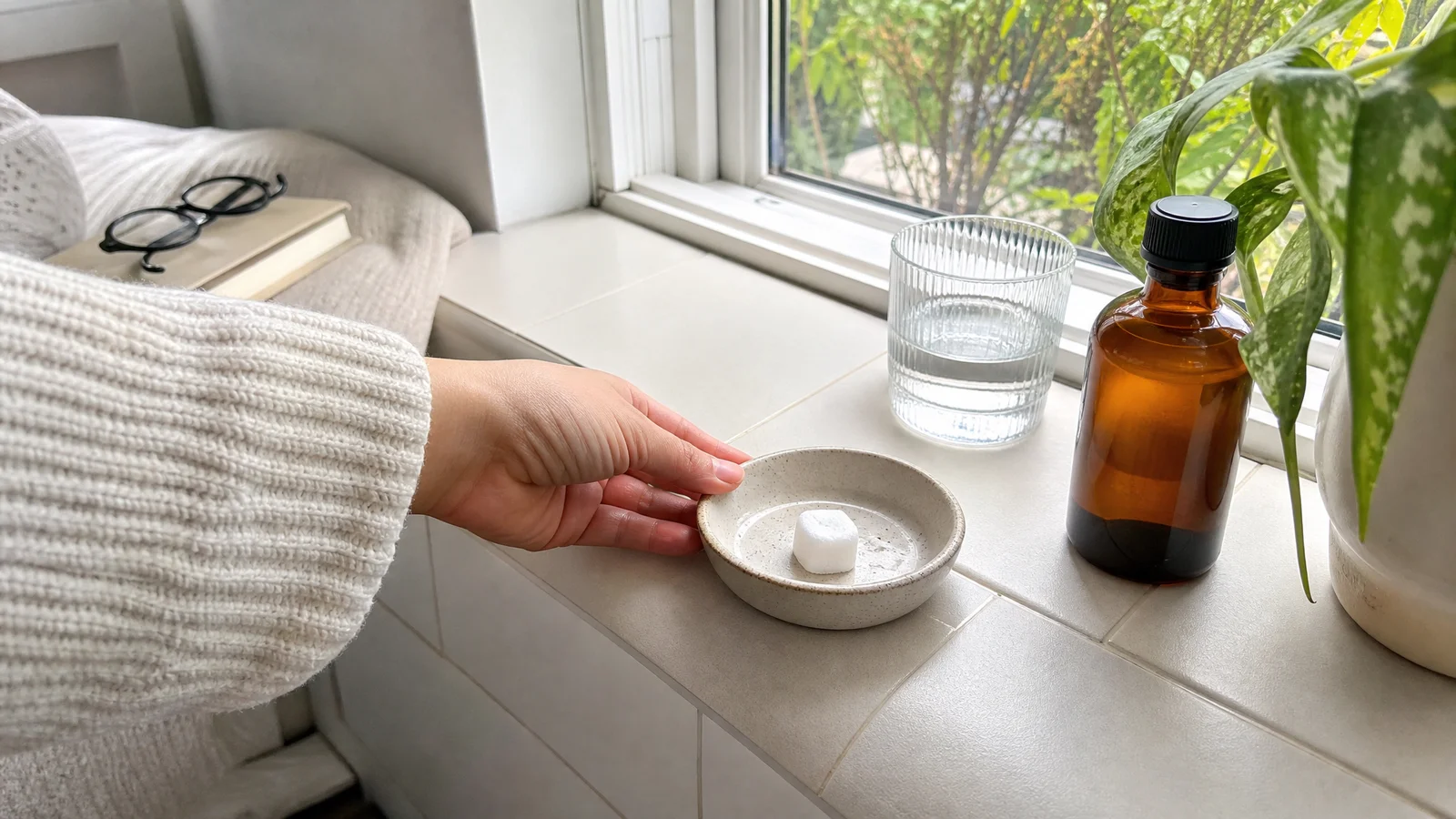
Start small and start gently. Put a single drop on a cotton pad, set it somewhere you can walk past, and notice how the sharp, cooling note arrives and fades. It will tell you quickly whether you enjoy it.
Keeping it, and what we sell
How long does it keep, and why did mine crystallize?
Typically 2 to 3 years when kept tightly capped in a cool, dark place. In cool conditions fine crystals may form, which is a normal characteristic of the oil and not a sign of spoilage, and gentle warming returns it to clear liquid. The cap matters because the oil is thin and volatile, and an open bottle loses its top note first. If crystals do not clear or the smell has changed, treat it as past its best. More in how to store camphor oil.
Do you sell blocks, tablets, rubs or brown oil?
No. We sell one thing, camphor essential oil, the white fraction, in sizes from 0.5 oz up to 400 lb. We do not sell crystals, tablets, blocks, camphorated oil, fragrance oil, rubs, balms, carrier oils or blends. A pharmacist is the right person for over-the-counter rubs, and a candle or soap supplier for bases and fragrance oils. Camphor oil vs tablets and blocks explains the formats.
If your question is not here, ask us in writing through the contact page. The name on a bottle describes a cut and only the lot report describes the contents, so that one habit settles most of the questions above, ours included.
Camphor Essential Oil
Camphor Essential Oil from our own shop, in sizes from 0.5 oz to bulk.
From $9.99
Shop Now →