Camphor Oil vs Camphor Tablets: Which Fits the Job?
A camphor block and a bottle of camphor oil share a name and a big part of their smell, and that is where the similarity ends. One is a solid that slowly turns into vapor. The other is a liquid distillate with a mix of constituents that depends on the cut. Choosing between them is mostly a matter of what you are trying to do and who else is in the house.
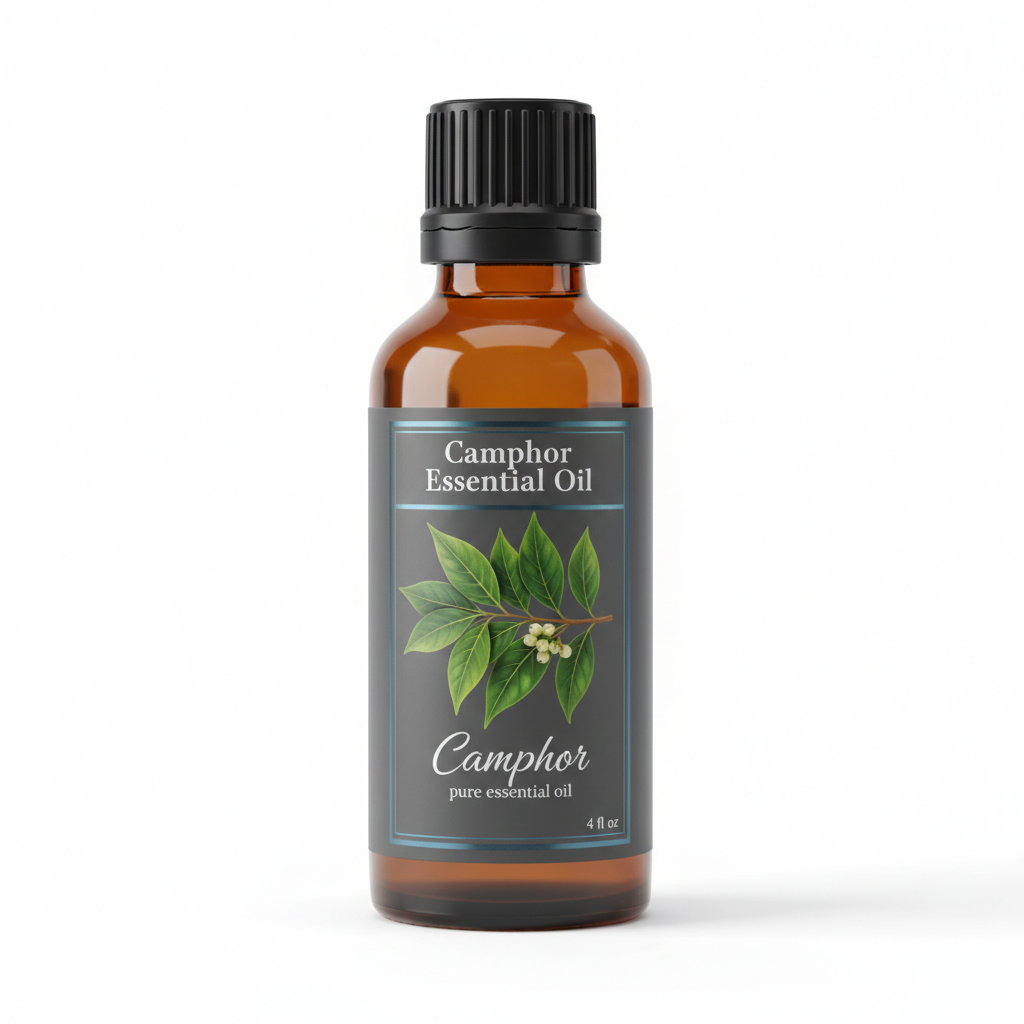
Camphor Essential Oil
Our own Camphor Essential Oil, in sizes from 0.5 oz to bulk.
From $9.99
Shop Now →What each one actually is
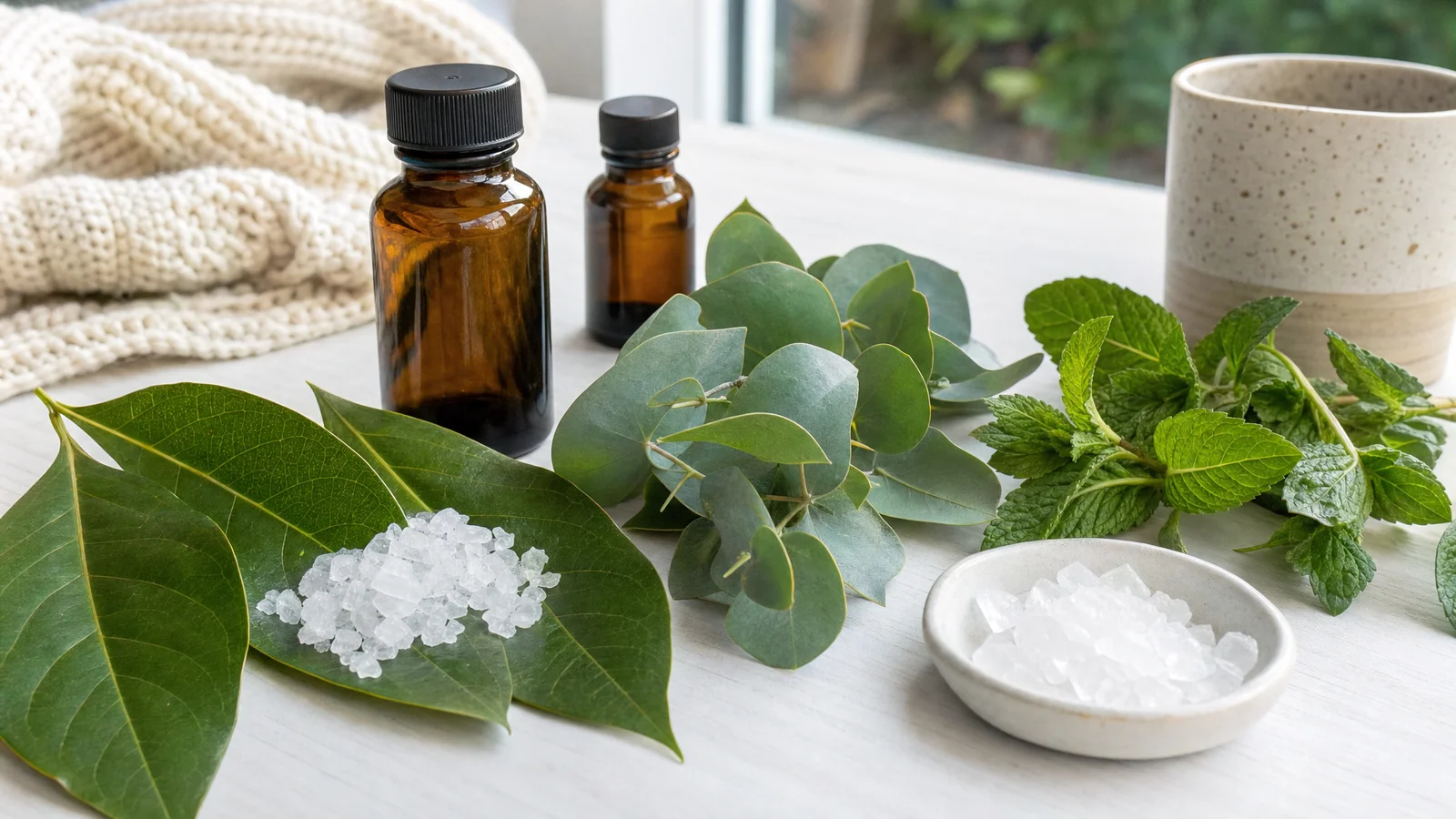
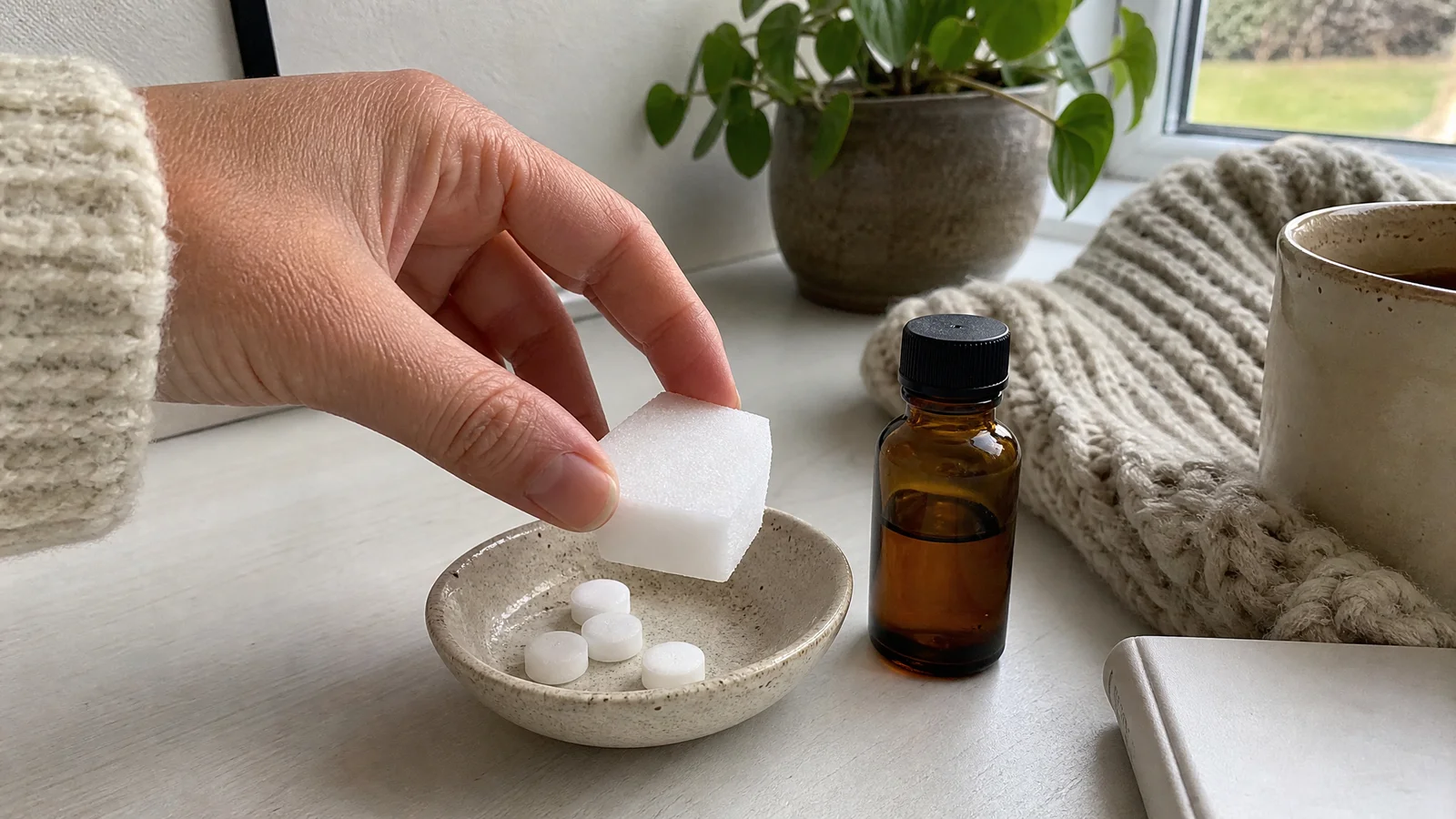
Tablets, cubes and blocks are solid camphor, the crystalline ketone. The INCHEM poison information monograph notes that camphor sublimes appreciably at room temperature and normal pressure (INCHEM, camphor monograph), and that is the whole mechanism of a block: the solid gradually becomes vapor and fills a closed space with its smell. New York City's health department notes camphor is sold as solid cubes or balls, as a balm or ointment, or in vapor-steam products.
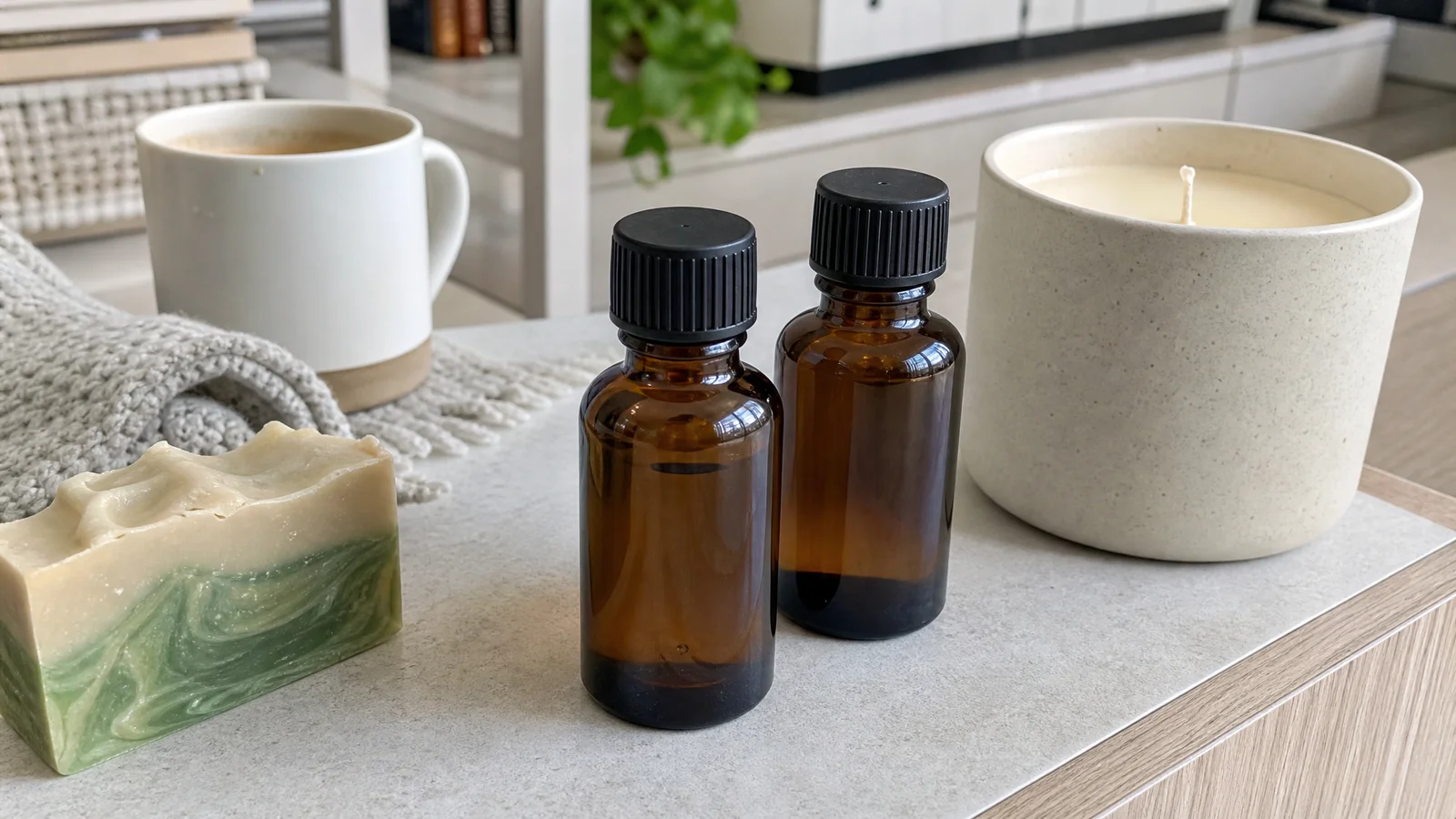
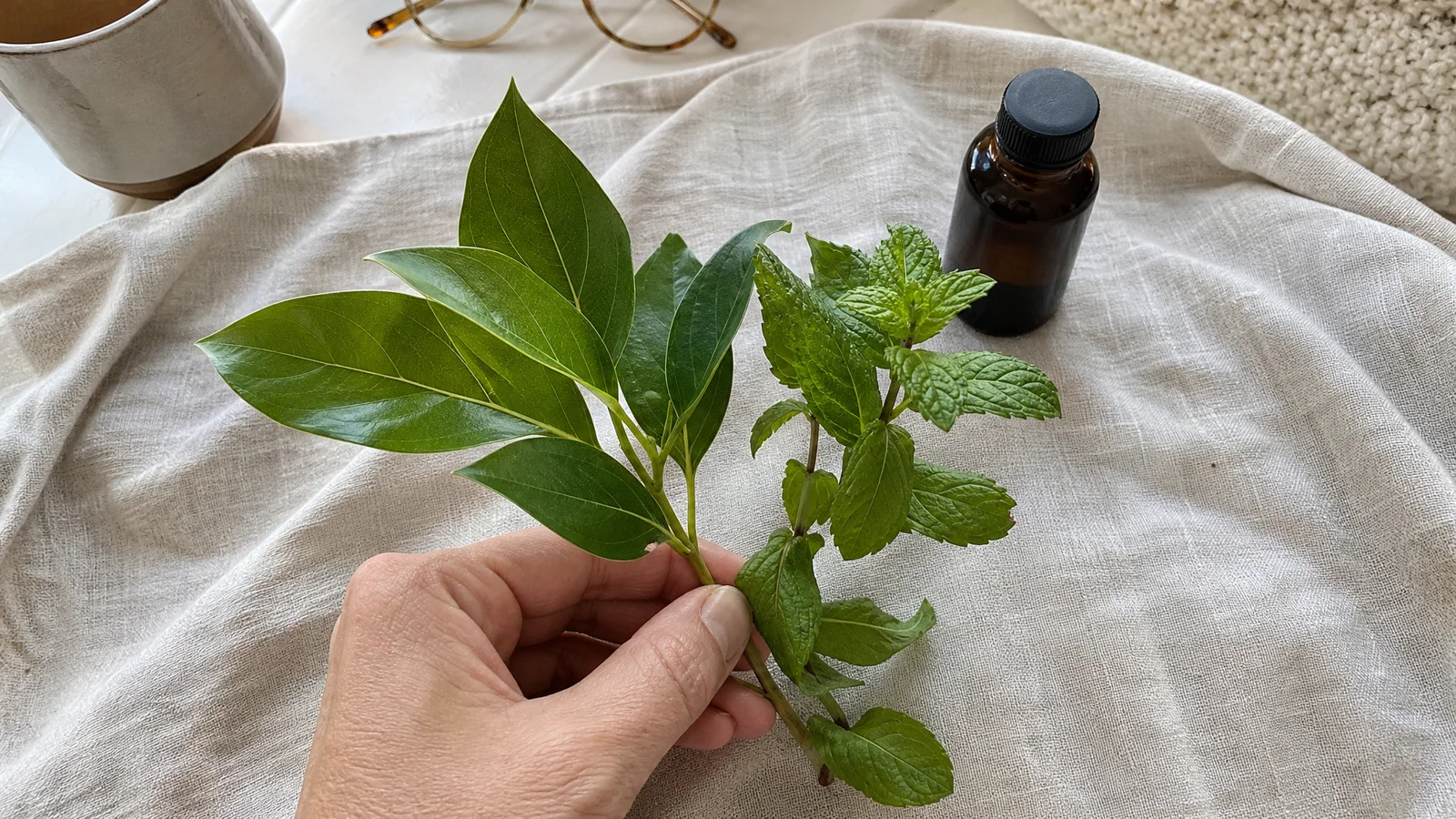
Camphor essential oil is a different material. It is the distillate of Cinnamomum camphora, separated by boiling point. We sell the white fraction, which per the Tisserand Institute contains only a little camphor itself, "up to 9%, more typically 3%" (Tisserand Institute, Cinnamomum camphora). So the oil is not simply liquid camphor, and "camphor oil" and "camphor tablets" should not be treated as interchangeable. Our guide to the different camphor oils explains the cuts.
Choosing by job
| You want... | Format that fits |
|---|---|
| A steady scent inside a closed trunk or drawer | A solid format is built for this, because slow sublimation in a closed space is its mechanism |
| A camphor note you can measure out for a blend, candle, soap or sachet | Oil, because you control it by the drop |
| Pest control | Neither. Use a product whose label says it is for pests |
| A ritual or ceremonial camphor | Ritual camphor is its own category, and our oil is not a substitute |
The adjustability of oil is the argument in its favour. You can use two drops or ten, on a pad, in a diffuser blend or in a sachet, and change your mind next week. A block gives you one strength and one behaviour. We sell oil only, so for blocks, tablets or crystals you will need a supplier that carries them.
It helps to picture each format sitting in your home. A block in a closed trunk is a quiet, set-and-forget kind of scent, and it does the same thing from the first day to the last. A bottle of oil is more like a seasoning: you decide how much, where, and for how long, and you can stop whenever you like. People who love to tinker with scent tend to prefer the second. People who want something fixed and unfussy lean toward the first.
The pest question
People often reach for camphor to protect clothes. New York City's health department advises against using camphor products to control pests, and says pest repellents must meet EPA requirements (NYC Health, Camphor). The vocabulary is tangled too: US mothballs are insecticides whose active ingredient is naphthalene or paradichlorobenzene, not camphor (NPIC, mothballs). So a pack called "mothballs" cannot be assumed to be camphor, and a pack called "camphor" cannot be assumed to be an approved pest product. We make no pest-control claim for our oil; our moth article covers what protects wool, and our closet guide covers the scent side.
Safety does not depend on format
Neither one is for swallowing. The INCHEM monograph reports that toxic effects appear after ingestion of approximately 2 g of camphor. Both formats are dangerous to children, and nothing we have read says one is clearly safer. What differs is how each looks to a child: a small solid cube in a drawer fits in a mouth and can resemble a sweet, while a bottle is harder to open but its contents can be spilled or swallowed. Our advice is the same for both: a closed cabinet above a child's reach, not merely out of sight. If anything is swallowed, call Poison Control at 1-800-222-1222 right away.
The same New York City page gives two more warnings that apply to both. Heating camphor can cause splattering and burns, so do not warm either to speed up its scent. And never add camphor to a humidifier or a bowl of hot water. If you are considering a diffuser, read how to diffuse camphor oil first, and see our safety guide and edible vs regular camphor for more.
Who should wait on either
With young children and nowhere secure to store a camphor product, neither format is a good idea yet. Our oil is a cosmetic aromatic, so for a food ingredient, a medicine or a pest product it is the wrong item, and a pharmacist or pest-control professional is the right one. A storage plan that fits your home matters more than a format that fits your project.
A simple way to decide
Ask yourself three plain questions. What am I trying to scent: a closed container or an open room? Do I want to adjust the strength? And who shares this space? If your answers are an open space, yes, and adults only, oil is the more flexible fit. If the job is a closed trunk and you want a fixed result, a solid is a more natural match, though it comes from a supplier other than us.
Whichever you choose, keep the original packaging, label anything you decant, and store it high and closed. Good habits matter more than the format.
For scent that you want to dial up or down, oil is the format that lets you. For a fixed, closed-space job, a solid is the more natural fit.
Camphor Essential Oil
Camphor Essential Oil from our own shop, in sizes from 0.5 oz to bulk.
From $9.99
Shop Now →Sources & Further Reading
- INCHEM. Camphor poison information monograph. inchem.org
- NYC Health. Camphor. nyc.gov
- National Pesticide Information Center. Mothballs. npic.orst.edu
- Tisserand Institute. Cinnamomum camphora. tisserandinstitute.org