What Is Camphor Oil? Why It Has So Little Camphor
The commonest surprise about camphor oil is that it is not liquid camphor. Camphor itself is a waxy white solid. The oil is a distillate from the camphor laurel, Cinnamomum camphora, and in the cut we sell, the compound that gave the tree its name turns out to be a minor player. Here is how we would explain it to someone standing at our counter.
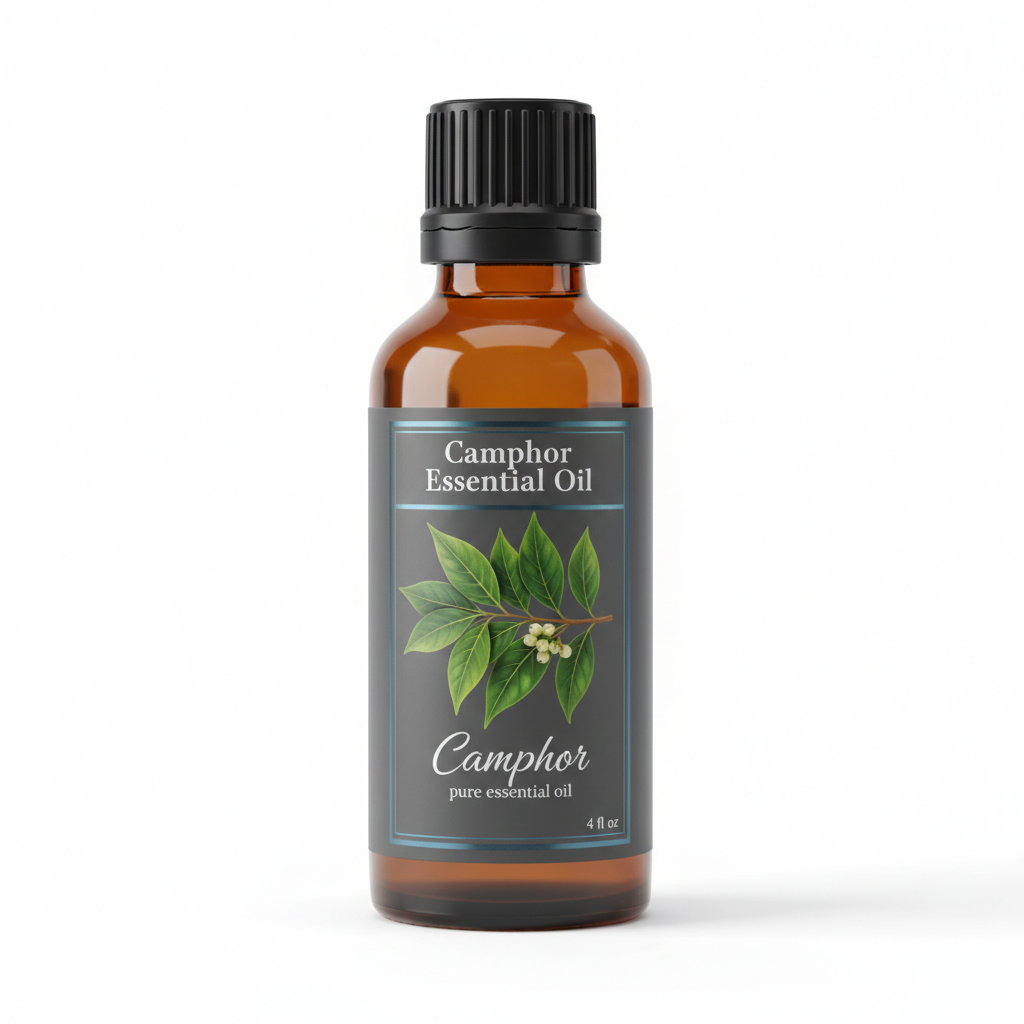
Camphor Essential Oil
Our own Camphor Essential Oil, in sizes from 0.5 oz to bulk.
From $9.99
Shop Now →Three things, one name
People say "camphor" for the tree, the crystals and the oils, but they are three different things made in one chain. The older production route, described in the PROSEA plant-resources handbook, chipped the plant material and steam-distilled it, filtered out the camphor crystals, then rectified the remaining oil under vacuum, which gave up more camphor and a "camphor-free" oil (Windadri and Rahayu, PROSEA, 1999). That camphor-free oil is what gets divided into the commercial oils. In other words, camphor oil is what is left once most of the camphor has been taken out. Our post on how camphor oil is made tells the whole story.
The white cut and its surprise
We sell the white fraction, the lightest cut and the one meant for fragrance and craft work. According to PROSEA, its chief constituent is 1,8-cineole, the molecule that also gives eucalyptus its character, not camphor. The Tisserand Institute puts camphor in these fractions at up to 9 percent, more typically around 3 (Tisserand Institute). That explains the aroma: sharp, cooling and crystalline, with a dry woody base. If you picture a mothball, think instead of a cleaner, brighter, more eucalyptus-leaning relative.
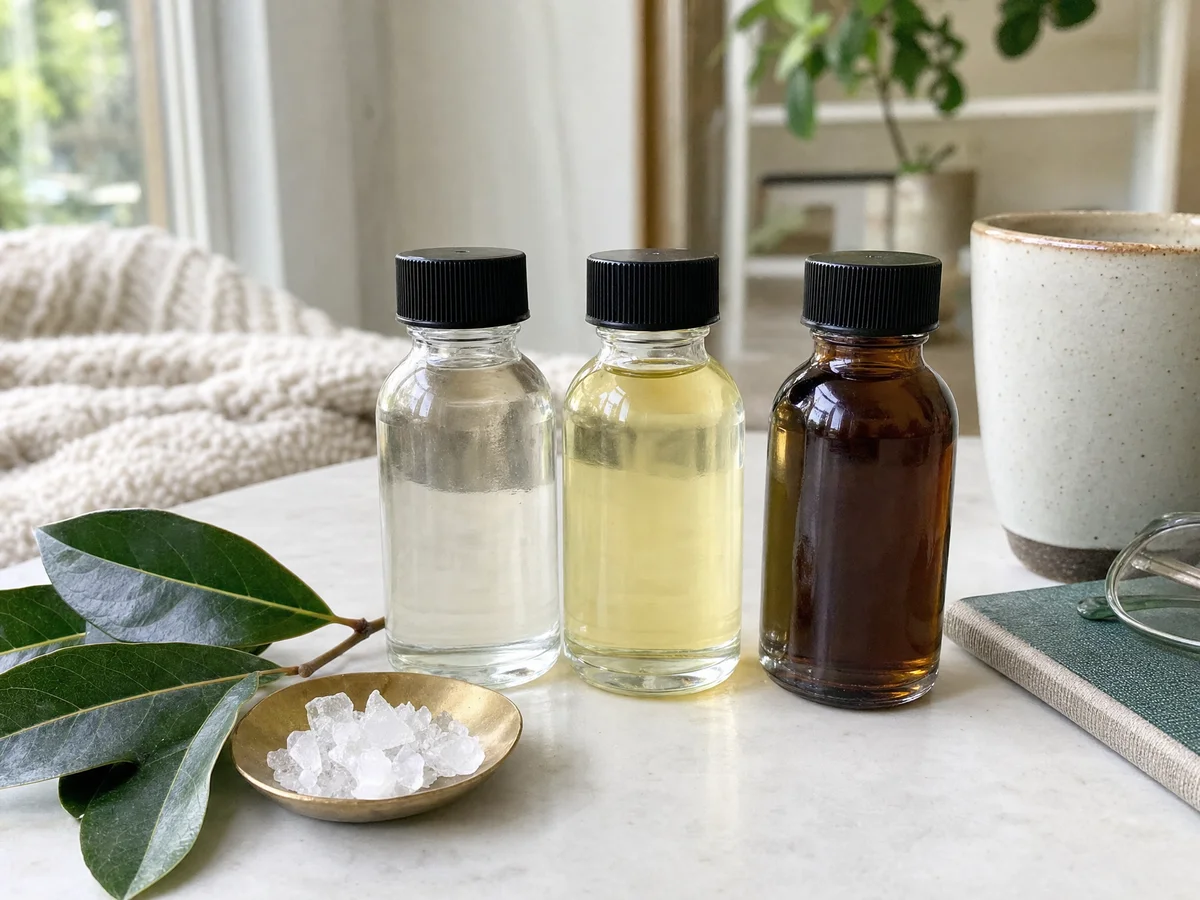
Those are general figures for the trade. The Certificate of Analysis for one of our batches lists a relative density of 0.878, a refractive index of 1.467 and an optical rotation of +5.80 degrees at 20 C. If you need a GC-MS report or a camphor percentage for a lot, ask us in writing through our contact page before you order, and our post on reading a camphor oil GC-MS report shows what to look for.
One tree, several oils
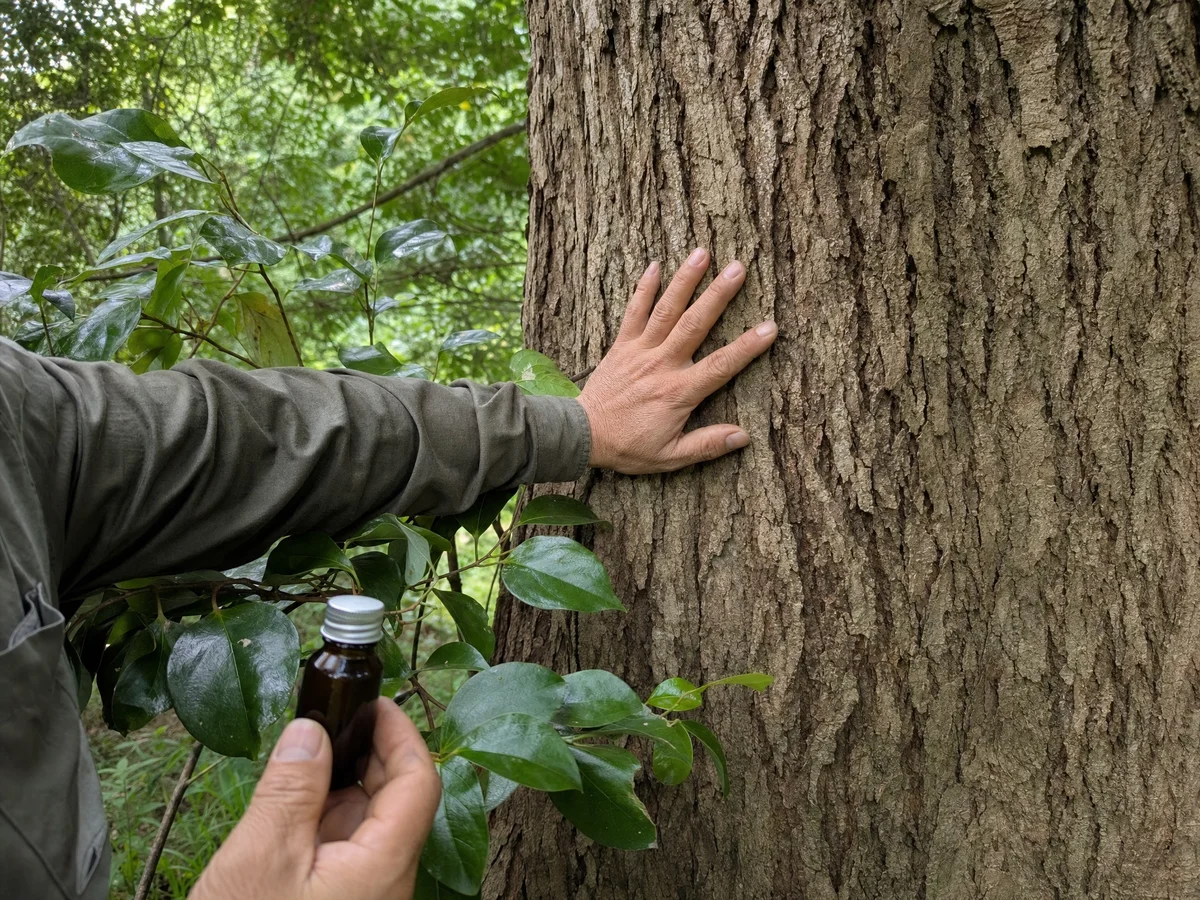
The same species gives other oils too. Ho wood and ravintsara come from Cinnamomum camphora as well, and the tree occurs in many chemical varieties, or chemotypes (Tisserand Institute). A 2023 study in Molecules distilled leaves from 974 trees across 13 Chinese provinces and found some rich in 1,8-cineole, some in camphor, some in linalool and some in trans-nerolidol (Zhang et al., 2023). So the species name alone does not tell you what is in the bottle; the cut and the lot do. Our posts on ravintsara versus camphor oil and Ho wood versus camphor oil sort out the overlap, and white versus brown camphor oil explains why the colour matters.
What it is like to open the bottle
Uncap it and keep it at a distance. The first impression is a clean, sharp lift, cooling and crystalline, and then a dry woody base shows up underneath. Because it is a top note it arrives quickly and fades just as fast, so we find it is best met on a paper strip rather than straight from the neck of the bottle.
What we use it for
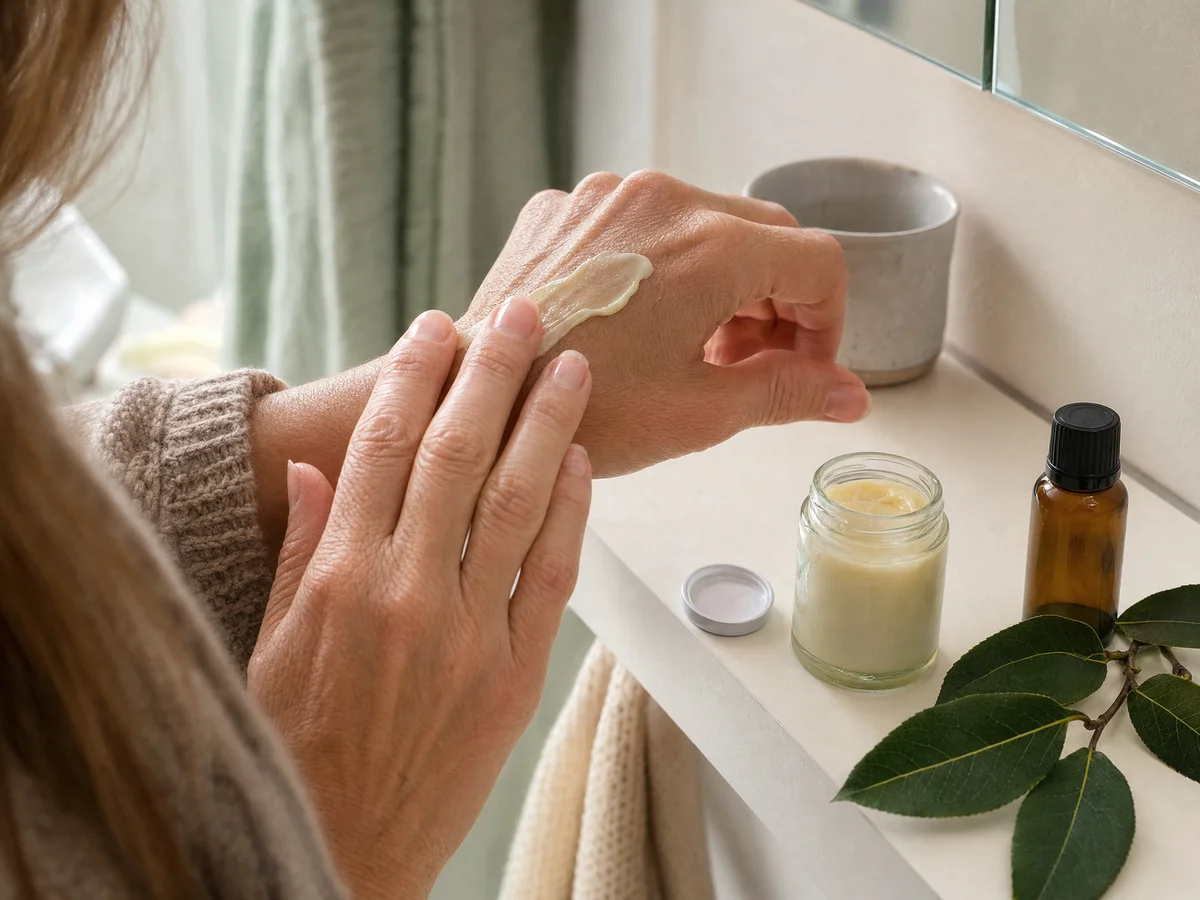
We describe camphor oil as a top note and a blend amplifier: a drop or two sharpens lavender, rosemary, eucalyptus, peppermint, cedarwood and citrus oils. People use it in diffuser blends, wardrobe sachets, candles, soap and, well diluted, in massage oils and homemade skincare. It is an aromatic and cosmetic material, and we make no medical claims for it. If you have a cough, an ache or an itch, a pharmacist or physician is the right person to ask. We also do not sell camphor blocks, tablets, rubs or balms, which are different products. To see how it behaves in a blend, why camphor oil feels so cool is a good next read.
Who it suits
Camphor oil suits people who like crisp, cool-leaning scents and enjoy blending. If you like soft, sweet aromas, it may be more of a seasoning than a favourite, and that is perfectly fine. Many of the oils we love best are ones we use a drop at a time.
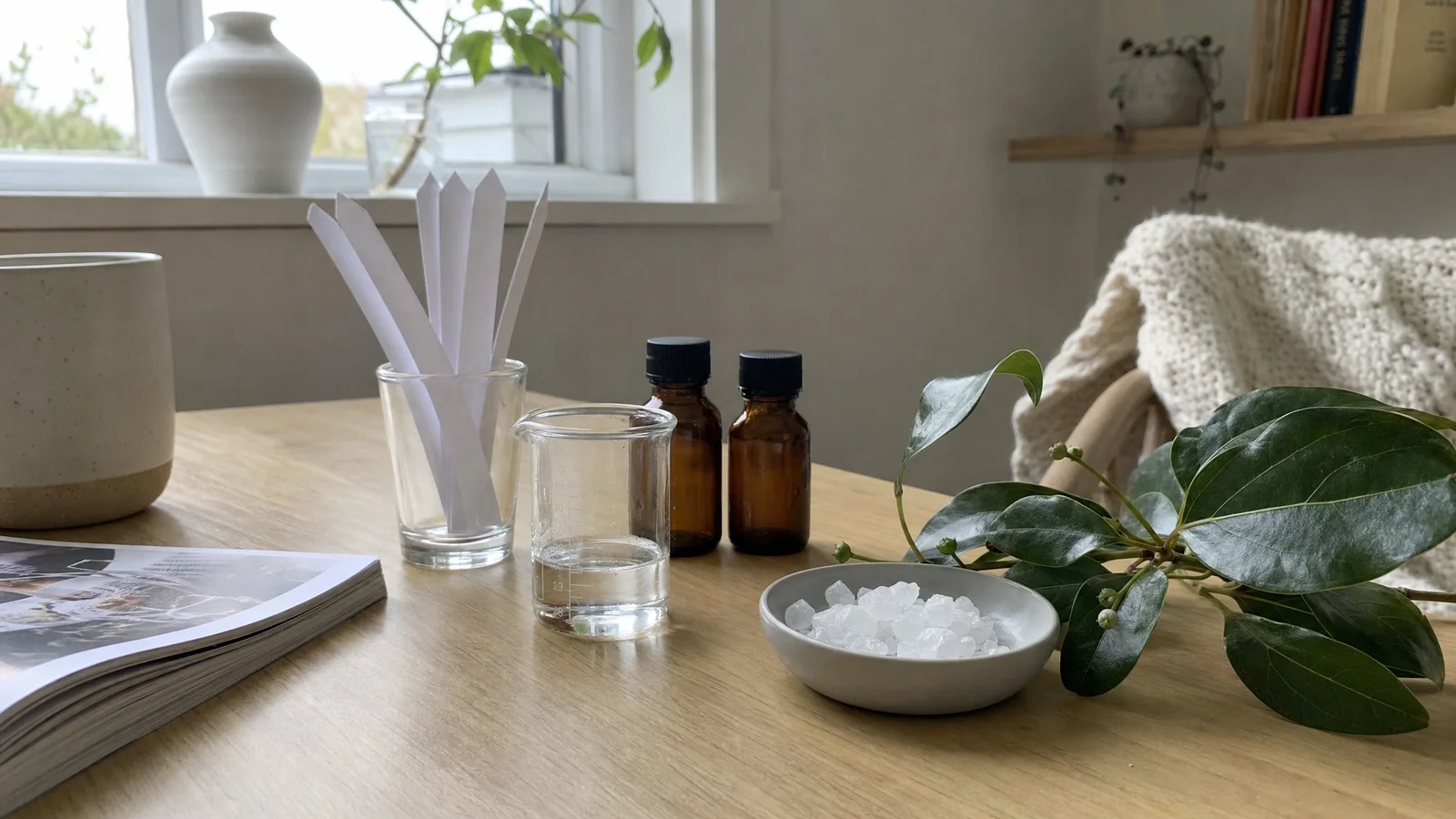
If you are new to it, start with one drop on a strip and a second strip with lavender or citrus beside it. Smell, wait a minute, smell again, and decide how much a blend of yours could take.
A word on care
Camphor is potent. We recommend diluting to 0.5% to 2% in a carrier oil before any skin contact, with a patch test first, keeping it away from the eyes, and never swallowing it. It is neurotoxic in quantity, so we do not use it around infants and young children, and anyone with a seizure history should skip it. Store it tightly capped in a cool, dark place, where it typically keeps two to three years.
It is a classic for a reason: a little goes a long way, and nothing else smells quite as crisp.
Camphor Essential Oil
Camphor Essential Oil from our own shop, in sizes from 0.5 oz to bulk.
From $9.99
Shop Now →