Camphor Essential Oil vs Fragrance Oil for Crafts
Put a bottle labelled "camphor essential oil" next to one labelled "camphor fragrance oil" and they look like cousins. They are not. One is a distillate of a named tree, the other is a scent that someone composed, and the name on the front does not tell you what is inside either one.
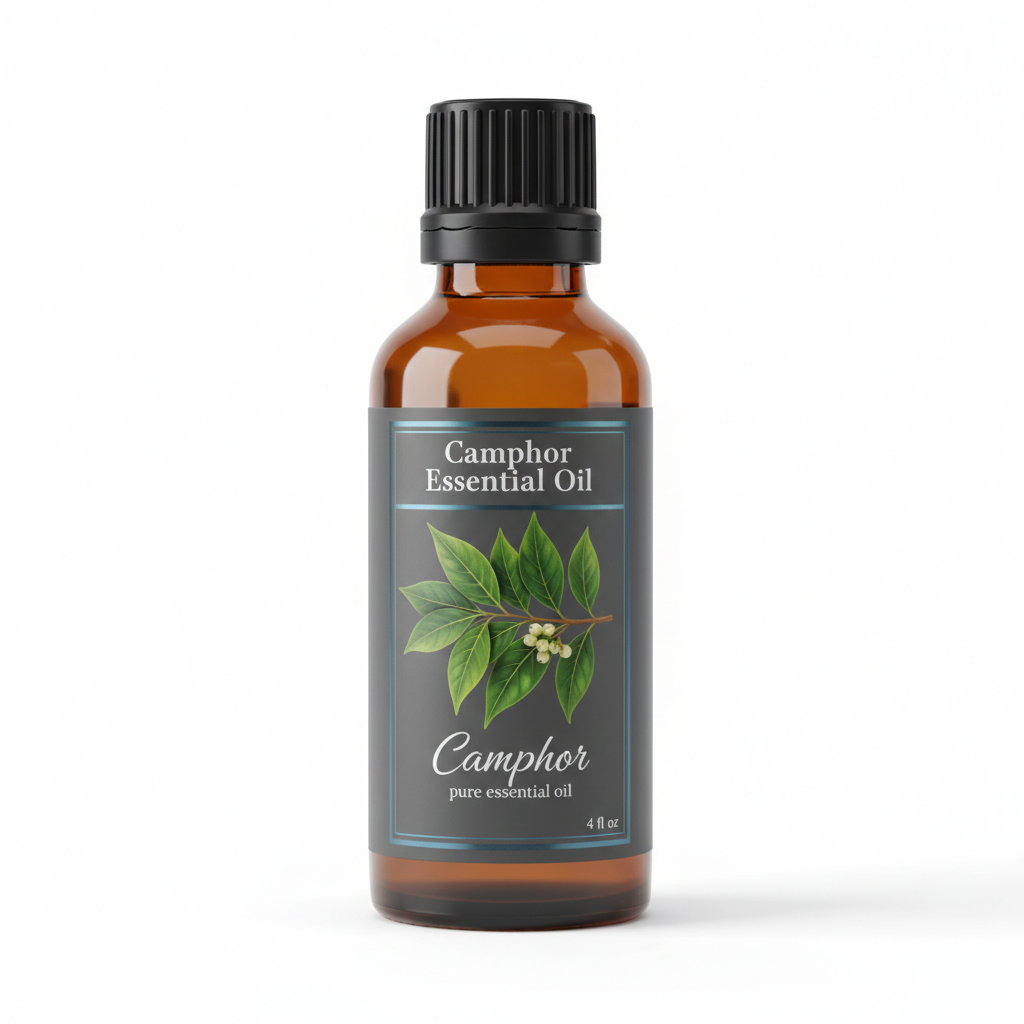
Camphor Essential Oil
Our own Camphor Essential Oil, in sizes from 0.5 oz to bulk.
From $9.99
Shop Now →Two kinds of ingredient behind one word
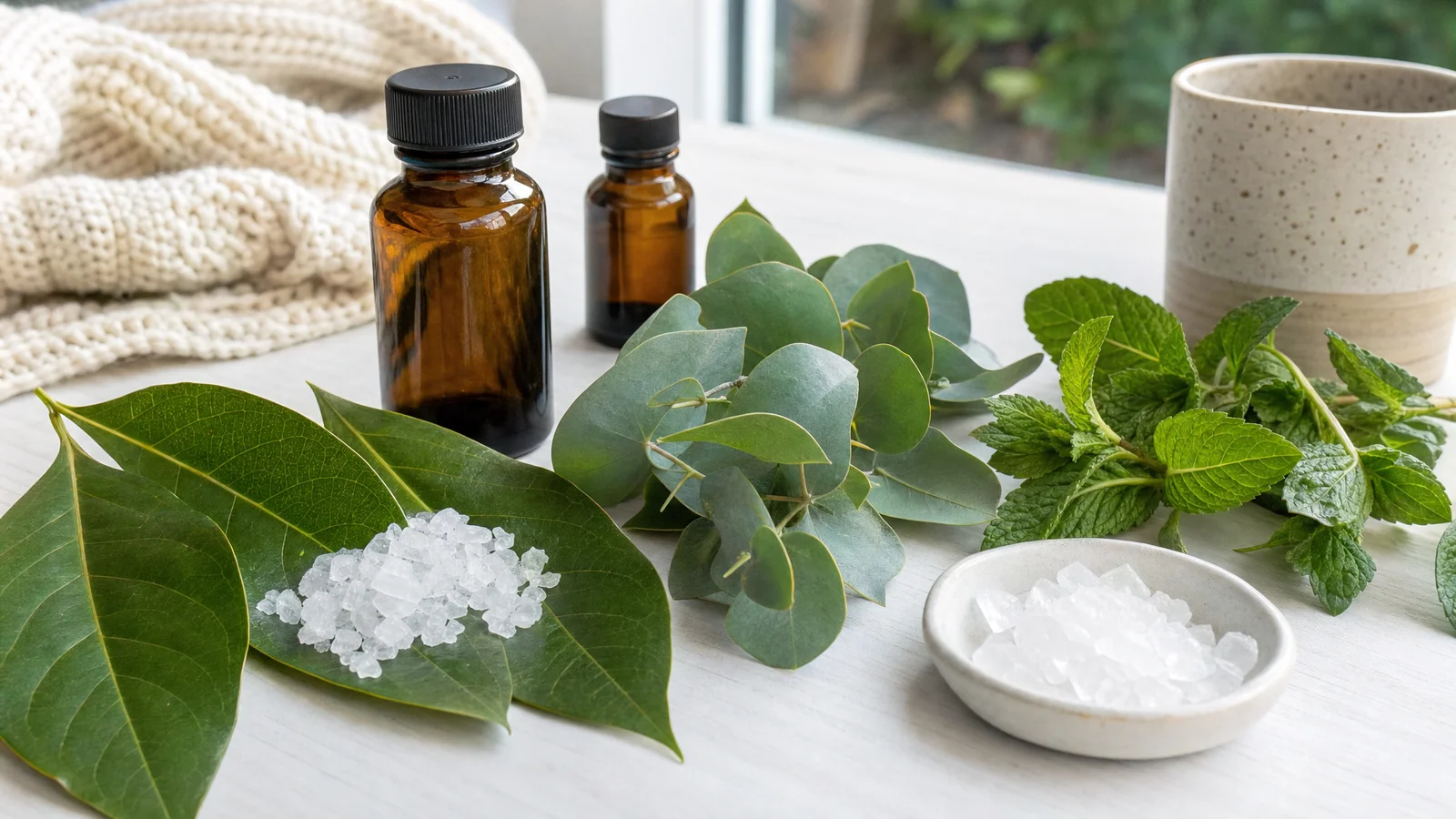
We sell camphor essential oil from Cinnamomum camphora, the white fraction, steam-distilled. When you buy it you know the plant, and you can ask us for a report on a specific lot. A fragrance oil plays by different rules. Reference works describe it as a blend of synthetic aroma compounds, natural essential oils, or both, usually diluted in propylene glycol, vegetable oil or mineral oil (Wikipedia, Fragrance oil). A "camphor" fragrance oil may contain very little of anything from the camphor tree.
It helps to know that the smell most people call camphor is a bit of a misnomer in the white oil anyway. White camphor oil is the light cut taken after the camphor crystals have been removed, and its chief constituent is 1,8-cineole, the eucalyptus-like molecule, with little actual camphor in it (PROSEA, Windadri and Rahayu, 1999). The Tisserand Institute puts camphor in these fractions at up to 9 percent, more typically about 3 (Tisserand Institute). So even the real thing is sharper and more eucalyptus-leaning than the mothball smell you may be picturing. The story of the cuts is in our white versus brown explainer.
What a label gets to leave out
The FDA explains that cosmetic labels can simply say "Fragrance" in place of individual ingredients, that formulas are treated as trade secrets, and that the agency does not have the same authority to require allergen labelling on cosmetics that it has for food (FDA, Fragrances in Cosmetics). That is not a flaw in fragrance oils, just how they work. With a fragrance oil you rely on the supplier's disclosure sheets. With an essential oil you can name the plant on your ingredient list and, if you need the chemistry, ask for a lot report. Either way you have to ask.
Smell them side by side
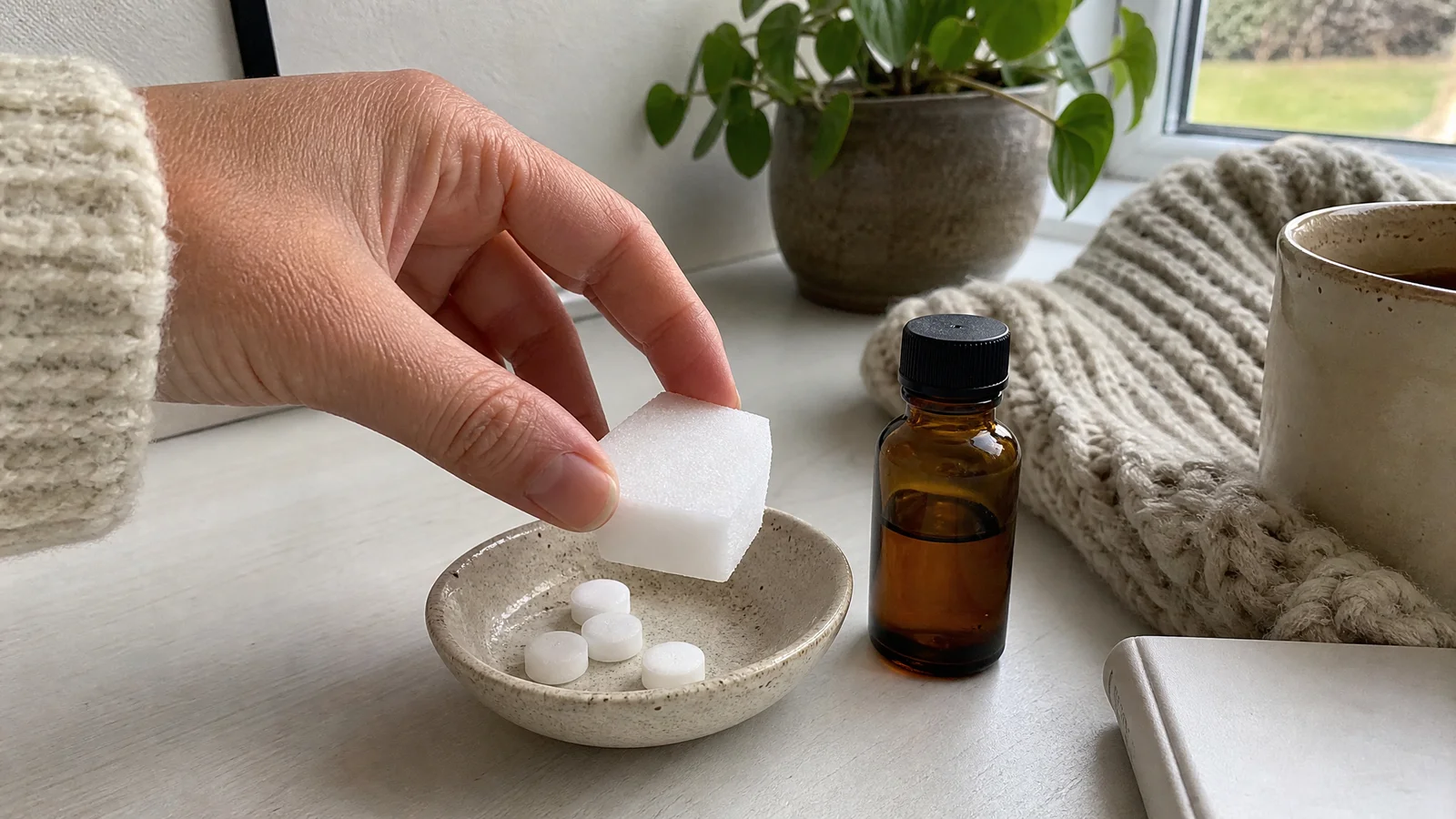
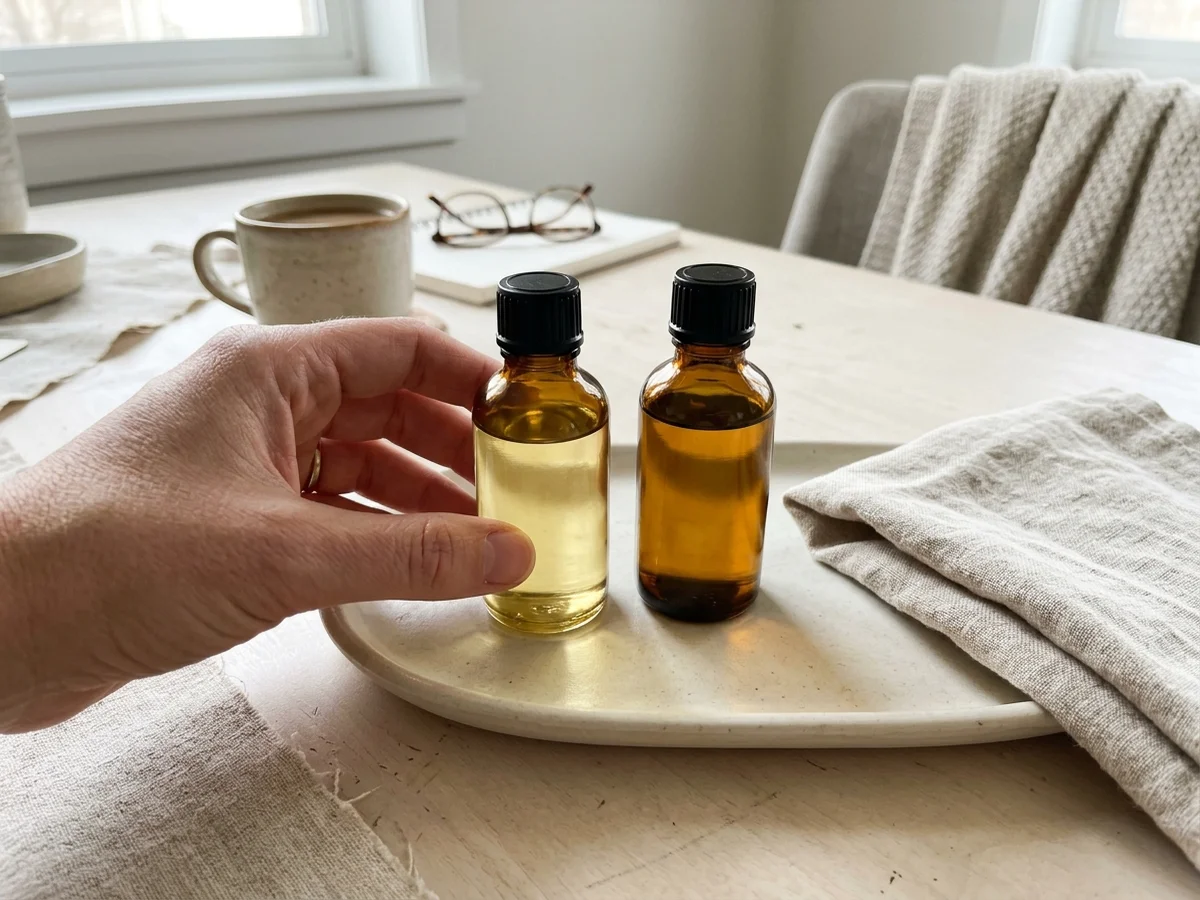
If you can get both in front of you, do this small exercise: put one drop of each on separate paper strips, label them in pencil, and wait a minute. Smell the first strip, then rest your nose, then smell the second. A fragrance oil often arrives fully formed, smooth and consistent from the first second. An essential oil tends to change as it sits, opening one way and drying down another. Neither is a better smell, but each one behaves like what it is, and it helps to know which behaviour you are looking for in a finished candle or soap.
Choosing by project
Here is how we would think about it, project by project.
- Anything with an ingredient list. If your own buyers expect botanical names, the essential oil fits and a fragrance oil does not. Fragrance goes under one word, and any allergens the supplier discloses become yours to track.
- Anything that touches skin. Our guidance for the essential oil is 0.5% to 2% in a carrier oil, after a patch test. Before you build a product to sell on that number, check the current IFRA standard for your product type. A fragrance oil has its own limit, set in the supplier's IFRA documentation for that exact product, so never carry one oil's number over to the other. Camphor oil for skin and FDA camphor rules go into the details.
- Candles. What matters is the maximum fragrance load and the temperature at which to stir the scent in, and both come from the data sheet for that exact oil, plus a rest period and a test burn on your wax. Our candle scenting post walks through the method, and burning camphor at home is worth a read before heat is involved.
- Room diffusers. Everyone in the room breathes what you diffuse, so the oil's own profile matters. Camphor is neurotoxic in quantity and is not for infants or young children, so we keep it out of rooms where they spend time. See how to diffuse camphor oil.
- Soap and bath products. These have their own chemistry and their own supplier rules, and a soap-making supplier is the right source for load rates.
Keep your notes
When you decide, write it down. A craft notebook with the oil, the supplier, the lot number, the amount and the date saves enormous trouble later, especially if you ever have to repeat a batch or answer a customer's question. It is a dull habit and a deeply useful one, and it applies equally to a fragrance oil and an essential oil.
Where we land
If you like to know what is in your products and can name it, the essential oil is the straightforward choice, and a few drops go a long way because the oil is thin and volatile. If you want a camphor-ish scent at a particular price or with a particular staying power, a fragrance oil from a supplier who sends full documentation is a legitimate craft ingredient too. The mistake would be to treat them as interchangeable in a recipe. Pick one, read its data sheet, and write your label to match.
Whichever you choose, smell it on a paper strip before it goes anywhere near a batch. Your nose will tell you quickly whether it has the dry, cool lift you are after.
Camphor Essential Oil
Camphor Essential Oil from our own shop, in sizes from 0.5 oz to bulk.
From $9.99
Shop Now →