FDA Camphor Rules: What the 11% Limit Really Means
People often say the FDA caps camphor at 11 percent, and just as often that it banned camphor oil. Neither is quite right, and the real story is more interesting: one rule is about a drop-in-the-medicine-cabinet mix-up from the 1970s, the other is a ceiling that applies to approved external drug products. Neither is aimed at an aromatic oil sold for fragrance and craft.
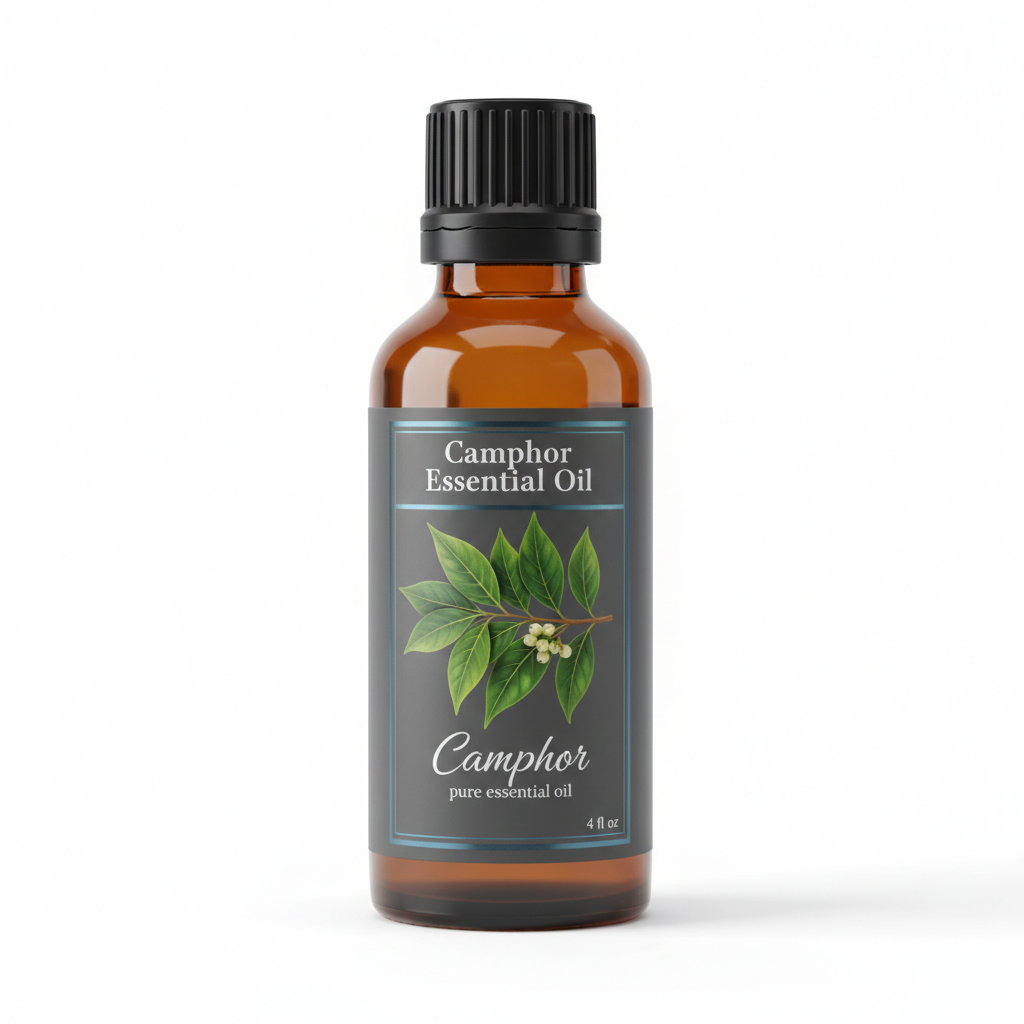
Camphor Essential Oil
Our own Camphor Essential Oil, in sizes from 0.5 oz to bulk.
From $9.99
Shop Now →The 1982 rule: a story about mistaken bottles
The camphorated oil rule was not really about skin. It was about swallowing. Camphorated oil was an old home remedy, camphor dissolved in oil, and it was an amber, slightly viscous liquid that looked a lot like castor oil. The FDA's final rule, published on September 21, 1982 (47 FR 41716), cites 706 ingestions reported to poison centers between 1974 and 1978 and another 130 in 1979, 38 of them judged toxic.
The detail that stays with you is how those poisonings happened. Of 32 incidents where the cause was known, 28 were confusion with another product, and in 20 of those the other product was castor oil. Adults mistook one bottle for the other, and sometimes gave it to a child.
The agency weighed other fixes: a different color or container, child-resistant caps, stronger warnings, prescription-only sale. It concluded that adequate directions and warnings "cannot be written" for a product with such a long history of mix-ups, and made camphorated oil drug products misbranded new drugs, effective immediately. Now listed in 21 CFR 310.502, the rule applies to drug products labeled or represented as camphorated oil, which includes the names "camphor liniment" and "camphor oil" when used for such a product. Some secondary sources date the ban to 1983; the Federal Register and the FDA's own rulemaking history say 1982.
Where the 11 percent comes from
The 11 percent figure belongs to a different document. Over-the-counter external pain-relief products fall under an FDA monograph (M017), which allows camphor from 0.1 to 3 percent, and "exceeding 3% to 11%" as a cooling counterirritant ingredient. The number traces back to a 1979 advisory panel, which judged preparations of 3 to 11 percent camphor acceptable as counterirritants.
Here is the nuance worth remembering. In 1982 the FDA turned down requests to keep camphorated oil on the market at 3 to 11 percent, because the swallowing hazard did not go away at those strengths. It pointed to a 3-year-old who had a convulsion after swallowing an estimated 0.7 gram of camphor from a product with about 5 percent camphor. So 11 percent is a ceiling for an approved topical product category. It is not a line below which camphor is safe to swallow or hand to a child, and it is not a limit on essential oils, which are not drug products.
Drug rules and aromatic oils are different shelves
Whether something is a drug depends on what it is said to do. The FDA looks at claims in labeling, advertising and online, and at a product's reputation. A fragrance and craft oil with no drug claims is a different thing from a camphorated oil drug product. We sell Camphor Essential Oil as an aromatic and cosmetic material, and we make no drug claims for it. We are not lawyers, and anyone selling or importing camphor products should check the labeling with a regulatory professional.
The practical lessons are the same ones the FDA drew in 1982. Camphor products are not for swallowing, and a bottle should say plainly what it is. A 2009 Pediatrics report on a cluster of toddlers with seizures from camphor poisoning in the Bronx found that many imported camphor products did not meet US labeling and content requirements. If a camphor product has no ingredient list, makes drug claims without a Drug Facts panel, or suggests taking it by mouth, put it back on the shelf.
Our article on swallowing camphor oil covers why that route is the dangerous one, and our safety overview and the children article go further. If you are curious how store-bought rubs read on their labels, see camphor rubs compared.
A habit for reading rules
Rules like these are easy to repeat and easy to garble. The 11 percent line in particular gets passed around as though it were a universal safety number, when it belongs to one category of approved products. When you meet a claim about what the FDA allows, we suggest asking three things: which product category it covers, what year the rule is from, and whether the person repeating it has read the text. The Federal Register entries are public and surprisingly readable once you find the right page.
Reading a camphor label
A drug product carries a Drug Facts panel with the active ingredient and its percentage, the words "For external use only," and an age warning. The monograph's labeling tells adults and children 2 and older how often to apply it and says to ask a doctor for children under 2. An aromatic or cosmetic oil should show an ingredient name and an honest description of what it is, with no instructions to use it for a condition.
Why a small seller reads the fine print
We are a small business selling one oil, and we like knowing where the lines are drawn. It keeps our descriptions plain: what the oil is, what it smells like, how to handle it carefully. That is the whole job of a label, and the 1982 story is a good reminder of what can happen when a bottle fails at it.
Rules change, so check the current text of the monograph and 21 CFR 310.502 yourself before relying on any summary, including this one.
Camphor Essential Oil
Camphor Essential Oil from our own shop, in sizes from 0.5 oz to bulk.
From $9.99
Shop Now →Sources & Further Reading
- Federal Register, Sept. 21, 1982 (47 FR 41716): New Drugs; Camphorated Oil Drug Products for Human Use, final rule
- FDA: Rulemaking history for OTC camphorated oil drug products
- FDA OTC Monograph M017: External analgesic drug products (posted May 2, 2023)
- 21 CFR 310.502: Certain drugs accorded new drug status through rulemaking procedures
- FDA: Is it a cosmetic, a drug, or both?
- Khine et al. 2009, A cluster of children with seizures caused by camphor poisoning, Pediatrics 123(5):1269-1272