Using Camphor Oil on Skin: Dilution and Patch Tests
Camphor oil smells so clean and cool that it is easy to forget how concentrated it is. Skin is where most people first get into trouble with any essential oil, and camphor, with its strong sensory punch, deserves a slower approach than a gentle floral would.
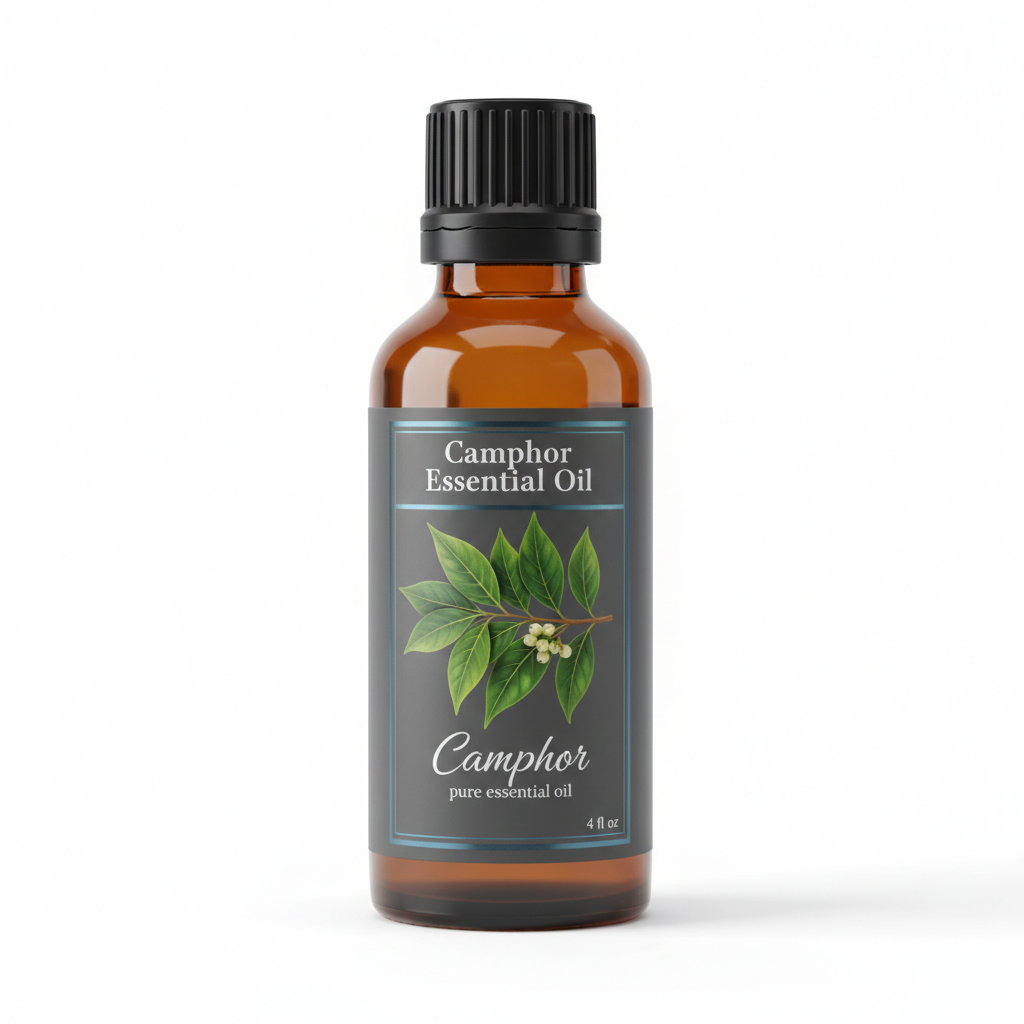
Camphor Essential Oil
Our own Camphor Essential Oil, in sizes from 0.5 oz to bulk.
From $9.99
Shop Now →Start with what the oil is
We sell one camphor oil, Cinnamomum camphora, neat and undiluted. Because it arrives concentrated, the first rule is the same one we give for every use: dilute it. Our guidance is 0.5% to 2% in a carrier oil before any skin contact. In practice that is roughly 3 to 12 drops in an ounce of carrier, using the rough convention of 20 drops to the milliliter. Drop sizes vary, and Tisserand Institute notes that studies found anywhere from 20 to 40 drops per milliliter, so treat that as an estimate and lean low. For general skin use, check IFRA standards for your own formulation if you are making something to share or sell.
Slow and boring is the goal
If you've ever tried a new skincare product and wished you had gone slower, you'll understand the approach we're describing. Camphor is a strong-minded oil, and the best way to meet it is with the least exciting method possible: a small batch, a low dilution, one new thing at a time.
Mix a very small amount in a clean container, label it with the date and the ratio, and make a note of what carrier you used. A scribbled label is the difference between a mix you can repeat and one you can only guess at later.
A patch test is not optional
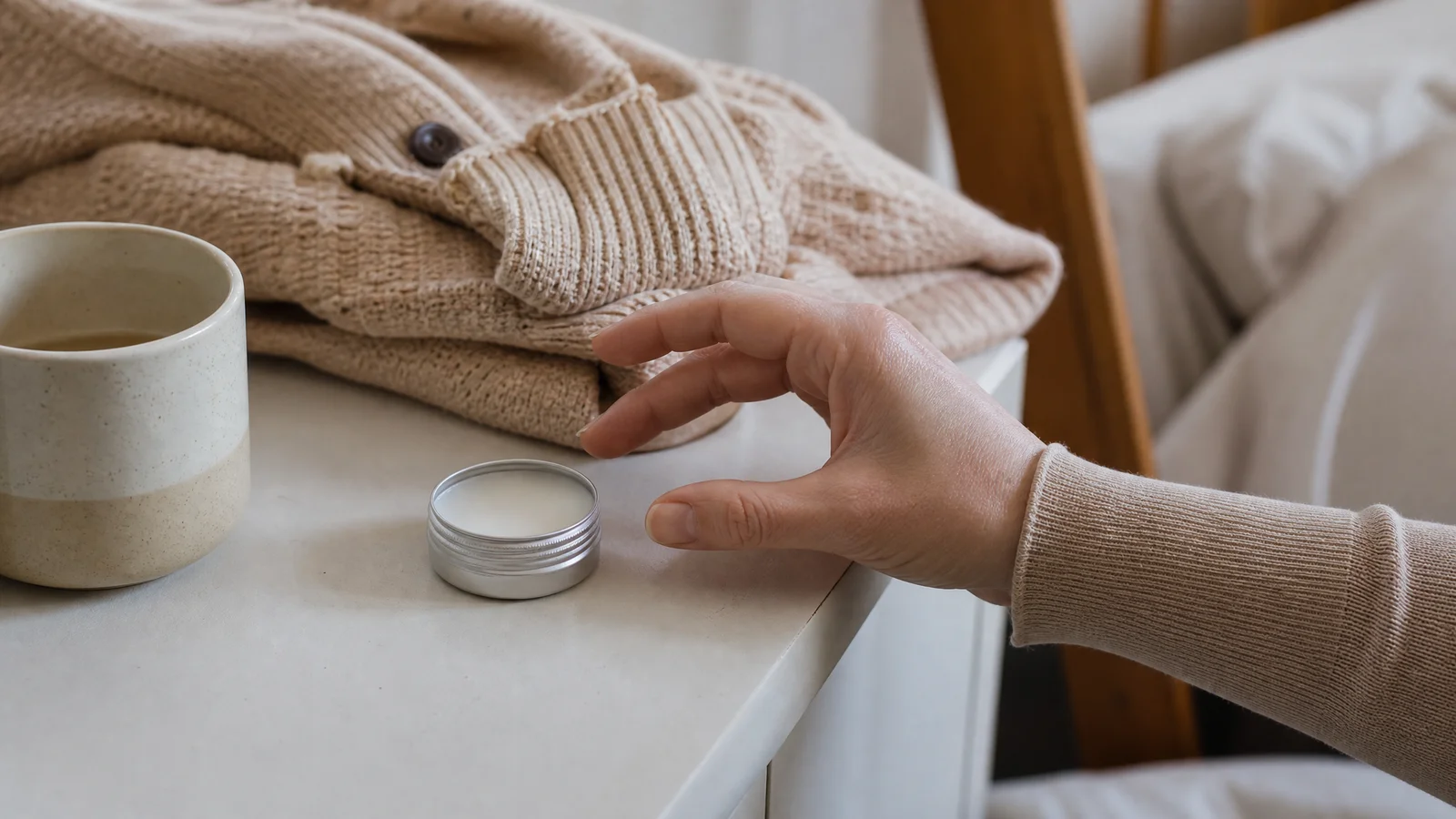
Camphor can irritate, and allergy to it is rare but documented. The American Academy of Allergy, Asthma and Immunology notes only a few case reports of allergic contact dermatitis to camphor products, and adds that a negative prick test does not rule it out. So the practical test is simple: put a small amount of your diluted mix on a spot such as the inner forearm, leave it, and watch for redness, itching or any stinging over a day. If anything shows up, wash it off with soap and water and stop.
After the patch test, give the mix another day or two before using it more widely. You are looking for a quiet, uneventful result. If your skin does nothing at all, that is a good sign.
The sensation is not the point
People often judge a camphor product by how strongly it tingles. That is the wrong measure. The tingle comes from camphor switching on cold-sensing receptors in the skin, as lab studies on the TRPM8 channel have described, and a stronger feeling does not mean a better or a safer product. If it stings, it is too much. Dilute further, or leave it off.
Smell it before you wear it
Skin is also where scent lingers, and a camphor note can be surprisingly persistent. Before you blend a body oil, open the bottle and think about whether you'd like that sharp, cooling, woody smell around you for hours. You may find that you prefer it as a faint background note, which usually means going to the low end of the dilution range, not the high one. A little goes a long way, and a lightly scented oil is far more pleasant than a loud one.
Pairing it with something soft, like lavender, can round off the edges for anyone who finds camphor on its own a bit stark.
Keep a clean, short routine around it
Wash your hands after you handle a diluted mix, and before you touch your face. Use a clean dropper or pipette, wipe the neck of the bottle, and recap it straight away; camphor is volatile, and an open bottle gives up its sharp top note first. If you use a dish to mix, rinse it well afterward, because the scent clings to glass and plastic longer than you might expect.
Where we would not put it
- Near the eyes, inside the nose or on the lips.
- On broken, inflamed or freshly shaved skin.
- On or near children. The Royal Children's Hospital describes camphor as readily absorbed through skin, and our own advice is to keep this oil away from them entirely.
- Anywhere under heat, such as hot compresses or bandaged wraps.
- If you are pregnant, nursing, or have a seizure history, ask your physician before using camphor in any form.
Do not expect cosmetic miracles. We do not make claims about what camphor oil does for the skin itself, and the research on camphor as a skin ingredient is mostly about finished over-the-counter products, not cosmetic oils. What you can count on is a crisp, cooling, slightly woody scent, which is a perfectly fine reason to blend it into a lightly scented body oil you use with care.
For related questions, how to patch test camphor oil covers the steps, camphor oil and acne and camphor for itching take on two common skin questions, and best carrier oils for camphor oil helps with the base. Our safety overview covers the rest.
Camphor rewards respect. A weak dilution, a patch test and a clear idea of who should sit this one out will get you a lot further than enthusiasm will.
Camphor Essential Oil
Camphor Essential Oil from our own shop, in sizes from 0.5 oz to bulk.
From $9.99
Shop Now →