Ho Wood vs Camphor Oil: The Linalool Cousin
Ho wood and camphor oil come from the same species, Cinnamomum camphora, but are different materials. Ho wood is a linalool-led oil, rectified to reduce safrole. Camphor oil, in the white fraction we sell, is a cut of the distilled wood oil led by 1,8-cineole. Their scents, risks and buying questions differ.
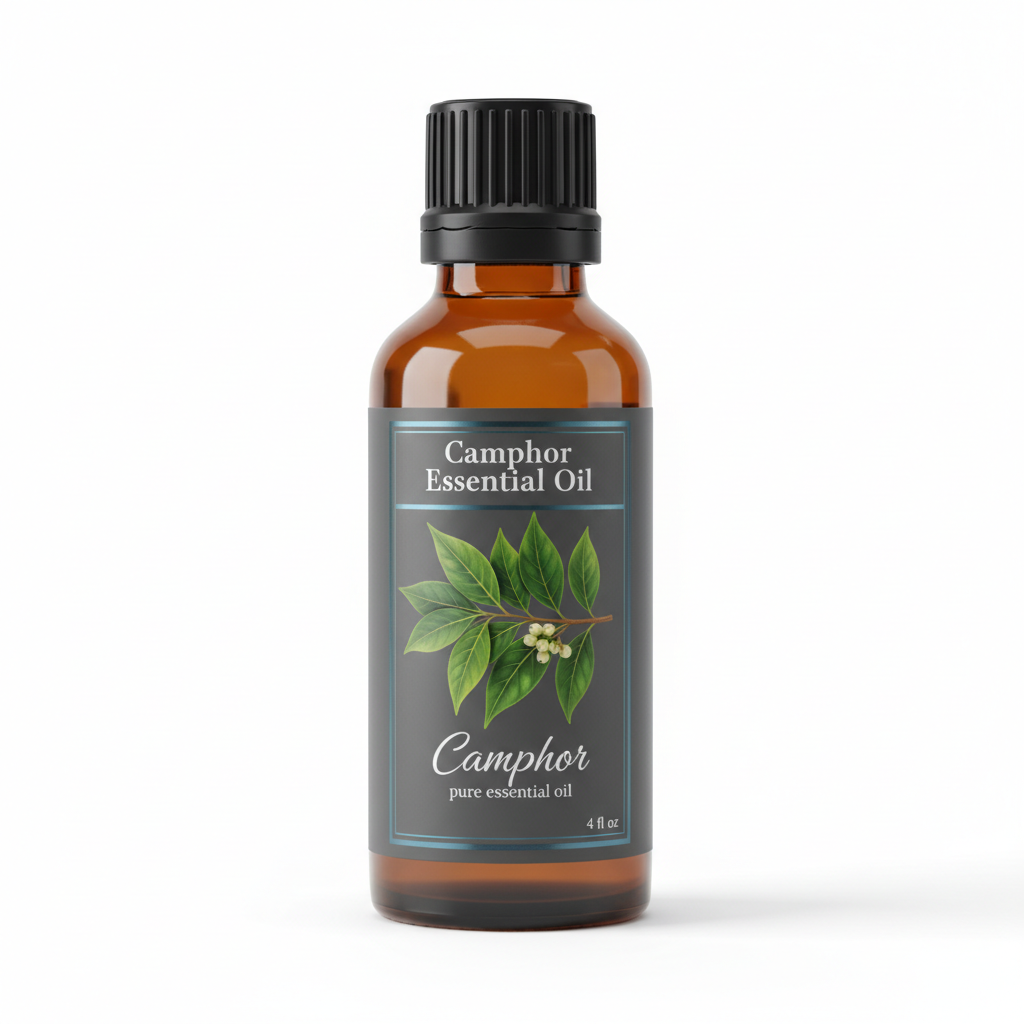
Camphor Essential Oil
Our own Camphor Essential Oil, in sizes from 0.5 oz to bulk.
From $8.69
Shop Now →The two get linked because the Tisserand Institute points out that ho wood, ravintsara and camphor oils all come from the same plant (Tisserand Institute). That is true and also a trap, because it invites the idea that they are variations of one oil. This page compares them as materials: what leads the chemistry, what each is mainly asked about when buying, and where the reasoning stops. We sell camphor oil only, we do not sell ho wood, and nothing here is advice for a health condition. For the full map of names, see our guide to the types of camphor oil.
Same tree, different oil
A tree species makes whichever oil its genetics dictate, and Cinnamomum camphora is unusually variable. A 2023 survey of leaf oils from 974 wild trees across 13 Chinese provinces found 140 linalool-type trees, about 14%, with linalool ranging from 11.23% to 96.45% of the oil and a mean oil yield of 1.55%. The most common type in the same survey was the eucalyptol (1,8-cineole) type, with 249 trees, and 153 were camphor types (Zhang et al. 2023). Those are research leaf oils, so they show the spread of what a tree can make, not what a commercial ho wood bottle holds. A review of the species quotes just 26.6% linalool in one linalool-type leaf oil, from a different study (Lee et al. 2022), which shows how wide the range of a "linalool type" can be. Our chemotype article goes through the whole family.
The trade has a name for this. PROSEA says the market recognises three main groups of oil from the species, true camphor oil, ho oil and apopin oil, and that Taiwan oil is mainly linalool or safrole while Japanese oil is mainly safrole (PROSEA). Notice what that says about Taiwan: a linalool oil and a safrole oil can come from the same island. Ho wood is the linalool one, and the Tisserand Institute says ho wood oil is rectified to reduce its safrole content. So the first buying question for ho wood is the same one we ask of camphor oil: where is the safrole?
The side-by-side table
| Ho wood | White camphor oil | |
|---|---|---|
| What it is | Linalool chemotype of Cinnamomum camphora, a ho oil group | Light fraction cut from distilled camphor wood oil |
| Main constituent | Linalool | 1,8-cineole (PROSEA) |
| Camphor content | Not stated in our sources | "Up to 9%, more typically 3%" for the fractions (Tisserand Institute) |
| Safrole step | Rectified to reduce safrole (Tisserand Institute) | Fractionated to reduce safrole (EFSA example); verify by lot |
| Odour as described in reference books | Linalool: floral, bergamot or lavender-like | White oil: almost colourless, eucalypt-like (PROSEA) |
| Main extra concern in our sources | Linalool oxidises in air and the products are contact allergens | Camphor hazard warnings on our pages; the safrole question |
| Do we sell it? | No | Yes, one product |
The odour row is built from chemical-reference descriptions of the lead molecules, not from our own scent comparison, since we do not have one. PubChem's records for linalool quote reference works describing a "floral, spicy, wood odor," an odour "similar to that of bergamot oil and French lavender," and a "typical floral odor free from camphoraceous and terpenic notes" (PubChem, linalool odor records). The same database lists a "camphor-like odor" for 1,8-cineole (PubChem, 1,8-cineole odor records). Put side by side, they point in different scent directions: floral and soft against cool and camphoraceous. We would say so to a buyer, and add that real bottles vary, so a lot report or a sample is the only way to know.
Where the cousins really differ: what you ask the seller
This is the practical heart of it. The two oils are asked about differently, and the questions follow the chemistry.
For camphor oil
Which fraction is it, and what is the lot's safrole result? We explain how to read the answer in our grade comparison. The safrole concern rests on animal evidence: the National Toxicology Program lists it as reasonably anticipated to be a human carcinogen, and the International Agency for Research on Cancer places it in Group 2B (NTP Report on Carcinogens; IARC classifications list).
For ho wood
Was it rectified, and is there a safrole result? Then a second question that camphor oil buyers rarely face: how old is the oil, and how has it been stored? A linalool-led oil is mostly one molecule that reacts with air. A multi-country patch-test study published in 2012 tested air-oxidised linalool at 6.0% in petrolatum on 2,900 patients being tested for dermatitis and found positive reactions in 6.9% of them overall, with a reported range of 3% to 13%. The authors concluded that oxidised linalool is a common fragrance allergen (Bråred Christensson et al., Contact Dermatitis 2012, via Europe PMC). Those were people already referred for dermatitis, not a general population, so the number does not say how common the problem is in everyone. It does say that for a linalool oil, freshness and closure are part of the product.
That point deserves a plain statement of what we do and do not know. Camphor oil also benefits from a tight closure, because it evaporates readily, which our origin page says is why every size is in dark glass with a tight closure, and why it states two years tightly closed. Our shelf life and storage guide covers that. We have no data on how our oil ages chemically, and nothing in this paragraph claims it does or does not oxidise in the way linalool does.
Do not read "lower camphor" as "milder"
A tempting shortcut runs: if ho wood has little camphor, and camphor is the worrying molecule, then ho wood is the gentle version. We would push back on that. The sources above say the fractions of camphor oil themselves contain little camphor, yet our origin page treats camphor oil as genuinely hazardous. The hazard of any essential oil is not located in one molecule's headline percentage, and the next material has its own profile. For ho wood the verified concern in this article is oxidised linalool as a contact allergen. For exact skin limits on either oil, the reference to open is Tisserand and Young, Essential Oil Safety; we did not find those figures in a source we could verify and we will not quote them second-hand.
Whatever you choose, the same general rules apply to every oil in this family. Keep it capped and out of reach of children. Do not swallow it. Camphor oil specifically is contraindicated for infants and young children and best avoided by anyone with a history of seizures. For an ingestion, call Poison Help at 1-800-222-1222 (poison.org). For any health question, ask a physician or pharmacist.
Which to reach for, by job
| The job | Our reasoning |
|---|---|
| A cool, camphoraceous note in a closet, linen spray or craft blend | The white camphor fraction, since the lead molecule is the one reference books describe as camphor-like. We sell it. |
| A floral, soft note | A linalool-led oil is the direction the reference descriptions point to. We do not sell one, so we will not rank brands. |
| A recipe that says ho wood | Buy ho wood from a seller who gives the Latin name, the chemotype, whether it was rectified and a lot report. Camphor oil is not a substitute. |
| A recipe that says camphor | Check whether it means the crystal, the oil or the fraction, and which fraction. See the ravintsara comparison for the cineole-type confusion. |
What we sell, and what our papers cover
Our Camphor Essential Oil, Cinnamomum camphora, is described on our pages as the white fraction of the wood distillate, 100% pure and undiluted, distilled and fractionated in China, with the producer named on file against each lot. We ask for a safrole result at or below detection on every lot and give it on request (Inside the Still). The posted Certificate of Analysis for batch CMPQGACCCNC003A lists specific gravity 0.878, refractive index 1.467 and optical rotation +5.80 degrees. It has no GC/MS and no composition, so it cannot tell you the camphor or linalool share of the oil. Sizes run from 0.5 oz to 400 lb in the shop.
Frequently asked questions
Is ho wood a type of camphor oil?
It comes from the same species and is a linalool chemotype. In the trade it is a separate group, ho oil, from true camphor oil.
Does ho wood contain camphor?
Our sources do not give a camphor figure for ho wood, so we will not state one. Ask for the lot's GC/MS table.
Does ho wood contain safrole?
PROSEA says Taiwan oil is mainly linalool or safrole, and the Tisserand Institute says ho wood is rectified to reduce safrole. Ask for the lot's result, as you should for camphor oil.
Can I swap ho wood for camphor oil in a recipe?
No. The lead molecules differ, so the scent and the risks differ.
Sources & Further Reading
- Tisserand Institute: Cinnamomum camphora, its many names and chemotypes
- Zhang T. et al. Chemical variation and environmental influence on essential oil of Cinnamomum camphora. Molecules 2023;28(3):973
- Lee S-H. et al. Phytochemistry and applications of Cinnamomum camphora essential oils. Molecules 2022;27(9):2695
- PROSEA: Cinnamomum camphora (L.) J.Presl
- Bråred Christensson J. et al. Air-oxidized linalool: a frequent cause of fragrance contact allergy. Contact Dermatitis 2012 (Europe PMC record)
- PubChem: linalool, odor records
- PubChem: 1,8-cineole (eucalyptol), odor records
- NTP Report on Carcinogens: Safrole
- IARC: Agents classified by the IARC Monographs, in CAS order
- Poison Help (poison.org), 1-800-222-1222