The Camphor Tree: Where Your Bottle Begins
Crush a leaf from a camphor tree between your fingers and you get a sharp, clean, unmistakable scent, which is why the tree has been prized for so long. Here is the surprise: the same species, Cinnamomum camphora, also gives us oils that smell floral, oils that smell like eucalyptus, and oils that barely smell of camphor at all. Knowing the tree helps you understand what is, and is not, in a bottle labeled camphor.
Camphor Essential Oil
Our own Camphor Essential Oil, in sizes from 0.5 oz to bulk.
From $9.99
Shop Now →A big evergreen with a long list of nicknames
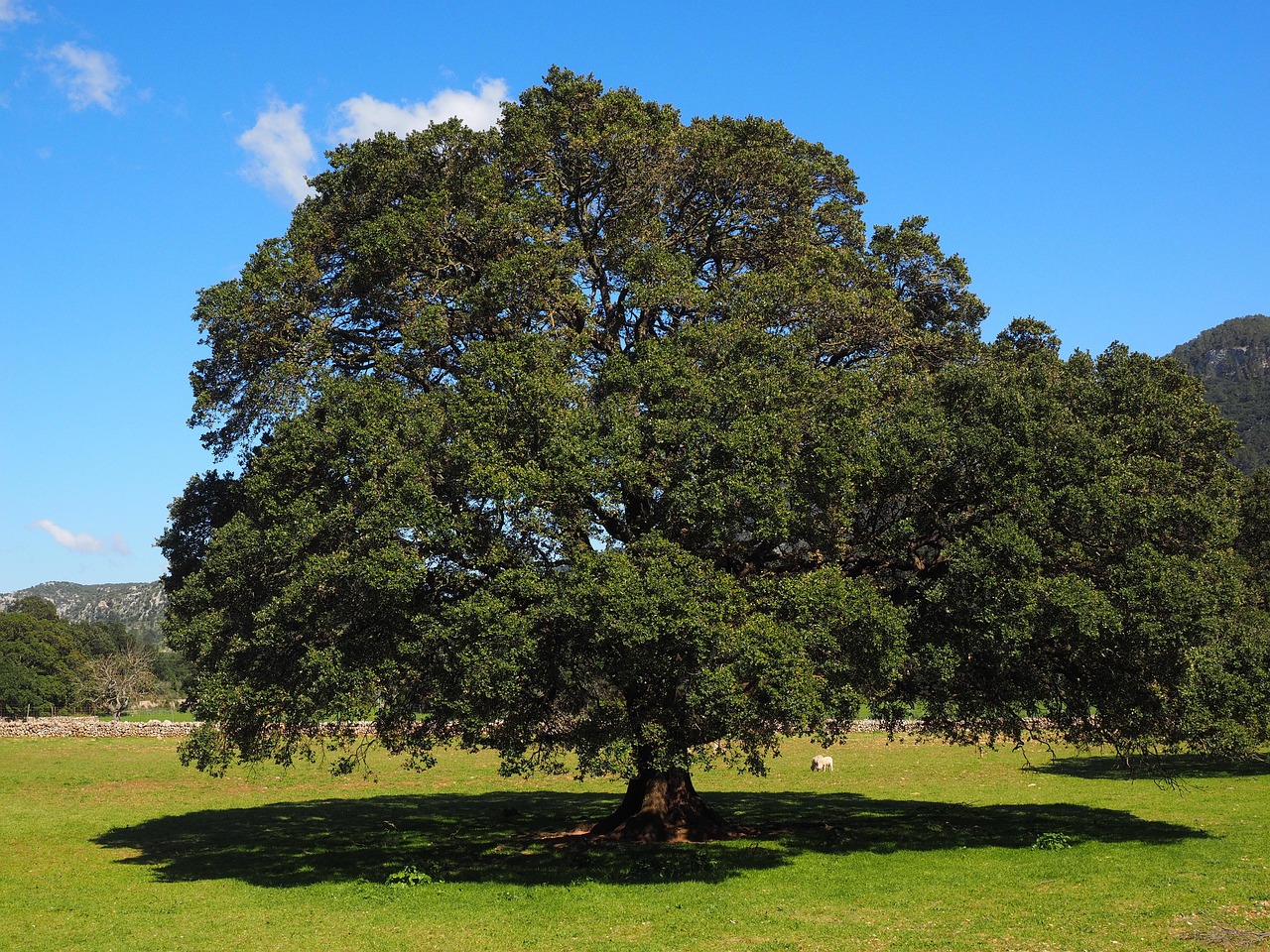
The camphor tree belongs to the laurel family. It is a large, glossy evergreen with aromatic leaves, small flowers in loose clusters and little black berries. How big depends on who you ask: PROSEA describes a tree of about 15 m that can reach 30 m, while the World Agroforestry database gives up to 40 m with a trunk as much as 3 m across. The references also disagree about its native range. PROSEA lists Japan, the Ryukyu Islands, China south of the Yangtze, Hainan, Taiwan and Vietnam; the Agroforestree Database names China, India, Japan, Sri Lanka and Taiwan.
We find that rather charming. A plant that has traveled with people for centuries, carried along trade routes and planted in temple grounds, does not keep a tidy passport. If you enjoy the human side of it, our post on camphor through the centuries follows that journey.
One species, many personalities
The more useful discovery for anyone who buys or blends is that individual trees differ in chemistry. The Tisserand Institute notes that ho wood, ravintsara and camphor oils all come from this single species, which occurs in many chemotypes (chemical types), three of them processed commercially.
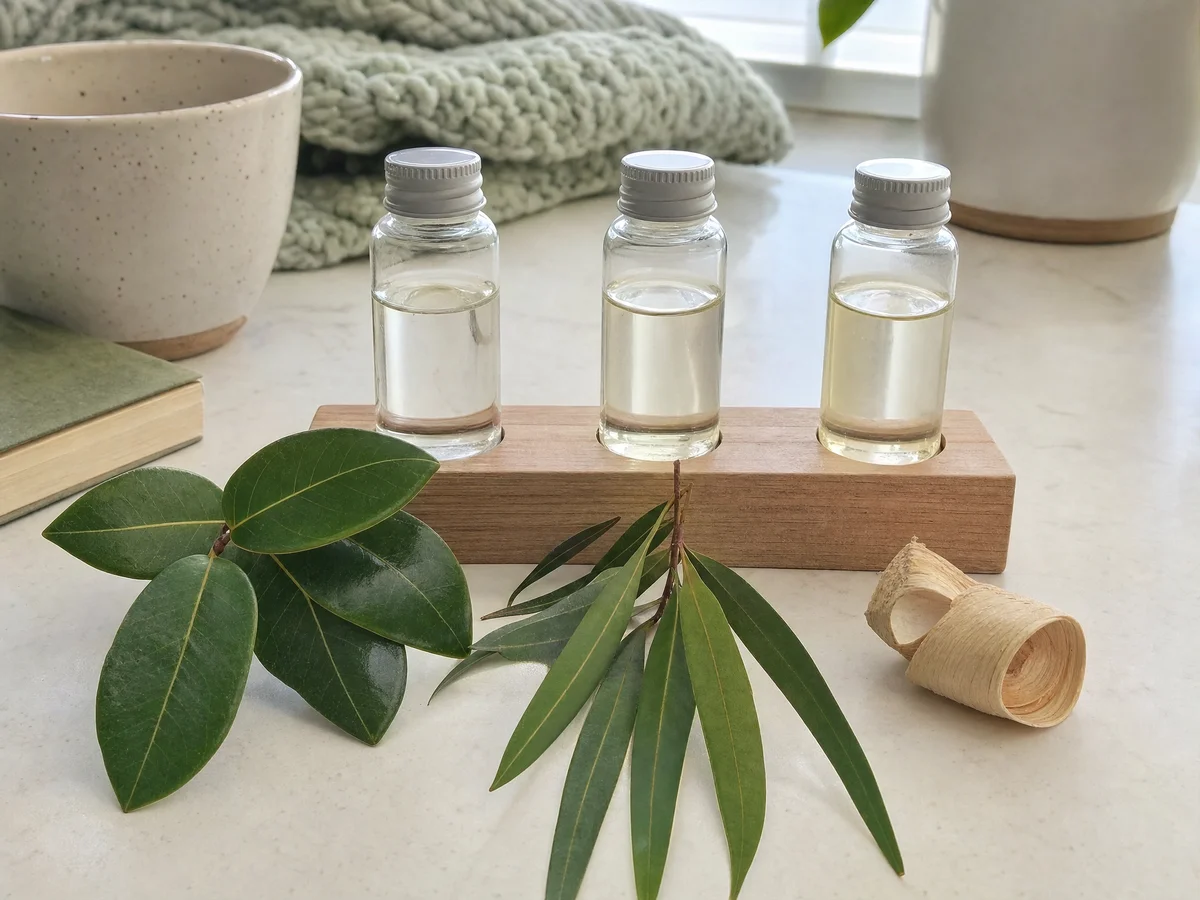
A 2023 study in Molecules shows how wide the spread is. Researchers distilled leaves from 974 trees across 35 populations in 13 Chinese provinces and sorted the trees by their dominant compound. The most common type was rich in eucalyptol (1,8-cineole), with 249 trees. Trans-nerolidol came next, then the camphor type with 153 trees, then a linalool type with 140. Within one type the numbers still swung enormously: some camphor-type trees were around 14 percent camphor, others nearly 88 percent.
That is leaf oil from a research collection, not the distillate the camphor trade has traditionally used, so it is not a picture of any commercial bottle. But it makes the point nicely. The botanical name tells you the tree, not the composition. That is exactly why ravintsara and ho wood, cousins of camphor oil from the same species, can smell so different from it.
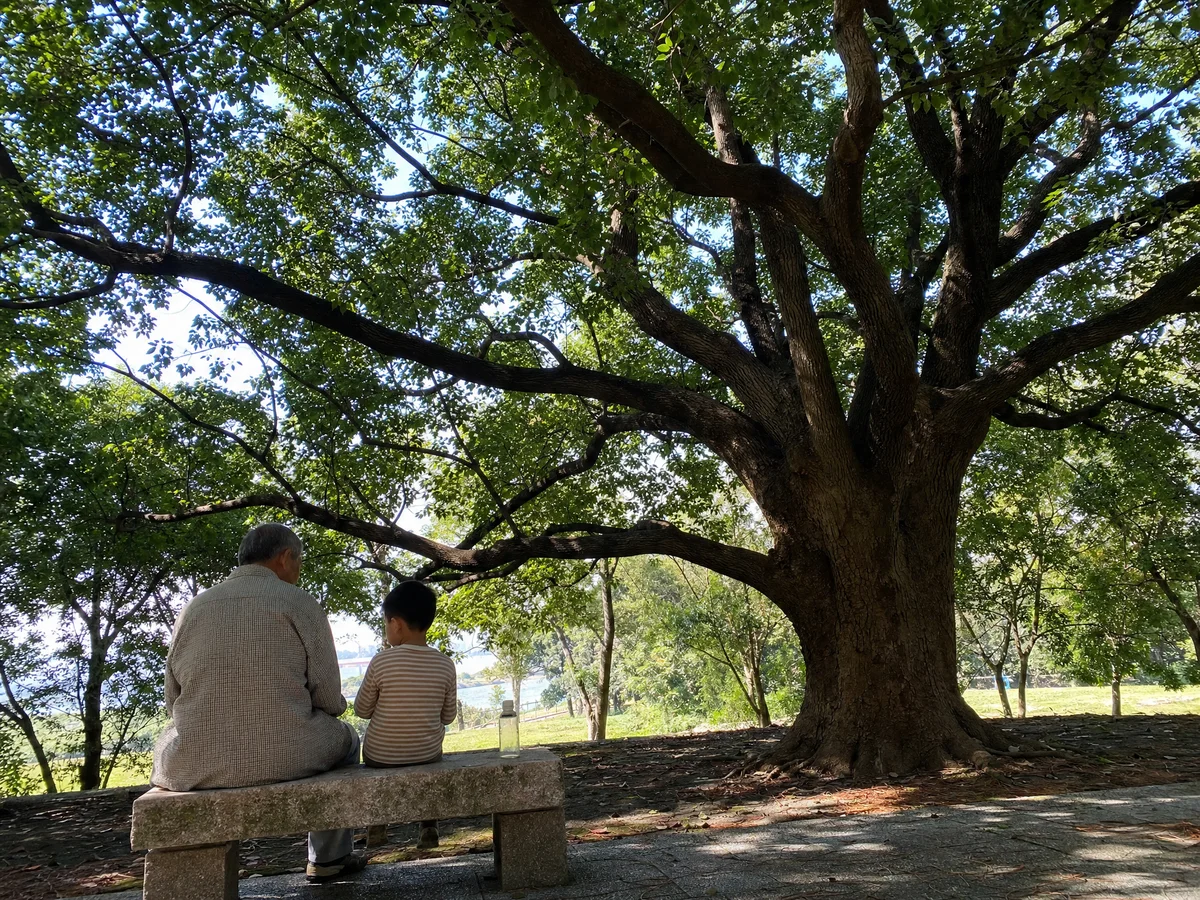
If you ever get the chance to stand under a camphor tree, notice how the whole place smells different. Leaves on the ground, bark in the sun and warm air all carry the scent, and it feels more like a landscape than a single note. A bottle on a shelf is a small, concentrated piece of that experience.
From tree to bottle
Traditionally the trade distilled the tree, lifted out the white crystals that give camphor its name, and then split what was left into fractions by boiling point. According to PROSEA, leaf distillation came later, first in the United States and then in Japan and Taiwan. What we sell is Cinnamomum camphora oil taken as the white fraction, the lighter cut that suits fragrance and craft work, and the full story of how that cut is made is in our process article.
The Certificate of Analysis we publish for one of our batches records steam distillation, the botanical name, density, refractive index and optical rotation. If you need a full chemical profile for your formula, such as a GC/MS report, ask us in writing through the contact page before you order, and our guide to reading a camphor GC/MS report will help you read it when it arrives.
It is a good reminder that plants do not read maps. Something that is cherished in one garden can be a nuisance in the next, and the same leaf that smells wonderful in your hand has a long and slightly untidy history.
A tree that is both treasured and a trespasser
Here is a fact that surprises gardeners. Outside its home range the camphor laurel can behave like a weed. The Florida Natural Areas Inventory lists it as a Category 1 invasive in Florida, with the earliest Florida specimen collected in the 1890s. Back home the story ran the other way: the Agroforestree Database notes that wild stands in Japan and Taiwan fell sharply through heavy harvesting before World War II. Plantations in China, which PROSEA says expanded from the 1990s, are part of how the trade carried on.
The lesson is a gentle one. A tree like this is worth asking questions about, and a good supplier welcomes them.
What to take from the tree
Questions worth asking about any bottle
Once you know how varied the tree is, a few polite questions come naturally. Which fraction is it? What does the label actually name? Is there a lot report you can look at? These are the questions we would want to ask too, and a good supplier will be glad to talk about them.
When a bottle says "camphor oil," the name alone does not say which type of tree, or which part of the distillate, you are holding. We describe ours plainly: the white fraction of a Cinnamomum camphora distillate, a sharp, cooling, crystalline aroma over a dry woody base, best used as a top note and a drop at a time. Treat the species name as the start of a good conversation with your seller.
Camphor Essential Oil
Camphor Essential Oil from our own shop, in sizes from 0.5 oz to bulk.
From $9.99
Shop Now →Sources & Further Reading
- Windadri FI, Rahayu SSB, 1999. Cinnamomum camphora, PROSEA Handbook 19. prosea.prota4u.org
- Orwa C et al., 2009. Agroforestree Database: Cinnamomum camphora. apps.worldagroforestry.org
- Florida Natural Areas Inventory. Camphor tree invasive species profile. fnai.org
- Zhang T et al., 2023. Chemical variation of Cinnamomum camphora essential oil. Molecules 28(3):973. PMC9919661
- Tisserand Institute. Cinnamomum camphora: its many names and chemotypes. tisserandinstitute.org