Camphor Oil for Ants and Roaches: What Pest Pros Say
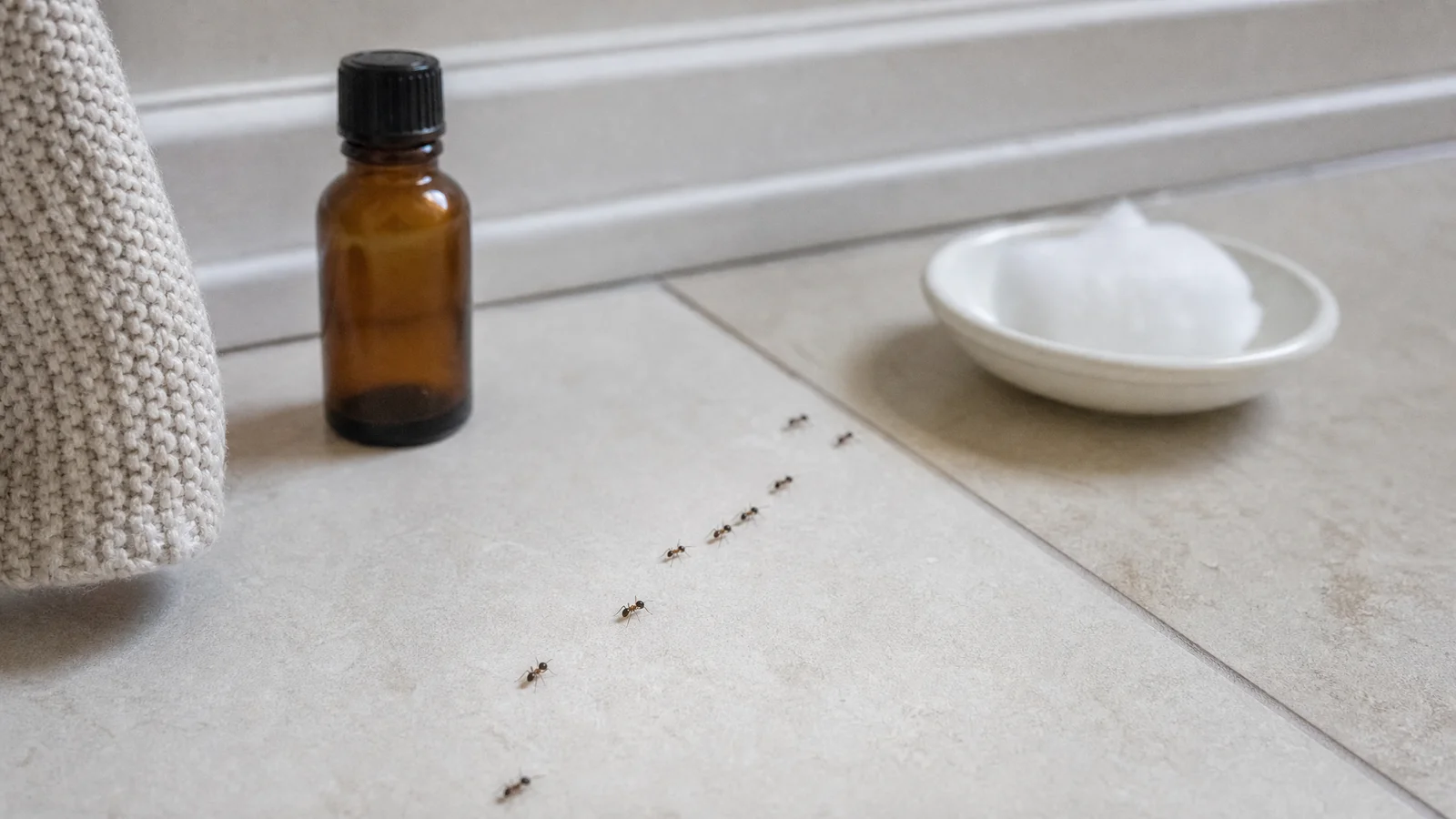
A bottle of camphor oil smells sharp enough that it feels like it should keep anything with six legs out of your kitchen. It is an appealing idea, and it is also one that pest-management professionals have a clear view on. The short version: the things that actually solve an ant or cockroach problem do not involve a scent at all.
Camphor Essential Oil
Our own Camphor Essential Oil, in sizes from 0.5 oz to bulk.
From $9.99
Shop Now →Start by knowing what you have
University of California pest specialists keep returning to one point on their cockroach page: identify the species before you act, because the best management options vary from one cockroach to another. The same goes for ants. A pest pro asks three plain questions. Where are you seeing them? At what time? What is within their reach, food or water? A scented cupboard answers none of them, so it makes sense to answer them first.
What the extension guidance actually says
The UC Integrated Pest Management pages describe the same sequence for both pests, and it is more practical than glamorous:
- Sanitation. Take away what they come for: food, water and shelter. Store food in sealed containers, fix leaks and clear clutter.
- Exclusion. Seal the cracks and gaps where they get in. For ants that means caulking entry points and keeping plants and mulch a foot back from the foundation.
- Baits. For cockroaches, UC IPM calls baits the primary pesticides used to treat infestations. For ants, bait lets workers carry the material back to the colony.
- Patience and the right help. Most baits are slow acting. A large or established roach population is a job for a licensed pest professional.
You will not find camphor or any other essential oil in those pages (cockroaches, ants). We read that as telling: if a scent were part of reliable control, extension guidance would have a reason to mention it.
Why a strong scent can work against you
UC IPM warns that foggers, bombs and aerosol sprays can repel and disperse cockroaches to other areas without killing them, which is the opposite of what you want. Anything that simply pushes pests out of one cupboard has moved the problem, not solved it. With ants, the logic is even clearer. Baits work because foragers carry them home, and for that to happen the foragers have to keep coming. Our reasoning from that: a strong scent near a bait station could discourage the very visits that make the bait work. That is an inference, not a measured result, but it is a good reason to keep any scent away from the spots where you are baiting.
A kitchen that gives them nothing
The nicest thing about the extension advice is that it is something you can do on a slow evening with a sponge. Pull out the toaster and look at the crumbs underneath. Wipe the sticky ring under the honey jar and the soy sauce bottle. Check the sink for a dripping tap, because water is as good as food to a pest. Look at the pet bowls, the compost caddy and the recycling bin, and be honest about when they were last emptied.
It is not exciting work, but a kitchen with clean counters, closed containers and no water in the wrong places feels different the moment you finish. That feeling is what a good pest plan looks like, and no fragrance can do it for you.
What to do by situation
A few ants on the counter
UC IPM suggests wiping them up with a sponge and soapy water, which removes the scent trail they leave behind, then finding where they are coming in and sealing it with caulk. Remove the crumb or spill that drew them in. If they keep coming back, identify the species before choosing a bait.
Roaches at night
Treat it as a sanitation and sealing job first, then a baiting job. If you are seeing many in daylight, bring in a licensed pest professional, because that is a building problem, not a kitchen problem.
Children or pets at home
Enclosed bait stations placed where only the pest can reach are the sensible choice, and camphor oil should stay out of the picture. Camphor is dangerous to small children if swallowed, and the Pet Poison Helpline notes that it is readily absorbed through the skin of dogs and cats (Pet Poison Helpline). Our pet safety article goes into more detail, and the poisoning guide covers what to do if a child swallows any.
A note on the pantry shelf
Many of us keep our oils in the same cupboard as the cooking things, and we get why: the shelf is handy and the door is shut. Our advice is to give essential oils a home of their own, in a cool, dark spot out of reach of children and pets, and well away from anything that gets eaten. A small box with a lid and a label on the front keeps the bottle upright and the cupboard tidy, and it means nobody mistakes a thin, sharp-smelling liquid for something else.
Where camphor oil belongs
We sell a cosmetic camphor oil and make no pest-control claim for it. Its place is as an aroma in a linen cupboard or a craft project, which Camphor Oil at Home covers. Keep it well away from food storage, and let your pest plan rest on the steps above.
A sealed pantry, a wiped counter and a patient bait station will do more than any bottle of oil, and your kitchen will smell like nothing at all, which is exactly right.
Camphor Essential Oil
Camphor Essential Oil from our own shop, in sizes from 0.5 oz to bulk.
From $9.99
Shop Now →