Why Camphor Rubs Feel Like Easier Breathing
Anyone who has opened a jar of camphor rub knows the moment: a cold rush up the nose and a sudden feeling that air is moving more freely. It is a lovely trick of the senses, and in a classic experiment it was exactly that.
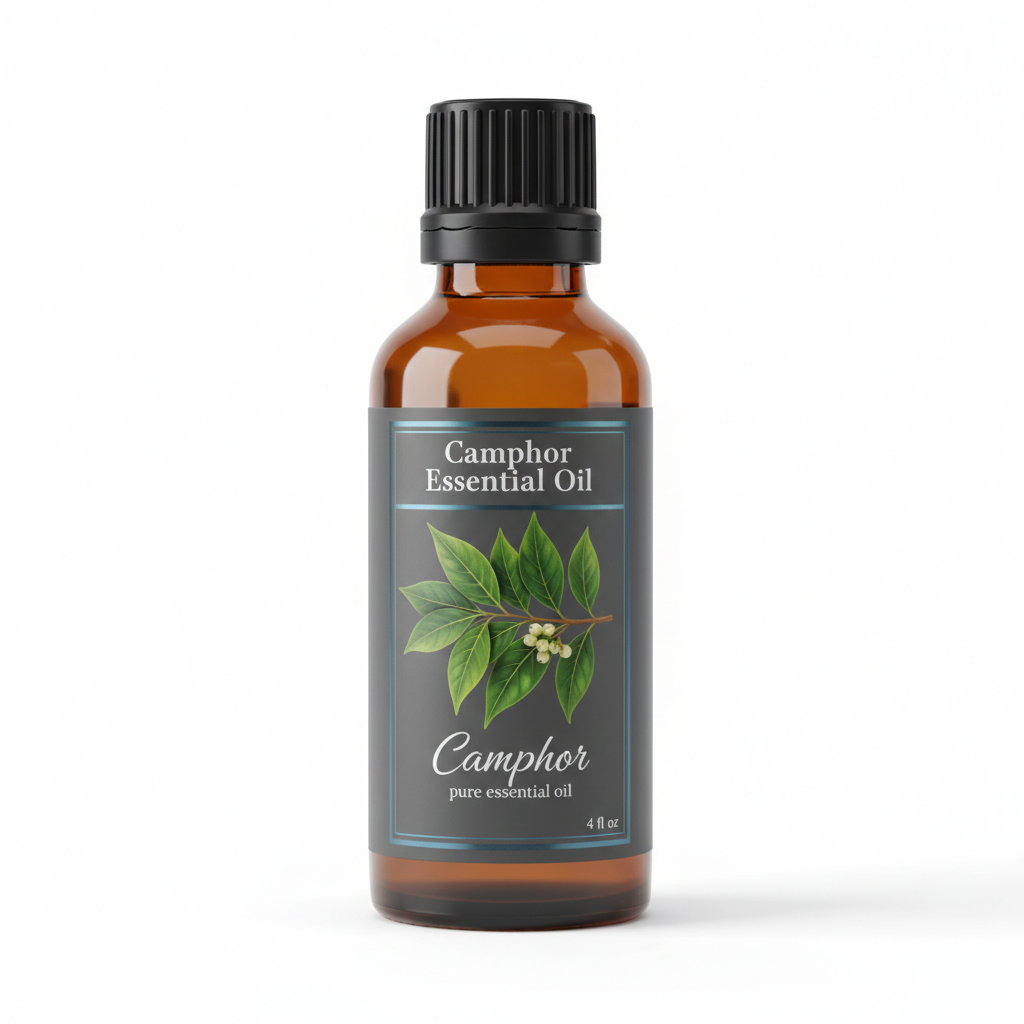
Camphor Essential Oil
Our own Camphor Essential Oil, in sizes from 0.5 oz to bulk.
From $9.99
Shop Now →The experiment that separated feeling from airflow
In 1983, Burrow, Eccles and Jones had volunteers breathe camphor, eucalyptus or menthol vapor for five minutes while they measured how hard it was for air to pass through the nose. The vapors changed nothing about that resistance. Yet most volunteers reported a cold sensation and a sense of improved airflow. Exercise, by contrast, did lower resistance, and brought no sensation of cold at all. The authors concluded that camphor, eucalyptus and menthol stimulate cold receptors in the nose.
Put plainly, those receptors report temperature, not volume, and the brain reads cooler air as more air. We find that delightful. It also explains why people can feel a rub working while nothing about the airway has measurably changed. The sensation is real and pleasant. It is simply a different thing from a clear nose.
Why the feeling is so convincing
Think about the last time you stepped into cold air on a winter morning and took a deep breath. It felt wide open, clear and clean, even if nothing about you had changed. Our noses are wired to read cool as spacious, and anything that borrows that sensation borrows the impression too. That is why a jar of something cooling can feel like a small miracle the first time you open it.
There is something rather lovely in that. It means the pleasure of these scents is real, even when the explanation is a trick of the senses. You do not need to believe a cooling aroma is doing something else to enjoy it.
What the children's study adds
The study most often cited for chest rubs is a 2010 trial in Pediatrics by Paul and colleagues. It followed 138 children aged 2 to 11 with cold symptoms, randomly given a camphor, menthol and eucalyptus ointment, plain petrolatum, or nothing before bed. Parents rated the ointment best for cough, congestion and sleep difficulty, petrolatum was no better than nothing, and every group improved by the second night. Irritant side effects were more common with the ointment.
It is useful to know what that does and does not tell you. The ratings came from parents, the product was a finished three-ingredient ointment so camphor's own share cannot be teased out, and children recover from colds on their own. It is a study about a tested product used on children aged 2 and up, not about a bottle of oil.
Why age matters so much
Labels on camphor chest rubs tell parents to ask a doctor before using them on children under 2, and the American Academy of Pediatrics' guidance on mentholated rubs starts at age 2. The reason is camphor's record in little ones. A 2009 report in Pediatrics described three children aged 15 to 36 months with seizures at one hospital within two weeks: two had swallowed camphor and one had been rubbed repeatedly on the skin. If a child has swallowed any camphor product, call Poison Help at 1-800-222-1222 straight away, or 911 for a seizure, unusual drowsiness or trouble breathing. For a baby or toddler with a cough, the pediatrician is the right call.
Labeled rubs and bottles of oil are different things
The United States lists camphor among the active ingredients for topical cough-suppressant products in 21 CFR 341.14, and those finished products come with directions, warnings and age limits. A bottle of camphor oil is a different animal: a neat, volatile aromatic with no drug labeling, and the camphor share of any given lot is a property of that lot. That is why we do not suggest turning it into a chest rub. If you are curious how a homemade version stacks up, our DIY vapor rub article goes through it, and our steam inhalation piece covers the other common habit.
Enjoying the cool feeling safely
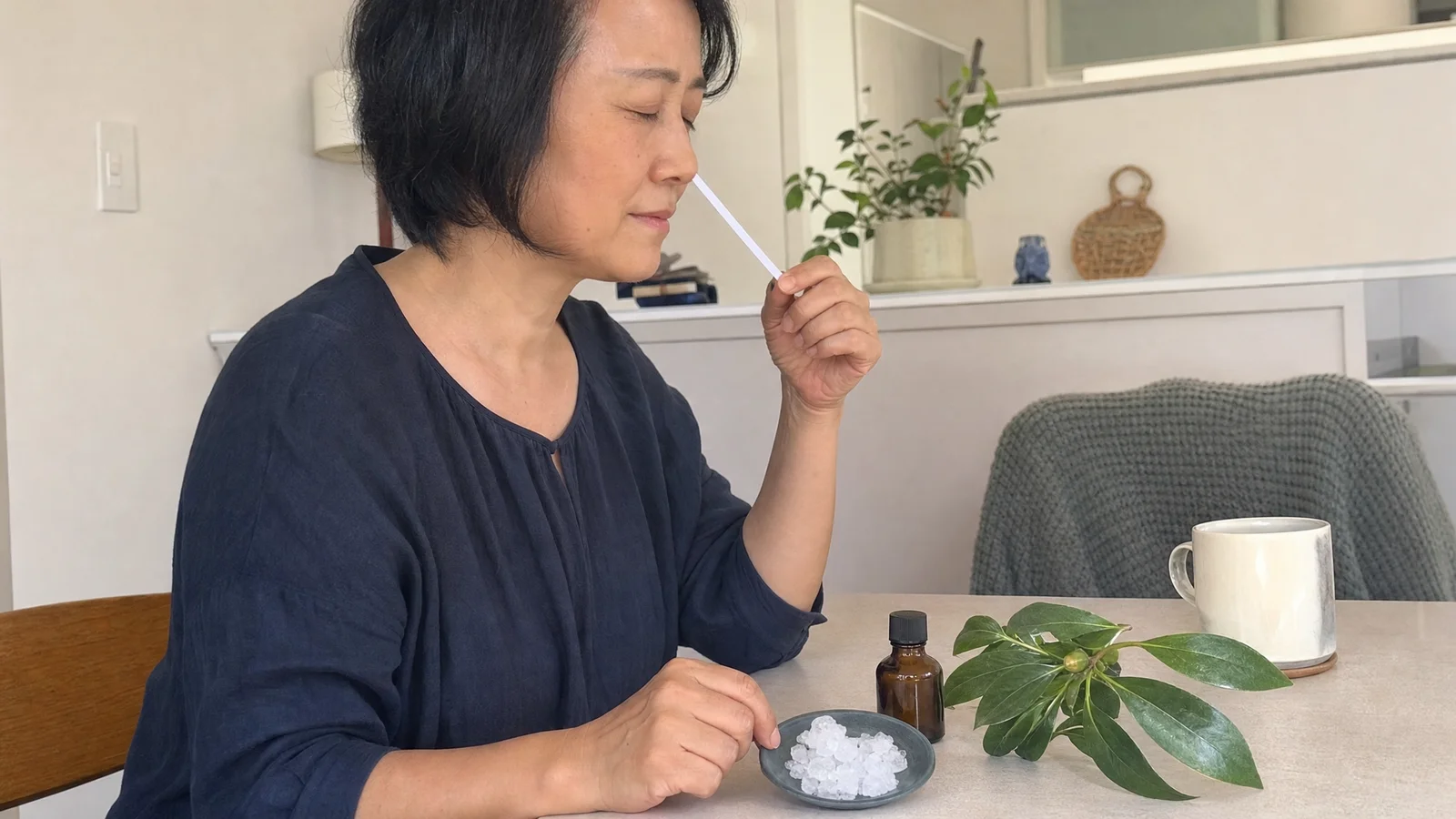
If it is the sensation you love, there are simple ways to enjoy it that keep the oil away from skin and from children. Open a bottle in a well-aired room and take a single slow sniff from a hand's width away. Notice how the sharp, cool note arrives first and the dry woody base settles in afterwards. Then cap it. A moment is enough, and it keeps the experience a treat instead of a habit.
Cool cousins
Camphor is not alone in this trick. Menthol and eucalyptus use related cold-sensing pathways, which is why so many rubs combine all three. We put them side by side in our three cool scents comparison, and our children's article gathers the age points.
A persistent or worrying cough, fever that lingers, bloody mucus or any trouble breathing belongs with a healthcare professional, and no cooling scent changes that. We sell an external cosmetic oil, and we are happy to talk about its aroma. For the lungs, ask a clinician.
The nose is wonderfully easy to impress, and that cold rush is a good reminder of how much of smell and breathing happens in the mind.
Camphor Essential Oil
Camphor Essential Oil from our own shop, in sizes from 0.5 oz to bulk.
From $9.99
Shop Now →Sources & Further Reading
- Burrow, Eccles and Jones, camphor, eucalyptus and menthol vapour and nasal resistance, Acta Otolaryngol 1983
- Paul et al., vapor rub, petrolatum and no treatment for children, Pediatrics 2010
- Khine et al., children with seizures caused by camphor poisoning, Pediatrics 2009
- 21 CFR 341.14, antitussive active ingredients
- Poison Help (poison.org)