Karpura in Ayurveda: Which Camphor Is Which?
Say "camphor" in an Ayurvedic setting and you are really saying karpura, a word that has covered more than one substance for a very long time. It is a good reminder that the name on a label and the tree behind it are not always the same thing, and it is the most interesting thing about camphor in this tradition.
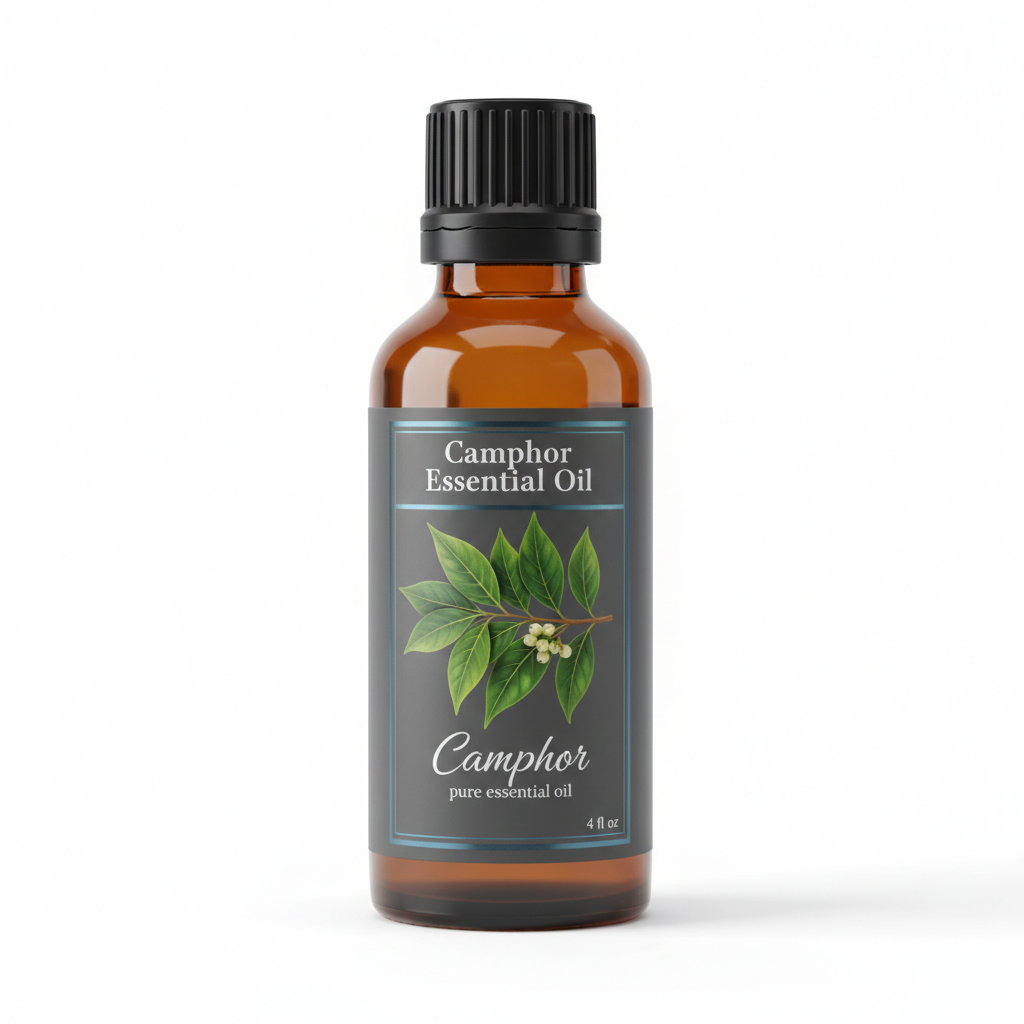
Camphor Essential Oil
Our own Camphor Essential Oil, in sizes from 0.5 oz to bulk.
From $9.99
Shop Now →Two kinds of karpura
One herbal monograph from India describes how Sanskrit writers recognised two kinds of karpura: pakva, from Cinnamomum camphora, and apakva, from Dryobalanops aromatica. It says both were used in Ayurveda, with apakva used more in medicine (Himalaya Herbal Finder, camphor tree). That is a single herbal source, and we offer it as one account of the tradition rather than the last word.
What matters for a buyer is that the two trees give different materials. The PROSEA handbook describes Borneo camphor as crystallised oil consisting of almost pure borneol, a different compound from the camphor of Cinnamomum camphora, and it even advises avoiding "camphor" in the trade names of that tree's timber, to prevent confusion with true camphor wood (PROSEA, Dryobalanops). So when you meet "Ayurvedic camphor" on a label or in a text, the first question is which plant and which compound. We sell Cinnamomum camphora oil, and we cannot say it matches whatever a given classical verse meant.
Why a single word can be a puzzle
If you have ever tried to follow a recipe written in another language, you know the feeling: the word looks familiar, and then you realise the ingredient it names is not quite the one you had in mind. Old texts are full of this. A name that meant one thing in a trading port could mean another by the time it reached a kitchen or a temple, and people copying a manuscript by hand did not always know the difference.
That is part of why we enjoy reading about karpura so much. It reminds us that behind every familiar bottle sits a long chain of people who named, traded and argued over a material, and that the name on the label is the very end of that chain, not the beginning.
How the story travelled
The Borneo resin is the camphor that moved along medieval trade routes, and historian Peter Romaskiewicz notes that the earliest Indic citation to camphor may be Varahamihira's Brhatsamhita in the mid-sixth century (Romaskiewicz). He also observes that India's relationship with camphor was complex, with abundant trade and perhaps a native Indian substitute at times. Nobody has settled that cleanly. Our history of camphor tells the wider story.
Cooling, in two vocabularies
Ayurveda describes karpura as cooling, but its idea of "cooling" is a classification of a substance's character, not a temperature reading. What a modern reader feels on the skin is a different thing: camphor produces a cool-feeling sensation, which is why it often turns up in cooling products. The two vocabularies share a word and not much else, and it is worth keeping them apart.
A tradition that respects the material
If there is a single lesson in how traditional systems handle camphor, it is restraint. Our Traditional Chinese Medicine post shows a parallel pattern, with practitioners treating the material carefully and in small amounts. Camphor is a concentrated material, and traditional users did not treat it casually. That is a good way to approach it today. Our camphor oil is an external cosmetic oil, sold neat, and we recommend diluting it to 0.5% to 2% in a carrier oil before any skin contact (and check IFRA standards for your own formulation), patching first, and keeping it away from the eyes, children and pets. Never ingest it. Questions about Ayurvedic use belong with a qualified practitioner, and questions about your health belong with a physician or pharmacist.
A bottle on your own shelf
If the history makes you curious about the smell, the simplest thing you can do is meet it on its own terms. Open a bottle of Cinnamomum camphora oil, hold it a hand's width away, and take one slow breath. You will notice a sharp, cooling, crystalline top with a dry woody base. Take a second breath after a minute, and you will notice the sharpness fades first and the woody part lingers a little longer. That is a pleasant way to spend a moment, and it is a reminder that what you are smelling is one particular material from one particular tree.
Then cap it tightly and put it back where it lives, cool and dark and out of reach of children and pets.
Using the tradition well
- Ask which camphor. A name that reads "karpura" or "camphor" may be borneol-rich Borneo material, camphor laurel or something else.
- Read the botanical name. It is the most reliable identifier of what is in a bottle. Ours is Cinnamomum camphora.
- Enjoy it as culture. The place of camphor in Indian ritual and daily life is a story worth knowing on its own terms.
It is a lovely thing that one small word can carry a thousand years of trade, ritual and quiet argument about which tree it meant.
Camphor Essential Oil
Camphor Essential Oil from our own shop, in sizes from 0.5 oz to bulk.
From $9.99
Shop Now →