Why Camphor Rubs Tingle: The Cool Sensation Explained
Anyone who has opened a jar of camphor rub knows the sequence: a sharp scent, then a cool tingle on the skin, sometimes followed by a faint warmth. It is a vivid sensation, and it explains why camphor has been in balms for so long. What it does not do is turn a bottle of essential oil into a muscle remedy, and that gap is worth understanding.
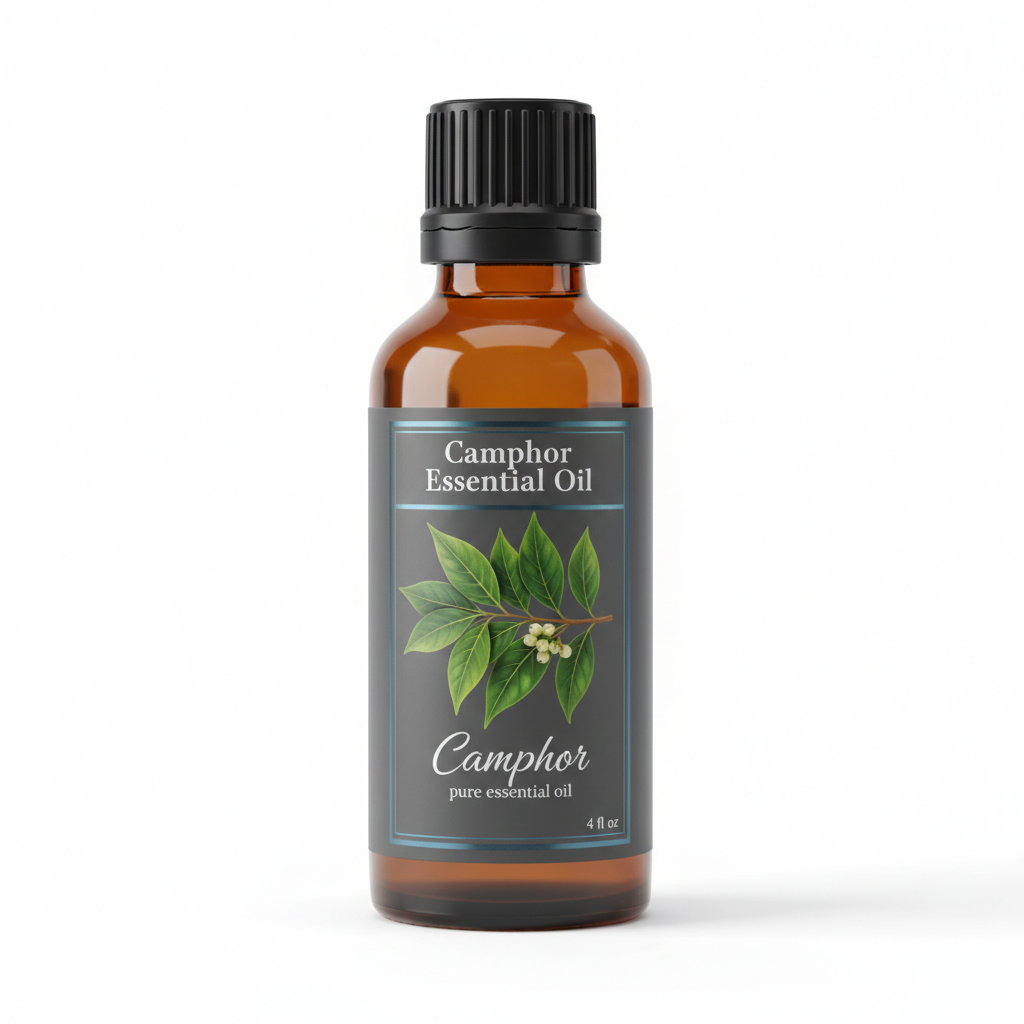
Camphor Essential Oil
Our own Camphor Essential Oil, in sizes from 0.5 oz to bulk.
From $9.99
Shop Now →A sensation with a mechanism
Your skin carries nerve endings that react to temperature, and camphor talks to several of them. A 2013 study in Chemical Senses found that camphor activates TRPM8, the channel that detects cool temperatures, in cultured cells and in rat sensory neurons, while also dampening its response to menthol. Earlier, a 2005 paper in the Journal of Neuroscience found that camphor activates TRPV1, the channel that responds to heat and capsaicin, though less strongly than capsaicin does, and that it then desensitizes that channel more quickly and completely. In that same study repeated camphor applications made a third channel, TRPV3, more responsive, which the authors noted does not fit a simple pain-relief story.
In plain English, camphor does not feel cool because your skin is cooler. It feels cool because it switches on the cold-sensing wiring. That is a sensory effect, observed in cells and animal neurons, and it is a real and fascinating one.
Why that is not the same as a muscle claim
Those studies describe what camphor does to receptors in a dish. They are not trials in people with sore muscles, and we are not going to suggest our oil does anything for muscles, joints or pain. Finished over-the-counter rubs are regulated products with a set percentage of camphor, a Drug Facts label and warnings, and the 2005 paper itself describes camphor as a major active ingredient of balms and liniments sold as topical analgesics. A bottle of undiluted essential oil is a different thing: it has no label percentage for its camphor content, and the Certificate of Analysis for our batch lists density, refractive index and optical rotation rather than a camphor figure.
There is another wrinkle. Many commercial rubs also contain menthol, eucalyptus oil or methyl salicylate, so the sensation people credit to camphor is often a team effort. A 2022 study of a compound liniment in China, for example, involved methyl salicylate, menthol and camphor together. You cannot read a single ingredient's effect out of a blend.
What you will notice when you open the bottle
Unscrew the cap and hold the bottle a little way from your nose instead of right under it. You'll notice the sharp, cooling, crystalline top note first, and then, once that first rush fades, a dry woody base underneath. It is the same family of sensation the studies describe, only arriving through your nose, and it comes and goes quickly. That is simply what a top note does.
It is also why a little camphor goes so far. Our oil is thin and bright, and one drop on a cotton pad can fill a small space with that clean, icy smell. Most people who are new to it add a second drop to be sure, and then wish they hadn't. Start with one and wait a few minutes before deciding.
What this means for the oil on your shelf
If you enjoy the cool, crisp scent of camphor, that is a fine reason to keep a bottle. If you have a sore muscle, the right people to ask are a pharmacist, who can explain regulated rubs and their warnings, or a physician if the soreness is persistent or unexplained. Our oil is an aromatic, cosmetic material.
If you do put it on skin at all, our guidance is to dilute it to 0.5% to 2% in a carrier oil, patch test on a small area first, keep it away from your eyes, and never swallow it. Skip it on broken skin, and keep it away from children and pets. Rubs that heat or strongly tingle are not the place to experiment with more, and our is camphor oil safe piece covers who should leave camphor alone entirely. For the other cool-feeling oils, camphor vs eucalyptus vs menthol compares how they smell and feel, and camphor oil benefits and uses takes the wider view.
If you're curious about the sensation itself, the safest laboratory is your own nose. Smell two or three cool-smelling oils on separate strips and compare how each one feels at the back of your nose. Camphor tends to feel drier and more crystalline than mint, and that difference is easy to notice once you try it.
Questions worth asking before you reach for any rub
- Is the camphor percentage printed on the label? A real rub tells you; a bottle of essential oil does not.
- What else is in the jar? Menthol, eucalyptus and other ingredients share the credit for that tingle.
- Who will be near it? Rubs and oils belong well out of reach of children and pets.
- Do you want a scent, or do you want a product with a purpose? The first is our department; the second is a pharmacist's.
We love the way camphor smells, and we like talking about why it feels the way it does. Knowing where our oil fits, and where it does not, makes it much easier to enjoy.
The cool tingle is a small piece of sensory biology that happens to smell like a medicine cabinet, and that is plenty interesting without asking it to do anything more.
Camphor Essential Oil
Camphor Essential Oil from our own shop, in sizes from 0.5 oz to bulk.
From $9.99
Shop Now →