Camphor Oil for Acne? Why We'd Leave It Off Blemishes
Camphor smells crisp and clinical and feels icy on the skin, so it is easy to see why people wonder about it for breakouts. We love this oil for its scent, which is exactly why we want to be straight with you: we would keep it off blemishes.
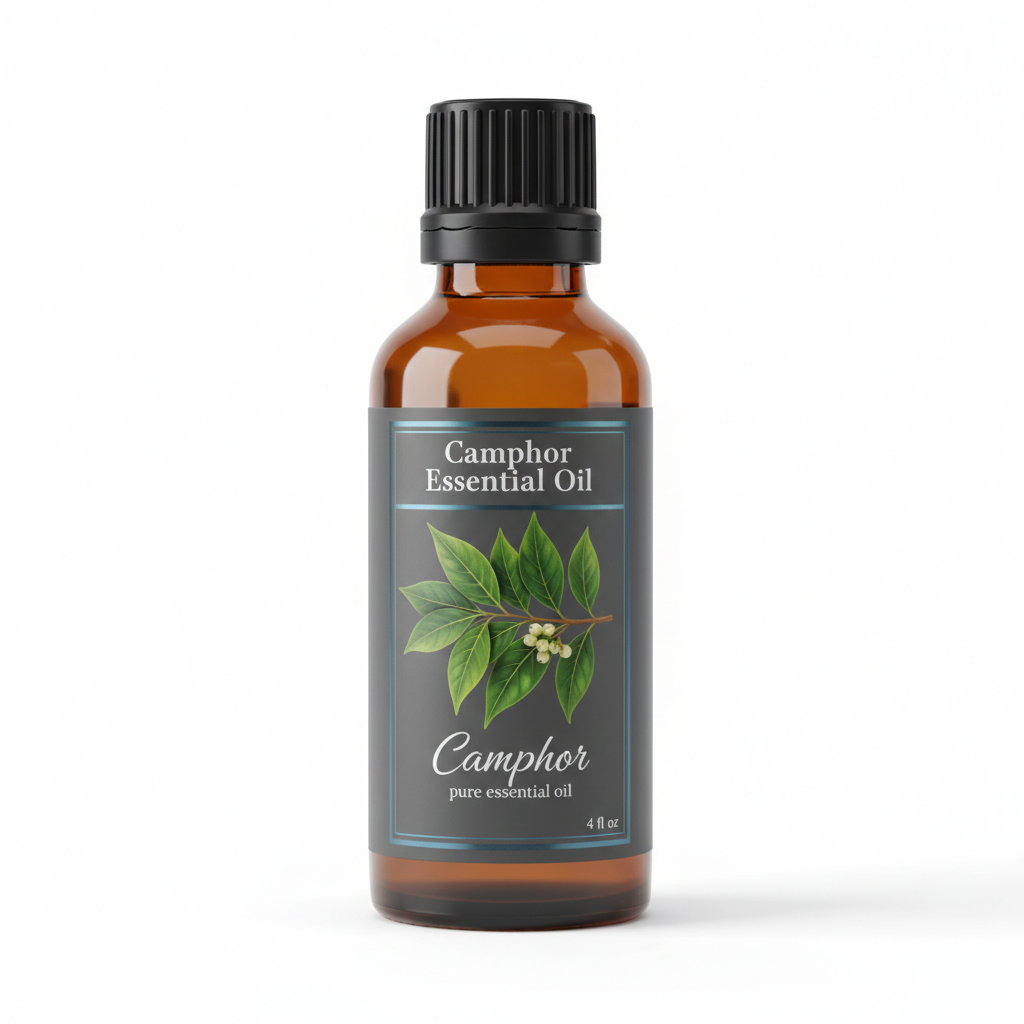
Camphor Essential Oil
Our own Camphor Essential Oil, in sizes from 0.5 oz to bulk.
From $9.99
Shop Now →The cool feeling is not a clue
That tingle is real. A 2013 study in Chemical Senses showed that camphor activates TRPM8, the same cold-sensing channel that menthol uses, in cultured cells and rat sensory neurons. It explains why camphor feels fresh. It does not say anything about what is going on inside a pimple. A sensation is a sensation, and a clean scent is only a scent.
It also helps to know how camphor is described on skin. The Arthritis Foundation calls menthol and camphor rubs counterirritants, products that create a cooling sensation to distract from discomfort underneath. That is a sensible job for a rub and a strange one for skin that is already red and tender.
What the research does and does not include
A 2023 analysis in Cureus searched English-language PubMed articles from 2010 to 2022 on camphor and menthol agents. Of 103 results, 15 concerned health-related use, and the authors pointed to pain, itch and upper respiratory symptoms as the areas where topical use looked potentially useful, with only a few studies behind each and a call for properly controlled trials. Acne is not on that list. We could find no controlled trial of camphor essential oil on acne, so any page quoting a percentage improvement deserves a raised eyebrow.
Tea tree oil shows what real interest looks like. A 2023 review gathered the human studies of tea tree oil and acne and reported fewer inflammatory lesions, mainly papules and pustules, yet concluded that, given how different the studies were, firm conclusions on efficacy and safety are not possible. Even the best-studied essential oil for this question comes with that careful sentence. Camphor does not have a literature to hedge about. If you are comparing the two oils for other purposes, our camphor and tea tree comparison is a fun read.
Why the idea keeps circulating
Three ordinary facts get stitched together. The scent reads as clean, the cooling reads as calming, and camphor appears in familiar rubs that lend it borrowed authority. Add the fact that breakouts rise and fall on their own, and anything tried during a flare gets the credit when it settles. Without a comparison group, that is how many home habits earn their reputations.
There is also the matter of allergy. The American Academy of Allergy, Asthma and Immunology notes a few case reports of allergic contact dermatitis to camphor, in a sunscreen and in ear drops. A reaction on top of a breakout is hard to tell from a worse breakout, which muddies the picture further.
Why a clean scent can mislead
There is something about a sharp, tidy smell that makes us trust a product more. Camphor smells the way a freshly scrubbed bathroom feels, and it is easy to let that impression do the thinking. But a smell tells you nothing about what is happening on your skin, and an icy tingle tells you very little more. If you take one habit from this page, let it be this: judge a product by what has been studied, not by how crisp it smells.
It also helps to notice how many "miracle" posts about essential oils are written by people who never opened the bottle. When you read about camphor on skin, ask whether the writer has told you what was studied, in whom, and at what dose. If not, keep scrolling.
A better plan for blemishes
Persistent, painful, widespread or scarring acne is a medical question, and a dermatologist or pharmacist has options that were actually studied for it. Beyond that, a boring routine with fewer new products at once makes it easier to see what helps. Camphor is also a poor idea for teens and children without a clinician, since it has a documented record of poisoning in young children, as in our camphor poisoning guide.
Where camphor oil shines
This oil is a joy as an aromatic: a sharp, cooling, crystalline top note with a dry woody base that wakes up lavender, rosemary and citrus in a blend. That is where we point people. For anything touching skin we recommend diluting to 0.5% to 2% in a carrier, patch testing first, and keeping it away from the eyes; our safety guide covers the details, and camphor oil on skin looks at the wider question. We sell an external cosmetic oil and nothing here is medical advice.
A final thought on patience. Skin takes its own time, and the urge to try something new every few days is strong when you're staring at the mirror. Resist it where you can. A short, steady routine and a conversation with a professional will show you what works far better than a rotating cast of bottles.
If you already own a bottle
That is no problem at all. Open it, enjoy the sharp, cooling note, and let it do what it does best: sharpen a blend of lavender, rosemary or citrus, or scent a drawer. When you have a flare-up, put the bottle back on the shelf and make that call to a skin professional instead. Your face will thank you for the boring routine.
Some topics reward curiosity more than experiments, and this is one of them. A good conversation with a skin professional will take you further than any bottle on our shelf.
Camphor Essential Oil
Camphor Essential Oil from our own shop, in sizes from 0.5 oz to bulk.
From $9.99
Shop Now →Sources & Further Reading
- Selescu et al., camphor activates and sensitizes TRPM8, Chemical Senses 2013
- Arthritis Foundation, topical treatments for arthritis pain
- Hoang, Wong and Olympia, camphor- and menthol-containing agents, Cureus 2023
- Tea tree oil and acne: a review, 2023
- AAAAI Ask the Expert, camphor and menthol allergy