Camphor Diffuser Blends: 3 Pairs, One Drop
The best camphor diffuser blend is a short one: a single drop of camphor beside two drops of one partner oil, in a roomy space, run for a little while. Camphor is a sharp accent, not a main ingredient, and the blends that work are the ones that treat it that way. Here is how to build them.
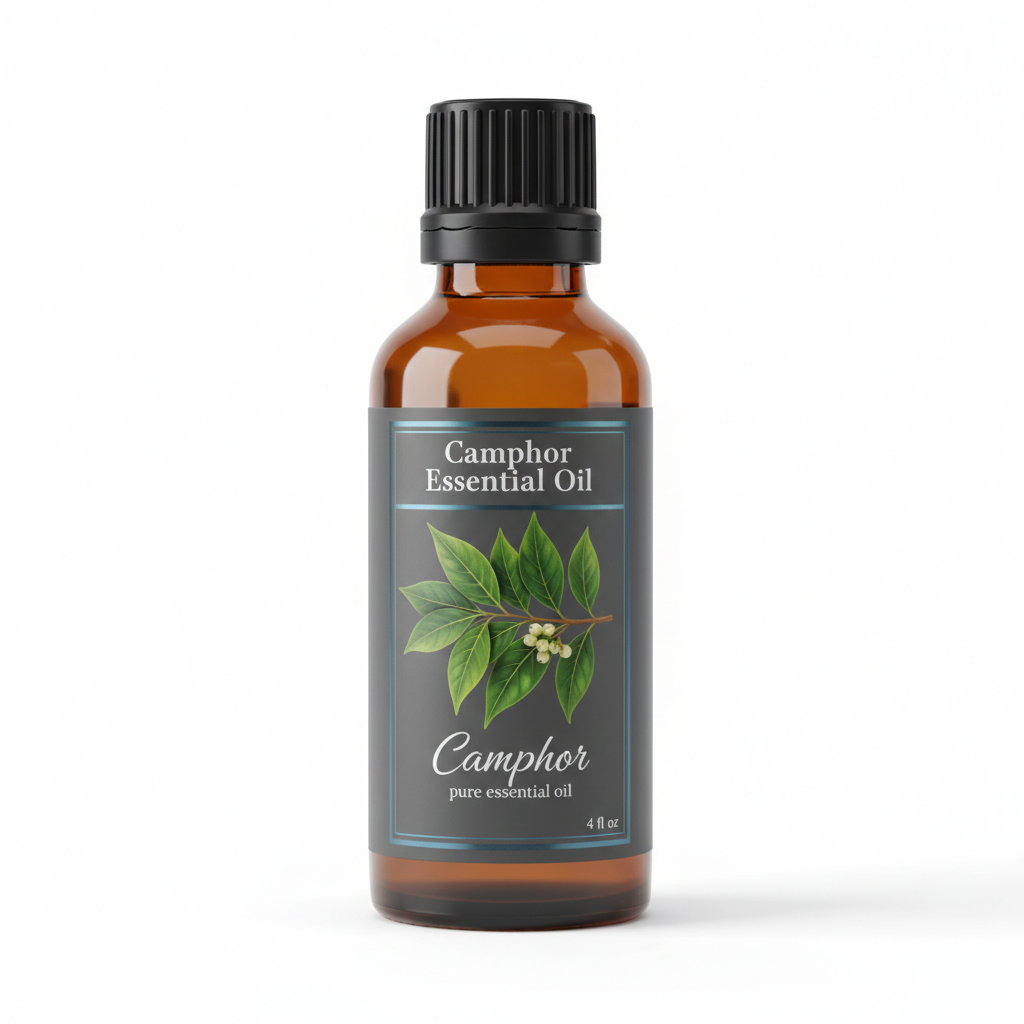
Camphor Essential Oil
Our own Camphor Essential Oil, in sizes from 0.5 oz to bulk.
From $9.99
Shop Now →Who it suits
Camphor in a diffuser suits an adult-only studio, hallway or living space where you want a short burst of dry, cool scent and can open a window afterward. We keep camphor away from infants and young children and from anyone with a seizure history, and we would skip the diffuser if a pet shares the room and cannot leave. If any of that describes your home, put the camphor in a closet or craft project instead. The reasons are covered in our diffusing guide, pet article and children article. A published safety data sheet for one white camphor oil, as summarized by the European Food Safety Authority, classes it as an irritant and sensitiser for skin and eyes and respiratory tract, which is one more reason to start low.
Think in drops, not percentages
Dilution percentages are for skin, not for air. Robert Tisserand, in a comment on the Tisserand Institute's website, put it this way: dilution rates do not apply to diffusion, which depends on the amount of oil, the diffuser, the room and the time, and "2-3 drops over several hours is a reasonable guide." That is general guidance for essential oils, and camphor is a sharp one, so we keep the camphor to one drop inside that total.
That budget makes recipes pleasantly simple. Three drops is a ratio exercise: one part camphor, two parts partner. Five oils would each be a fraction of a drop, so pick a heart oil, add camphor as the accent, and stop.
Three pairs worth trying
A white camphor fraction already contains cineole, limonene and pinene, according to a published European specification, so the best partners either echo those or give them something to stand against. These are formulations reasoned from that profile, for adults, in a cool ultrasonic diffuser.
| Blend | Drops | What the camphor adds |
|---|---|---|
| Citrus lift | 1 camphor, 2 citrus oil | Sharpens the lemon-like limonene it already contains |
| Dry wood | 1 camphor, 2 cedarwood | A quick cool opening over a lasting wood |
| Green conifer | 1 camphor, 2 pine, fir or cypress | Doubles the pine-needle facet |
If you fancy lavender or rosemary, keep the camphor at one drop and let the partner take the lead. Our pairings guide explains the reasoning for each partner, and our holiday blends use a stock-vial method for recipes with more oils. Partner oils come from an essential oil supplier, since camphor is the one oil we sell.
What each pair smells like
Here is how we picture each of the three, as plain how-to guidance for your own nose. The citrus pair opens bright and sharp, with the camphor giving the fruit a dry edge so it smells less like a sweet peel and more like a cool, clean zest. The cedarwood pair is quieter: the first sniff is crisp, and then the wood settles in underneath and stays. The conifer pair is the most outdoorsy of the three, with a green, needle-like sharpness that can feel almost like opening a window.
Try them one at a time rather than all in the same afternoon. Noses get tired, and the third blend always smells a little less distinct than the first.
Running it well
- Heavier oils first, camphor last. Camphor oil is thin and volatile, and it is the easiest to overshoot. Adding it last keeps the count honest.
- Pick a bigger room than you think. The same drops smell far gentler in a large space.
- Run 30 to 60 minutes, then rest 30 to 60, opening a window in the pauses. Stop if anyone has a headache, dizziness, nausea or irritated eyes or throat, and see a physician if it persists.
- Resist topping up. Noses tire of sharp scents quickly, so a fading smell does not mean a clear room.
Pick a good moment
A diffuser session is nicest when it has a clear beginning and end. Choose a time when you are home and awake, open a window a crack, start the diffuser, and notice how the scent develops over the first quarter of an hour. When it begins to feel like enough, switch it off. Do not wait until you can no longer smell it, because that is exactly the point at which your nose has stopped reporting and the room has not changed.
Measuring one drop
With a one-drop budget, the dropper matters. Drop size depends on the bottle, the orifice reducer and the angle. The batch on our Certificate of Analysis has a relative density of 0.878, so with the common rough convention of about 20 drops per milliliter, a drop weighs a little under 50 mg. Hold the bottle vertical, let the drop fall rather than squeezing, cap it between drops and wipe the neck. If your bottle gives big drops, count one as more.
Leave these out
- Candle-warmed burners and open flame, which suit camphor poorly; see burning camphor at home.
- Bedrooms and nurseries.
- Peppermint and eucalyptus stacked with camphor. The Tisserand Institute notes caution for peppermint around small children's breathing and describes its eucalyptus guidelines for children as cautious, so stacking all three adds up.
A diffuser is for scent. Our article on cooling oils and stuffy noses explains what the research on those vapors covers, and for any health question a pharmacist or physician is the right person to ask.
One bottle goes a very long way at one drop a session, so there is no need to hurry a blend. Start with a pair, and let your nose tell you if it wants more.
Camphor Essential Oil
Camphor Essential Oil from our own shop, in sizes from 0.5 oz to bulk.
From $9.99
Shop Now →Sources & Further Reading
- Tisserand Institute. Kids and inhalation safety (comment by Robert Tisserand, 9 March 2020). tisserandinstitute.org
- EFSA FEEDAP Panel, 2022. Camphor white oil (composition and safety data sheet classification). PMC8756382
- Tisserand Institute. Drop size of essential oils. tisserandinstitute.org