What to Blend With Camphor Oil: Pairings by Goal
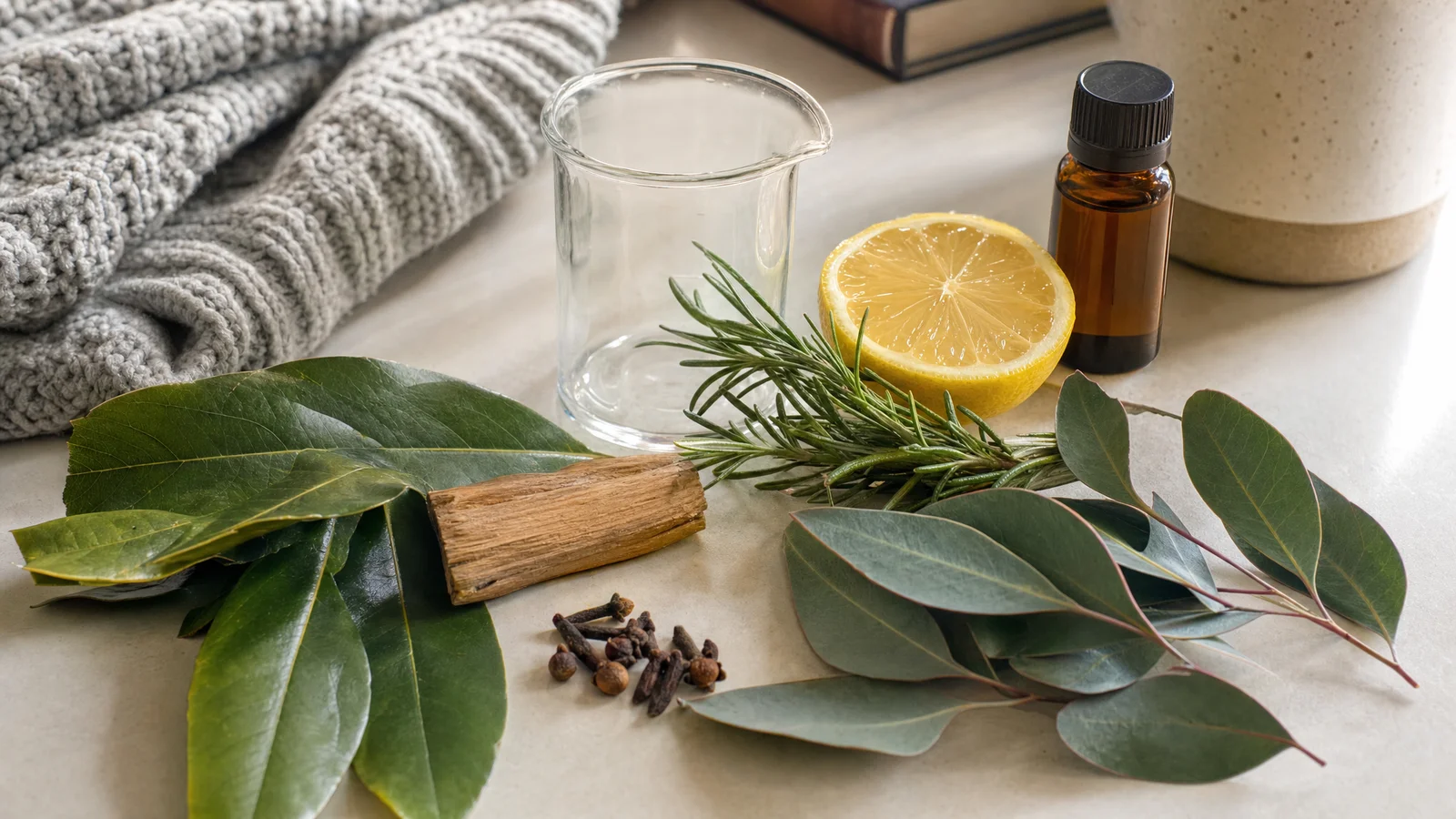
Camphor oil does not fill a blend the way a floral or a citrus does. It sharpens one. We describe it as a blend amplifier: a drop or two snaps lavender, rosemary, citrus and conifer notes awake. The easiest way to choose a partner is to decide what you want the camphor to do, and let that pick the pairing.
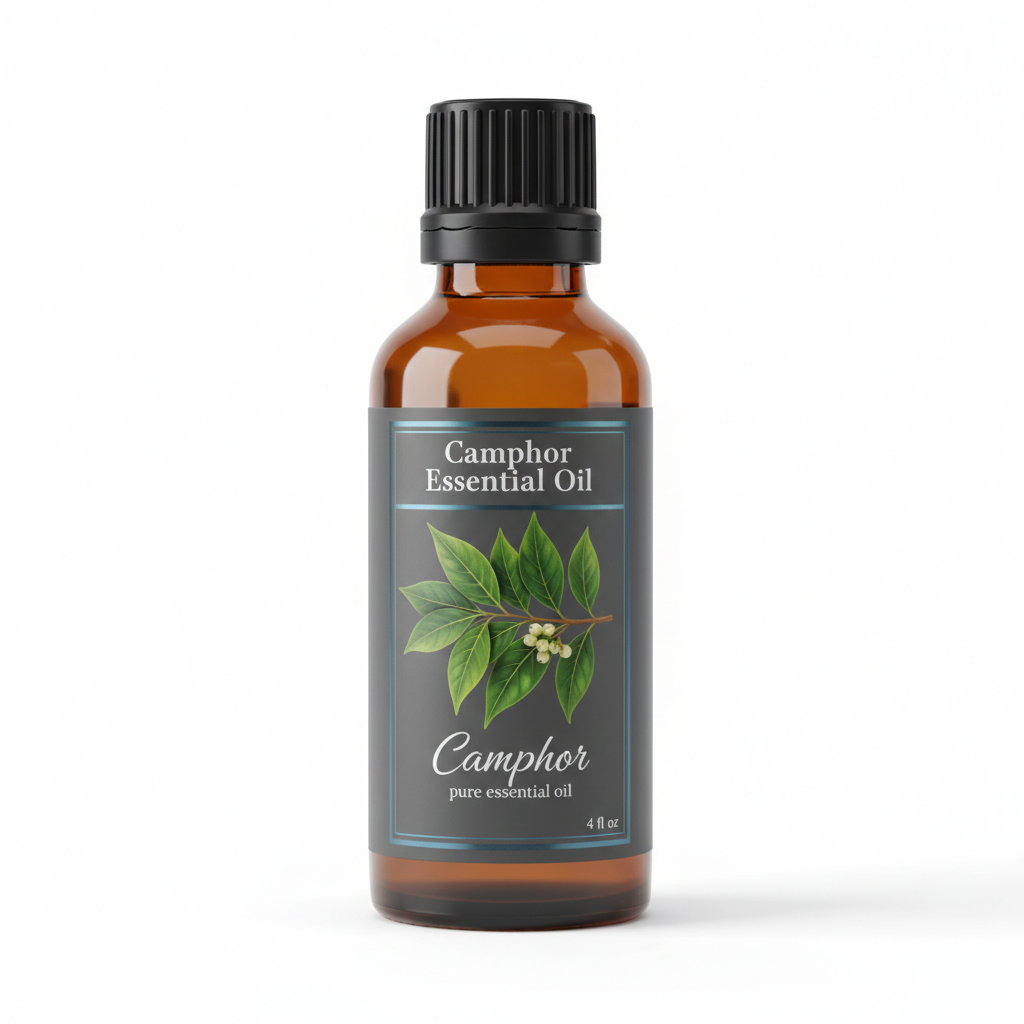
Camphor Essential Oil
Our own Camphor Essential Oil, in sizes from 0.5 oz to bulk.
From $9.99
Shop Now →What is already in the bottle
A published European specification for a white camphor fraction lists 1,8-cineole at 27 to 43 percent, limonene at 18 to 27 and alpha-pinene at 4 to 10, with camphor itself under 0.1 percent. The Tisserand Institute gives a broader range for camphor in white fractions, up to 9 percent and typically about 3. Cineole smells like eucalyptus, limonene like lemon, pinene like pine. That is a handy map for blending. A partner either repeats one of those notes, which makes it louder, or stands against them, which gives the blend contrast. These pairings are reasoned from that profile, not from a recipe card.

For a louder cool note: eucalyptus and peppermint
Eucalyptus is the camphor oil's closest cousin by chemistry. Medicinal eucalyptus oils are typically more than 70 percent cineole, so pairing them stacks the same facet at higher volume. You get a bigger cool note rather than a new idea, with the camphor adding dryness. Our three-way comparison puts them side by side.
Peppermint is different. Its character comes from menthol, which brings sweetness, and a touch of camphor dries it out. This pairing suits anyone who finds peppermint alone a little like candy.
One practical note for both: the Tisserand Institute urges caution with peppermint around small children's breathing, and describes its own eucalyptus guidance for children as cautious. Keep these pairings out of rooms children or pets share. Our diffusing guide has the questions we ask first.
To keep it recognizable: citrus and conifer
These are the pairings where a shared molecule does the work.
- Citrus oils repeat limonene, the lemon-like note camphor oil already carries, so a little camphor reads as extra snap instead of a stranger in the blend.
- Pine, fir and cypress repeat the pinene. Both are cool and green, and the camphor adds a dry mineral edge.
Some citrus oils are phototoxic on skin. For anything that touches skin, check the specific oil with its supplier or in Tisserand and Young's guide first.
For contrast: lavender, rosemary and cedarwood
- Lavender brings floral roundness that a white fraction lacks, since linalool, lavender's floral compound, is scarcely present in it. This is the pairing most likely to feel like a finished perfume idea. Our ho wood article shows how a floral oil and a cool one can come from the same species.
- Rosemary is herbal and sharp, closer in spirit to camphor. Expect something fresh and herbal. Rosemary oils vary by chemotype, so check which one your supplier offers.
- Cedarwood is a dry wood that lasts. Camphor is quick and cedarwood stays, so together they draw an arc: sharp first, dry at the end.
How to smell your way through a pairing
Blending is much easier when you slow down your nose. Put a drop of each oil on its own strip of paper, wave them gently, and smell each one separately. Then hold the strips together, fanned out like a hand of cards, and notice how the combination changes as you move them closer. This costs almost nothing and shows you in seconds whether camphor is going to tighten a blend or take it over.
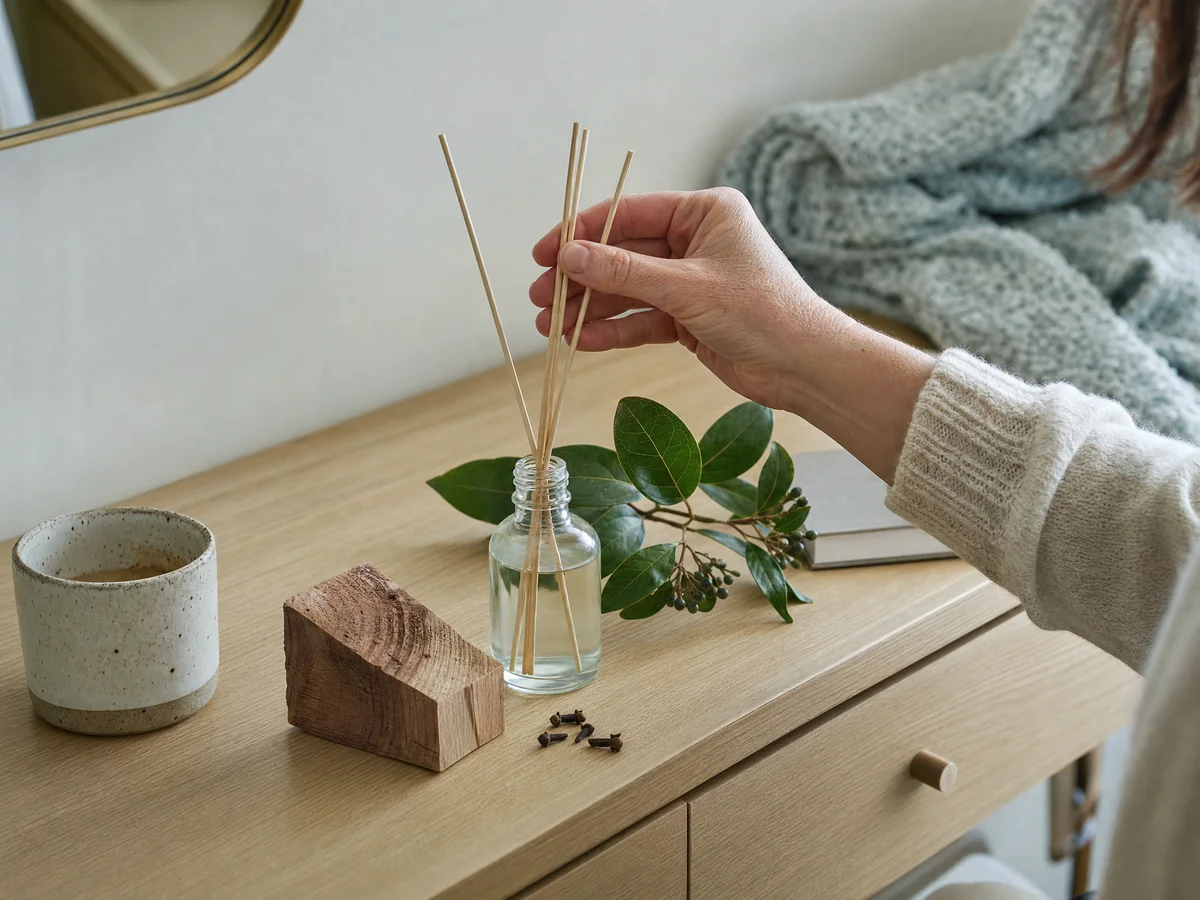
Give your nose a break between rounds. Camphor tires the sense of smell faster than most oils, so step away, breathe some plain air, and come back before you decide. A blend that seemed too sharp at the first sniff often turns out friendly on the third.
A quick chooser
| You want | Reach for |
|---|---|
| A louder cool note | Eucalyptus |
| Less sweet mint | Peppermint |
| Brighter citrus | Any citrus oil |
| Greener, cooler wood | A conifer oil |
| Rounder, floral | Lavender |
| A longer finish | Cedarwood |
Going beyond two oils
When you move past a pair, fix the heart of the blend first, whether that is lavender, cedarwood or citrus, then add camphor last, one drop at a time. It is easy to overshoot and impossible to take back out. Keep a written count so a good trial can be repeated, and let a promising blend rest overnight before judging it, since the first minute of a sharp top note is its least representative moment. Avoid piling camphor onto two or three other cineole or menthol oils. You would stack the same cool facet three times, which makes a blend louder rather than better. If you want warmth, put a warm material in the heart.
Our blending walkthrough shows how to size a first test, and the diffuser article applies these pairings to a room. The partner oils come from an essential oil supplier, as camphor is the one oil we sell. You can find it in our shop, with larger sizes on our bulk page and a guide to buying camphor essential oil in bulk for anyone who blends often.
Keep a little notebook
Write down what you tried, how many drops of each, and what you thought of it after a day. A scrap of paper is enough. Months later, when you have forgotten which pairing you loved, the notes will remember for you. And if a blend goes wrong, you'll know exactly which drop to leave out next time.
Think of camphor as a pinch of salt: judge it by what one drop does to the blend, not by a fixed percentage of the formula.
Camphor Essential Oil
Camphor Essential Oil from our own shop, in sizes from 0.5 oz to bulk.
From $9.99
Shop Now →Sources & Further Reading
- EFSA FEEDAP Panel, 2022. Camphor white oil. PMC8756382
- Tisserand Institute. Ho wood, ravintsara and camphor oils from the same plant. tisserandinstitute.org
- Mieres-Castro D et al., 2021. Pharmaceuticals 14(12):1210 (Eucalyptus globulus essential oil composition). PMC8706319
- Tisserand Institute. Kids and inhalation safety. tisserandinstitute.org
- PubChem. Odor records for 1,8-cineole, limonene, alpha-pinene and linalool. pubchem.ncbi.nlm.nih.gov