Camphor Balm Recipe: Measured by Weight, Not Drops
Most balm recipes finish with "add 20 drops," and that is the step we would change. Drops are a surprisingly loose unit, and with a strong oil like camphor the measuring is where a home recipe is won or lost. Here is a camphor-scented balm worked out in grams instead.
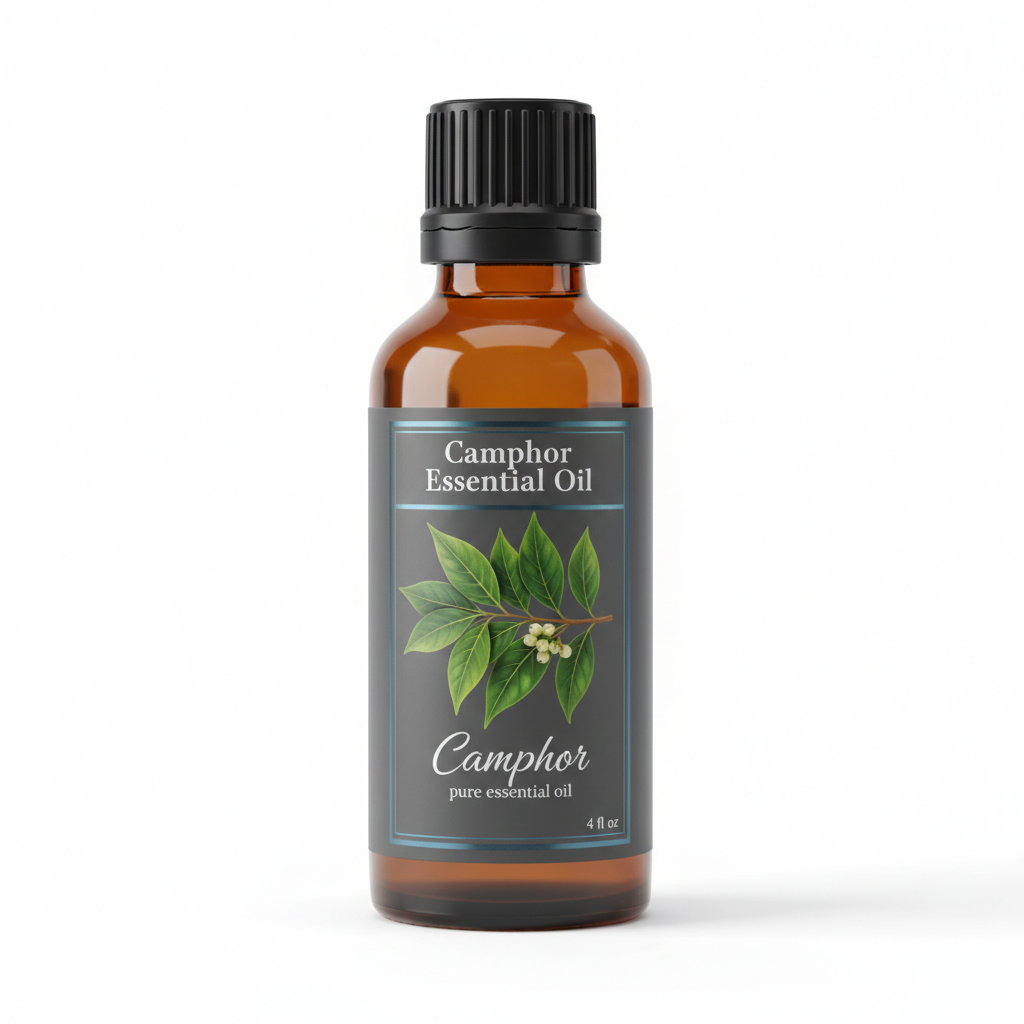
Camphor Essential Oil
Our own Camphor Essential Oil, in sizes from 0.5 oz to bulk.
From $9.99
Shop Now →Why we weigh
The Tisserand Institute collected three drop-weighing studies (1999, 2000 and 2016). Twenty drops of essential oil averaged 0.66 g, and a millilitre came to anywhere between 20 and 40 drops depending on the dropper. If a recipe assumes 30 per millilitre and your bottle delivers 20, you add a third less than planned; at 40, a third more. For a balm where you care about the percentage, that is a wide margin.
A scale that reads to 0.01 g takes the guesswork out, since oil at 1% of a 30 g batch weighs just 0.30 g. A kitchen scale that reads to whole grams cannot register that at all. If you only have drops, treat the result as a rough scent level and stay at the low end.
Decide the percentage first
We recommend diluting our camphor oil to 0.5% to 2% in a carrier before any skin contact, and for a balm we work in the 1% to 2% part of that range, by weight of the finished balm. That is our own conservative choice for a skin-active oil, set with the following in mind.
Over-the-counter camphor products are drugs, made to a defined standard with a measured camphor ingredient. A white camphor oil is a different material. One published specification for a commercial camphor white oil, from the European Food Safety Authority, lists camphor at under 0.1% and 1,8-cineole at 27 to 43%, and the same opinion treats the oil as an irritant to skin and eyes and a skin and respiratory sensitiser. That is one specification, not a description of every oil, but it explains why we do not try to dial the oil up to a drug's strength. Our own Certificate of Analysis lists density, refractive index and optical rotation for one batch and no GC/MS; if you want a lot report, ask us in writing through the contact page. For the history of the regulations, see FDA camphor rules explained.
The base and the numbers
We use 20% beeswax to 80% carrier oil, a design choice: a bigger wax share gives a firmer balm and a smaller one a softer balm. The millilitre figures below divide grams by 0.878, the relative density on the Certificate of Analysis for our published batch.
| Batch | Beeswax | Carrier oil | Oil at 1% | Oil at 2% |
|---|---|---|---|---|
| 30 g | 6 g | 24 g | 0.30 g (0.34 ml) | 0.60 g (0.68 ml) |
| 60 g | 12 g | 48 g | 0.60 g (0.68 ml) | 1.20 g (1.37 ml) |
| 100 g | 20 g | 80 g | 1.00 g (1.14 ml) | 2.00 g (2.28 ml) |
At the average of 30 drops per millilitre, the 30 g batch at 1% is about 10 drops, but weighing it is better.
Making it
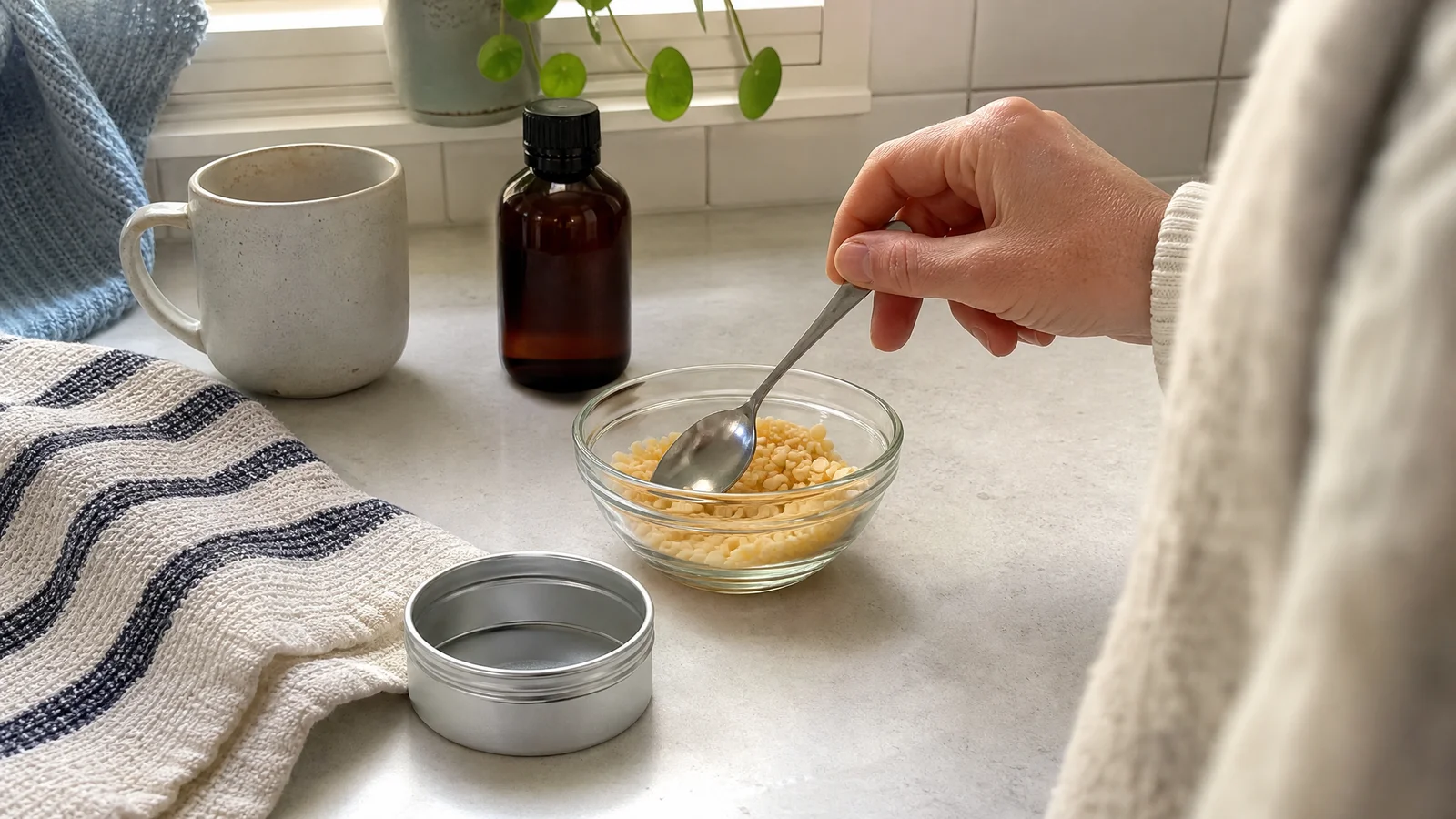
- Weigh the wax and carrier into a heatproof jar. We do not sell carrier oils or wax, so you will find them at a craft or soap-making supplier. Our carrier oil comparison explains why jojoba suits a jar you will keep and sweet almond one you will finish quickly (skip almond if anyone has a tree-nut allergy).
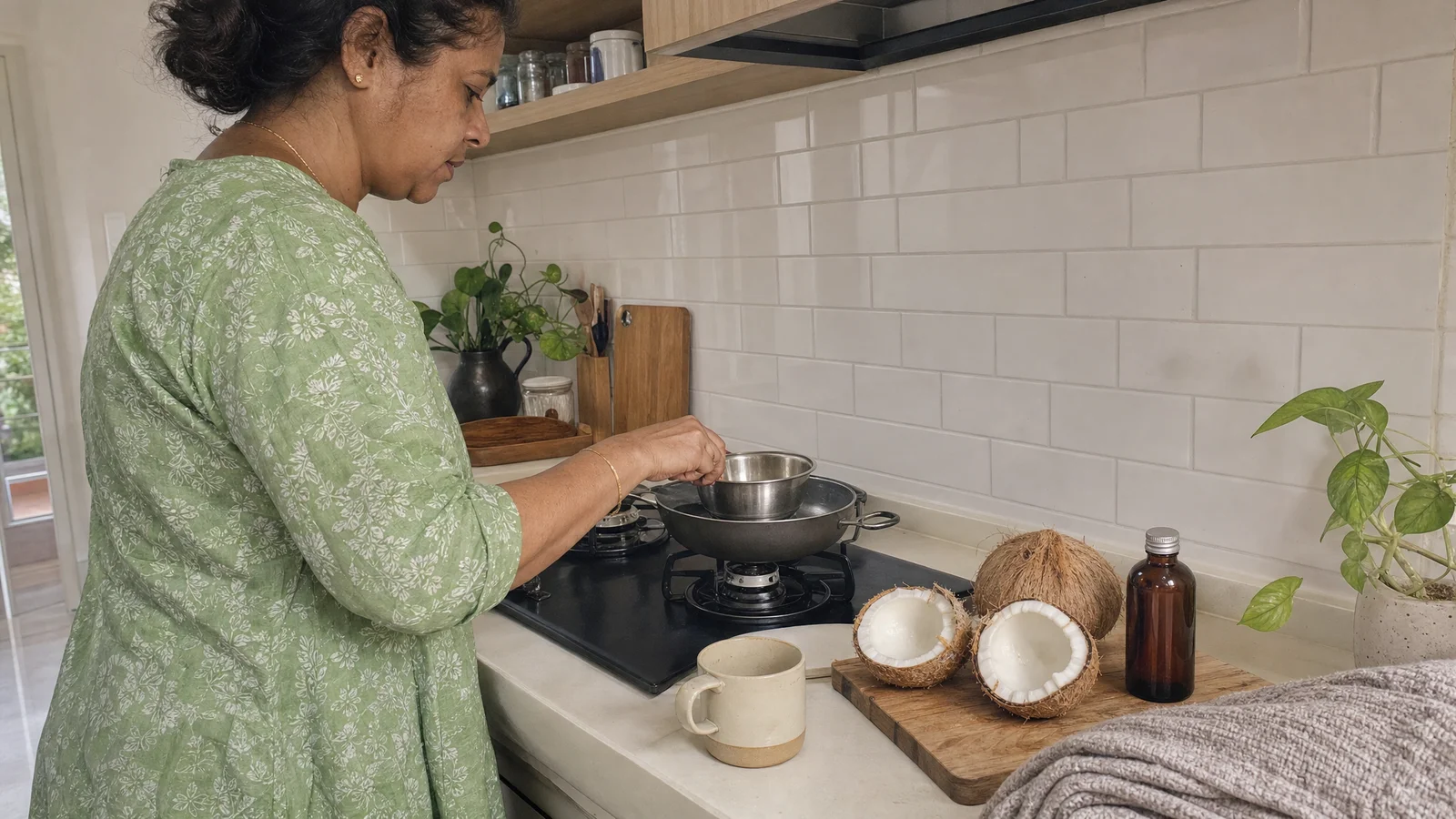
- Melt in a water bath, never over a direct flame, and keep the hot wax away from skin.
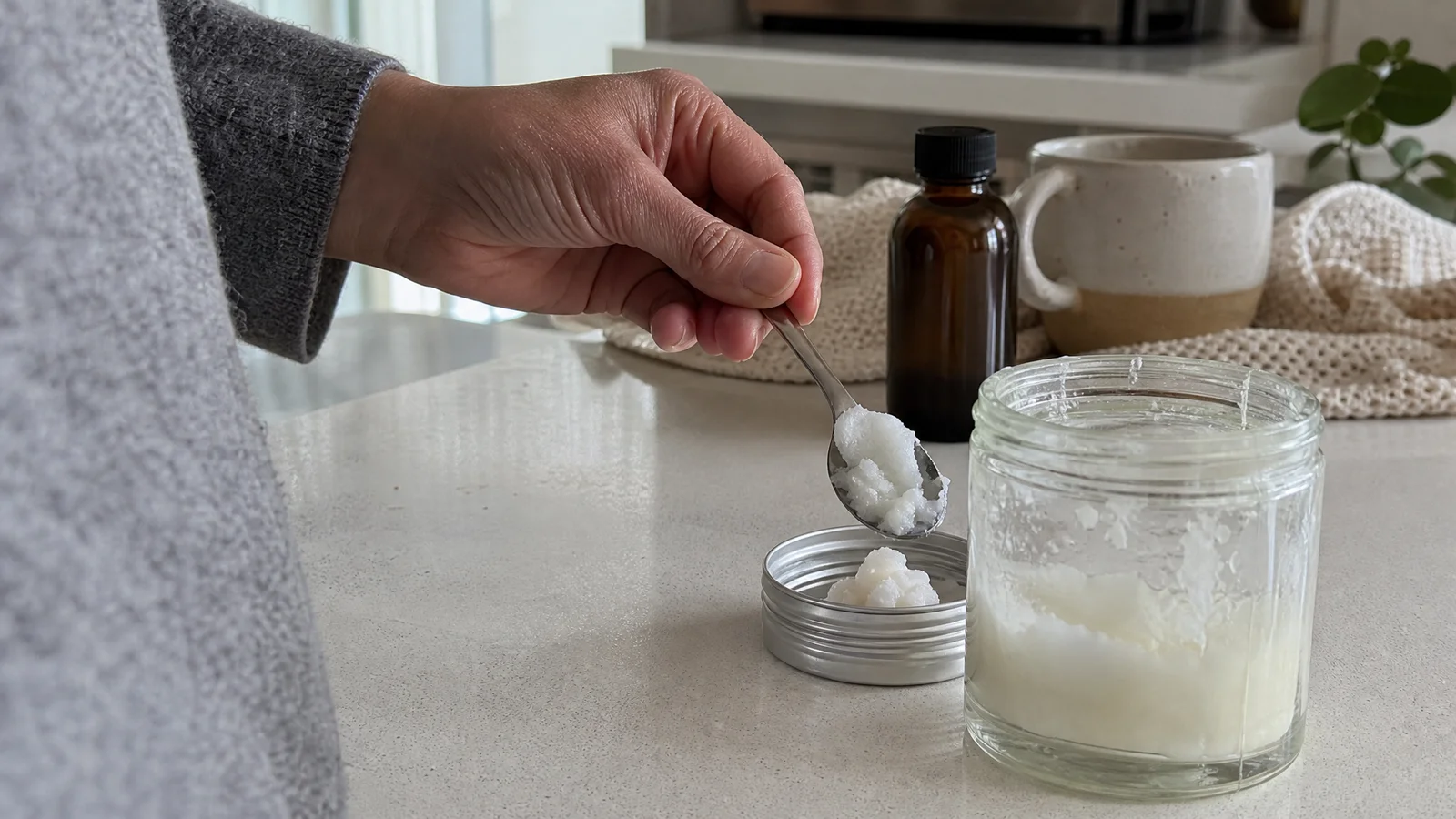
- Cool, then add the oil. Take the jar off the heat and wait until the edges start to cloud. Light, volatile aromatics escape from very hot wax, so adding the oil late keeps more of it.
- Stir well, pour into a clean tin, let it set undisturbed, and label it with the date, the percentage and "adult use only, keep away from children."
Using it well
- Patch test first. The steps are in our patch test guide.
- A thin layer on intact skin, never on wounds or damaged skin, never near the eyes, and not under a tight bandage. Wash your hands afterward, since oil travels from fingers to eyes and mouth.
- Adults only. We do not recommend camphor products for children, and a tin of balm is easy for a child to reach. Poison Control states that swallowed camphor from a chest rub can cause nausea, vomiting, seizures and death, so store the tin up high.
- Ask a physician or pharmacist first if you are pregnant or breastfeeding, have asthma or a history of seizures, or already use other products on the same skin.
If anyone swallows any of it, call Poison Help at 1-800-222-1222 right away. For handling in general, Is Camphor Oil Safe? goes further.
Little details that make a nicer jar
A few habits are worth the extra minute. Warm the tin or jar before you pour, by letting it sit in the water bath for a moment, so the balm sets smoothly and the surface looks even. Pour slowly in one steady motion. If a skin forms on top as it cools, you can leave it as it is; a firm, matte surface is part of what homemade balm looks like.
When it has set, open the lid and give it a gentle sniff. You are looking for a faint, cool, woody note in the background, not a smell that jumps out at you. If it is louder than you like, that is useful to know for the next batch, and you can write the new percentage on the lid.
How far a bottle goes
This is a few-drops project. A 0.5 oz bottle holds roughly 14.8 ml, about 13 g at our batch's density, which is enough for around 43 batches of 30 g at 1%. The math makes the point we started with: the oil is the smallest ingredient in the jar, so it pays to measure it with care.
Make a small batch, weigh the oil, write the percentage on the lid, and you will always know exactly what is in the jar.
Camphor Essential Oil
Camphor Essential Oil from our own shop, in sizes from 0.5 oz to bulk.
From $9.99
Shop Now →