Camphor and Coconut Oil: A 2-Ingredient Body Oil
A scented body oil does not get simpler than this: one carrier, one essential oil, nothing else. Camphor in coconut oil smells cool, crisp and clean, and it takes five minutes. Because there are only two ingredients, the whole recipe comes down to one number, the percentage of camphor, so we have worked it out by weight.
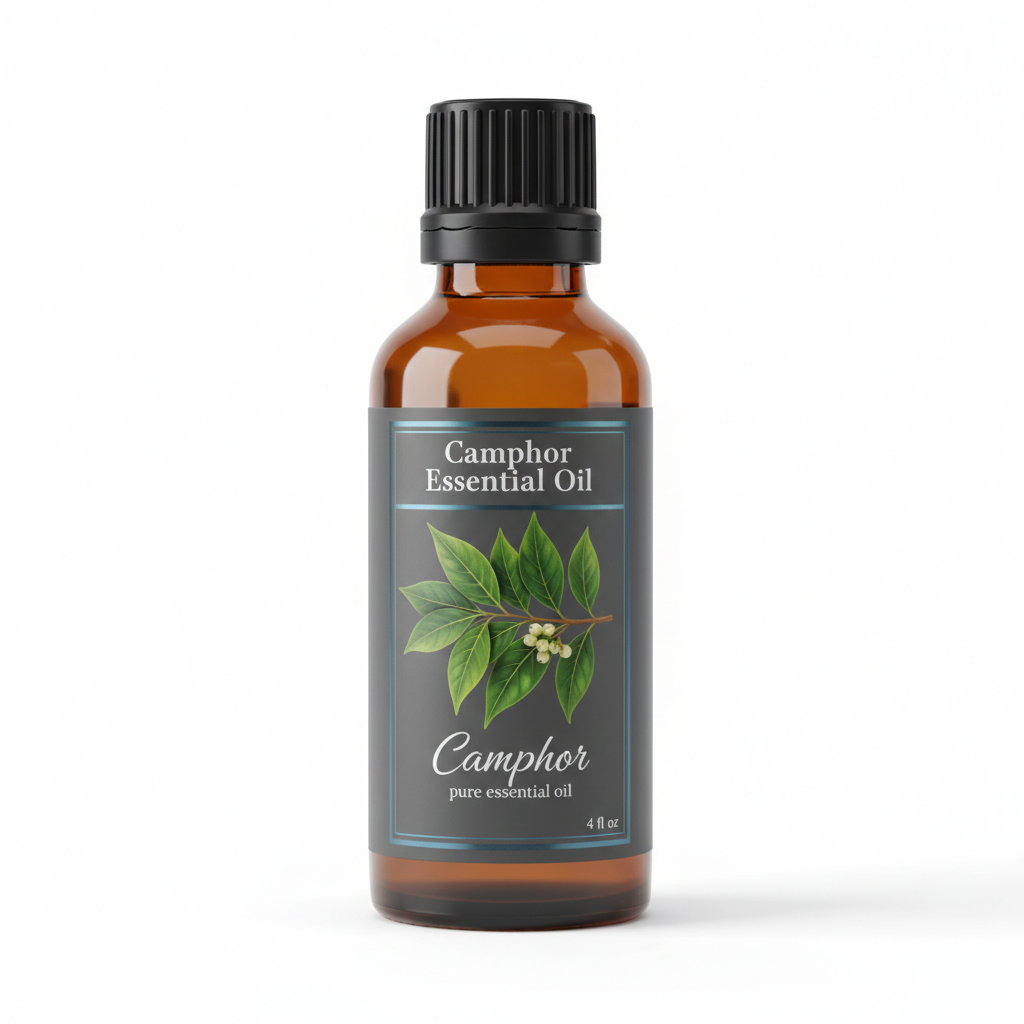
Camphor Essential Oil
Our own Camphor Essential Oil, in sizes from 0.5 oz to bulk.
From $9.99
Shop Now →Is a skin blend what you want?
Camphor is potent, so it is worth asking whether you need it on skin at all. We recommend diluting to 0.5% to 2% in a carrier oil before any skin contact, patch testing first, keeping it away from the eyes, and keeping it out of reach of children and pets. This is a scented oil for adults only, not for any skin or health concern, and for those a pharmacist, physician or dermatologist is the right person. If all you want is the cool note, a drop on a cotton pad in a drawer gives you that with no skin contact; the closet guide shows how.
The ingredients
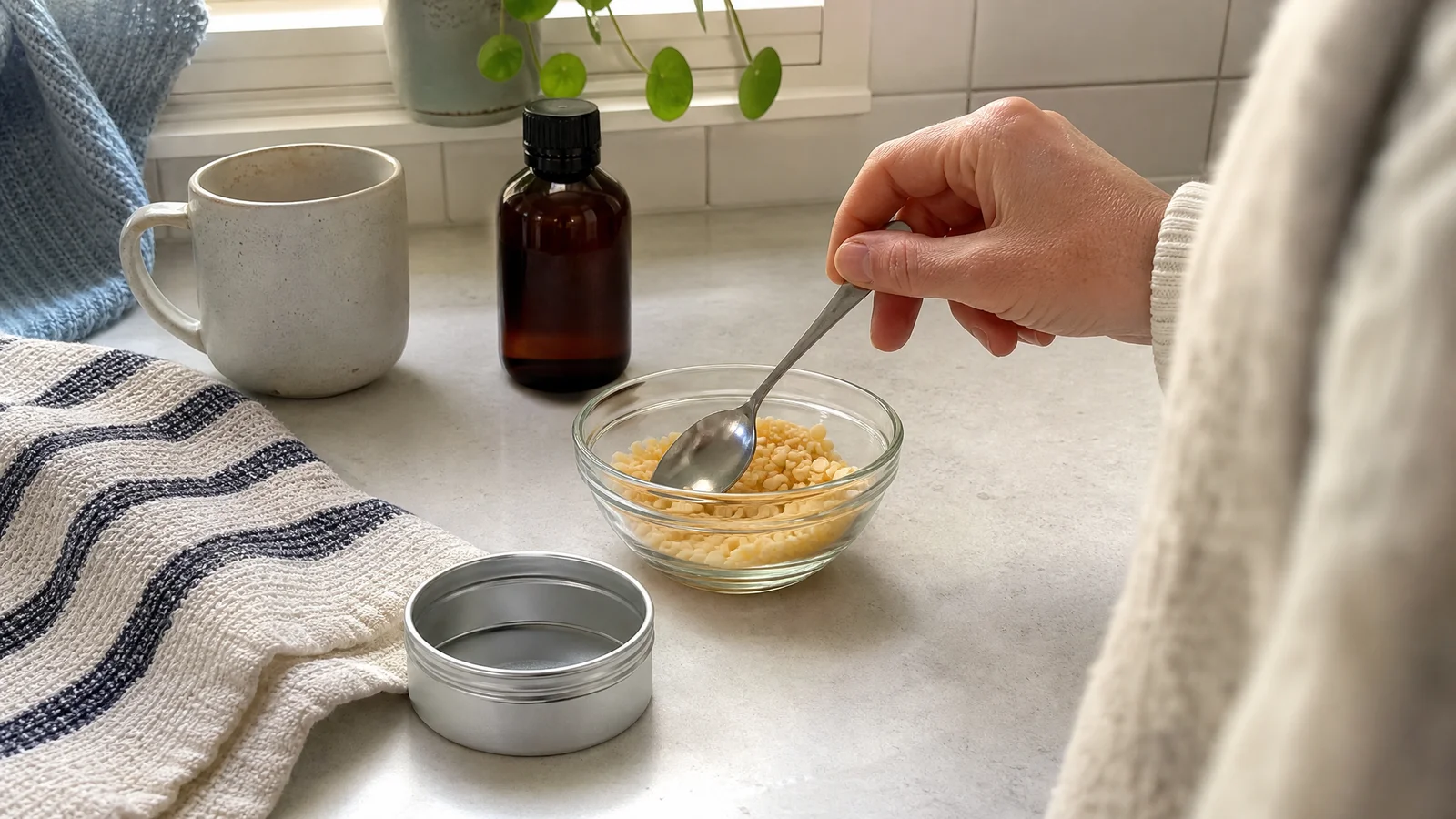
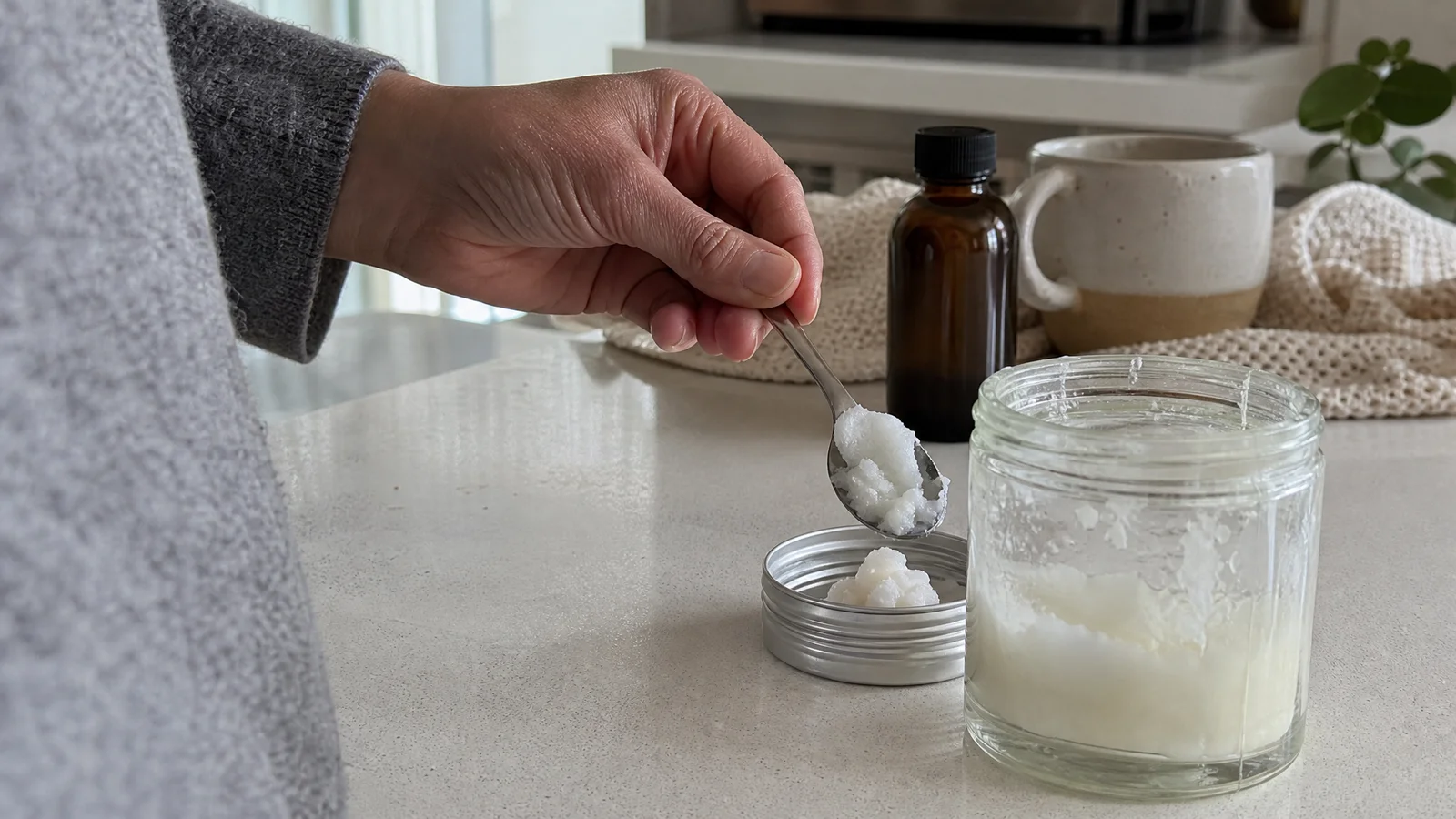
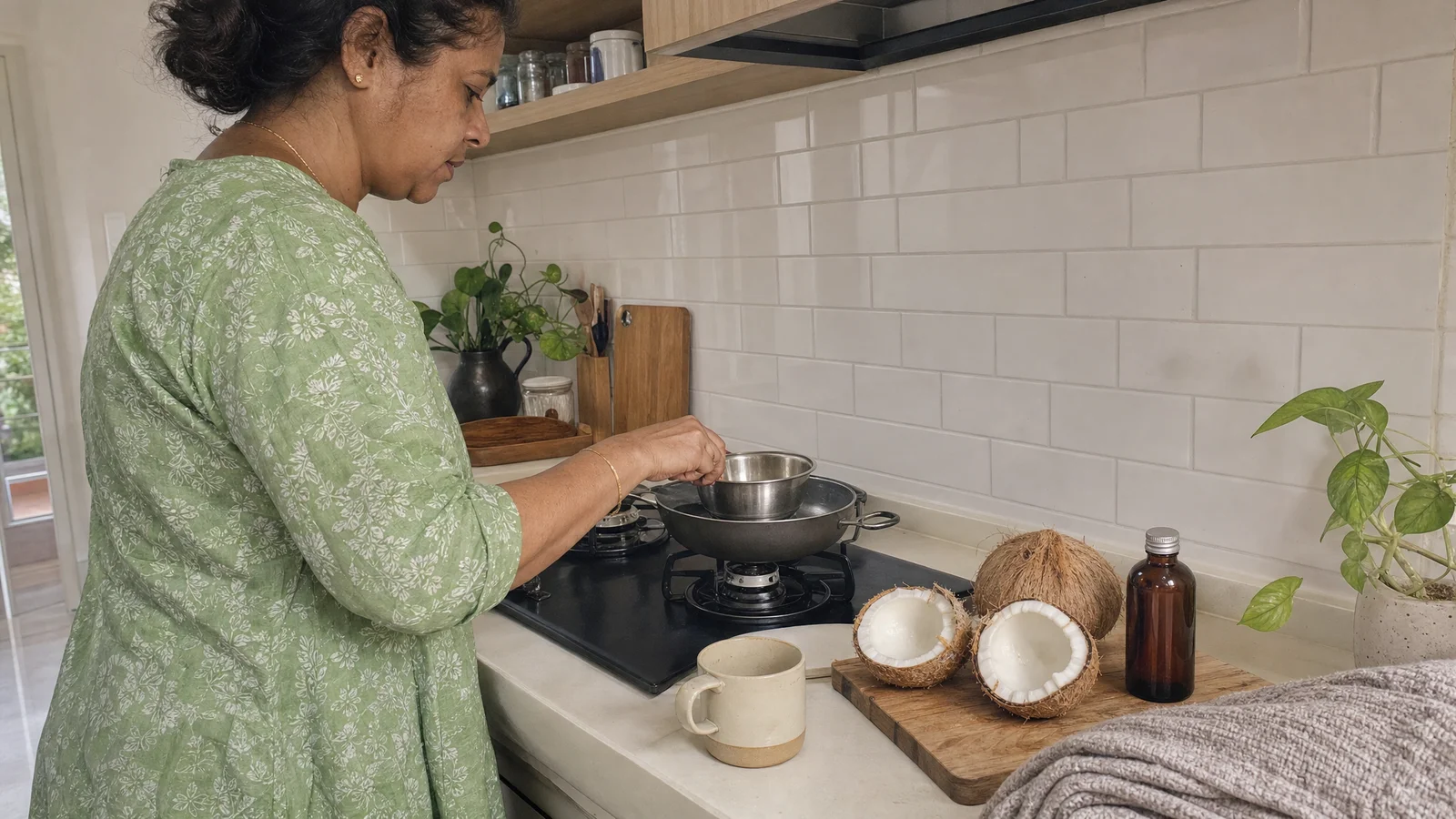
We sell the camphor oil; coconut oil comes from a food or cosmetic ingredient supplier. Choose fresh stock with a best-by date, since a stale carrier is a poor base for anything. Coconut oil is solid in a cool room and liquid in a warm one. If you would rather compare carriers, our post on the best carrier oils for camphor oil does that. Anyone allergic to coconut should skip this recipe. Others with sensitive skin should patch test; the American Academy of Allergy, Asthma and Immunology describes a few case reports of allergic contact dermatitis from camphor, including one person whose prick test was negative but who reacted to open exposure (AAAAI). Our patch test guide gives a method.
What you will notice
Coconut oil has a soft, creamy smell of its own, and camphor oil is sharp, cool and crystalline over a dry woody base, so the two are quite a contrast. When you stir them together, expect the coconut to sit up front for a moment and the camphor to follow behind it. At 0.5% the camphor is a whisper, something you catch when you lift the jar to your nose and not something you carry around with you. That is a good place to begin, because you can see how you feel about the combination before you go further.
The arithmetic, by weight
The batch on our Certificate of Analysis has a relative density of 0.878, so 1 ml is about 0.878 g. Drops are a looser unit: across three weighing studies the Tisserand Institute found 20 drops averaged 0.66 g, with 20 to 40 drops per millilitre, and its own chart assumes 30 (Tisserand Institute, drop size). For a 30 g jar of coconut oil:
| Dilution | Camphor oil by weight | Volume | Drops (30 per ml; range at 20 to 40) |
|---|---|---|---|
| 0.5% | 0.15 g | 0.17 ml | 5 (3 to 7) |
| 1% | 0.30 g | 0.34 ml | 10 (7 to 14) |
| 2% | 0.60 g | 0.68 ml | 20 (14 to 27) |
Because a drop varies so much by dropper, a scale reading to 0.01 g or a pipette marked in millilitres is more trustworthy than counting. Our suggestion is to start at 0.5% for a first jar: you can always add a little more camphor, but you cannot take it out.
Method
- Warm the coconut oil in a clean glass jar standing in warm water until it is clear. Do not use a direct flame.
- Let it cool until it feels just warm on the back of your hand.
- Weigh in the camphor oil and stir with a clean, dry utensil.
- Cap the jar, label it with the date and percentage, and store it cool and dark.
With no water in the jar, it does not need a preservative the way a spray does, but a wet finger adds water, so scoop with a dry spoon. Use it up within the coconut oil's best-by date. Our camphor oil typically keeps two to three years capped, cool and dark, and fine crystals in the cold are normal and clear on gentle warming.
Making it a nice jar
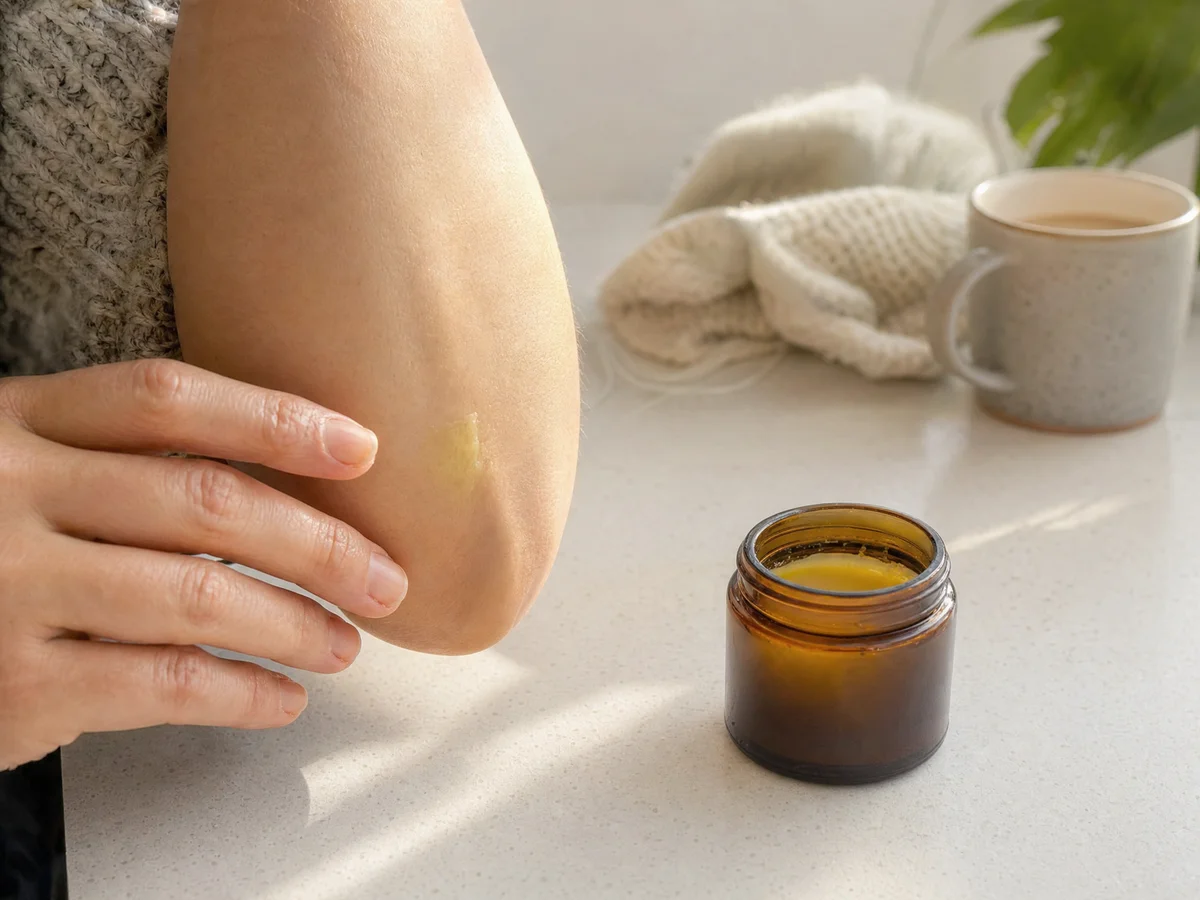
A small amber or dark glass jar with a wide mouth suits this recipe, because it keeps light off the oil and lets you scoop with a clean, dry spoon. Label the lid with the date and the percentage in plain marker, and add the best-by date of the coconut oil you used. If you ever hand a jar to someone, the label is the most thoughtful part of the gift: it tells them what is in it, how strong it is and that it is for adults only.
Keep the jar away from radiators and sunny windowsills. Coconut oil softens and melts easily, and a jar that goes through warm and cool cycles will look different from one that stays put on a shelf.
Where it goes and where it does not
- Arms, legs or shoulders, in a thin layer: the intended use, for adults, after a patch test.
- Face, eyes, lips and inside the nose: avoid.
- Broken or irritated skin: avoid.
- Children and babies: do not use; see camphor and children.
- Pets: do not apply, and keep pets from licking treated skin. Pet Poison Helpline says camphor should never be applied to dogs or cats (Pet Poison Helpline).
- Pregnancy or breastfeeding: ask your OB-GYN or midwife first; see camphor oil during pregnancy.
If you plan to give or sell the oil, check the current IFRA standard for your product type for a camphor limit, since our 0.5% to 2% line is general guidance for home use.
Smell the first jar before you judge it. A cool, clean scent that you notice only when you lean in is exactly what two ingredients should do.
Camphor Essential Oil
Camphor Essential Oil from our own shop, in sizes from 0.5 oz to bulk.
From $9.99
Shop Now →