DIY Camphor Room Spray That Actually Mixes
The classic room spray recipe, a few drops of essential oil shaken into a bottle of water, has a flaw you notice by the third spritz: the oil floats. The first sprays are nearly plain water and the last ones are close to neat oil landing on your sheets. Here is a camphor spray worked out by weight, with the two ingredients most recipes leave out.
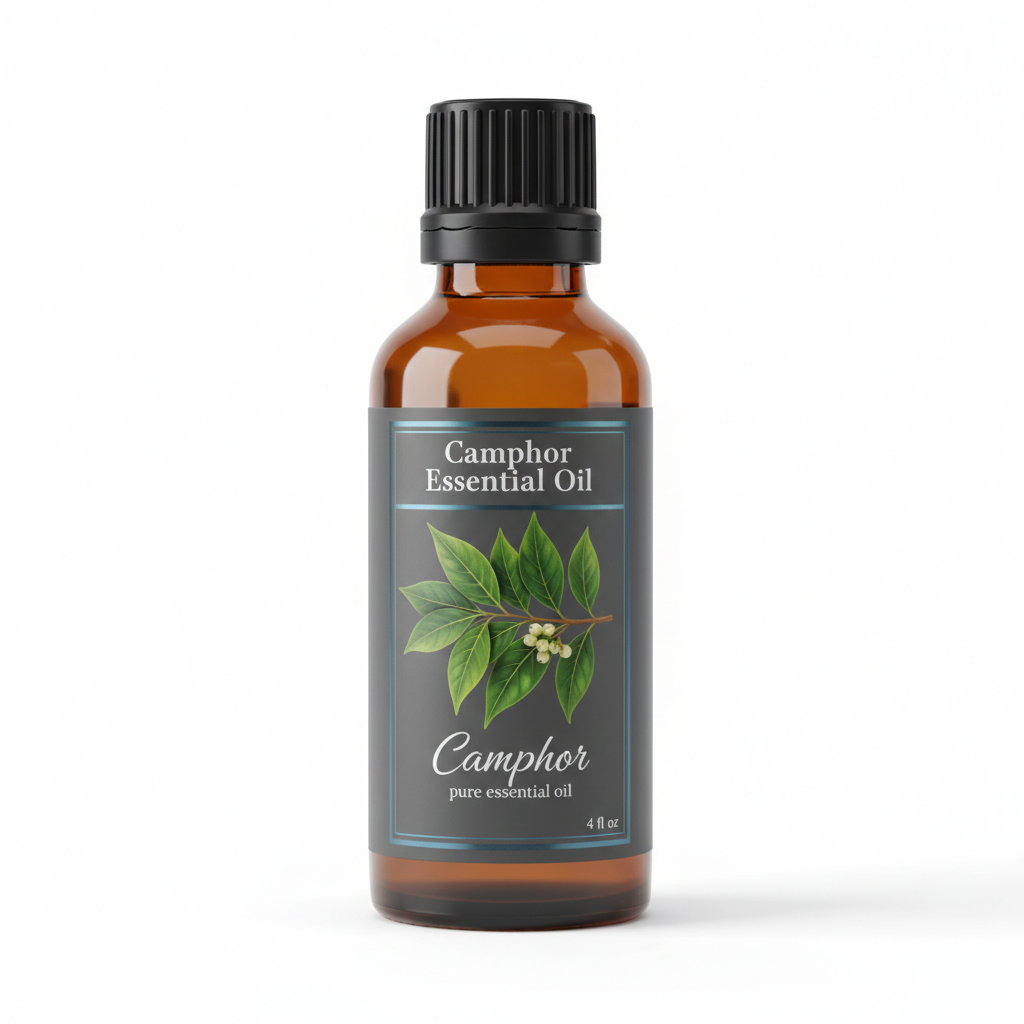
Camphor Essential Oil
Our own Camphor Essential Oil, in sizes from 0.5 oz to bulk.
From $9.99
Shop Now →Do you need a spray at all?
If all you want is a cool, crisp note in a closet or on a shelf, a cotton pad in a mesh bag does the job with no water, no preservative and no mist in the air; our closet guide shows how. A spray is for when you want a quick, even, light scent on linens or in a room, and you are happy to buy two craft ingredients and make small batches.
The two missing ingredients
A solubilizer. Oil and water separate, and craft suppliers sell polysorbates, which are surfactants that disperse small amounts of oil in water. The Soapery's room spray guide uses polysorbate 80 at 1:1 with the essential oil by volume, and mixes it into the oil first before adding that mix to the water. Ratios vary between suppliers, so treat 1:1 as a starting point and judge by how clear the mix looks.
A preservative. Water grows things. The same guide points out that witch hazel, water and essential oil alone lack a real preservative, and uses a broad-spectrum one, Geogard Ultra, in its recipe. The right amount is whatever your preservative's supplier states for a product like this. Without one, the spray is not something to keep.
The formula, by weight
Weigh on a scale that reads to 0.01 g if you can, since the oil is a fraction of a gram. For a 100 g batch:
| Ingredient | Amount | Role |
|---|---|---|
| Camphor essential oil | 0.5 g (0.5%) | Scent |
| Polysorbate 20 or 80 | 0.5 g (1:1 with the oil, adjust per your supplier) | Solubilizer |
| Broad-spectrum preservative | Your supplier's stated rate | Preservative |
| Distilled water | The rest, to 100 g | Base |
Half a percent is the low end of our 0.5% to 2% dilution guidance. That guidance was written for diluting the oil in a carrier before skin contact, so it is a handy reference here rather than a rating for sprays. Linens touch skin and a mist can be breathed, so we would start at 0.5% and not go above 1% for a spray, and check IFRA standards if you plan to sell what you make.
From grams to drops
The batch on our published Certificate of Analysis has a relative density of 0.878, so 0.5 g is about 0.57 ml. The Tisserand Institute's drop-weighing studies (1999, 2000, 2016) put a millilitre at 20 to 40 drops, with its charts assuming 30. That makes 0.57 ml roughly 17 drops, or 11 to 23 at the extremes. A scale or pipette is more reliable than a dropper, and polysorbate is thick, so weigh it as well.
Method
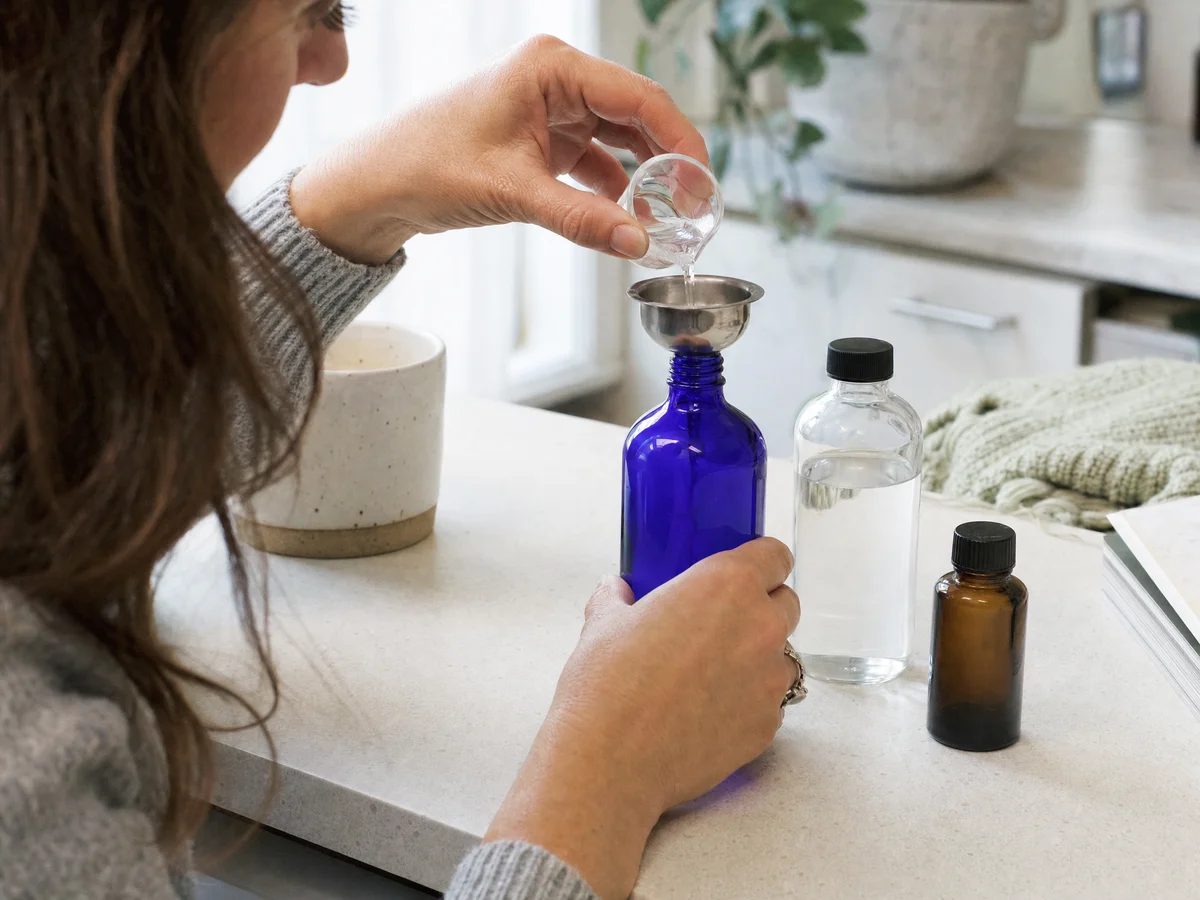
- Wash the bottle with hot soapy water, let it dry, then rinse it with isopropyl alcohol.
- Weigh the polysorbate into a small clean beaker, add the camphor oil, and stir until clear. If it will not clear, it needs more polysorbate.
- Add the water slowly while stirring. A little haze is normal.
- Stir in the preservative at your supplier's rate.
- Pour into a spray bottle, label it with the date and the percentage, and store it cool and out of reach.
The Soapery says a spray made this way lasts about a couple of months and recommends small batches. If it turns cloudy, smells off or changes colour, discard it.
What it smells like when it works
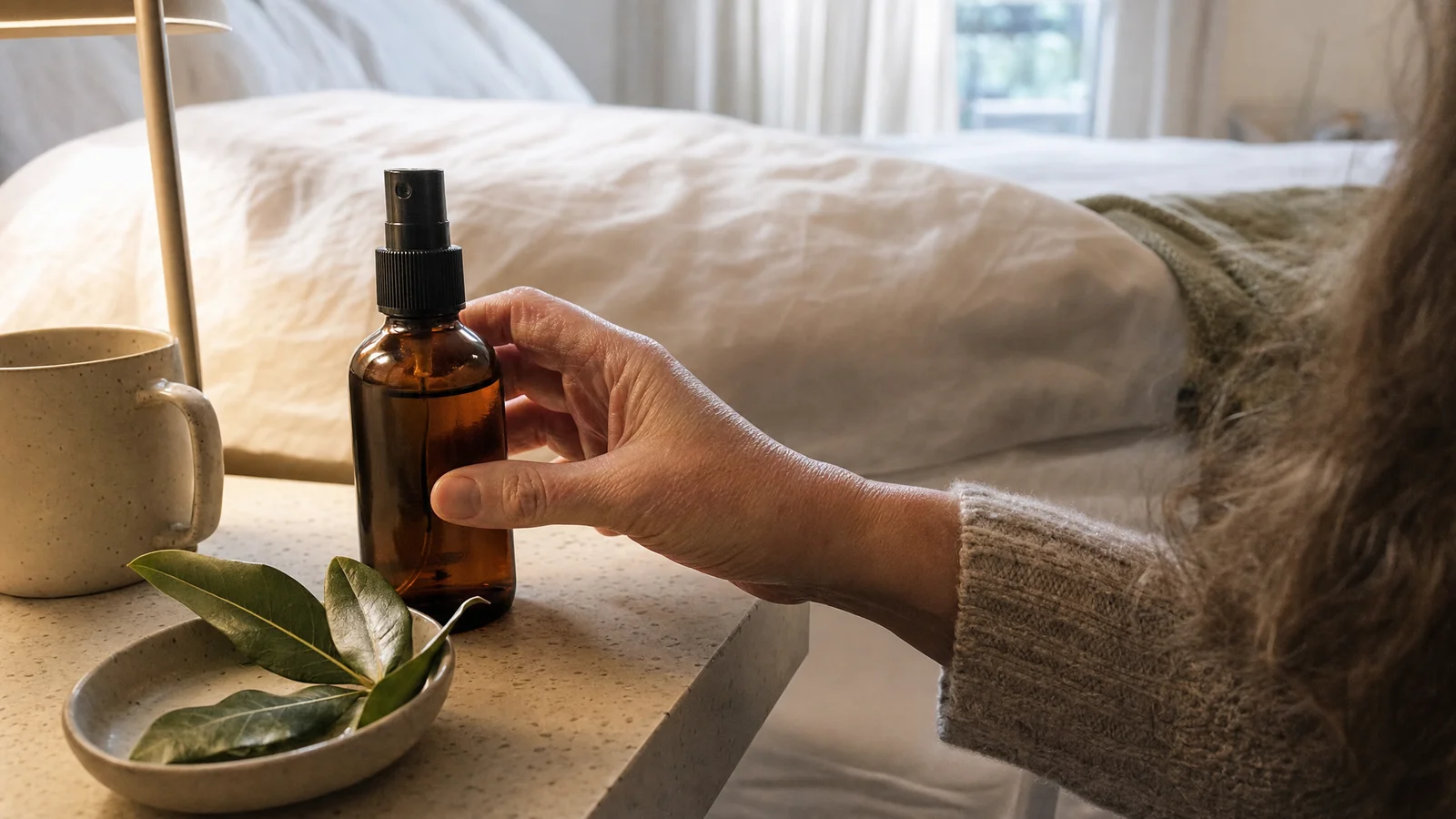
A well-mixed camphor spray smells different from the neat oil. The first mist is cool and crisp, and then it settles into a drier, woody whisper on the fabric. Because camphor is a top note, you will notice the brightness in the first minutes and a softer trace after that, so spray where you want a fresh feeling when you walk in, not as a long-lasting perfume. If the scent feels too sharp, the fix is almost always a lower percentage and a lighter hand, not a different oil.
On fabric, and around the household
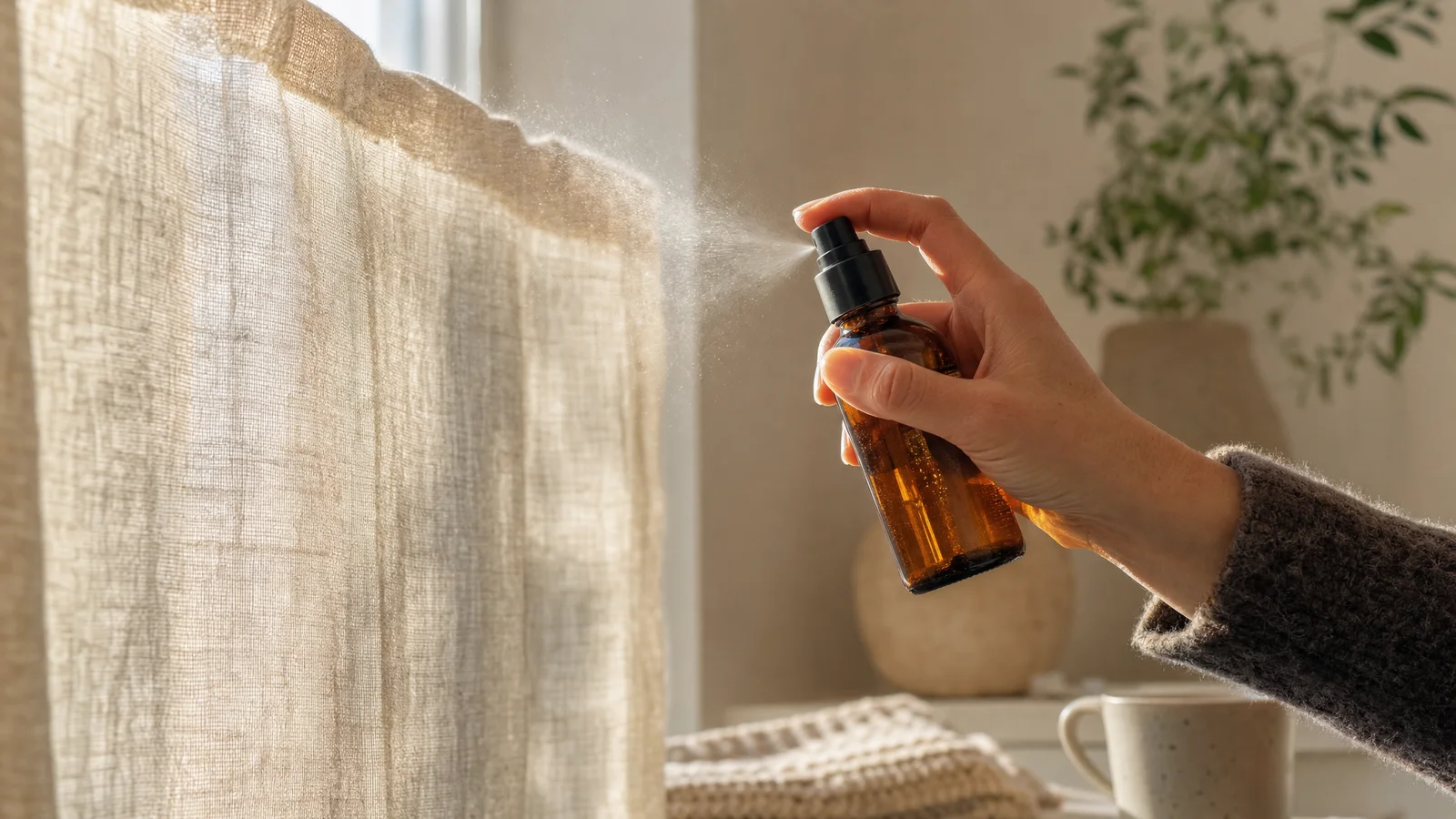
Spot test a hidden corner and let it dry first. Skip silk, leather and dry-clean-only fabrics unless you have checked them, do not spray bedding while someone lies on it, and do not soak anything. Mist away from infants, because camphor is contraindicated for them and for young children, and keep it away from places where pets sleep: Pet Poison Helpline reports camphor is toxic to dogs and cats. Our guides on pets and children explain more. If you are scenting laundry, our laundry guide says why we keep camphor oil out of the dryer.
Scaling and troubleshooting
For a 50 g test bottle, halve every line: 0.25 g oil, 0.25 g polysorbate, the preservative at the supplier's rate and water to 50 g. If your scale cannot read hundredths of a gram, make 100 g or more rather than guessing at drops. If the spray separates into an oily film within a day, the solubilizer was too low or the mixing too brief, so remake it instead of shaking before each use. If the nozzle clogs, the polysorbate was probably not fully blended. A dated note on each batch tells you which one gave the scent you like.
We sell the oil only, so polysorbates, preservatives and bottles come from a craft or cosmetic ingredient supplier, and a cosmetic chemist is the right person for questions about preserving a product. This is a scent product, nothing more: weigh it, solubilize it, preserve it, make a small bottle, and enjoy a cool, crisp mist.
Camphor Essential Oil
Camphor Essential Oil from our own shop, in sizes from 0.5 oz to bulk.
From $9.99
Shop Now →