Camphor Oil vs Vapor Rub: Why They Are Not the Same
Open a jar of vapor rub and the smell is unmistakable, and it is natural to wonder whether a bottle of camphor oil plus some wax would give you the same thing at home. We think the more useful answer is no, and the reasons are interesting, because they tell you a lot about what camphor oil really is.
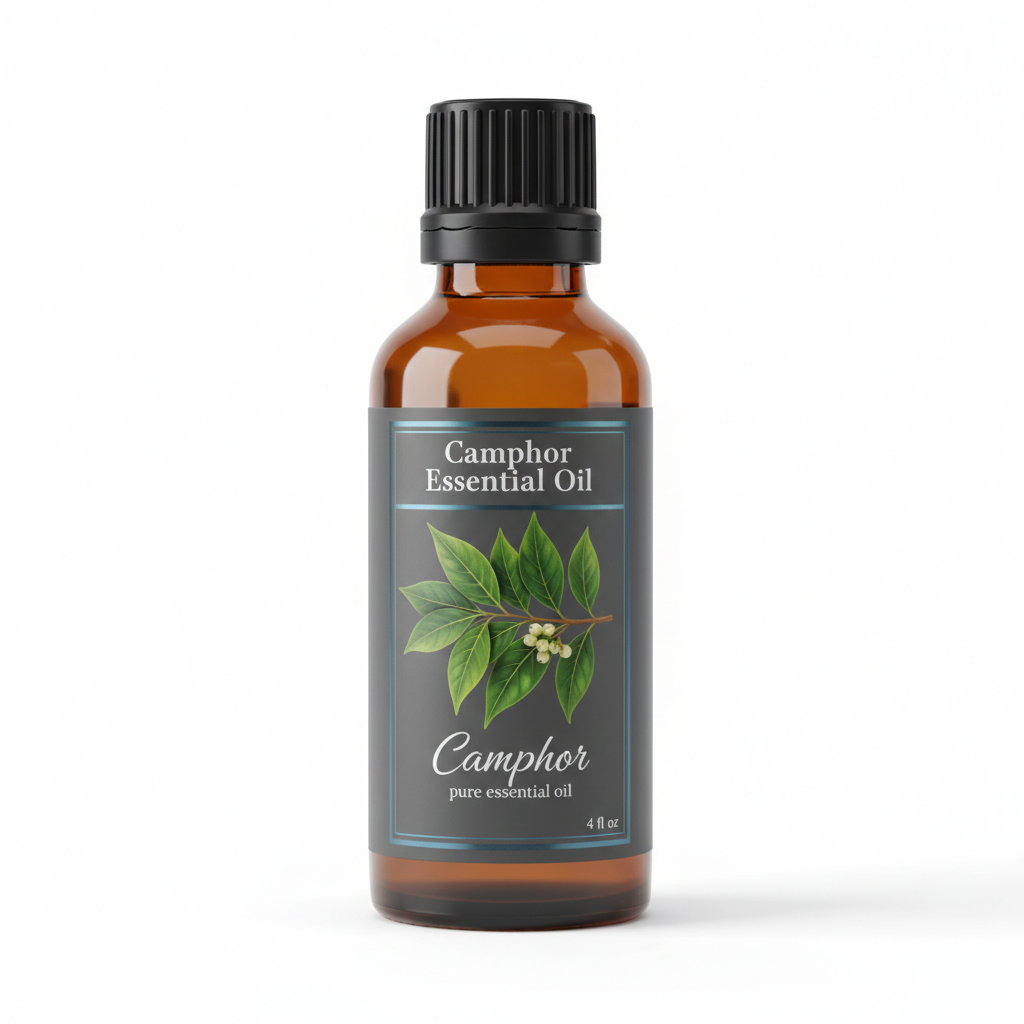
Camphor Essential Oil
Our own Camphor Essential Oil, in sizes from 0.5 oz to bulk.
From $9.99
Shop Now →What is in the jar
A pharmacy vapor rub is a drug product. It is formulated to a defined standard, with a measured amount of camphor as an ingredient, made under batch controls that a kitchen cannot match, and labeled with directions. Poison Control's overview of the best-known product makes the same point from the safety side: when swallowed, the camphor in a vapor rub can cause nausea, vomiting, seizures and death, and small children are at higher risk. It describes a 3-year-old with epilepsy who had a seizure after a mother applied a vaporizing chest rub for ten hours and added camphor tablets around the crib. A product like that belongs on a pharmacist's shelf, with a pharmacist to answer questions.
What is in our bottle
Camphor oil is not liquid camphor. The camphor crystals are taken out of the distillate first, and the oils come from what is left, cut into fractions that are white, yellow, brown and blue. We sell the white fraction, the one used for fragrance and craft. Our fractions guide explains the cuts.
The white oil's makeup is not what the name suggests. One published specification for a commercial camphor white oil, from the European Food Safety Authority's 2022 opinion on six batches, lists camphor at under 0.1% with 1,8-cineole at 27 to 43% and limonene at 18 to 27%. That is one specification and not a description of every bottle, but it shows the idea: a white camphor oil is a cineole-led aromatic material, not a stand-in for the camphor in a drug. The Certificate of Analysis we publish for one batch lists density, refractive index and optical rotation, with no GC/MS profile, so we do not state a camphor percentage for our oil. If a lot report matters to you, ask us in writing through the contact page.
It is worth saying that the instinct behind the question is a good one. People who like the smell of a vapor rub are often drawn to the idea of making things themselves, and we understand the appeal of a jar you mixed with your own hands. The trouble is that a pharmacy jar and a home jar only look alike. One has a measured composition and a label behind it, and the other has whatever you weighed on a kitchen scale that evening.
So why not copy the recipe?
Because the match would be an illusion. A homemade version has no verified camphor level, so you cannot tell how much you are applying, and layering on eucalyptus or menthol adds more strong, skin-active materials to an unmeasured mixture. We make no medical claims for our oil, and we are not suggesting a home product for coughs, congestion or any other health concern. Those questions go to a pharmacist or physician, who can choose a product with a known dose.
What our oil smells like on its own
Put a drop on a scent strip and wave it gently. You will notice something sharper and drier than the sweet, minty smell of a rub: cooling and crystalline, with a woody base underneath. It is quick to leave the strip, which is part of why we think of it as a top note and a blend amplifier rather than a main character. Smelling it by itself, before you imagine it as anything else, is the best way to see why it does not stand in for a pharmacy product.
If what you love is the scent
Plenty of people simply enjoy a cool, camphorous aroma, and that is a fine reason to own the oil. For a scented, cosmetic balm, our camphor balm recipe works it out by weight with the oil at 1% to 2% of the base, well inside our 0.5% to 2% dilution guidance, using a base you can buy at a craft supplier. It is an adults-only project, and for the reasoning on regulation see FDA camphor rules explained.
Children and the home
Camphor is contraindicated for infants and young children, and we do not recommend any camphor product for them. The Royal Children's Hospital Melbourne guideline reports serious toxicity in children from about 30 mg/kg of camphor, with seizures usually appearing within 90 minutes of ingestion, which is why jars and bottles belong out of reach. Our guides on children and poisoning symptoms go through this in more detail. If anyone swallows camphor, call Poison Help at 1-800-222-1222 immediately and do not wait for symptoms.
The simplest way to put it: the jar from the pharmacy is a medicine, and the bottle we sell is an aromatic oil, so each is best used for the job it was made for.
Camphor Essential Oil
Camphor Essential Oil from our own shop, in sizes from 0.5 oz to bulk.
From $9.99
Shop Now →