Camphor Foot Balm on a Petroleum Jelly Base
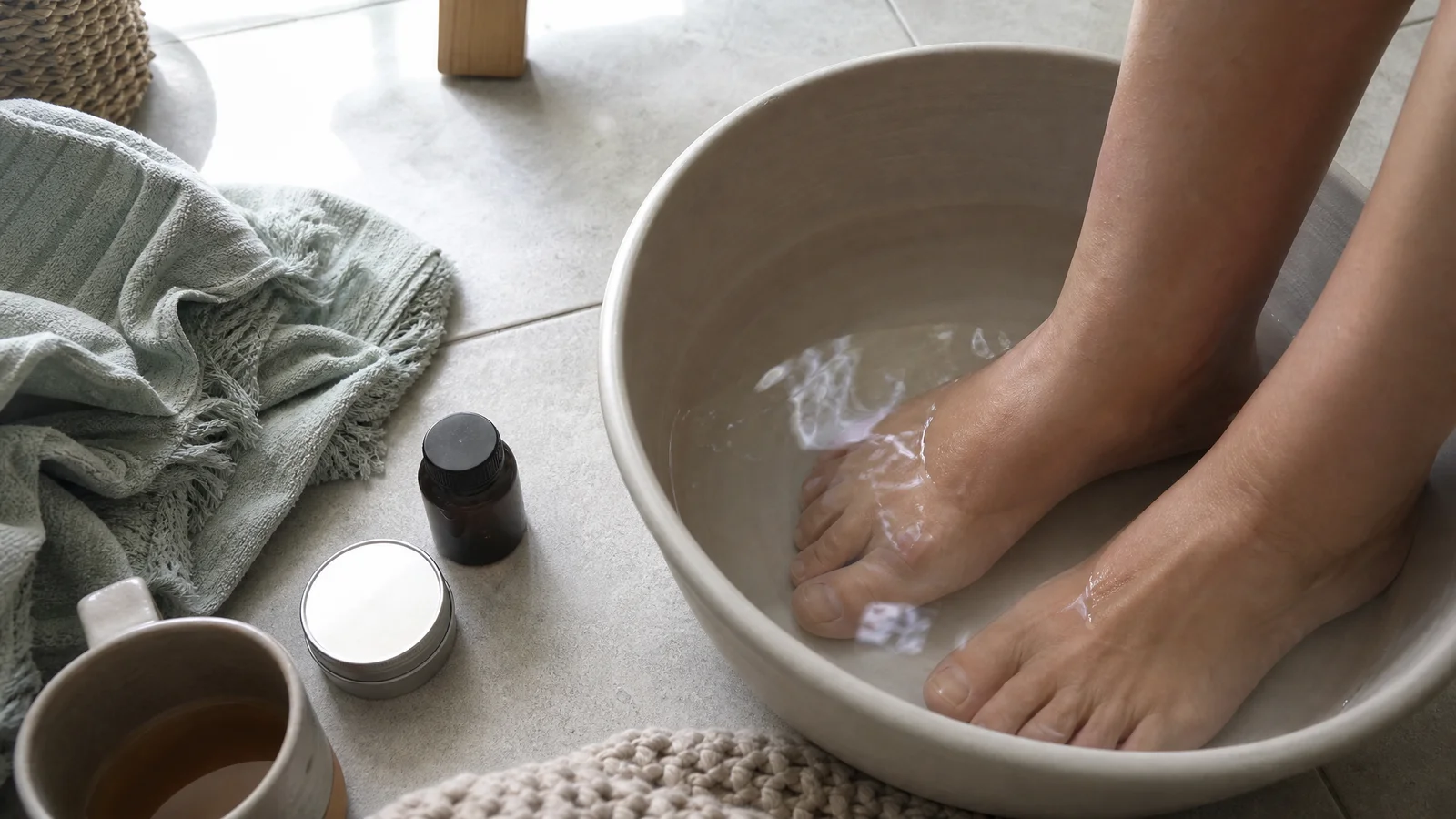
Foot-care advice usually opens with the fun part, the scented soak. We would start somewhere plainer. The dermatology routine for dry heels is short baths, moisturizer, and petroleum jelly at night, and a cool camphor aroma fits best as a finishing touch on that routine rather than a replacement for it.
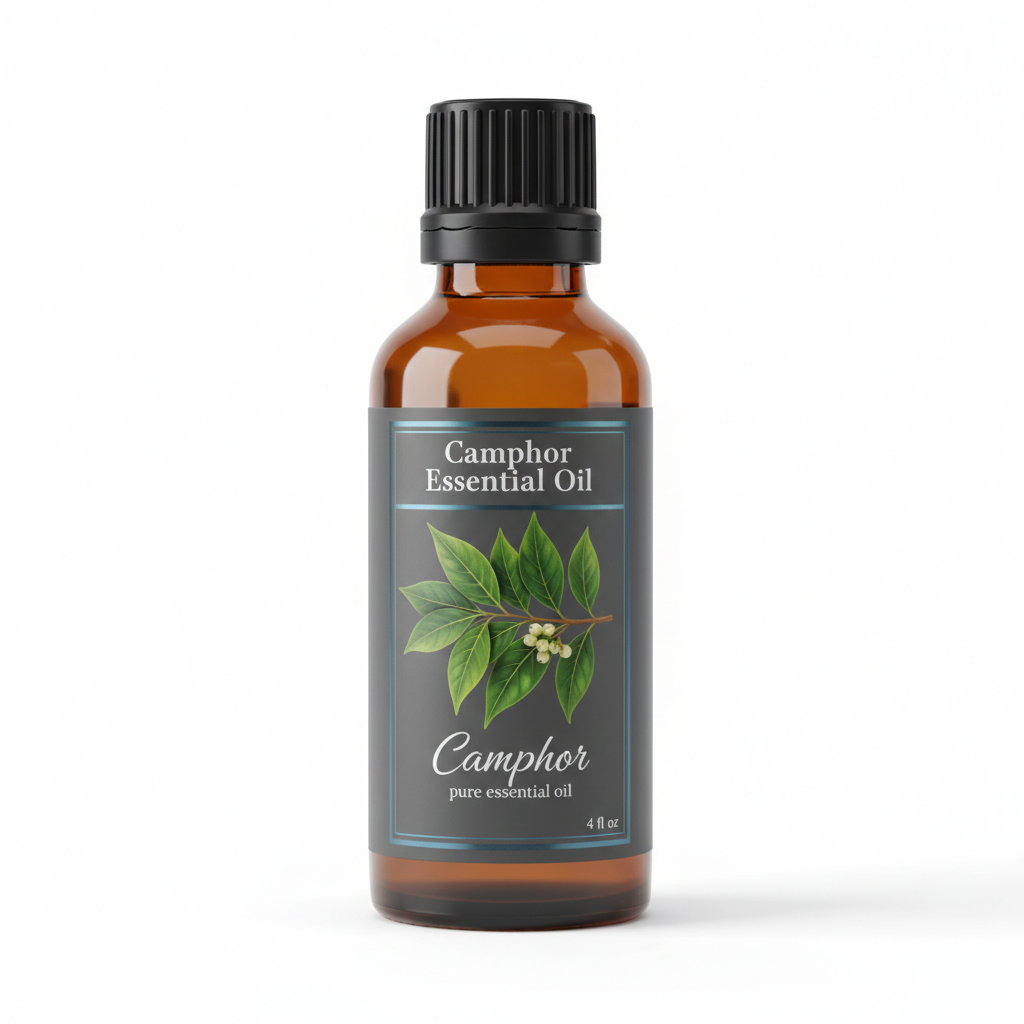
Camphor Essential Oil
Our own Camphor Essential Oil, in sizes from 0.5 oz to bulk.
From $9.99
Shop Now →What dermatologists ask for first
The American Academy of Dermatology's advice for dry, cracked heels is refreshingly simple: keep baths and showers to 5 to 10 minutes, because long soaks dry the skin out; moisturize within 5 minutes of bathing; consider a cream with 10 to 25 percent urea, an alpha hydroxy acid or salicylic acid; and before bed, apply plain petroleum jelly and pull on socks to protect the sheets. If heels are severe or do not improve, the next stop is a board-certified dermatologist, since cracked heels are sometimes tied to a medical condition such as diabetes.
Two things follow. A long, scented soak runs against that advice, so we keep ours short. And the word "plain" matters: a camphor balm trades a little simplicity for a pleasant smell. We think that is a fair trade for most adults, as long as it is understood as a scent choice.
A word on Epsom salt
Most soak recipes add Epsom salt, often with the idea that magnesium soaks in through the skin. A 2017 review in Nutrients looked at the evidence on transdermal magnesium and concluded that the claim is scientifically unsupported. That leaves Epsom salt as a familiar, pleasant ingredient in warm water. Enjoy it for that, follow the package, and keep the soak brief.
Why the oil goes in the jar, not the basin
Camphor oil does not mix into water. The Certificate of Analysis we publish for one batch lists a relative density of 0.878 at 20 C, lighter than water, so drops sit on the surface as beads and a thin film. The first thing your skin meets when you step in is the undiluted film, which is the opposite of how we ask anyone to handle this oil. Our dilution guidance is 0.5% to 2% in a carrier, always.
The cleaner answer is to put the camphor where you can measure it: in a balm you apply after the soak, with the water left plain. If you want a hint of the aroma at the basin, one drop on a cotton pad set nearby does it, with no contact with the water or your skin.
The balm, worked out by weight
For heels and soles we start at the bottom of our range, 0.5% of the balm by weight, in plain petroleum jelly. Because the batch on our Certificate of Analysis has a relative density of 0.878, we can convert grams to millilitres. Drops vary by bottle, so treat them as a rough guide; the Tisserand Institute's weighing studies put a millilitre at anywhere from 20 to 40 drops.
| Balm size | Petroleum jelly | Oil at 0.5% | Volume | Drops (20 to 30 per ml) |
|---|---|---|---|---|
| 1 oz | 28 g | 0.14 g | 0.16 ml | 3 to 5 |
| 2 oz | 57 g | 0.29 g | 0.32 ml | 6 to 10 |
| 4 oz | 113 g | 0.57 g | 0.64 ml | 13 to 19 |
A 1 oz jar only needs a few drops, which is hard to measure well, so 2 oz is a more comfortable batch.
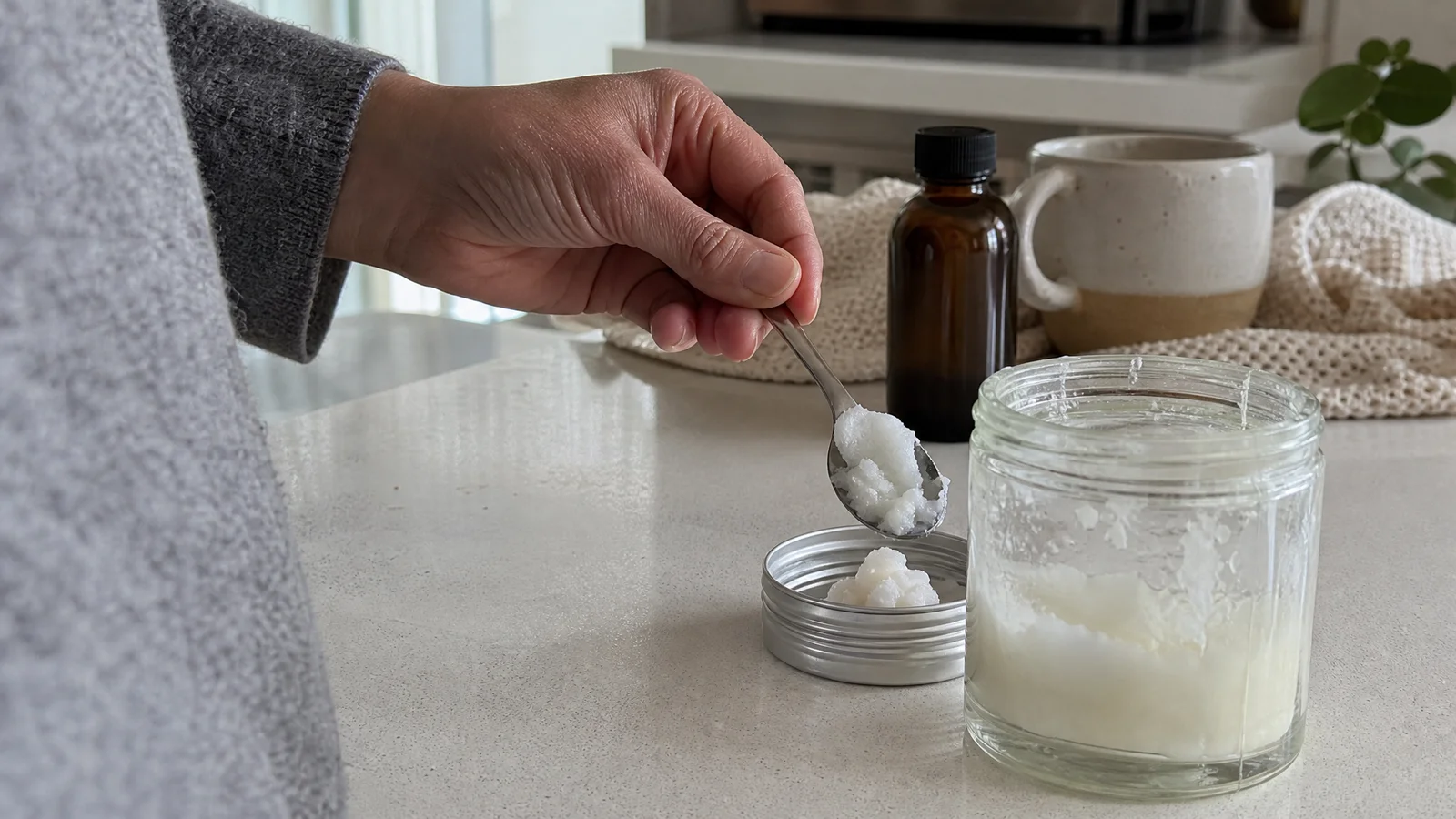
- Stand a jar of plain petroleum jelly in a bowl of warm water until it softens. Skip the open flame.
- Let it cool until it is soft but not hot. Camphor oil is thin and volatile, so it escapes quickly from a hot base.
- Stir in the oil with a clean rod, scraping the sides, then pack the balm into a clean jar and label it with the date and "0.5%".
- Patch test on the inside of the forearm first; our patch test guide has the steps.
- At night, smooth a thin layer over clean, dry, intact skin on the heels and soles, then put on socks. Keep it off the skin between the toes, off any crack, and away from the face, and wash your hands afterward.
The same recipe logic, with a firmer base, is in our camphor balm guide, and Is Camphor Oil Safe? covers handling in general. The oil comes in several sizes, and since this project uses a fraction of a millilitre, the smallest bottle holds many batches.
Make it a small ritual
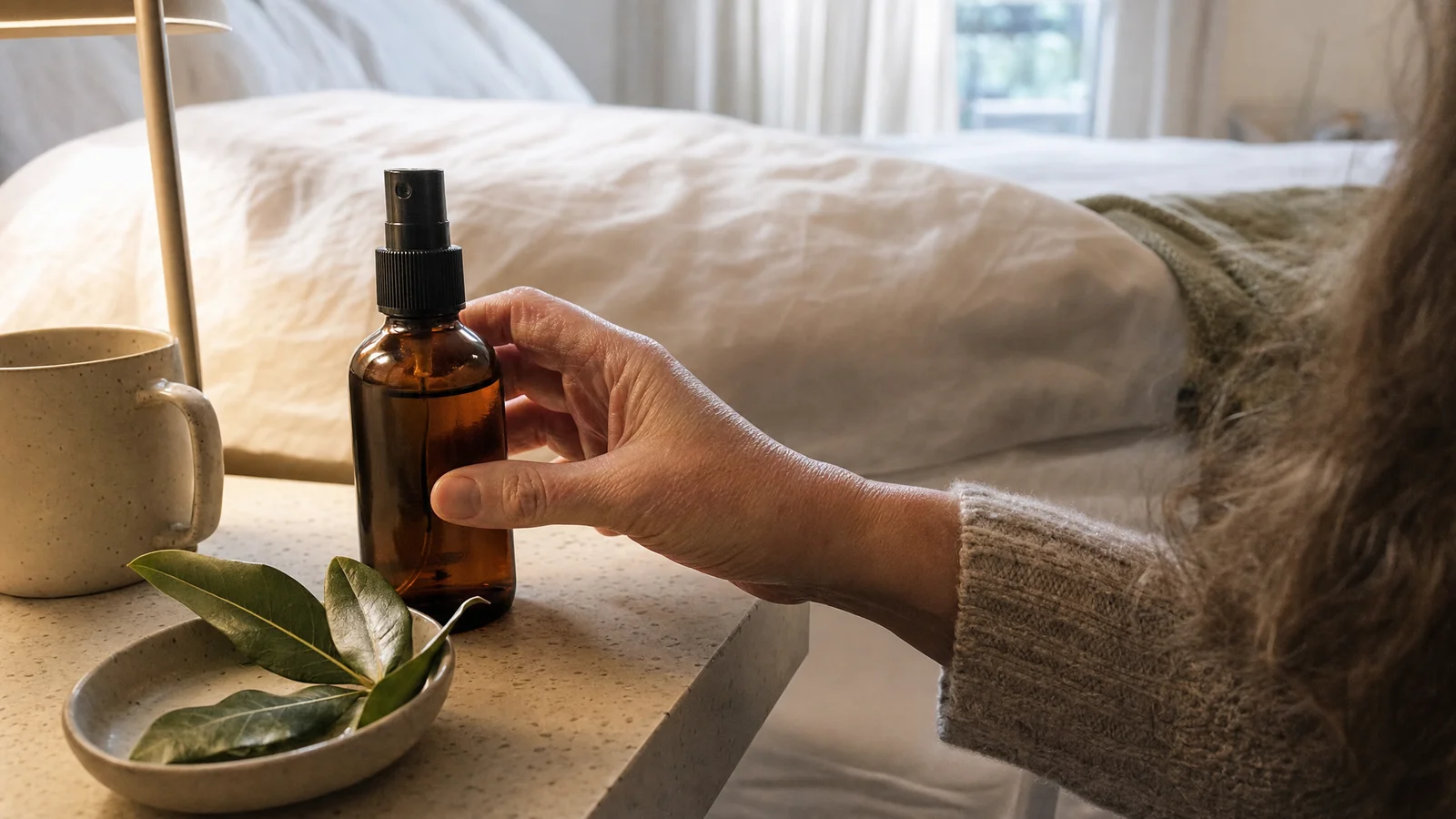
One thing we like about a night-time balm is that it gives the end of a day a clear edge. Rinse briefly, dry your feet properly, press the balm on in a thin layer, pull on clean cotton socks and be done. The jar by the bed becomes a small habit, and because the scent is faint and cool, you only notice it for a moment at the start.
Who should skip it
- Anyone with diabetes, reduced feeling in the feet, or poor circulation. Numb feet cannot judge water temperature or notice a reaction, so a podiatrist or physician should set the routine.
- Anyone with cracked skin that is bleeding, red, swollen or sore. That is a question for a doctor or dermatologist, not a balm.
- Households with infants and young children. Camphor is contraindicated for them, and we do not recommend any camphor product around a small child. Keep the jar out of reach.
- Anyone pregnant, breastfeeding, or with a history of seizures. Ask your physician or pharmacist first.
- Homes with cats and dogs. Pet Poison Helpline says camphor is absorbed through the skin and should never be put on dogs or cats, and pets that lick feet or nap on socks are the reason to be careful. Our pet safety guide goes into more detail.
If anyone swallows any of the balm, call US Poison Help at 1-800-222-1222, and call 911 for seizures or trouble breathing.
If plain petroleum jelly is all you ever use, you are following the better-supported routine. Camphor is only there for the smell, and a cool, crisp note after a long day is all we would ask of it.
Camphor Essential Oil
Camphor Essential Oil from our own shop, in sizes from 0.5 oz to bulk.
From $9.99
Shop Now →