Camphor Oil as a Top Note: When It Earns a Place
Some materials in a blend are there to be remembered, and some are there to make everything else smell better in the first minute. White camphor oil is firmly in the second group. It is a fast, sharp, cool top note that sparks up whatever sits beside it, and it is a poor choice if you want warmth, sweetness or staying power.
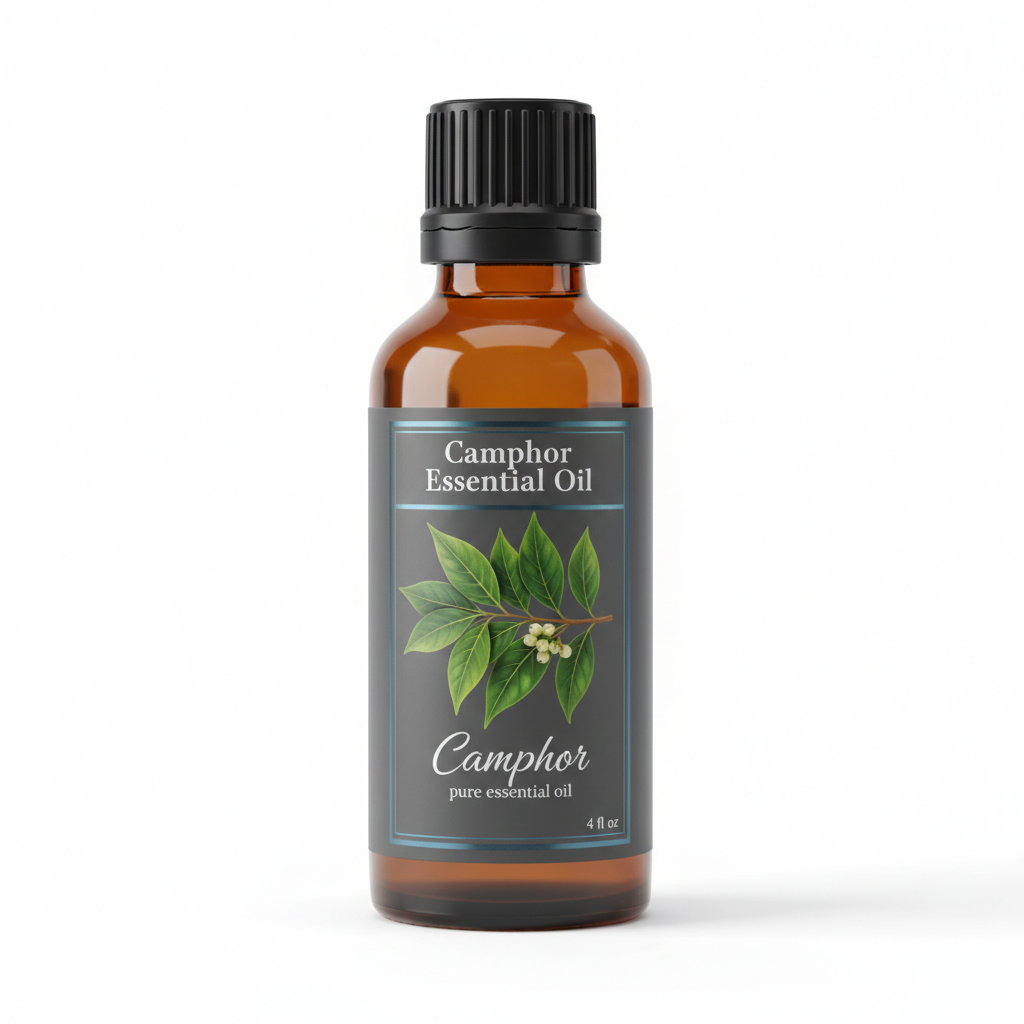
Camphor Essential Oil
Our own Camphor Essential Oil, in sizes from 0.5 oz to bulk.
From $9.99
Shop Now →What it brings to the first minute
Our camphor oil is sharp, cooling and crystalline over a dry woody base, and we class it as a top note, one of the first things you smell and the first to fade. That is also why we call it a blend amplifier: a drop or two can make lavender, rosemary, citrus and conifer notes seem to wake up.
Chemistry explains why. The European Food Safety Authority's specification for a white camphor fraction lists 1,8-cineole at 27 to 43 percent, limonene 18 to 27, p-cymene 6 to 15 and alpha-pinene 4 to 10, with camphor itself under 0.1 percent in the six batches it examined (EFSA FEEDAP Panel, 2022). That is one specific Taiwanese cineole-rich oil, not a promise about every bottle, but it shows the idea: a eucalyptus-like edge, a lemony edge and a pine edge in one material. Our scent profile post explores how each compound smells.
When it belongs, and when to choose something else
Reach for it when a blend feels heavy, sweet or flat at the start. Choose something else when you want longevity, because top notes leave early and a camphor-led blend can seem to lose its character within the hour. If you want a minty top note instead of a woody one, peppermint is the better pick; camphor versus peppermint explains why they are not interchangeable. And keep any camphor blend away from rooms used by infants, young children or pets, since camphor is neurotoxic in quantity.
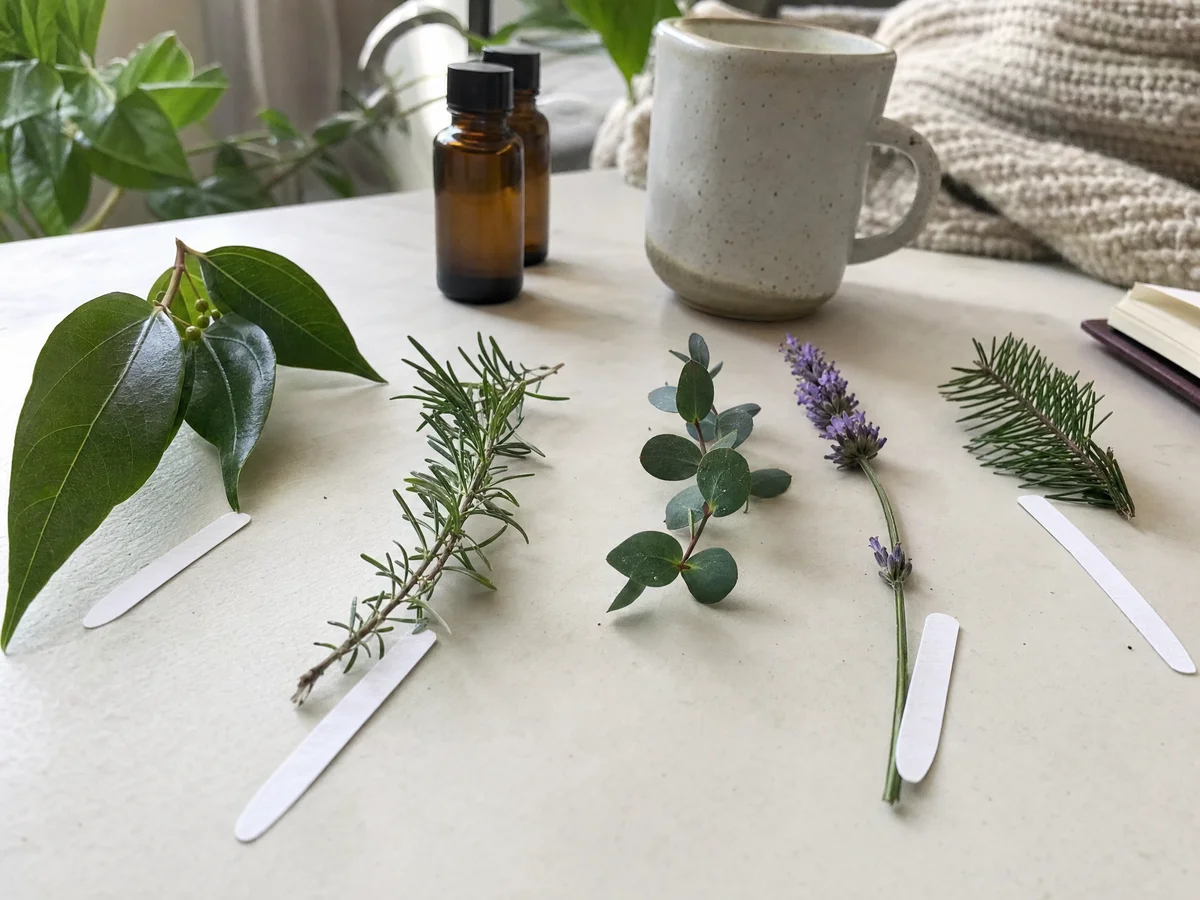
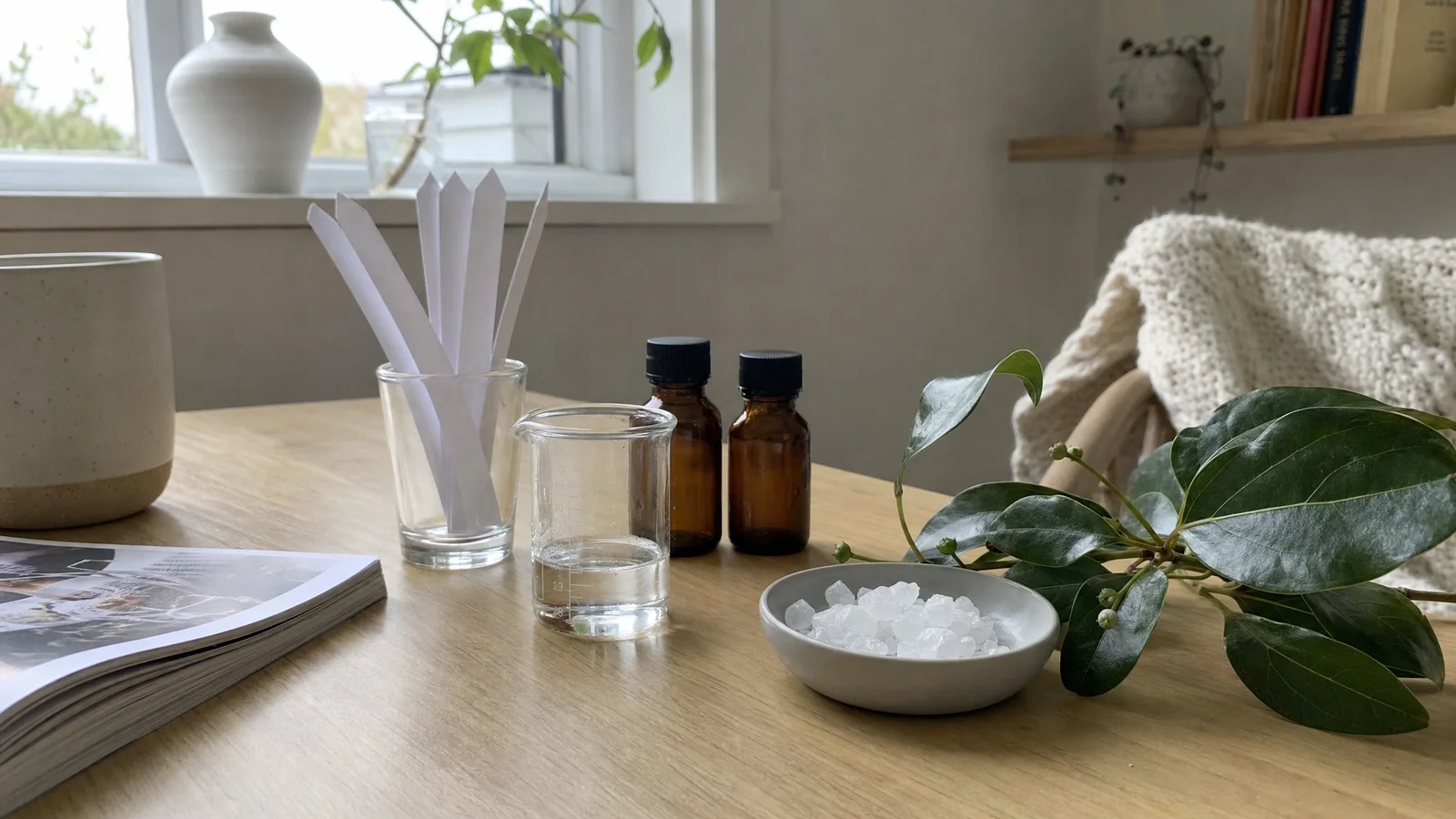
If you have never worked with a top note before, a small ritual helps. Dip a scent strip, wave it once, and notice what you smell in the first few seconds. Then set it down and come back in a few minutes. With camphor you will notice that the sharp front edge disappears first, and the dry woody base is what lingers on the paper. That arc, bright start and quiet finish, is the whole personality of a top note.
Sizing a first trial by drops
The usual mistake is a camphor note so loud it dominates. A ladder of small trials avoids that. Twenty drops per millilitre is a rough convention, since real drop size varies by dropper and oil. On the batch on our Certificate of Analysis, relative density is 0.878, so one drop is on the order of 44 mg. Take a base of 20 drops of your other materials and set up three strips:
| Trial | Camphor drops | Total drops | Camphor share by count |
|---|---|---|---|
| A | 0 | 20 | 0% |
| B | 1 | 21 | about 5% |
| C | 2 | 22 | about 9% |
Smell each right away, after fifteen minutes and after an hour or two, and keep the lowest trial where you can notice the lift. If one drop is already too much, dilute first: one part camphor oil to nine parts neutral carrier gives a mix at one-tenth strength that you can add in whole drops. Carriers come from a craft or cosmetic supplier. The percentages above count drops, not weight.
Choosing partners by role
Instead of a list, think about what each neighbour does for the camphor. Our ten pairings post goes through them one by one.

- Repeat a facet. Eucalyptus echoes the cineole, so the cool note grows rather than changes; see the three-way comparison.
- Bridge a facet. Citrus sits beside the limonene, which PubChem describes as "pleasant lemon-like", and conifer oils sit beside alpha-pinene, with its "characteristic odor of pine" (PubChem). Shared molecules make the pairing feel natural.
- Add contrast. Lavender or cedarwood pulls the blend away from the cold side and gives it roundness.
- Swap it out. If you want sweetness and long wear, the answer is a different top note.
Treat these as reasoned starting points, and check the supplier of your other oils for their ratios.
Little habits that keep a camphor blend tidy
- Cap the bottle straight after each drop. The oil is thin and volatile, and an open bottle loses its brightness quickly.
- Write down your drop counts as you go. A blend you love is easy to repeat only if you remember what you did.
- Smell the blend fresh each day for a few days before you call it finished. Top notes change how a blend reads from the first minute to the last.
- Give your nose a break between strips. Smelling coffee beans or just the crook of your elbow resets things surprisingly well.
Camphor rewards patience. The blends that work best are usually the ones where it was added last and in the smallest amount.
A word about skin
All of the above is about smell on a strip. A leave-on product has its own limits. For general skin use our guidance is 0.5% to 2% in a carrier after a patch test, and if you plan to sell a product, check the current IFRA standard for that product type before you settle on a figure.
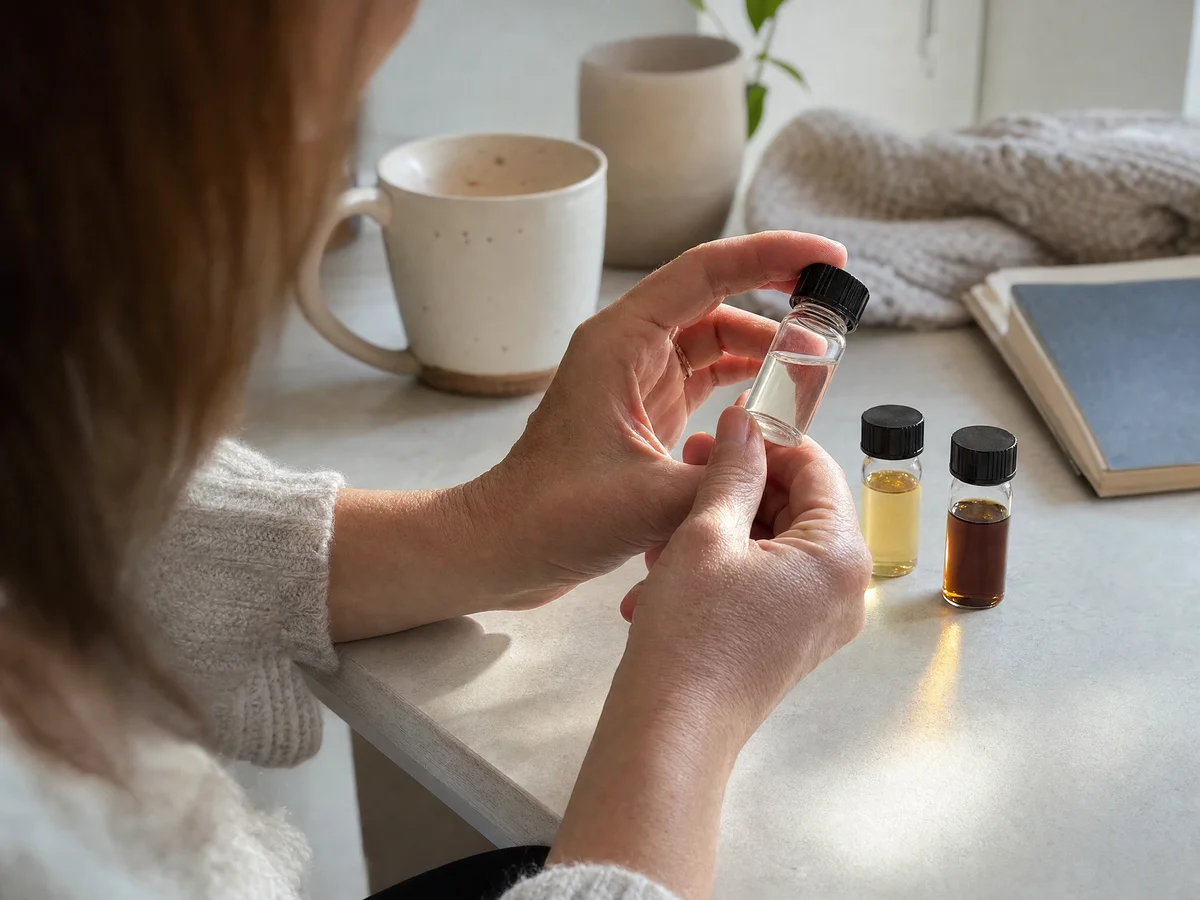
The nicest compliment a camphor note can earn is that nobody names it. They just say the blend smells brighter than expected.
Camphor Essential Oil
Camphor Essential Oil from our own shop, in sizes from 0.5 oz to bulk.
From $9.99
Shop Now →