Camphor Oil Studies: How to Read the Headlines
Every few months a headline announces that camphor does something remarkable. Read the paper and it usually turns out to concern isolated camphor, a branded ointment, or nerve cells in a dish. That does not make the science dull. It just means the interesting part is different from the headline.
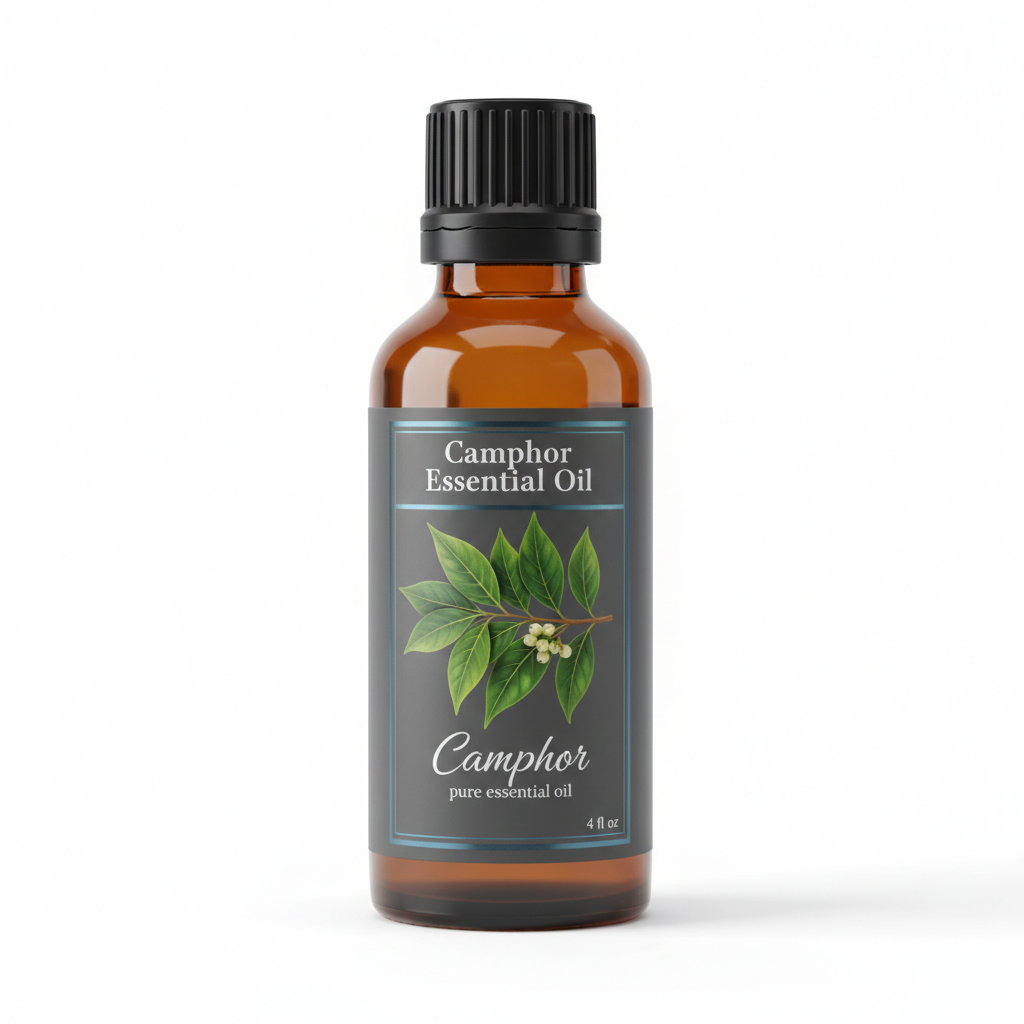
Camphor Essential Oil
Our own Camphor Essential Oil, in sizes from 0.5 oz to bulk.
From $9.99
Shop Now →Three questions that sort most studies
What was in the jar? Pure camphor, a vapor rub with menthol and eucalyptus oil, and a distilled essential oil are different materials. Who was measured? A cell line, a rat neuron, eighteen adults and 138 children are not interchangeable. What counted as the result? A reported sensation, a parent's rating, and a lab number answer different questions.
A small habit for reading camphor news
When a story about camphor crosses your screen, slow down before you share it. The first sentence usually carries the excitement, and the details that matter sit three paragraphs down. A few questions take less than a minute:
- Look for the jar. Does the study say what the camphor actually was: a purified compound, a labeled ointment, or an essential oil?
- Count the participants. A handful of volunteers is a pilot, and a pilot is a reason for a bigger study, not a conclusion.
- Notice the verb. "Activated," "was associated with" and "was rated as" mean three different things.
- Check who it applies to. A result in rats or in a dish is a result in rats or in a dish.
None of this is cynical. It is simply how you get the most out of an interesting finding without taking it somewhere it cannot go.
Lab work on sensation
The best-understood research is about how camphor feels. A 2005 study in the Journal of Neuroscience showed camphor activating the heat-sensing channel TRPV1 and then desensitizing it, and a 2013 study in Chemical Senses found it activating the cool-sensing channel TRPM8. A 2023 review of plant-derived substances in over-the-counter cough and cold remedies looked at the same family of channels. These explain why camphor tingles. They are cell and animal results, not outcomes in people.
Small human studies
In 1983, a small physiological study had adults breathe camphor, eucalyptus or menthol vapor for five minutes and compared nasal resistance to airflow with how the airflow felt. In 2010, a randomized, partly blinded trial of 138 children aged 2 to 11 compared a vapor rub with petrolatum and with no treatment on one night, with parents rating symptoms. Parents rated the vapor rub most favorably, though irritant effects were more common with it. A trial like that tells you about a finished, regulated product and parent perceptions. It does not tell you about a bottle of undiluted oil.
A 2011 case series of 18 people using Vicks VapoRub on toenails is also widely cited. We unpack it in its own article, and a 2025 review of that product's literature called the evidence for both colds and toenails limited and inconclusive.
The most consistent research is about harm
The firmest body of work on camphor is about poisoning. The American Association of Poison Control Centers guideline from 2006 began from national data showing roughly 10,000 camphor ingestion exposures a year, and case reports keep appearing, including a 2025 report of a one-year-old with seizures. Those reports are not rates, but they are a steady signal, and it is why we keep this oil firmly in the adult, external, handle-with-care category. Our guide to poisoning symptoms and side effects goes through them.
What about the oil we sell?
Studies of camphor essential oil as sold are scarce and often concern the tree rather than the bottle. Composition varies by plant chemotype and by which fraction of the distillate is sold, which is why we point curious readers to our pieces on what is in the bottle and the tree itself. If you want the broader picture of how the oil is used, camphor oil benefits and uses is the place to go. The Certificate of Analysis we publish for one batch lists density, refractive index and optical rotation; if you need GC-MS, ask us in writing through the contact page before ordering.
What we can honestly tell you
We would rather talk about the thing we know well, which is what the oil is like in the bottle. Open it and you will notice a sharp, cooling, crystalline scent over a dry woody base, and it fades quickly because it is a top note. In a blend, a drop or two tends to make its neighbors seem brighter. That is a description of the aroma, and it is all we ask the oil to be.
If a study ever makes you curious about a particular claim, bring the question to a pharmacist or physician and keep the oil for what it does best, which is smell wonderful in small amounts.
Good science tells you what a result covers and where it stops. With camphor, that usually means a fascinating sensation, a real safety record, and a lot of questions still waiting for a better study.
Camphor Essential Oil
Camphor Essential Oil from our own shop, in sizes from 0.5 oz to bulk.
From $9.99
Shop Now →Sources & Further Reading
- Xu H et al. Camphor activates and strongly desensitizes TRPV1, J Neurosci (2005)
- Selescu T et al. Camphor and TRPM8, Chem Senses (2013)
- Modulation of TRP channels by plant derived substances in OTC cough and cold remedies (2023)
- Effects of camphor, eucalyptus and menthol vapour on nasal resistance to airflow and nasal sensation (1983)
- Paul IM et al. Vapor rub, petrolatum, and no treatment for children with nocturnal cough (2010)
- Valido A et al. There's the Rub, PeerJ (2025)
- Manoguerra AS et al. Camphor poisoning guideline (2006)
- Salcedo et al. Camphor toxicity case report, BMC Pediatrics (2025)