Why Camphor Oil Prices Vary So Much: What to Check
Put two bottles labelled "camphor essential oil" side by side and the prices can look like they belong to different products. Often that is because they are. Camphor oil is less a single oil than a family of materials that share a tree, and the price on the label is pricing which member of the family you are holding.
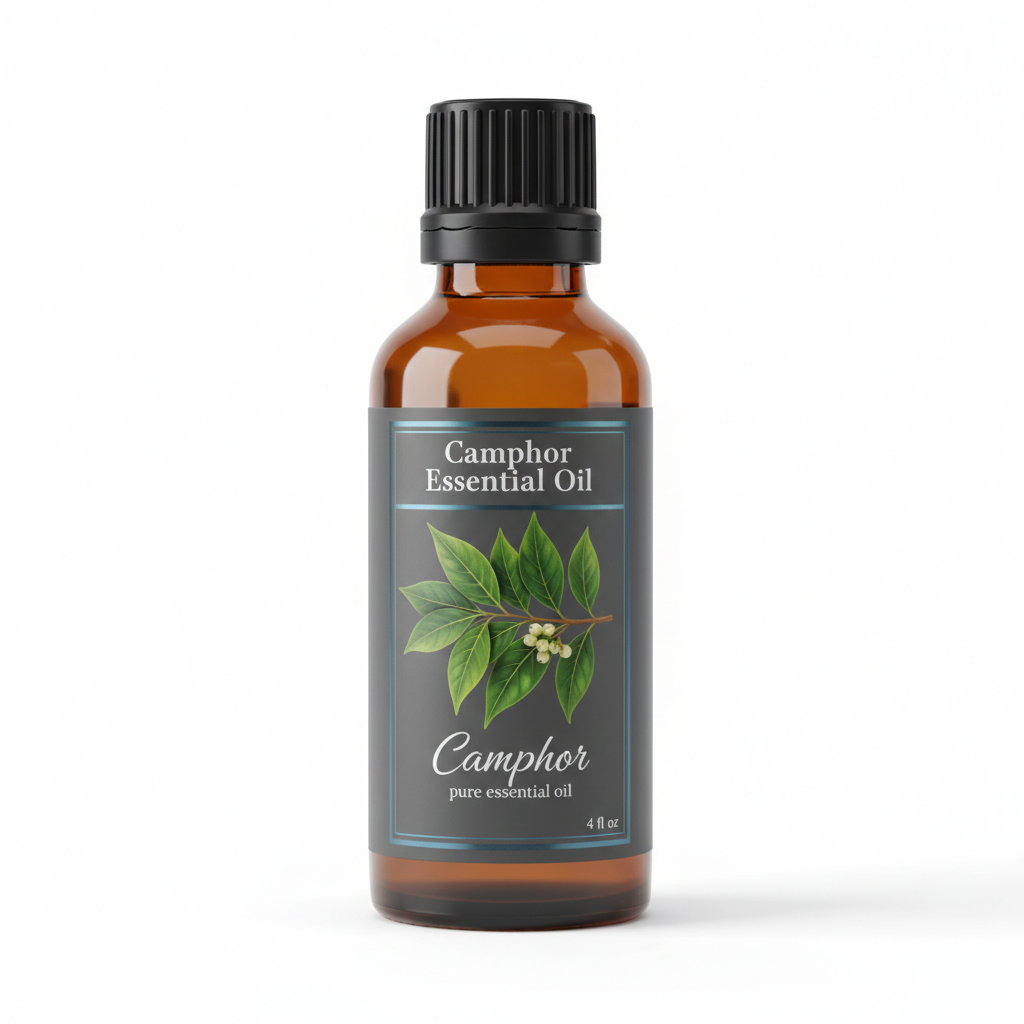
Camphor Essential Oil
Our own Camphor Essential Oil, in sizes from 0.5 oz to bulk.
From $9.99
Shop Now →It is a bit like buying "wood" at a lumberyard. Pine, oak and cedar are all wood, and nobody expects them to cost the same or behave the same. Camphor oil works that way, and the name on the front rarely says which one you are getting.
One tree, several oils
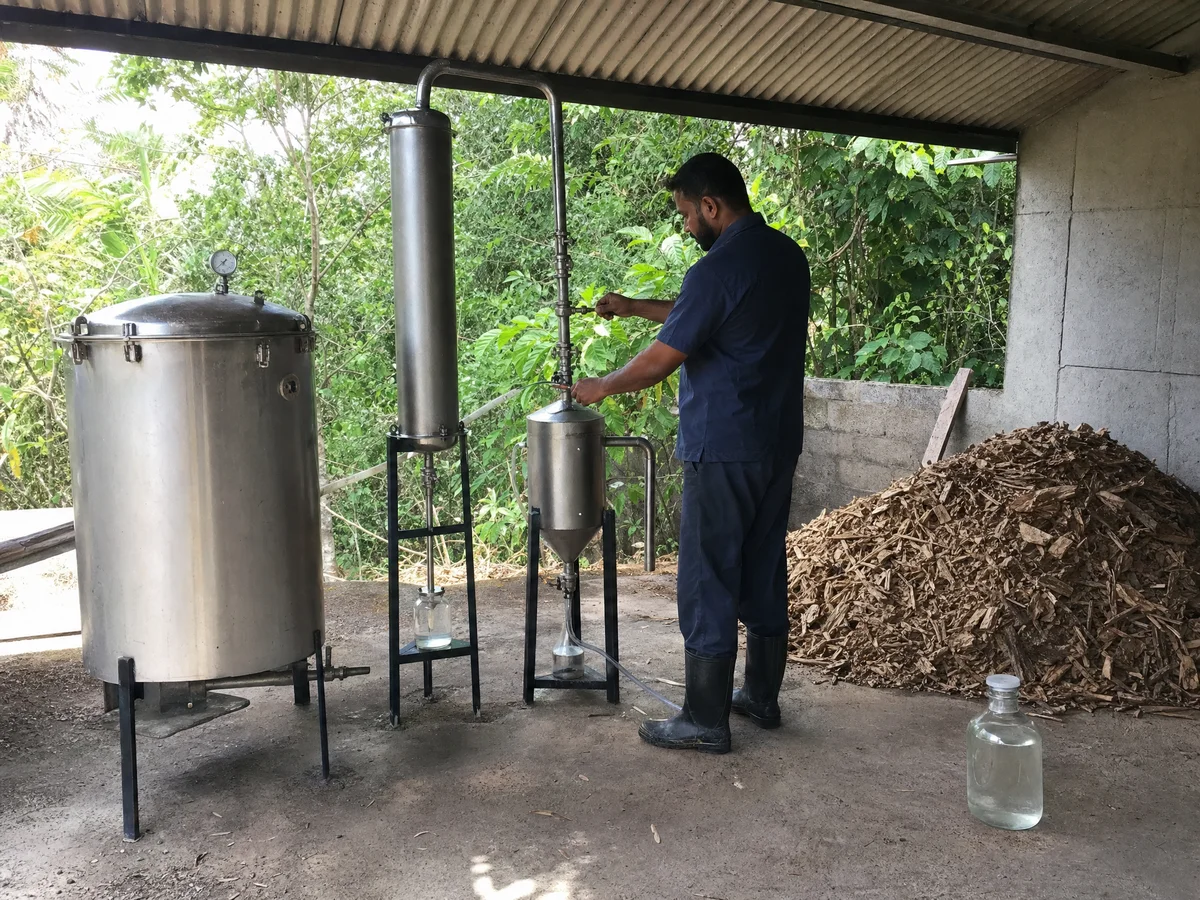
Everything starts with Cinnamomum camphora. Once the camphor crystals have been taken out of the crude distillate, what remains is separated by boiling range into fractions. The PROSEA plant handbook describes white camphor oil as the first fraction, about a fifth of the camphor-free oil, with 1,8-cineole as its chief constituent and an almost colourless, eucalypt-like character. Brown oil comes next and is roughly 80% safrole, a compound that perfumery chemistry isolates for other uses (Windadri and Rahayu, PROSEA, 1999). The Tisserand Institute adds that the yellow and brown cuts are not usually sold on the open market, and that blue is not sold at all (Tisserand Institute).
The sources describe yellow a little differently, but the lesson for a shopper is the same: the white, brown, yellow and blue cuts are different materials with different buyers. We sell the white fraction of the distillate, neat and undiluted. It is the light cut that suits fragrance and craft work, and it is the cut to look for if that is what you are making. When someone else's camphor oil costs a fraction of ours, the first question to ask is simply which cut is in the bottle.
The tree matters as much as the cut
Even within one species, no two trees smell quite the same. A 2023 survey of 974 camphor trees across 13 Chinese provinces found that individual trees fell into distinct chemical types, camphor-rich, linalool-rich and eucalyptol-rich among them (Zhang et al., Molecules, 2023). That is why Ho Wood and Ravintsara, which come from the same plant, smell nothing like a cineole-rich white camphor oil. If you are curious how those names sort out, Ho Wood vs Camphor Oil and Ravintsara vs Camphor Oil are the places to start. For pricing, the takeaway is simple: a linalool-leaning oil sold as camphor and a cineole-leaning white cut are two different aromatic ingredients, and one being cheaper tells you very little about the other.
A small trade with a long shadow
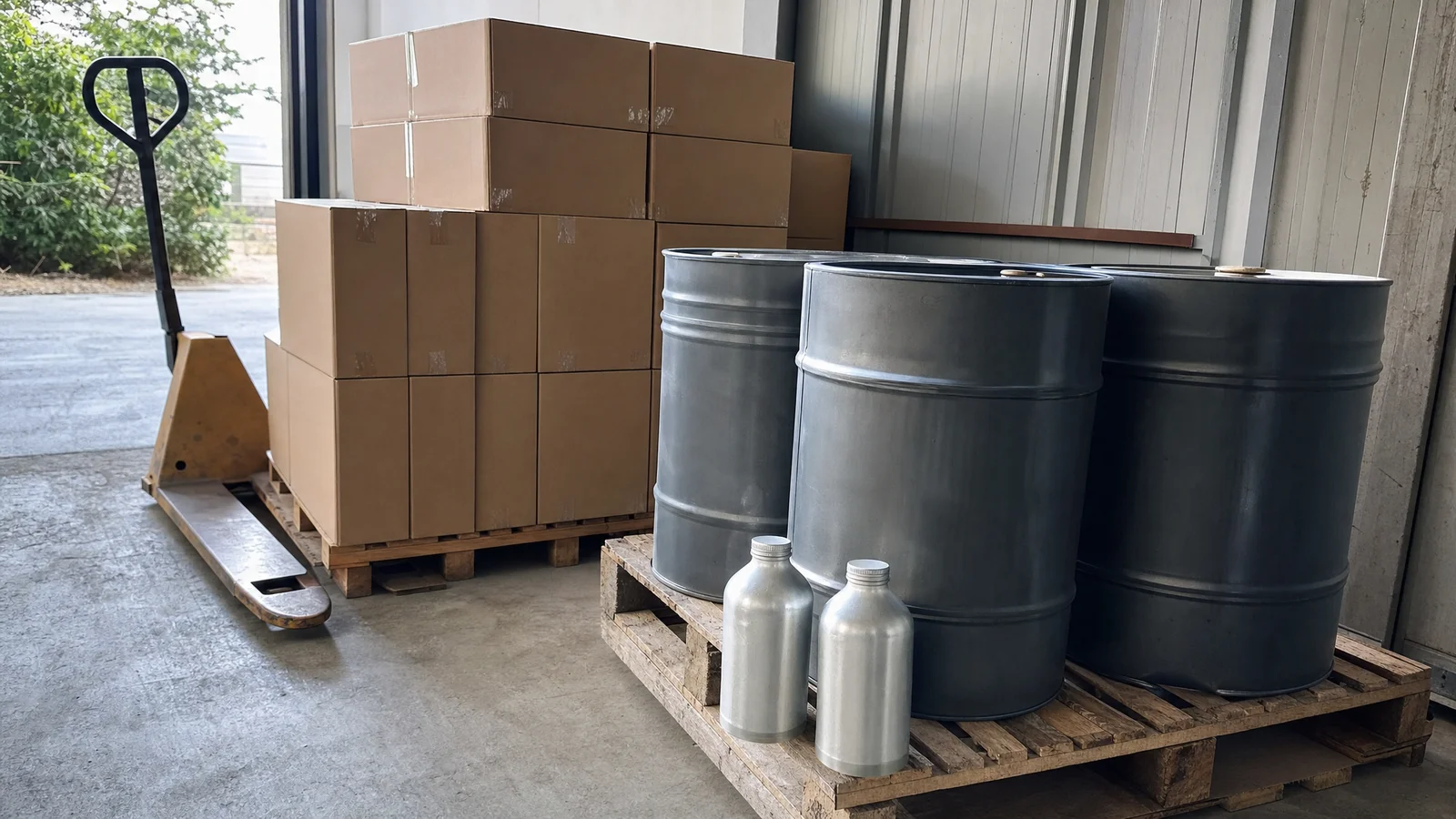
The market behind all this is surprisingly quiet. Before the First World War, most internationally traded camphor came from natural stands in Taiwan; when those thinned, plantations followed in Taiwan and later Japan, and since the 1990s large plantations have grown up in China. Japan once produced several thousand tonnes a year before synthetic camphor took over much of the demand (PROSEA, above). The synthetic route turned camphor the solid into a chemical commodity, so the oil is a small, separate trade beside it. That is our reading, and it helps explain why a "camphor price" you find online often describes the crystals and not the oil. It also means the cosmetic-use white cut is one slice of a distillation whose other slices go to other industries, so its price moves with them as well as with the tree.
Questions we would ask any seller
When we look at a bottle we do not know, we ask the same few things in the same order. Which fraction is it? Which species and part of the tree? Is there a report for this lot, and does the lot number on the report match the one on the bottle? None of these questions is rude, and a seller who is proud of the product tends to answer them quickly. If the replies are vague, that tells you something too.
What to compare when price won't tell you
- The fraction. Ask for it by name, and compare white with white.
- The composition. A GC/MS report shows the major compounds. If you have never read one, How to Read a Camphor Oil GC/MS Report walks through it.
- The paperwork. The Certificate of Analysis we publish is for one batch and lists density, refractive index and optical rotation. If you need GC/MS or a camphor content figure for a particular lot before ordering, ask us in writing through the contact page.
- A sample first. For larger orders, our wholesale page describes sample bottles and a free consultation.
Use your nose as a second opinion
Paperwork is the surest guide, but your nose is a useful sanity check too. Our white fraction is sharp, cooling and crystalline with a dry woody base. If another bottle smells heavy, medicinal or sweetish in a way that surprises you, that is a good moment to go back and ask what is inside. Smelling two bottles side by side, on separate strips, is a very quick way to see that they are not the same material.
Low prices and high ones
A low price is not proof of a problem; a different tree or a shorter supply chain can be genuinely cheaper. It is simply a reason to ask which fraction you are getting and to ask for a report, because the heavier cuts are rich in safrole. The International Agency for Research on Cancer lists safrole as possibly carcinogenic to humans (Group 2B), based on liver tumours in rodents given it by mouth (IARC Monographs vol. 10). A listing that names no fraction and offers no report leaves that question open. In the other direction, a high price is not automatically a quality signal. Branding and packaging add cost without changing what is in the bottle, and our post on organic camphor oil explains why a farming label does not identify the cut either.
So the next time two camphor oils differ wildly in cost, you will know where to look first: the cut, the tree, and the report behind it.
Camphor Essential Oil
Camphor Essential Oil from our own shop, in sizes from 0.5 oz to bulk.
From $9.99
Shop Now →