FDA Camphor Rules Explained: The 11% Limit and the Camphorated Oil Ban
The FDA has no blanket 11 percent rule for every camphor product. The 11 percent figure is the top of the over-the-counter monograph range for camphor in external products, and the 1982 camphorated oil ban is a separate rule on drug products labeled or represented as camphorated oil. Both concern drug products, not fragrance oils.
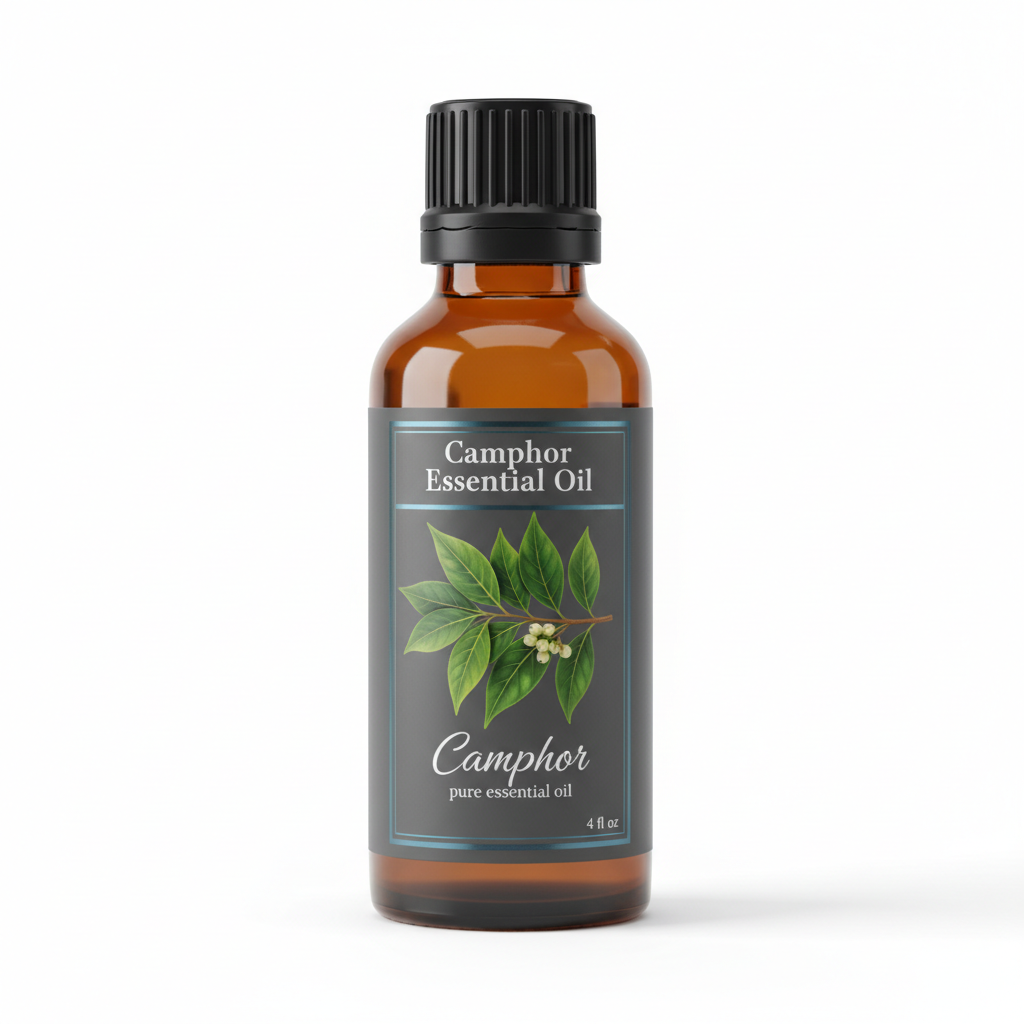
Camphor Essential Oil
Our own Camphor Essential Oil, in sizes from 0.5 oz to bulk.
From $8.69
Shop Now →
Two rules people blur together
| Rule | What it says | Where it lives | What it applies to |
|---|---|---|---|
| Camphorated oil ban | Any camphorated oil drug product, or similar product, is misbranded and a new drug that needs an approved application. Effective September 21, 1982 | Final rule 47 FR 41716, now listed in 21 CFR 310.502(a)(4) | Drug products labeled or represented as camphorated oil, including the names "camphor liniment," "camphor oil" and "camphorated liniment" |
| External analgesic monograph (M017) | Camphor 0.1 to 3 percent; camphor "exceeding 3% to 11%" as a counterirritant; 3 to 10.8 percent when combined with phenol. Labels say "For external use only" and tell adults and children 2 and older to apply to the area no more than 3 to 4 times daily; for children under 2, "do not use, consult a doctor" | FDA OTC Monograph M017, posted May 2, 2023 | OTC external analgesic drug products |
| Cough and cold monograph | A topical camphor ointment containing 4.7 to 5.3 percent camphor; directions for adults and children 2 and older; for under 2, "Ask a doctor"; "For external use only. Do not take by mouth or place in nostrils." | 21 CFR 341.74 | OTC cough drug products in ointment form |
One correction to a common citation. You will sometimes see the camphor limit attributed to 21 CFR 310.201 or to Part 348. When we opened the current text, 310.201 contains no camphor language, and Part 348 now covers only male genital desensitizers. The external analgesic monograph that sets the camphor ranges is now posted by the FDA as OTC Monograph M017, converted to an administrative order under the CARES Act in 2020.
What the 1982 rule actually did
The 1980 proposal (45 FR 63869) would have covered camphorated oil and any drug product with camphor above 11 percent. The final rule in 47 FR 41716 was narrower, and it is worth reading precisely. It limited itself to camphorated oil and similar products, defined as any drug product containing camphor in oil or any camphor-containing drug product represented as camphorated oil. Decisions on other camphor products above 11 percent were deferred to the reviews of antimicrobial, anorectal, cough/cold and external analgesic drugs.
The reason was poisoning from mix-ups, not toxicity on skin. The agency cited 706 camphorated oil ingestions reported to the National Clearinghouse for Poison Control Centers from 1974 to 1978, and 130 in 1979, of which 38 were considered toxic. Of 32 incidents with a known cause, 28 were confusion with another product, 20 of them with castor oil. The FDA considered and rejected alternatives: a distinctive color or container (castor oil was only one of several products camphorated oil had been mistaken for), child-resistant packaging (only 4 of the 32 cases were young children drinking it themselves), stronger warnings (existing labels already said not to ingest), and prescription-only sale. It concluded that adequate directions and warnings "cannot be written," requested a recall to the retail level, and made the rule effective immediately.
Where the 11 percent comes from, and what it does not mean
The 11 percent number traces to the 1979 advisory panel on topical analgesic drugs, which concluded that preparations with 3 to 11 percent camphor were safe and effective as counterirritants (44 FR 69802, as described in the 1982 document). In the final rule the FDA explicitly turned down requests to keep camphorated oil on the market at 3 to 11 percent, explaining that those products have the same ingestion hazards as stronger ones. The same document recounts that a 3-year-old girl had a convulsion after swallowing an estimated 0.7 gram of camphor from a product with about 5 percent camphor.
That should change how you read the number. 11 percent is a ceiling for topical use in an approved monograph category, not a threshold below which camphor is safe to swallow, handle casually or give to a child. The decision, in the FDA's own words, rested on an "adverse benefit-to-risk ratio" for camphorated oil at every concentration. Our article on swallowing camphor oil covers why ingestion is the dangerous route.
A small wrinkle: the monograph states the upper bound two ways, 11 percent for the counterirritant ingredient and 10.8 percent for the phenol and camphorated metacresol combinations. If a source quotes 10 percent, it is probably rounding the 10.8 figure.

A timeline, and why some sources say 1983
| Date | Event | Citation |
|---|---|---|
| Dec. 4, 1979 | Advisory panel report on external analgesic drug products | 44 FR 69768 |
| Sept. 26, 1980 | Proposed rule on camphorated oil and products above 11 percent camphor | 45 FR 63869 |
| Sept. 21, 1982 | Final rule: camphorated oil drug products are misbranded new drugs | 47 FR 41716 |
| Feb. 8, 1983 | Tentative final monograph for external analgesic drug products | 48 FR 5852 |
| Mar. 14, 1997 | Consolidation of the camphorated oil provision into 21 CFR 310.502 | 62 FR 12083 |
| Mar. 27, 2020 | OTC monographs converted to administrative orders under the CARES Act (M017 is one) | Public Law 116-136 |
| May 2, 2023 | Current M017 text posted | FDA OTC monograph page |
Some secondary sources say the camphorated oil ban was a 1983 action. The Federal Register and the FDA's own rulemaking history page show September 21, 1982, and a 2009 Pediatrics report also dates the restriction to 1982. The 1983 date matches the external analgesic tentative final monograph, which is probably where the confusion begins.
What this means for an aromatic oil
These rules are written for drug products. The FDA's page on cosmetics and drugs says intended use is established by claims in labeling, advertising and on the internet, by a product's reputation, and by ingredients with a well-known drug use, and that a product that is both must meet both sets of requirements. A pure essential oil sold for fragrance, with no drug claims and no instructions to apply it for a condition, is a different thing from a "camphorated oil drug product."
We want to be exact here. The 1982 rule names "camphor oil" among the labels that make a drug product misbranded when it is represented as camphorated oil. We sell Camphor Essential Oil as an aromatic and cosmetic material, not as a drug, and we make no drug claims for it. We are not lawyers and this is not legal advice; anyone selling or importing camphor products should have a regulatory professional review the labeling.
For buyers, the practical lesson is the same one the FDA drew in 1982. Be wary of any camphor product that is sold for swallowing, that carries drug claims without a Drug Facts label, or that has no concentration stated. A 2009 Pediatrics report on three Bronx toddlers who had seizures found that many imported camphor products failed US labeling and content requirements (Khine and colleagues). The wider safety picture is in Is camphor oil safe? and for households with young children, camphor oil and children.
How do I read a camphor label?
For an OTC drug product, look for a Drug Facts panel with the active ingredient and its percentage (inside the monograph ranges above), the words "For external use only," an age warning for children under 2, and a statement about not swallowing. For an aromatic or cosmetic oil, there should be an ingredient list, an honest statement of what the material is, and no instructions to apply it for a disease or symptom. A bottle with neither a Drug Facts panel nor a plain aromatic label, or one that suggests swallowing, deserves skepticism.
Is camphor banned in the United States?
No. Camphor is allowed in OTC drug products within the monograph ranges above. What the 1982 rule removed from the market was camphorated oil as a drug product.
Does the 11 percent limit apply to homemade rubs?
Homemade preparations are not FDA-evaluated products, so the monograph does not govern them in a practical sense. The 11 percent figure remains a useful outer boundary for what the FDA reviewed, not a safety guarantee. Our DIY camphor vapor rub article works through the arithmetic and why it is adult-only.
How do commercial rubs compare?
Brand-by-brand percentages are covered in camphor rubs compared. Always read the Drug Facts panel on the product in your hand.
Where can I check the current text?
Use the FDA's OTC monograph page for M017 and the current electronic CFR for 21 CFR 310.502 and 341.74. Regulations change, and the details above reflect what we read in October 2026.
For the dilution side of home use, see the camphor oil dilution guide. Product details for our oil are on the shop page.
Sources & Further Reading
- Federal Register, Sept. 21, 1982 (47 FR 41716): New Drugs; Camphorated Oil Drug Products for Human Use, final rule
- FDA: Rulemaking history for OTC camphorated oil drug products
- FDA: Rulemaking history for OTC external analgesic drug products
- FDA OTC Monograph M017: External analgesic drug products (posted May 2, 2023)
- 21 CFR 310.502: Certain drugs accorded new drug status through rulemaking procedures
- 21 CFR 341.74: antitussive drug product labeling
- FDA: Is it a cosmetic, a drug, or both?
- Khine et al. 2009, A cluster of children with seizures caused by camphor poisoning, Pediatrics 123(5):1269-1272