Is Camphor Oil Safe for Dogs and Cats?
No. Pet Poison Helpline says camphor is readily absorbed across the skin and should never be applied to dogs or cats, and it lists vomiting, depression and seizures among the signs of poisoning. We found no verified safe vapor level for diffusing it, so keep camphor oil, rubs and moth blocks away from pets entirely.
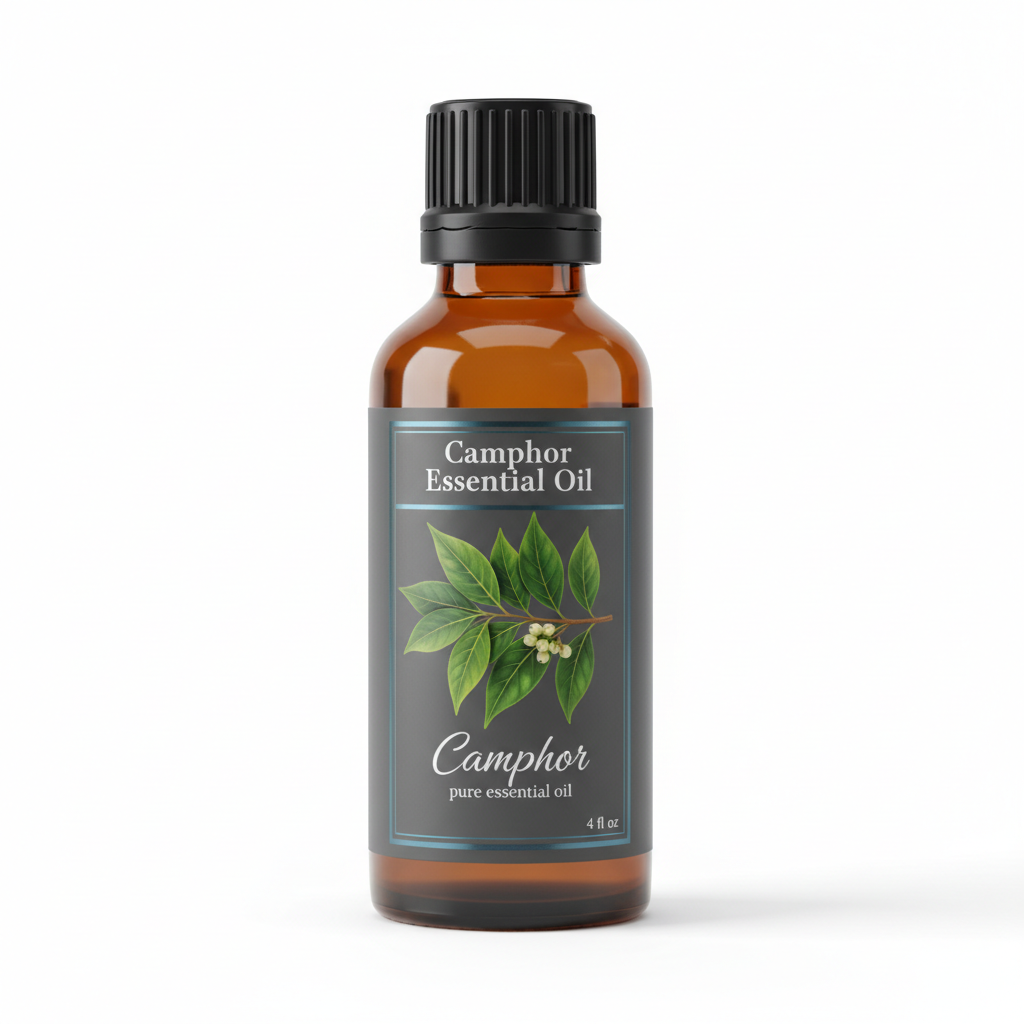
Camphor Essential Oil
Our own Camphor Essential Oil, in sizes from 0.5 oz to bulk.
From $8.69
Shop Now →
What the sources say, and how far each one goes
There is less camphor-specific pet research than the confident tone of many pet-and-essential-oil articles suggests. These are the pieces we could open and read, with their limits.
| Source | What it says | Limits |
|---|---|---|
| Pet Poison Helpline, camphor page | Camphor is common in topical pain and arthritis rubs, is readily absorbed across the skin, and should never be applied to dogs or cats. Signs: skin irritation, nausea, vomiting, diarrhea, depression, seizures in large amounts, and rarely death from respiratory depression or seizures | A short summary page with no dose figures and no mention of diffusing |
| ASPCA veterinarian Tina Wismer, quoted in a 2018 KOMO news story | Essential oil deaths are extremely rare but can happen in a cat with an underlying breathing problem such as asthma; cats can take oils in through grooming; 100 percent oils carry more risk than weak ones; diffuse only products labeled safe for cats, in a room the cat cannot enter, and sparingly | Secondhand, general to essential oils, not about camphor in particular |
| Royal Children's Hospital Melbourne | Camphor is highly toxic and readily absorbed from skin, with most toxic exposures from swallowing; common sources include rubs and mothballs | About children, not animals |
| Manoguerra et al. 2006 guideline | Emergency referral for people who swallow more than 30 mg/kg of a camphor product, or have symptoms by any route | Human guideline; no animal threshold |
The honest summary: the one pet-specific source we could verify is unambiguous about skin, mentions swallowing indirectly through rubs, and says nothing about vapor. For vapor, all we have is a general veterinary caution about essential oils and cats.
Three ways camphor reaches a pet
Instead of asking whether camphor is "toxic to pets" in the abstract, it is more useful to ask how a pet actually meets it. Camphor is volatile and fat-soluble, and the household routes below follow from the sources above plus ordinary pet behavior. The last column is our rule, not a measured threshold.
| How it happens | Route | What backs it | Our rule |
|---|---|---|---|
| Camphor rub or oil on your skin, then the pet licks you or lies on you | Skin contact and grooming | Pet Poison Helpline on skin absorption; ASPCA vet on grooming | Do not apply camphor products where a pet will touch or lick the area |
| A spill, a leaking cap or an open bottle on a low surface | Skin, then grooming or licking | Reasoning from the same sources | Store sealed and high; clean spills at once with the pet out of the room |
| Camphor blocks, tablets or mothballs in drawers and closets | Swallowing | RCH lists rubs and mothballs as common camphor sources, and notes some mothballs contain other chemicals instead | Keep out of any pet's reach, behind a closed door or in a latched container |
| A diffuser running in the room | Air, then fur and grooming | ASPCA vet's caution on diffusing around cats; no camphor vapor data | Do not diffuse camphor where pets live |
Why a small animal needs more caution
Poison thresholds are written per kilogram of body weight. The only camphor threshold we could verify is the human 30 mg/kg figure above, and we are not proposing it as a pet dose; no validated animal threshold was available to us. But per-kilogram numbers shrink fast in absolute terms as the animal gets smaller. As an illustration of scale only, 30 mg/kg is 360 mg for a 12 kg toddler, 120 mg for a 4 kg cat and 750 mg for a 25 kg dog. Our oil has a specific gravity of 0.878 on its posted certificate, so 1 mL weighs about 0.88 g, or 880 mg. A cat that groomed a few tenths of a milliliter of oil off its fur would be dealing with an amount that is not small next to its body weight. Whether that causes harm depends on the camphor share, which our certificate does not state, and on the animal.

Where we disagree with common advice
Two pieces of advice come up constantly. One says that if you diffuse in a ventilated room, pets will be fine. The other says that a diluted camphor oil is fine on a dog. We disagree with both for camphor.
On the first, we found no study that measured camphor vapor in a home with animals, so "ventilated" is a hope, not a result. The ASPCA vet's own conditions (a product labeled safe for cats, a room the cat cannot reach, limited use) are not conditions a camphor oil label meets. On the second, Pet Poison Helpline's line is categorical: never apply camphor to dogs or cats. We do not say that dilution changes that, because the source does not.
We also avoid the opposite mistake. We are not claiming that a faint smell of camphor will sicken a healthy dog. The truth is that this has not been measured, and when it is cheap to keep animals and camphor apart, we recommend doing that rather than gambling on a missing number. Other species, such as birds, rabbits, reptiles and fish, have their own sensitivities, and we found no verified guidance for them, so ask a veterinarian before bringing any camphor product into a home that includes them.
If you keep camphor in a home with animals anyway
Some households will, for religious practice, closet storage or craft work. These steps follow from the skin and swallowing routes above. They are precautions from reasoning, not tested protocols.
- Keep bottles, blocks and tablets in a latched container, in a room pets cannot open.
- Wash your hands after handling camphor and before touching a pet, since the sources describe skin absorption and grooming.
- Do not apply camphor products to any area a pet can reach, including your arms, chest or neck, when the pet sleeps on you.
- Clean spills at once, with the pet out of the room, and let the area dry before letting the pet back in.
- Never put camphor blocks on the floor of a closet or in a low drawer.
Questions to bring to your veterinarian: whether your particular animal has a breathing condition that makes vapor a problem, whether any camphor product in your home is within the animal's reach, and what signs should trigger an emergency visit.
If a pet has been exposed
- Move the pet away from the source and call a veterinarian right away.
- Or call an animal poison line: Pet Poison Helpline at (855) 764-7661 (its page notes an incident fee applies), or the ASPCA Animal Poison Control Center at (888) 426-4435.
- Keep the product container so you can read out the name, strength and an estimate of how much is missing.
- Do not wait for signs such as vomiting or depression; call first and follow the professional's instructions.
This is a summary of public guidance, not veterinary advice. Pet Poison Helpline's own disclaimer says its content is not veterinary advice.
Is a pet at risk if I only smell camphor on a family member?
We found no data on that. The sources describe skin contact, grooming and swallowing, so the sensible reading is to keep camphor off areas a pet will touch or lick and to wash up before handling animals.
Is it okay to diffuse camphor in a room the pets cannot enter?
That is the ASPCA vet's general condition for essential oils, and it is better than diffusing around pets. We still recommend against camphor, because vapor drifts, settles and clings to fur and to your clothes, so a closed door is not a seal. This part is our reasoning. The method details for people are in how to diffuse camphor oil safely.
Are camphor moth blocks safer than oil around pets?
They solve different problems and share the same risk if swallowed. See does camphor repel moths? and our closet guide on camphor for closets and wardrobes for placement ideas that keep products out of reach.
What do people need to know about camphor in a household with children and pets?
The same storage rules work for both: sealed, labeled, high, and away from food. The household safety summary is in Is camphor oil safe?, and the full list of uses with a safety box is in camphor oil uses around the home.
We sell one Camphor Essential Oil, as an aromatic and cosmetic material, in dark amber glass with a tight closure. Sizes and details are on the shop page.
Sources & Further Reading
- Pet Poison Helpline: Camphor is toxic to dogs
- KOMO/Sinclair: Are essential oils hurting your cat? (Feb. 2018), quoting ASPCA veterinarian Tina Wismer
- ASPCA Animal Poison Control: toxic and non-toxic plants list (hotline number)
- Royal Children's Hospital Melbourne: Camphor poisoning clinical guideline
- Manoguerra et al. 2006, Camphor poisoning: an evidence-based practice guideline for out-of-hospital management, Clinical Toxicology