
Camphor Oil Uses at Home: The Complete Guide to Closet, Laundry, and Air

Key Takeaways
- Camphor essential oil is one of the most versatile botanical tools you can keep at home, with practical applications across closets, laundry, and ambient scenting.
- A little goes a long way. Most home uses call for just two to five drops at a time.
- Camphor oil is potent. Proper dilution, good ventilation, and sensible storage habits are non-negotiable.
- White camphor oil (the first fraction from steam distillation) is the variety best suited to cosmetic and aromatic home use.
- Camphor pairs beautifully with eucalyptus, lavender, cedarwood, peppermint, and rosemary in blended formulas.
- This guide covers safety first, then moves into specific room-by-room and task-by-task applications.
There is something quietly remarkable about a bottle of camphor essential oil sitting on a shelf. It weighs almost nothing. It takes up almost no space. Yet the range of practical home applications it supports is genuinely wide. People reach for camphor oil when they want their linen closet to smell pristine, when they are looking for a naturally crisp note in freshly washed sheets, and when they want to fill a room with cool, focused air that makes the whole space feel more awake.
This guide covers camphor oil uses at home in real depth. Not a bullet list of vague suggestions, but an honest, room-by-room account of what camphor oil is, how it works in a domestic setting, and exactly how to use it with confidence. If you have been wondering what is camphor oil used for beyond the bottle label, you are in the right place.
1. What Is Camphor Oil and Where Does It Come From?
Camphor essential oil is steam-distilled from the wood, roots, and branches of Cinnamomum camphora, a large evergreen tree native to East Asia. The tree has been cultivated for centuries in Japan, Taiwan, and China, and its aromatic wood has been prized across many cultures for its distinctive sharp, cool, almost mentholated scent.
The distillation process produces a raw camphor oil that is then separated into fractions through a second rectification step. These fractions are typically called white, brown, and yellow camphor. For home aromatic and cosmetic use, white camphor is the fraction you want. It is the lightest, cleanest-smelling portion, and it contains the highest proportion of the oxygenated compounds responsible for camphor's bright, clarifying scent character. Brown and yellow camphor contain safrole, a compound considered unsafe for cosmetic and home use, and reputable suppliers will note clearly which fraction they are offering.
The primary chemical constituent that defines camphor oil's aroma and character is camphor (the ketone), typically making up 40 to 50 percent of white camphor oil's composition. You will also find 1,8-cineole (the same compound prominent in eucalyptus oil), borneol, linalool, and small amounts of pinene. Together these compounds give the oil a scent profile that is at once sharp and cooling, woody and green, with a slight sweetness underneath.
A Brief History of Camphor at Home
Long before camphor essential oil became a modern aromatherapy staple, people used solid camphor blocks and camphor-infused materials to protect stored textiles. Camphor chests were a standard feature in households across East Asia and parts of Europe. The wood of Cinnamomum camphora was so valued for this purpose that antique camphor chests are still traded today, still faintly scented after a hundred years of storage.
The essential oil brings the same olfactory power in a far more flexible format. Instead of needing a whole chest carved from the wood, you can apply a few drops to a cotton disk and tuck it into any drawer. That flexibility is exactly what makes camphor oil uses so relevant to a modern home. For a broader look at the full spectrum of domestic applications, see our companion guide: 12 Ways to Use Camphor Oil for Home and Closet Freshness.
2. Safety First: Everything You Need to Know Before You Start
Camphor oil is potent. Its safety profile is well-documented, and the key points are straightforward, but they deserve prominent placement before we talk about any specific application.
Concentration and Dilution
For any application that involves skin contact (including laundry that will sit against your body), camphor oil should be properly diluted. A general guideline from cosmetic formulators is to keep camphor at or below one percent of a finished product. That works out to roughly five or six drops per 30 ml (one fluid ounce) of a carrier oil or unscented lotion base. Some professional standards suggest even lower concentrations for products used on the face or on sensitive skin.
For purely aromatic, non-skin-contact uses such as closet sachets and diffusion, undiluted oil on an inert carrier (a cotton pad, a clay disk, a porous wood bead) is generally acceptable, because the oil is not being absorbed by the body. Even so, moderation applies. A diffuser session of 30 to 60 minutes in a well-ventilated room is a reasonable starting point.
Ventilation
Camphor vapor is strong. In enclosed spaces with poor airflow, concentrated camphor aroma can become overwhelming. Always ensure a window is crackable or that a room has reasonable air circulation when diffusing. This is standard practice with most essential oils, and camphor is simply a case where the guideline matters a little more than usual.
Who Should Avoid Camphor Oil
- Children under two: Camphor is considered unsafe around very young children. Keep bottles stored securely, and do not diffuse in rooms where infants sleep.
- Pregnant and nursing individuals: Consult a qualified healthcare provider before using camphor oil in any form during pregnancy or breastfeeding.
- Pets: Cats and dogs can be sensitive to many essential oils. Diffuse in areas they can leave freely, and never apply diluted oil directly to a pet without veterinary guidance.
- Individuals with certain sensitivities: If you have a known sensitivity to camphor-family botanicals, perform a patch test before any skin-adjacent use and speak with your healthcare provider.
Storage Safety
Keep camphor oil in its original dark glass bottle, tightly capped, away from heat and direct light. It is flammable. Do not use it near open flames or leave saturated cotton materials near heat sources. Store out of reach of children.
The Patch Test
For any laundry or cosmetic application where diluted camphor oil will contact skin, patch test first. Apply a small amount of the diluted blend to the inside of your elbow, wait 24 hours, and check for any reaction before broader use.
This guide is for aromatic and cosmetic home use only. Always consult a qualified healthcare provider with any health-related questions. Essential oils are not substitutes for professional medical advice.
3. Closet and Wardrobe Uses: Keeping Fabrics Fresh Year-Round
The closet is where camphor oil's legacy is deepest, and it is still one of the best places to put it to work. The sharp, cooling scent acts as a powerful olfactory freshener, and the aromatic properties of camphor have long been associated with deterring the kinds of insects that are unwelcome around stored woolens and silks.
For a deep dive specifically into wardrobe applications, our dedicated article Camphor for Closets and Wardrobes: Crisp Freshness covers the full spectrum of techniques. Below are the core methods.
Cotton Pad Sachets
This is the simplest possible approach, and it works remarkably well. Take an unbleached cotton pad or a small square of cotton muslin. Add three to five drops of white camphor essential oil. Place it in a small organza bag or fold the muslin into a neat packet tied with a ribbon. Tuck one sachet into each shelf section of your closet, or hang one at the rod level among hanging garments.
Refresh the scent every four to six weeks by adding one or two new drops. The cotton holds the fragrance well and releases it slowly into the enclosed space.
Clay Diffuser Disks
Unglazed terra cotta or air-dried clay disks (available from craft suppliers and many aromatherapy retailers) are excellent passive diffusers for enclosed spaces. They are porous enough to absorb oil but dense enough to release the scent slowly over weeks. Place a disk on a closet shelf, add four or five drops of camphor oil, and replace the drops monthly. You can also blend camphor with cedarwood or lavender for a more complex and pleasant composite scent.
Wooden Bead Garlands and Rings
Unfinished wooden beads are another good passive diffuser material. Thread them onto a string and hang the garland from your closet rod, or place a cluster in a small bowl on a shelf. Apply camphor oil directly to the wood every few weeks. Cedar beads pair especially well with camphor oil because both have a shared woodsy character, and together they create a scent profile that is both classic and genuinely pleasant.
Drawer Liners
For folded items in drawers, scented drawer liners are a lovely low-effort solution. Cut plain unbleached kraft paper or acid-free tissue paper to fit your drawers. Dilute camphor oil in a small amount of water (approximately 10 drops per 100 ml) in a spray bottle, shake well, and mist the paper lightly. Allow it to dry completely before placing it in the drawer and stacking your clothes on top.
This approach keeps the scent subtle and pleasant rather than sharp, which is ideal for delicate garments that you do not want to over-scent.
Seasonal Storage Containers
When packing away off-season clothing in bins or vacuum bags, slip a camphor-scented cotton pad into each container before sealing. This is particularly popular with wool sweaters, cashmere, and other natural-fiber garments stored for summer. The scent has traditionally been considered a deterrent for fabric-damaging insects, though it is worth noting that no essential oil should be your only line of defense for irreplaceable items. Store serious heirlooms in acid-free archival conditions.
What to Expect
Camphor in a closet does not smell like mothballs, which tend to use synthetic naphthalene or paradichlorobenzene. Camphor oil has a cleaner, more botanical character. It is sharp on first opening the closet door, then fades to a clean background note as the space airs out when you are choosing an outfit. Garments do not typically retain a strong camphor scent themselves; the oil is in the air of the enclosed space, not soaked into the fabric.
4. Laundry Uses: A Crisp, Clean Finish for Linens and Clothes
Camphor oil has a natural affinity with laundry. Its cool, clean scent character reads as fresh in the same way that a line-dried sheet on a cold morning smells fresh: bright and slightly airy, with no synthetic sweetness.
For a full exploration of camphor in the laundry room, see our guide: Camphor on Laundry Day: A Clean, Crisp Finish for Linens. Here are the principal techniques for home use.
The Dryer Ball Method
Wool dryer balls are a popular alternative to synthetic dryer sheets, and they work exceptionally well as a vehicle for essential oil scenting. Add three to five drops of camphor oil to each dryer ball about 15 minutes before you plan to run the dryer, giving the oil a chance to absorb slightly into the wool. Then run a normal drying cycle.
The heat of the dryer disperses the scent through the load as it tumbles. The result is a subtle, clean fragrance rather than an obvious perfume. If you want a stronger result, use two scented balls per load. If you prefer barely-there scent, one drop per ball is sufficient.
Important: Only add essential oils to dryer balls for use in a dryer. Do not add undiluted essential oil directly to wet laundry in the wash drum, as oils and water do not mix and you may get uneven distribution.
The Final Rinse Method
Some people prefer to add camphor oil to their washing machine's fabric softener compartment along with a dispersant. Because essential oils do not dissolve in water, they need a dispersant to distribute evenly. A tablespoon of unscented liquid castile soap or a commercially available essential oil dispersant can serve this purpose. Add two to three drops of camphor oil to the dispersant, mix, and add to the softener compartment. The final rinse cycle will carry the scent through the load.
Note that heavily diluted by a full machine rinse, the scent on finished laundry will be very subtle. This method is best for people who want just a hint of freshness rather than a noticeable fragrance.
Linen Spray for Ironing
A linen spray made with camphor oil is a lovely addition to ironing day. The steam from the iron helps release the scent just as it is pressed into the fabric, and the sheets or shirts come out smelling clean and crisp. Recipe below:
- 100 ml distilled water
- 1 tablespoon witch hazel (unfragranced) as a dispersant
- 8 to 10 drops white camphor essential oil
- Optional: 4 to 5 drops lavender essential oil for a softer, rounder scent
Combine in a small glass spray bottle. Shake well before each use. Mist lightly over the fabric surface before pressing, holding the bottle 20 to 30 cm from the fabric for even coverage. Do not saturate. Allow the mist to settle for a few seconds before running the iron over the surface.
Safety note: This formula is for fabric use, not skin use. The concentration here is higher than a typical body-contact formulation and is not intended to be applied directly to skin.
Freshening Stored Linens
For linen closets storing folded bedding, towels, and tablecloths, the camphor sachet approach described in the closet section works beautifully. Place one or two camphor-scented cotton pads between stacks of folded items. When you pull out a sheet set for use, it will carry a subtle, clean scent. Airing it briefly before use allows any stronger notes to soften.
A Note on Fabric Types
Camphor oil is generally considered compatible with most natural fabrics when properly diluted or used as an indirect scent source. It is not recommended to apply undiluted camphor oil directly to fabric, as with any essential oil, because it can leave oil marks and may affect some fabric finishes. Always use it via a carrier method: dryer ball, linen spray, or sachet.
5. Air and Diffuser Uses: Scenting a Room with Cool, Clarifying Notes
If you have ever walked into a room that smelled genuinely crisp and awake without being able to identify exactly why, there is a reasonable chance camphor or a camphor-adjacent botanical was involved. The scent has a quality that some aromatherapists describe as mentally clarifying. It opens the senses rather than settling them into softness.
Our dedicated article on Camphor Diffuser Blends for Cool, Clarifying Air offers a full repertoire of blend formulas. This section covers the foundational approach and the best methods for different rooms.
Ultrasonic Diffuser Use
Ultrasonic diffusers are the most common type in home use. They use a vibrating disk to break water and essential oil into a fine mist, dispersing scent into the air without heat. Camphor oil works well in these devices. A standard guideline:
- For a small room (up to about 15 square meters): 3 to 4 drops total in the diffuser's water reservoir.
- For a medium room (15 to 30 square meters): 5 to 7 drops.
- Run in 30-minute sessions with breaks in between, especially for enclosed spaces.
Because camphor is a strong oil, it is usually best used as a note within a blend rather than as the sole oil in the diffuser. Even one or two drops of camphor alongside four drops of a softer oil will give you plenty of presence without making the room feel sharp.
Nebulizing Diffuser Use
Nebulizing diffusers use pressurized air to atomize undiluted essential oil, producing a much more intense aromatic output than ultrasonic devices. With camphor, this intensity needs to be managed. Use very short sessions (10 to 15 minutes) and ensure excellent ventilation. Nebulizing diffusers are most appropriate in larger spaces with natural airflow, such as a studio or open-plan living area, rather than small bedrooms.
Passive Diffusion Methods
Not every scenting application needs an electronic device. Passive diffusion is slower, subtler, and often a better fit for spaces where you want background scent rather than a noticeable aromatic statement.
- Cotton ball in a small dish: Add two or three drops of camphor oil to a cotton ball. Place it in a small open dish on a shelf. The oil evaporates gradually into the room over several hours.
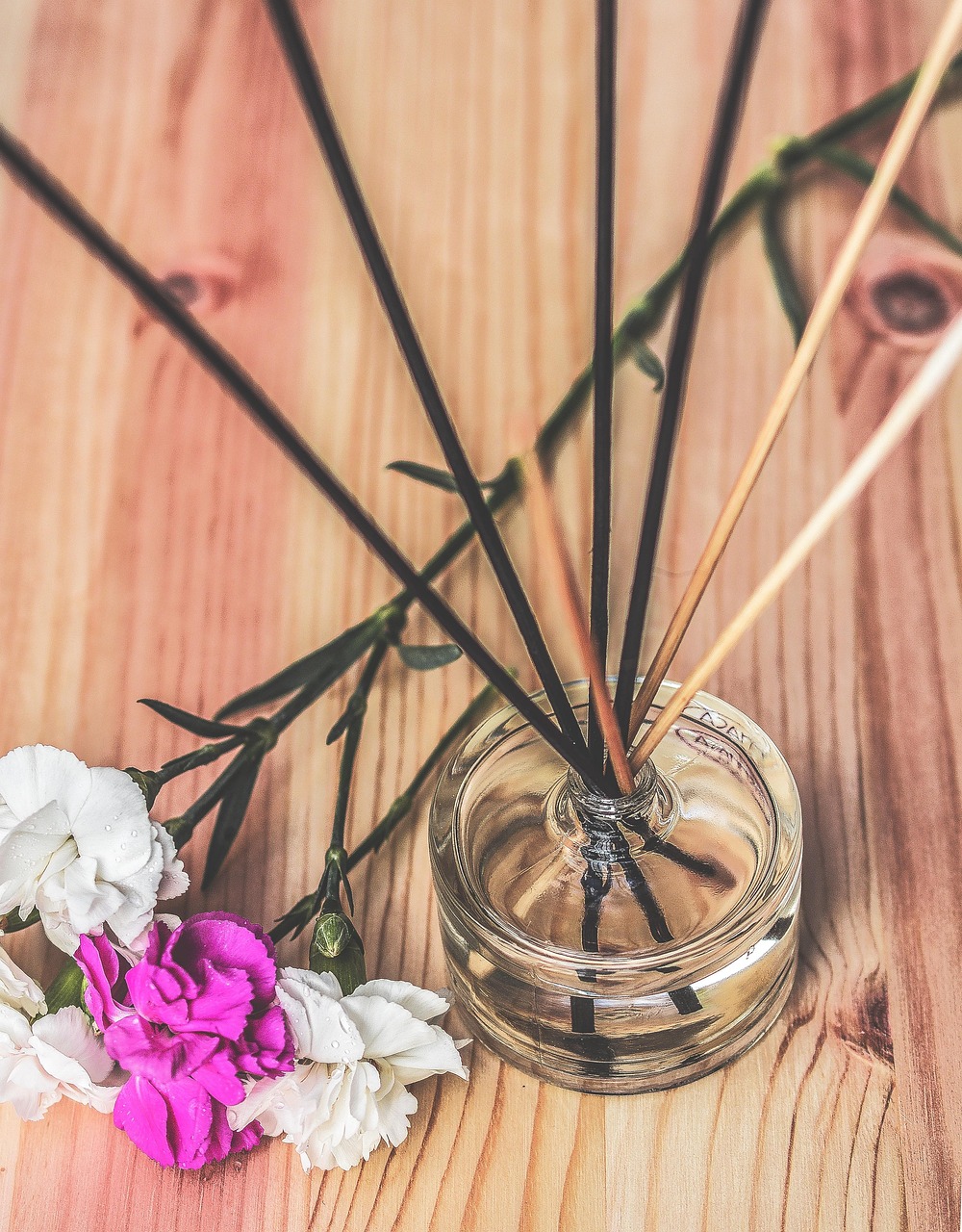
- Reed diffuser: Camphor oil can be added to an unscented reed diffuser base (typically a light carrier oil such as fractionated coconut oil or dipropylene glycol). Use at around five percent camphor in the blend, then add complementary oils to build out the scent.
- Room spray: Combine 10 drops of camphor oil, 90 ml of distilled water, and one tablespoon of witch hazel in a glass spray bottle. Shake before use. Mist into the center of a room or onto soft furnishings (patch test first on upholstery). The scent dissipates within 30 to 60 minutes, making this a good option for a quick refresh.
Room-by-Room Considerations
Home office or study: Camphor's sharp, clarifying character makes it a popular choice for workspaces. A short diffusion session at the start of a work block can help establish a fresh, focused atmosphere. Pair it with rosemary or peppermint for a particularly bright combination.
Hallway and entryway: The entry of a home benefits enormously from camphor because it neutralizes incoming odors (coats, shoes, general day-to-day smells) with something genuinely clean rather than just a heavy perfume. A passive cotton-ball diffuser tucked behind a decorative object on an entryway console works well.
Bathroom: A small amount of camphor in a passive diffuser or room spray gives a bathroom that spa-adjacent coolness. It pairs nicely with eucalyptus and bergamot in this setting.
Bedroom: Camphor in a bedroom is best used for a morning refresh rather than as an overnight scent. The stimulating quality of the aroma is better suited to waking up a space than to evening wind-down routines. If you want camphor in the bedroom at night, use it at a very low level and pair it with lavender, which softens the sharpness considerably.
Living room: For large open living areas, camphor works best as part of a blend where it provides brightness rather than dominating. Try it with orange, cedarwood, or frankincense for a warmer, more welcoming composite.
6. Camphor Oil Blending Guide: Pairings That Work at Home
Camphor is a strong, distinctive note. In perfumery terms it sits in the top-to-middle register: you smell it immediately, but it does not linger on the surface the way a base note does. This makes it very useful as a character-defining element in a blend, as long as it is used with restraint relative to its partners.
Understanding Camphor's Scent Position
Camphor is simultaneously sharp and woody, cooling and slightly sweet in its very back notes. It reads as clean rather than floral, green rather than spicy. This places it well alongside:
- Other cool botanicals (eucalyptus, peppermint, spearmint)
- Soft florals that need a sharper counterpoint (lavender, geranium)
- Woody bases that it echoes and amplifies (cedarwood, sandalwood, vetiver)
- Bright citruses that lift its coolness (lemon, bergamot, orange)
- Resinous depths that anchor its volatility (frankincense, myrrh)
Five Home Blend Recipes
All ratios below are given as drops for a standard 100 ml ultrasonic diffuser fill, unless otherwise noted.
Morning Focus Blend (Home Office)
- 2 drops camphor
- 3 drops rosemary
- 2 drops lemon
- 1 drop peppermint
Clean Linen Air Blend (Bedroom or Laundry Room)
- 2 drops camphor
- 4 drops lavender
- 2 drops bergamot
Forest Wardrobe Blend (Closet Sachets: mix into a carrier before adding to cotton)
- 3 drops camphor
- 4 drops cedarwood
- 2 drops vetiver
- 1 drop pine or fir needle
Spa Atmosphere Blend (Bathroom)
- 2 drops camphor
- 3 drops eucalyptus
- 2 drops bergamot
- 1 drop geranium
Evening Calm Blend (Living Room, Low Camphor)
- 1 drop camphor
- 3 drops frankincense
- 3 drops orange
- 1 drop sandalwood
Camphor as a Single-Note Diffusion Oil
Camphor can absolutely be diffused alone. Many people who love the scent appreciate its unadorned clarity in a work context or for a brief room-reset session. If you choose to diffuse it solo, keep the dose low (two to three drops in a full ultrasonic reservoir) and limit the session to 30 minutes. The sharpness of an undiluted single-note camphor diffusion can become fatiguing over long periods.
Camphor in Cosmetic Bases
Beyond purely domestic scenting, camphor oil appears in several cosmetic formulation contexts. The most common at-home applications are scalp care blends and body oil formulations. Our articles on Camphor Oil for Hair: A Cooling Note for Scalp Scenting and Camphor and Coconut Oil: A Simple Two-Ingredient Cosmetic explore those applications in detail. For the purposes of this home guide, the key principle is consistent: keep camphor at a low percentage in any skin-contact formulation, typically at or below one percent.
7. Storage and Sourcing: Getting the Most from Your Bottle
The quality of camphor oil varies considerably across the market, and it is worth understanding what to look for before you buy. A bottle of poor-quality oil, whether adulterated, incorrectly fractionated, or oxidized from poor storage, will not perform well in any of the applications described in this guide. It may also have a harsher or less pleasant scent character than well-sourced white camphor.
What to Look For When Buying Camphor Oil
Specify white camphor: As noted earlier, white camphor is the fraction appropriate for home aromatic and cosmetic use. The label should state the oil is white camphor or camphor (rectified white). If it simply says "camphor oil" with no further specification, ask the supplier which fraction it is before purchasing.
Latin name on the label: A reputable supplier will list the botanical name Cinnamomum camphora on the label or product page. This is a basic indicator of quality and transparency.
Country of origin: High-quality camphor oil typically originates from Taiwan, Japan, or mainland China. Some production also comes from Sri Lanka. Knowing the origin is a part of understanding what you are buying.
GC/MS testing: Better essential oil suppliers provide gas chromatography/mass spectrometry (GC/MS) test results for their oils, either on request or published on their website. These reports show the oil's chemical composition, which lets you verify that what you are buying is genuine white camphor and not a blend padded with synthetic camphor or cheaper fractions.
Packaging: Camphor oil should be sold in dark glass bottles (amber or cobalt blue). Avoid suppliers packaging it in clear glass or, worse, plastic, as both compromise the oil's quality over time.
How to Store Camphor Oil at Home
Once you have a quality bottle, proper storage extends its useful life considerably. Essential oils are volatile organic compounds, and they degrade through exposure to three things: heat, light, and oxygen.
- Temperature: Store camphor oil in a consistently cool location. A cabinet away from the stove or a basement shelf is ideal. Avoid storing it in direct sunlight or near heating elements.
- Light: The dark glass bottle does most of the work here, but an additional layer of protection (a box or drawer) is never a bad idea.
- Oxygen exposure: Always replace the cap tightly after use. If you decant into a smaller working bottle, try to keep it close to full so there is less air space above the oil.
Well-stored white camphor oil has a shelf life of approximately two to four years from the distillation date. An oxidized camphor oil will smell harsher and more chemical than fresh oil, and its aromatic performance in blends will be noticeably diminished. When in doubt, smell the oil straight from the bottle. Good white camphor should smell clean, sharp, and slightly sweet, not harsh or predominantly synthetic.
How Much to Buy
For general home use covering closet sachets, laundry, and occasional diffusion, a 10 ml bottle will last most households three to six months. If you are blending for multiple applications, a 30 ml bottle is more economical. Buying very large quantities (100 ml or more) only makes sense if you are actively formulating in volume and will use it within the shelf life window.
8. Quick-Reference Table: Camphor Oil Uses at a Glance
The table below summarizes the main home uses covered in this guide, along with recommended method, typical dose, and key safety notes for each application.
| Application | Method | Typical Dose | Key Notes |
|---|---|---|---|
| Closet sahet | Cotton pad in organza bag | 3 to 5 drops per pad | Refresh every 4 to 6 weeks |
| Drawer liner | Diluted mist on kraft paper | 10 drops per 100 ml water | Dry completely before placing in drawer |
| Dryer ball scenting | Drops on wool dryer ball | 3 to 5 drops per ball | Add before cycle, not to wet laundry directly |
| Linen spray (ironing) | Glass spray bottle with witch hazel | 8 to 10 drops per 100 ml | Fabric use only, not for skin |
| Ultrasonic diffuser | Drops in water reservoir | 3 to 7 drops (room size dependent) | 30 to 60 min sessions, good ventilation |
| Room spray | Diluted in water and witch hazel | 10 drops per 90 ml | Patch test upholstery before use |
| Passive diffusion (cotton ball) | Drops on cotton in open dish | 2 to 3 drops | Slow, subtle; refresh every few days |
| Clay disk (closet or shelf) | Drops on unglazed terra cotta | 4 to 5 drops, monthly refresh | Long-lasting; blends well with cedarwood |
| Reed diffuser blend | In carrier oil base with reeds | Approx. 5% camphor in blend | Pair with softer base notes to balance |
| Scalp and hair care | Diluted in carrier oil | At or below 1% in finished blend | Patch test; see dedicated hair guide |
Bringing It All Together
Camphor essential oil has earned its place in the home across centuries and across cultures. The reasons are practical as much as they are sensory. Its scent does something distinctive: it makes space feel fresh without masking, clean without sweetening, and open without being empty.
The uses covered in this guide, from closet sachets and dryer balls to diffuser blends and linen sprays, share a common thread. They are all low-effort, repeatable habits that maintain a home environment that smells genuinely pleasant rather than artificially perfumed. That is what good botanical scenting does at its best.
Start with one application that suits your immediate need. If your linen closet is the priority, make a simple cotton pad sachet and see how the scent performs over four weeks. If you work from home and want a focused atmosphere, try the Morning Focus diffuser blend for a week of morning sessions. From there, the natural inclination is to experiment, and camphor's versatility means there is always a new combination or a new room to try.
Quality sourcing and proper dilution remain the two habits that will serve you consistently well, whatever specific uses you settle into. Keep a good bottle of white camphor on hand, store it correctly, and it will be a reliable part of your home aromatic practice for years.