Camphor for Itching and Bug Bites: The FDA-Listed Use
FDA's over-the-counter monograph lists camphor at 0.1 to 3 percent among ingredients for topical anti-itch products, and those labels mention insect bites. That is a regulatory fact about finished drug products at a fixed strength. Our camphor essential oil is a different thing: an undiluted aromatic material, not sold for itching, bites or any skin condition.
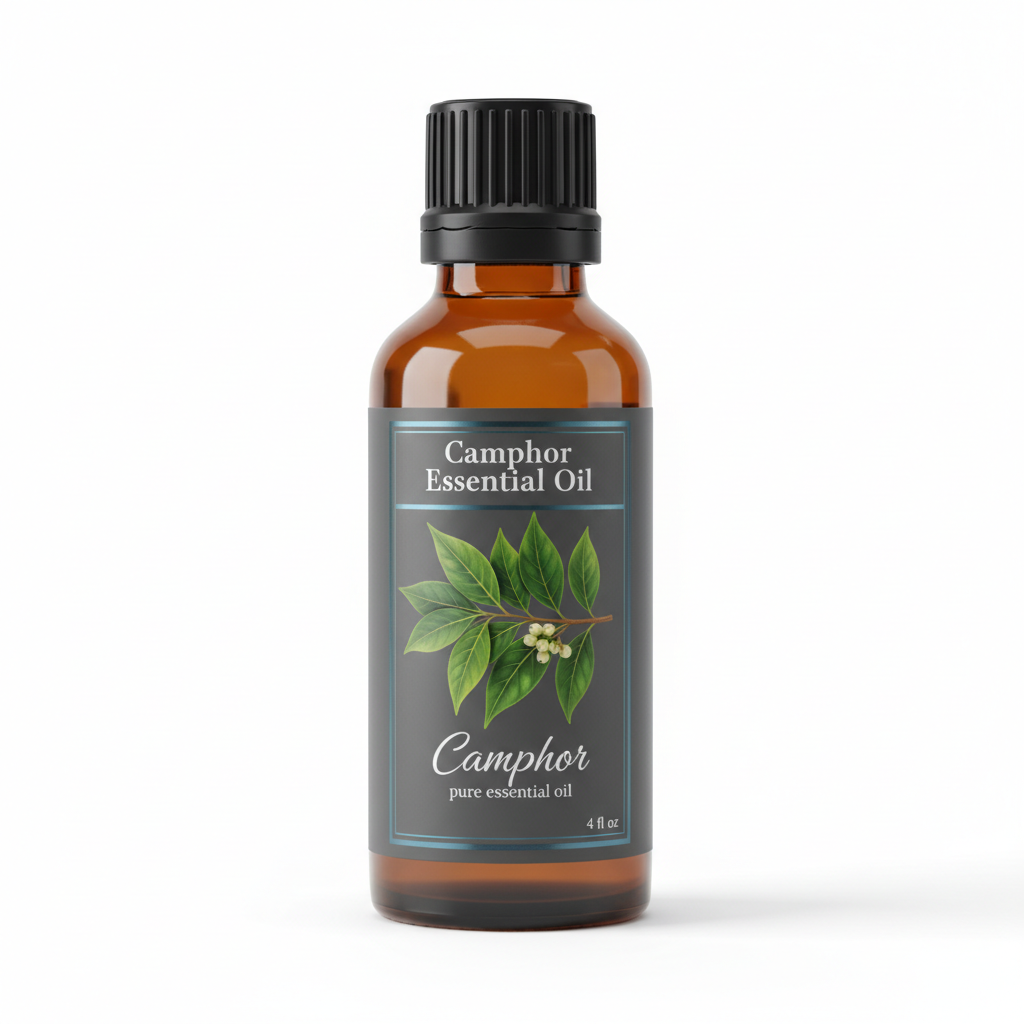
Camphor Essential Oil
Our own Camphor Essential Oil, in sizes from 0.5 oz to bulk.
From $8.69
Shop Now →This is the one health-adjacent topic where camphor has an official, named place, which is exactly why it needs careful handling. The listing is real. The jump from "a monograph lists camphor at 0.1 to 3 percent" to "I can put camphor oil on a bite" is where people get hurt. We will walk through what the listing says, what it does not say, and what a sensible adult would do with that.

What the monograph actually lists
The current FDA document is OTC Monograph M017, external analgesic drug products. In its definitions, an antipruritic is a topically applied drug that relieves itching by depressing cutaneous sensory receptors. Under the list of alcohols and ketones in the topical analgesic, anesthetic and antipruritic section, the entry for camphor is 0.1 to 3 percent. The same document lists camphor exceeding 3 percent up to 11 percent in a different group, the counterirritants, whose purpose is to cause mild irritation of the skin to distract from pain in deeper tissue.
So there are two camphor regimes in the same monograph, and they are defined by strength. At 3 percent and below, camphor sits with the anti-itch ingredients. Above 3 percent, it sits with the counterirritants. Neither range is a statement about essential oil. Both describe finished products made to a label.
The labeling language for products in the anti-itch group allows indications along the lines of "for the temporary relief of" pain, itching, or pain and itching, which may be followed by "associated with" items including minor burns, sunburn, minor cuts, scrapes, insect bites and minor skin irritations. The monograph's warnings for all these products include "For external use only," "Avoid contact with the eyes," and a direction to discontinue and consult a physician or doctor if the condition worsens or symptoms persist for more than 7 days or clear up and recur within a few days.
We repeat these as regulatory facts. They are what appears on drug labels, and our oil is not a drug product.
The gap between a 3 percent label and a bottle of oil
This is the part we most want you to hold on to. A finished anti-itch product at, say, 3 percent camphor is made by a manufacturer who has measured it into a base and put a Drug Facts panel on it. Our oil is camphor essential oil, 100 percent, undiluted. It is not 3 percent of anything.
Here is the arithmetic, shown as a reason for caution and not as a recipe. Three percent of a 1 fluid oz (about 30 mL) total is roughly 0.9 mL of oil. That is less than a quarter of a teaspoon of oil in a full ounce of base. The point is how small the fraction is, and how easy it is to overshoot with undiluted oil, with variable drop sizes, and with no way to measure well at home. Our dilution guide goes through the mechanics and why any home percentage is only an estimate.
That is also why the same label that mentions insect bites carries its warnings. A product made carefully at a regulated strength still tells people to stop if it gets worse.

What studies say about camphor and itch
A 2023 bibliometric analysis in Cureus by Hoang and colleagues reviewed English-language PubMed literature from 2010 to 2022 on camphor- and menthol-containing agents. Of 103 results, 15 addressed health-related use. The authors described topical use for pain, itch and upper respiratory symptoms as potentially effective, but each use rests on a limited number of studies, and they called for randomized, double-blind controlled trials.
Two things follow. First, the evidence for camphor and itch is a modest signal in a modest literature, and it is about camphor- and menthol-containing agents as a group, not about camphor essential oil. Second, the monograph is a regulatory classification of what can be marketed, which is a different thing from a ranking of how well an ingredient works.
On mechanism, a 2013 Chemical Senses paper by Selescu and colleagues reported that camphor activates the cold-sensing channel TRPM8 in cells and in rat sensory neurons. That helps explain why camphor feels cool or tingly. A sensation can compete with the sensation of itch, but this paper is cell and neuron work, not a trial in people with itchy skin.
| Question | What the cited sources say | What it does not say |
|---|---|---|
| Is camphor listed for itch? | FDA M017 lists camphor 0.1 to 3% among topical analgesic, anesthetic and antipruritic ingredients | That essential oil is the same as, or can stand in for, a finished product |
| Does camphor have clinical support for itch? | A 2023 analysis called topical camphor and menthol agents potentially effective for itch, with limited studies | That the evidence is strong or specific to camphor oil |
| Why does it feel cooling? | Camphor activates TRPM8 in cell and neuron experiments | That the sensation corrects whatever is causing the itch |
| Is it safe for any skin? | Labels warn against eyes, and counterirritant labels against wounds or damaged skin | Anything about safety on scratched, broken or inflamed skin from undiluted oil |
Why we would not reach for camphor oil on a bite
A bite or rash is skin that is already compromised, often scratched. Camphor above 3 percent is classified as a counterirritant, and the monograph's counterirritant labels say not to apply to wounds or damaged skin. Allergic contact dermatitis to camphor has been described in case reports: the AAAAI "Ask the Expert" page notes case reports in sunscreen and ear drops, and adds that a VapoRub report may have been due to other essential oils. A reaction on top of an itch is hard to tell apart from the original itch.
The people best placed to say what is going on with persistent or spreading itch are a pharmacist, physician or dermatologist. Itch can have causes that no rub will address, and the monograph's own seven-day warning exists for that reason.
Children and animals
For children the answer is firmer. The Healio pharmacy column by Edward Bell, PharmD, cites AAP Committee on Drugs advice from 1994 that camphor not be used in children, and describes ingestion as potentially fatal. A bite on a child is a pediatrician or pharmacist conversation, not an essential oil experiment. Our children and camphor page covers this at more length.
About bug bites and prevention
If the real goal is fewer bites, that is a different question from what to put on one. We take it up separately in our piece on camphor and mosquitoes, which compares camphor with EPA-registered repellents. And if you want to understand where the 11 percent figure comes from, see our explainer on the FDA camphor rules.
What we do sell, said plainly
We sell one product, Camphor Essential Oil, Cinnamomum camphora, described on our pages as the white fraction of the wood distillate, bottled undiluted in dark amber glass with a tight closure, in sizes from 0.5 oz to 400 lb. It is sold as an aromatic material. Our shop page shows the sizes. We do not sell it for itching or insect bites, and we would not suggest it as a substitute for an anti-itch product made and labeled for that purpose.
The posted certificate of analysis (batch CMPQGACCCNC003A) lists physical constants such as specific gravity 0.878 and refractive index 1.467, not a GC/MS profile or a safrole figure. Our Inside the Still page explains what we request for every lot.
Questions we would expect
Is camphor an approved anti-itch ingredient?
FDA's monograph lists camphor at 0.1 to 3 percent for topical anti-itch products. That applies to finished over-the-counter drug products, not to essential oil.
Can I dab diluted camphor oil on a bite?
We would not recommend it. The evidence for camphor oil on bites is not established in the sources cited here, and a reaction on compromised skin is hard to manage. A pharmacist can suggest a product made for the purpose.
How long should itching last before I ask someone?
The monograph's labeling tells users to consult a physician or doctor if the condition worsens or symptoms persist for more than 7 days. Severe swelling, spreading redness or trouble breathing after a bite or sting is an urgent matter, so call your local emergency number.
This page was written from published sources and has not been reviewed by a medical professional.
Camphor Essential Oil
Camphor Essential Oil from our own shop, in sizes from 0.5 oz to bulk.
From $8.69
Shop Now →Sources & Further Reading
- FDA OTC Monograph M017: External Analgesic Drug Products for OTC Human Use
- Hoang D, Wong A, Olympia RP. Current state of research on camphor- and menthol-containing agents. Cureus 2023
- Selescu T et al. Camphor activates and sensitizes TRPM8 to cooling and icilin. Chemical Senses 2013
- AAAAI Ask the Expert: Camphor and menthol allergy
- Healio: Camphor use entails unique safety concerns