Does Camphor Repel Mosquitoes? Evidence vs EPA-Registered Repellents
Camphor oil showed partial repellency against Aedes aegypti in one laboratory olfactometer study, but we found no evidence that it protects skin from bites for a reliable length of time. CDC says the effectiveness of non-EPA-registered repellents, including some natural ones, is unknown. Use a registered product when mosquito-borne disease is a concern.
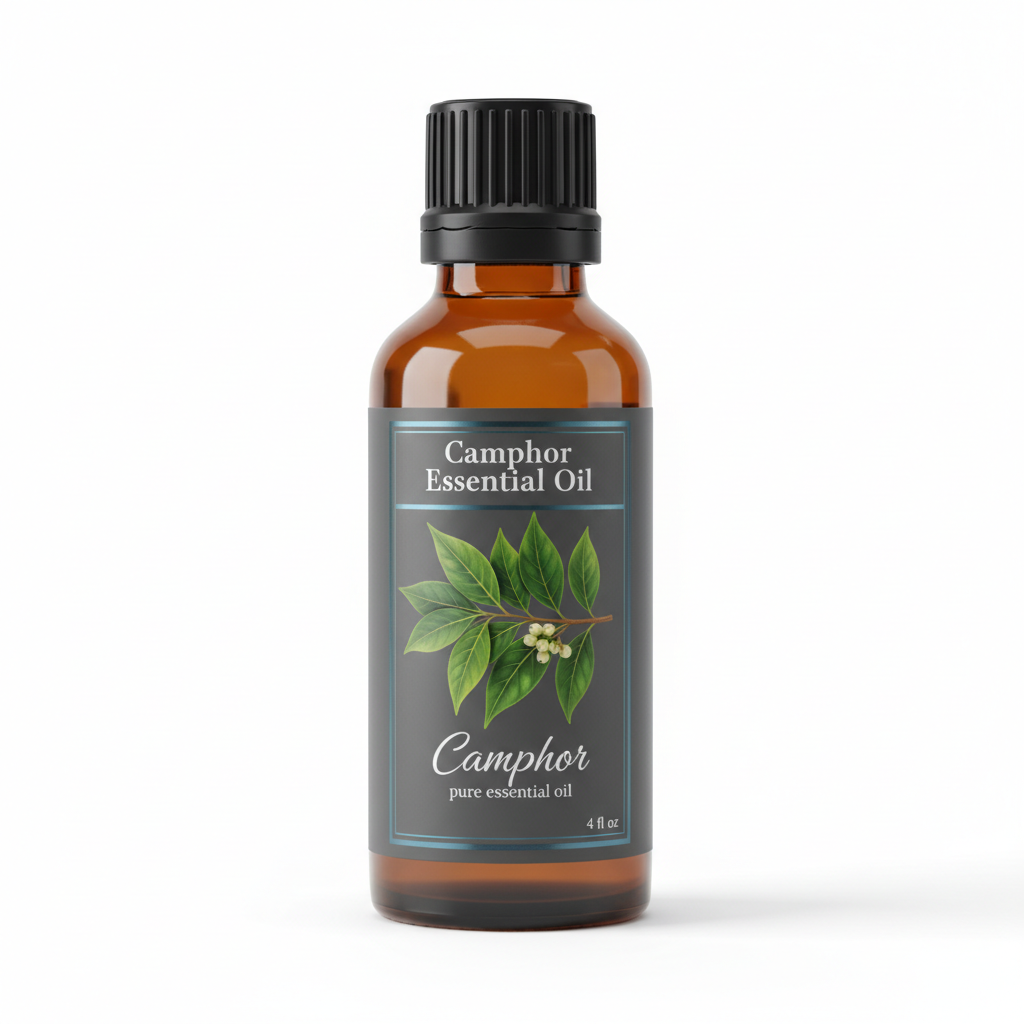
Camphor Essential Oil
Our own Camphor Essential Oil, in sizes from 0.5 oz to bulk.
From $8.69
Shop Now →The decision first: what to use outdoors
If the question is which repellent to put on before an evening outdoors, we are not the right shop to ask, and we say so plainly. We sell one product, camphor essential oil, and camphor oil is not on the list that matters here. CDC's mosquito prevention page recommends EPA-registered repellents and states that EPA registration means the agency has reviewed the product's effectiveness. It also says, in plain words, that "we do not know the effectiveness of non-EPA registered insect repellents, including some natural repellents." Camphor oil sold as an essential oil falls in that unknown group.
The EPA's own repellent page adds a practical check. A registration number on the label means the company gave EPA technical information on the product's safety and effectiveness against mosquitoes or ticks, based on scientific testing guidelines. Protection times vary because test conditions vary. You can look up the number you find on a bottle in EPA's database. A bottle of essential oil does not carry one, because it is not marketed as a repellent.
The CDC page lists plant-derived ingredients on its registered list too, such as oil of lemon eucalyptus and 2-undecanone, so being "natural" is not what disqualifies camphor. What disqualifies it is the absence of registered, tested evidence.

The one study that tested a camphor oil
Our search for camphor-specific mosquito evidence found a single relevant paper. Uniyal and colleagues, in the Journal of Arthropod-Borne Diseases (2016), compared 23 essential oils against Aedes aegypti in a Y-maze olfactometer. The camphor oil, from Cinnamomum camphora, repelled the mosquitoes at every concentration tested: 23.12 percent at 1 ppm, 41.5 percent at 10 ppm and 54.21 percent at 100 ppm. It ranked sixth of the 23 oils.
The oils that ranked above it performed better. Litsea reached 77.26 percent at 100 ppm, rosewood 66.90 percent and geranium 66.11 percent. The positive controls beat all of them: DEET scored 85.48 percent at 100 ppm and DEPA 80.62 percent.
| Material in the olfactometer | Repellency at 1 ppm | 10 ppm | 100 ppm |
|---|---|---|---|
| DEET (positive control) | 59.63% | 68.63% | 85.48% |
| Litsea (Litsea cubeba) | 50.31% | 60.26% | 77.26% |
| Rosewood | 46.00% | 59.22% | 66.90% |
| Geranium | 48.74% | 56.84% | 66.11% |
| Camphor (Cinnamomum camphora) | 23.12% | 41.50% | 54.21% |
Read the limits before reading the numbers. This was spatial repellency, which means whether mosquitoes moved away from a vapor source in a small maze, with 20 females per test and counts taken after three minutes. The authors did not test the oils on skin and note that skin testing may change the results. The oil's source, fraction and composition are specific to that study and not matched to ours. The finding is a reason to keep studying camphor, not a reason to put it on your arm.
Why a lab result does not equal protection
A repellent that works on skin has to hold up over hours of sweat, heat, abrasion and evaporation. Camphor is volatile. NIOSH lists a vapor pressure of 0.2 mmHg, which suggests that a thin layer on skin would leave quickly. That is our reasoning from the physical property and not a skin trial, but it matches how the studies on plant oils generally read.
The nearest field-style comparison we could open is Fradin and Day in the New England Journal of Medicine (2002). They tested 15 volunteers by placing a treated arm in a cage with 10 hungry, disease-free female mosquitoes, and recorded the time to the first bite. A 23.8 percent DEET product averaged 301.5 minutes of complete protection. A soybean oil product averaged 94.6 minutes. An IR3535 product averaged 22.9 minutes. The remaining botanical products averaged under 20 minutes, and repellent wristbands gave no protection. The abstract does not name which botanicals were tested, so we cannot say camphor was among them, and we are not claiming it was. The authors concluded that the non-DEET products available then could not be relied on for prolonged protection where mosquito-borne disease is a substantial threat.
That study is 24 years old and small. It is still the clearest published picture of the gap between a pleasant plant scent and a tested repellent, and nothing we found since contradicts the pattern for camphor.

How to read a repellent claim
Three questions sort most marketing quickly. First, is there an EPA registration number on the label? If not, CDC's statement about unknown effectiveness applies. Second, what was measured? The 2002 study used time to the first bite on a treated forearm, which is a protection time a buyer can use. An olfactometer percentage, like the camphor figures above, measures something else: whether mosquitoes drift away from a vapor. Third, for how long? EPA notes that protection times vary with test conditions, so a figure from a lab arm in a cage is a guide, not a promise for a humid evening by water.
Apply that to camphor and the answer is short. It has a partial lab percentage, no registration, no protection time and no field data. That is an incomplete file, and incomplete files are not what you want between you and a disease-carrying mosquito.
How the options compare
| Option | EPA registered | What the evidence we opened shows | Our rating for outdoor bite avoidance |
|---|---|---|---|
| DEET products | Yes | Longest complete protection in the 2002 comparison; higher concentration lasted longer. | Reliable |
| Picaridin, IR3535, oil of lemon eucalyptus or PMD | Yes (CDC list) | CDC lists them as providing protection sufficient to avoid bites of disease-carrying mosquitoes. In the 2002 study an IR3535 product lasted 22.9 minutes, so product and concentration matter. | Reliable when the label says so |
| Camphor essential oil on skin | No | No skin or field data found. One lab olfactometer study showed partial repellency. | Do not rely on it |
| Camphor oil vapor in a room or yard | No | No data found for outdoor spaces. | Do not rely on it |
We are leaving out concentration advice on purpose. Product labels for registered repellents tell you the concentration and how long the protection lasts. The label is the authority, and ours is not.
The safety trade-off most DIY repellent recipes skip
Most online camphor-repellent recipes ask you to rub a diluted oil on skin. We would not, and the reason is not caution for its own sake. The risk is swallowing as much as skin: a pharmacist's column in Healio, citing the American Association of Poison Control Centers, notes that 1,000 mg swallowed can be fatal to a 10 kg child. A recipe that puts camphor in a lotion also puts it in a product that can end up in a small mouth or on a small child's hands. The registered repellents come with age guidance printed on the label, so check it for any child. Pet Poison Helpline adds that camphor is readily absorbed across the skin of dogs and cats and should never be applied to them. Read our pet safety article if animals share your yard.
There is a related point about itching. Camphor also appears in some over-the-counter drug products, such as the body rubs Pet Poison Helpline lists, which is a separate regulatory subject with its own rules. That has nothing to do with whether the oil in a bottle repels mosquitoes. Our article on camphor and the FDA-listed itch use covers what regulators examined and why a fragrance oil is not an itch product.
Where camphor oil belongs, and where it does not
Where our oil answers a problem, it is a scent problem: a crisp aroma in a closed space. The household overview in camphor oil uses around the home sets out which jobs hold up. Mosquito control is not one of them. If you want the oil for fragrance, it is sold as an aromatic material and not as a drug or a pest product, in dark amber glass in sizes from 0.5 oz to 400 lb, listed in the shop. It is made for a closet, not a campsite.
If you are comparing it to other pest topics, our piece on camphor and clothes moths makes the same point about evidence: scent traditions and tested results are different things.
Quick answers
Is camphor in a mosquito coil or candle effective?
We did not find a camphor-specific study of coils or candles, so we cannot say. Burning camphor also introduces its own safety questions, which we cover separately. Use a registered repellent instead.
Why does a natural repellent need EPA registration?
Registration means EPA reviewed effectiveness data against mosquitoes or ticks. Without it, as CDC puts it, effectiveness is unknown. Some plant-derived ingredients, such as oil of lemon eucalyptus, are registered.
Could camphor ever be used with a registered repellent?
There is no evidence it adds protection. If you use a registered repellent, the label is the guide, and adding a second strong volatile material would only add exposure.
Last reviewed October 2026. This is an evidence review, not medical advice. For travel to a region with mosquito-borne disease, speak to a physician or travel clinic.
Sources & Further Reading
- CDC: Preventing mosquito bites
- EPA: Find the insect repellent that is right for you
- Uniyal et al. 2016, Journal of Arthropod-Borne Diseases: Behavioral response of Aedes aegypti towards essential oils using olfactometer
- Fradin and Day 2002, New England Journal of Medicine: Comparative efficacy of insect repellents against mosquito bites
- CDC NIOSH Pocket Guide: Camphor (synthetic)
- Healio, Pharmacology Consult (Bell, 2008): Camphor use entails unique safety concerns
- Pet Poison Helpline: Camphor