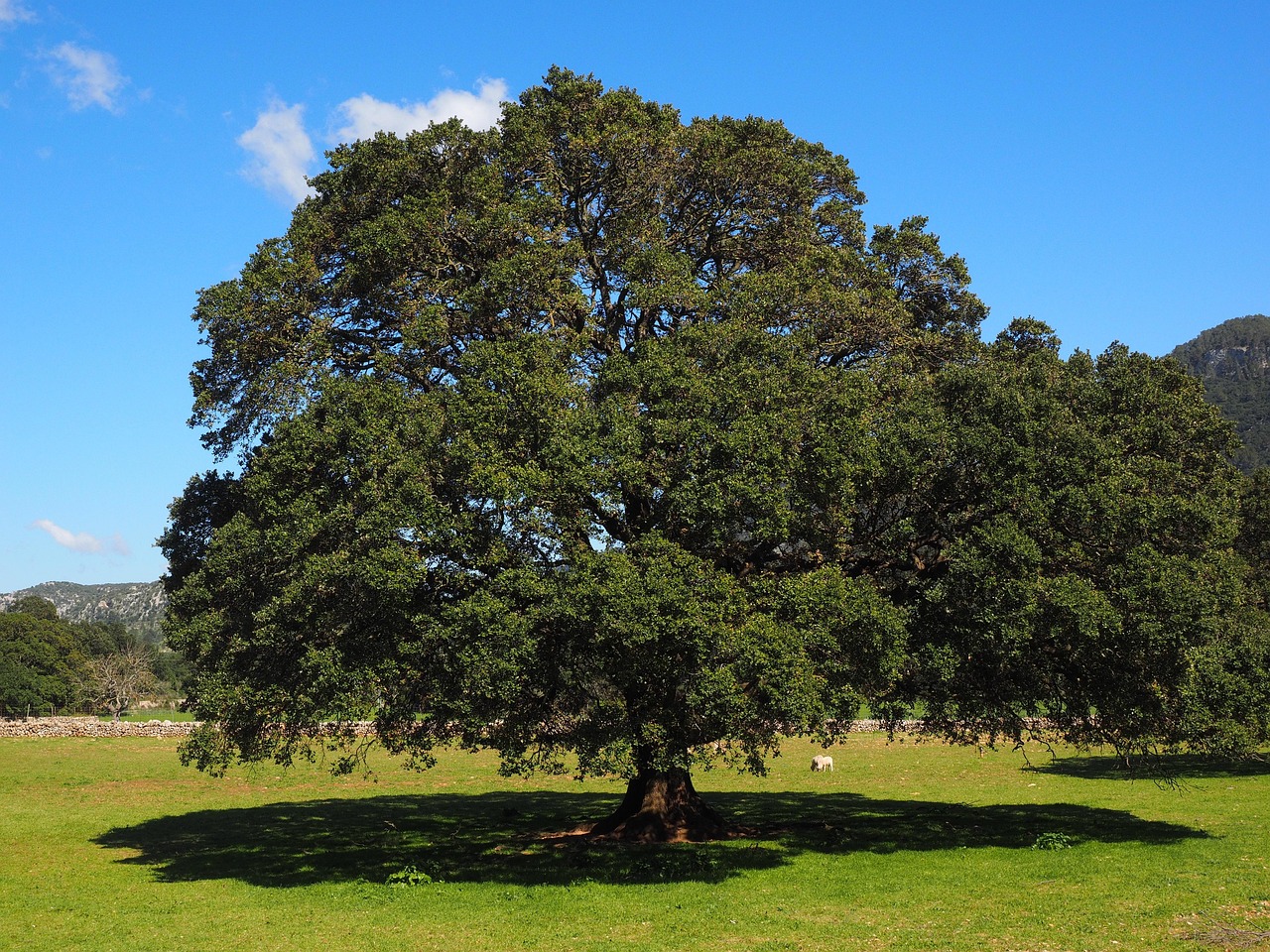
Cinnamomum Camphora: The Tree Behind Camphor Oil
Most people encounter camphor oil as a finished product: a clear, sharply aromatic liquid in a small glass bottle. But every drop of that oil traces back to a single remarkable species of tree. If you have ever asked where does camphor oil come from, the answer begins here, with Cinnamomum camphora and centuries of botanical history.
This deep dive moves past the surface-level facts. We will look at the tree's biology and geographic origins, break down its chemical composition, review what current research observations suggest, and walk through the quality and safety considerations that matter most to anyone working with camphor tree oil.

Meet the Tree: Botanical Profile of Cinnamomum Camphora
Cinnamomum camphora belongs to the Lauraceae family, the same botanical family as cinnamon, bay laurel, and avocado. It is a broadleaf evergreen that can reach 20 to 30 meters in height at full maturity, with a canopy spread wide enough to cast shade over an entire courtyard. The bark is deeply furrowed and grayish-brown. Crush a single leaf between your fingers and you will immediately recognize the scent: cool, woody, slightly medicinal in character.
The tree is native to southern China, Taiwan, and Japan, though cultivation has spread it across Southeast Asia, South Asia, Madagascar, and parts of southern Europe and California. In Japan, it is called kusu or kusunoki and is considered sacred in Shinto tradition. Several ancient specimens in Japan and China are estimated to be over 1,000 years old, which is partly the inspiration behind the name of this collection.
Camphor accumulates naturally in the wood, roots, and leaves of the tree in specialized secretory cells. Even young branches carry a detectable concentration. The compound does not appear in equal amounts across all plant tissues, which is why the method of extraction and the part of the tree used both influence the final oil profile significantly. You can read more about that process in our guide on how camphor oil is made.
Chemotypes: One Species, Multiple Chemical Identities
Here is where Cinnamomum camphora becomes genuinely fascinating from a chemistry standpoint. The species does not produce a single consistent chemical profile. Instead, it expresses distinct chemotypes: populations of the same plant species that produce meaningfully different principal compounds depending on their geographic origin and genetic lineage.
The major recognized chemotypes include:
- Camphor chemotype: Dominant in wood from mature trees, especially those harvested in China and Taiwan. High in camphor (the ketone), this is the source of classic camphor tree oil used in cosmetic and aromatic applications.
- Linalool chemotype: Found especially in Ho Wood oil, produced from the wood and roots of trees grown in certain regions of China. Very low in camphor, very high in linalool. Sold separately in the market as Ho Wood essential oil.
- 1,8-Cineole chemotype: Sometimes called ravintsara when leaves are distilled in Madagascar. Produces an oil dominated by the oxide 1,8-cineole rather than camphor. Frequently mislabeled in the market, which creates confusion for buyers.
- Safrole chemotype: High in safrole, a compound with significant safety concerns and regulatory restrictions. Not suitable for cosmetic use. Reputable suppliers do not carry this chemotype for consumer products.
- Borneol chemotype: Less commercially common, characterized by elevated borneol content.
Understanding chemotypes matters enormously for quality sourcing. Two bottles labeled "camphor essential oil" can come from the same species and still be chemically unrecognizable from each other. A reputable supplier will specify which chemotype they are sourcing, and ideally provide GC-MS (gas chromatography-mass spectrometry) data to confirm the profile.

Chemical Composition of the Camphor Chemotype
When we talk about camphor essential oil in a cosmetic and aromatic context, we are almost always referring to the camphor chemotype, distilled from the wood of mature trees. Its chemical profile is well-documented and relatively consistent across quality suppliers.
Primary Compounds
| Compound | Typical Range | Chemical Class |
|---|---|---|
| Camphor | 40% to 55% | Bicyclic monoterpenoid ketone |
| 1,8-Cineole (eucalyptol) | 10% to 20% | Cyclic monoterpenoid ether |
| Alpha-pinene | 2% to 10% | Bicyclic monoterpene |
| Beta-pinene | 1% to 5% | Bicyclic monoterpene |
| Limonene | 1% to 5% | Monocyclic monoterpene |
| Linalool | 1% to 4% | Acyclic monoterpenol |
| Borneol | 1% to 4% | Bicyclic monoterpenol |
| Safrole | Trace to 1% | Phenylpropanoid |
Camphor itself is a bicyclic monoterpenoid ketone with the molecular formula C₁₀H₁6O. It is the compound responsible for the oil's signature sharp, cool, slightly woody scent. If you are curious about how that scent profile actually layers and evolves on skin and in diffusion, our dedicated camphor scent profile guide breaks it down note by note.
Notable Secondary Compounds
The 1,8-cineole content in camphor chemotype oil contributes a cooling, slightly eucalyptus-adjacent quality to the overall aroma. Alpha-pinene and beta-pinene add a faintly resinous, forest-like undertone. Borneol, structurally related to camphor, carries its own earthy, slightly minty character. These secondary compounds, even at low percentages, shape how the oil behaves in a blend and how it interacts with other aromatic materials.
Safrole deserves a specific note. In quality camphor chemotype oil, safrole is present only at trace levels, well below concentrations of regulatory concern. However, the safrole-dominant chemotype of the same species produces oil that is not appropriate for cosmetic use and is regulated or restricted in many jurisdictions. This is another reason why GC-MS verification from a trusted supplier is not optional: it is a basic quality standard.
What Research Suggests: Observations from the Scientific Literature
Scientific interest in Cinnamomum camphora compounds is active and ongoing. The research is genuinely interesting, though it is important to frame these findings accurately: many studies are in vitro (conducted in laboratory conditions) or involve animal models, and observations from controlled research do not automatically translate into conclusions about what a topically applied or diffused oil does for a person.
With that framing clearly in place, here is what the literature observes:
Camphor and Skin Sensation
Some research suggests that camphor interacts with specific transient receptor potential (TRP) channels in the skin, particularly TRPV1 and TRPM8. These are receptors involved in how we perceive temperature and certain tactile sensations. Research observations in this area may partly explain why topical camphor-containing formulations have historically been associated with a cooling or warming skin sensation depending on concentration and application context. This is a sensory phenomenon, not a claim about biological activity in a clinical sense.
Alpha-Pinene and Atmospheric Studies
Alpha-pinene, one of the secondary compounds in camphor tree oil, has been studied in the context of forest atmosphere research. Some studies examining forest bathing environments suggest that monoterpene-rich air, of which alpha-pinene is a common component, may be associated with reported differences in subjective wellbeing among participants. These are observational associations in naturalistic settings, not controlled evidence of a specific effect.
1,8-Cineole in Aromatic Research
The 1,8-cineole fraction, which appears in camphor chemotype oil at meaningful concentrations, has been the subject of various studies examining cognitive performance during aromatherapy sessions. Some research suggests participants reported differences in alertness during inhalation periods compared to control conditions. Again, this is observational and should not be read as a definitive finding about what camphor oil does.
Safety Profile: What You Need to Know Before Using Camphor Oil
Camphor essential oil carries a more demanding safety profile than many popular oils. Taking it seriously is not alarmism. It is just responsible practice.
Dilution Requirements
The Research Institute for Fragrance Materials (RIFM) and the International Fragrance Association (IFRA) have issued guidance on camphor use in leave-on and rinse-off cosmetic products. For leave-on skin products, camphor is generally recommended at concentrations of 1.5% or below. For rinse-off products, somewhat higher concentrations have been considered acceptable in guidance documents, though formulations vary.
For general cosmetic blending at home, a safe working guideline is to keep camphor oil at or below 1% in any leave-on product. Always conduct a patch test on a small area of inner forearm skin and wait 24 hours before broader application.
Contraindications
- Pregnancy and nursing: Camphor can cross the placental barrier. It should not be used by pregnant or nursing individuals without explicit guidance from a qualified healthcare provider.
- Infants and young children: Camphor-containing products should not be applied to the face or airways of infants or young children. Serious adverse events have been documented in the medical literature following inappropriate use in this population.
- Seizure history: Some literature suggests camphor at high doses may lower seizure thresholds. Individuals with a relevant personal or family history should consult a healthcare provider before using camphor-containing products.
- Oral ingestion: Camphor oil must never be ingested. It is toxic when swallowed, and even small amounts have caused serious adverse events in documented cases. This is not a food-grade or supplement-grade ingredient.
- Undiluted skin application: Neat (undiluted) camphor oil should not be applied to skin. Always dilute in a carrier oil or cosmetic base.
If you are on any medication or managing any health condition, consult a qualified healthcare provider before incorporating camphor oil into your routine.
Sourcing and Quality Indicators
The camphor oil market contains a fair amount of variability. Synthetic camphor, produced from alpha-pinene derived from turpentine, is widely available and significantly cheaper than steam-distilled camphor tree oil. Synthetic camphor is not inherently dangerous in appropriate formulations, but it is not the same product as a properly sourced natural distillate, and labeling is not always transparent.
When sourcing camphor tree oil for aromatic or cosmetic use, look for these quality indicators:
- Botanical name and chemotype specified: The label or product listing should state Cinnamomum camphora and ideally identify the camphor chemotype.
- Country of origin disclosed: China and Taiwan are the primary commercial sources for camphor chemotype oil. Some suppliers source from Sri Lanka or India. Knowing the origin helps contextualize the expected chemistry.
- GC-MS report available: Reputable suppliers provide or make available a gas chromatography-mass spectrometry report for each batch. This is your best tool for verifying that camphor content is in the expected range and that safrole is at trace or undetectable levels.
- Distillation method noted: Steam distillation from wood chips of mature trees is the standard for quality camphor chemotype oil. Cold-pressed or solvent-extracted camphor products are uncommon and should be approached with additional scrutiny.
- Clear harvest or batch dating: Essential oils are not indefinitely shelf-stable. Camphor oil oxidizes over time, which can change both the scent and skin safety profile. Look for suppliers who date their batches and recommend storage guidelines.
A quick sensory check: quality camphor tree oil should smell clean, sharp, and distinctly camphoraceous, with a cool edge. If the scent strikes you as flat, dusty, or plasticky, those are signals worth paying attention to, even before any analytical data is reviewed.
A Tree Worth Understanding
The distance between a thousand-year-old Cinnamomum camphora growing in a Japanese shrine forest and a carefully labeled vial of camphor tree oil is longer than it might seem. It crosses botanical science, organic chemistry, agricultural practice, distillation craft, and quality control. Each step shapes what ends up in the bottle.
Knowing the tree, its chemical complexity, and its sourcing realities does not make the oil more or less aromatic. But it does make you a better-informed formulator, buyer, and user. That knowledge is worth having before the cap comes off.