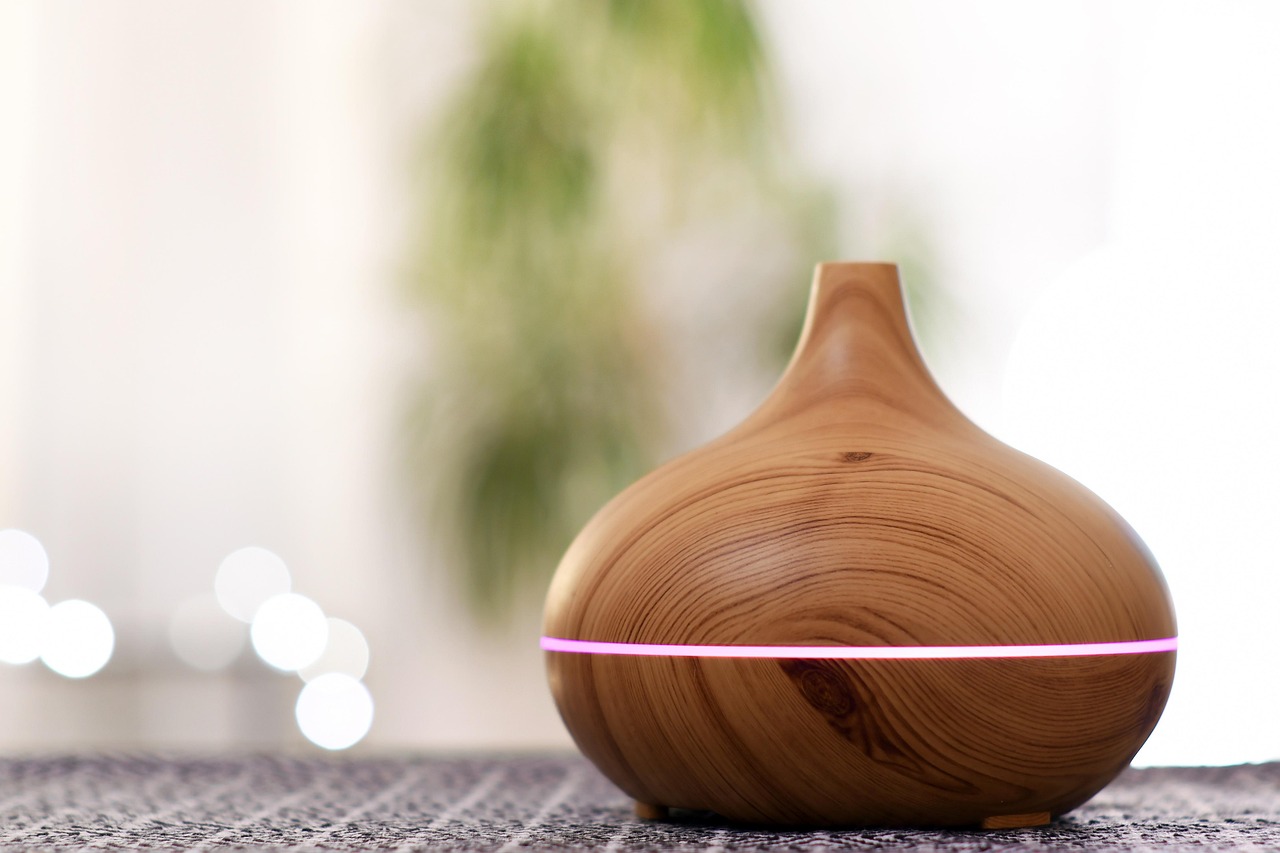
Camphor Diffuser Blends for Cool, Clarifying Air
There is a particular kind of stillness that a well-chosen diffuser blend can bring to a room. Not silence exactly, but a quality of atmosphere, a sense that the air itself has been refreshed and quietly ordered. Camphor essential oil is one of the oldest contributors to that feeling. Its scent is cool, clean, and slightly woody, with a bright edge that opens up a space without overwhelming it.
This guide is built around blending camphor with frankincense serrata, a resin-derived oil whose warm, balsamic character is an ideal counterweight to camphor's crispness. Together, and with a few carefully chosen companions, they produce cool crisp diffuser blends that feel grounded rather than clinical, and bright without being sharp.
Why Frankincense Serrata for This Blend
Frankincense comes in several botanical varieties, each with its own aromatic personality. Boswellia serrata, sourced primarily from the dry deciduous forests of India, produces a resin that is earthier and slightly greener than the more widely known Boswellia carterii. Its scent has a soft, warm depth with faint citrus-herbal undertones, a quality that botanical perfumers sometimes describe as "lived-in" rather than ecclesiastical.
That character is exactly what this family of blends needs. Camphor essential oil and menthol camphor eucalyptus oil combinations can read as very cool and airy, which is part of their appeal. But without a grounding note, that coolness can feel thin. Frankincense serrata adds a quiet resinous base that keeps the blend from floating away. It also blends unusually well at low concentrations, meaning a small number of drops carries real aromatic weight without taking over the composition.
You can explore the full character of this resin oil on the frankincense serrata product page, where sourcing details and quality notes are available.
Understanding the Core Ingredients
Camphor Essential Oil (White)
White camphor, steam-distilled from the wood of Cinnamomum camphora, is the appropriate variety for diffuser use. It is the lightest fraction of the distillation process, characterized by its cool, clean, slightly piney scent. The heavier fractions (yellow and brown camphor) contain compounds that make them unsuitable for home use, so always confirm you are working with white camphor specifically.
Eucalyptus (Eucalyptus radiata or globulus)
Eucalyptus is a natural partner for camphor. The two oils share some overlapping aromatic compounds, which means they blend seamlessly rather than sitting side by side. Eucalyptus radiata is slightly softer and fruitier than globulus, and it works well if you want a more rounded result. Eucalyptus globulus is sharper and more assertive. Both work in these recipes; the choice is personal.
Frankincense Serrata
As discussed above, this is the grounding note of the collection. It does not dominate when used in the proportions listed here. Think of it as the quiet presence that gives the blend coherence.
Supporting Notes
Depending on the variation you choose, you may also use peppermint, cedarwood (Atlas or Virginian), or lemon. Each is described in the variation section below.
The Signature Blend: Mountain Clarity
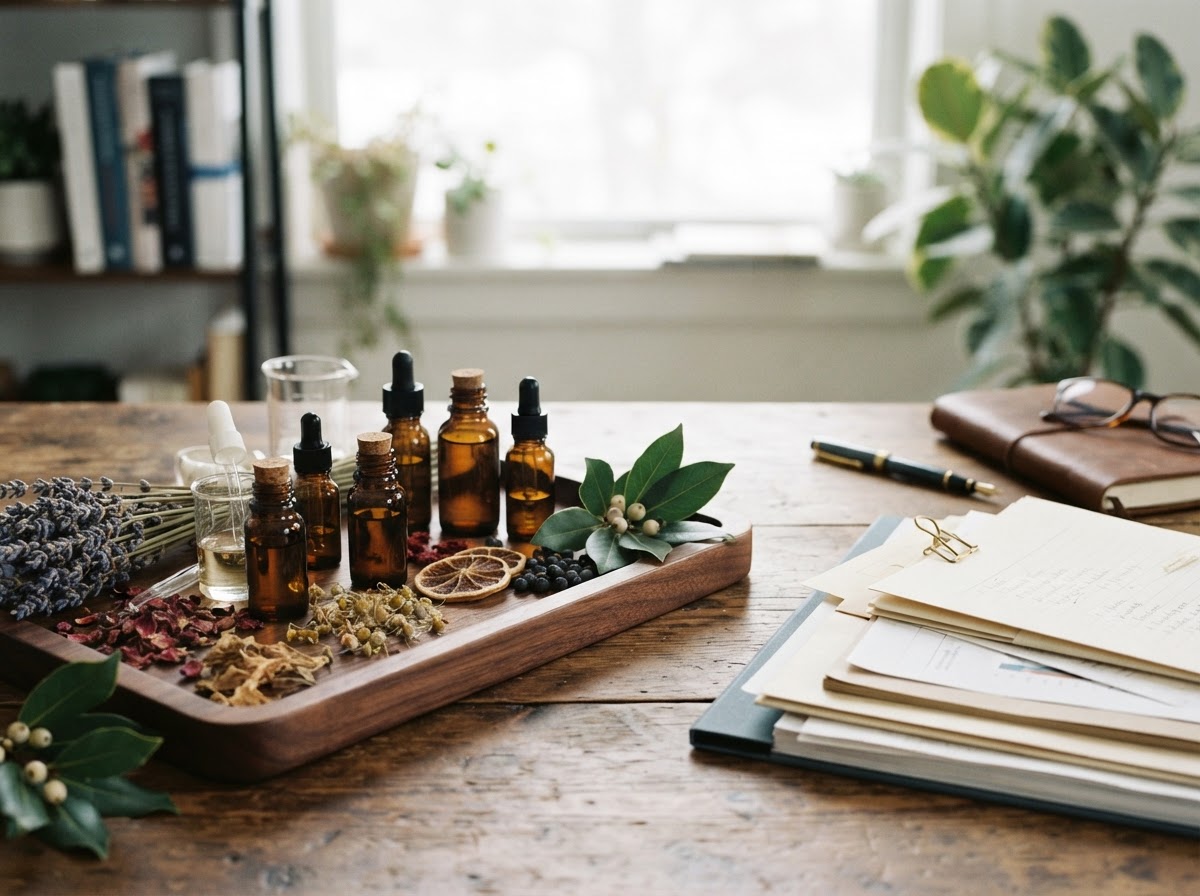
This is the base recipe, the one the variations branch from. It is designed for a standard ultrasonic diffuser with a 100 ml water reservoir. If your diffuser is larger (200 ml or 300 ml), scale proportionally.
Ingredients
| Ingredient | Drops (per 100 ml reservoir) | Approximate Volume |
|---|---|---|
| White camphor essential oil | 4 drops | 0.20 ml |
| Eucalyptus (radiata or globulus) | 4 drops | 0.20 ml |
| Frankincense serrata | 3 drops | 0.15 ml |
| Lemon essential oil | 2 drops | 0.10 ml |
| Total | 13 drops | 0.65 ml |
Total essential oil volume in the diffuser water is approximately 0.65%, which falls within the generally accepted range of 0.5% to 1% for ultrasonic diffusers used in ventilated rooms.
Step-by-Step Blending Instructions
- Pre-blend your oils in a small dark glass bottle first. This is called a concentrate or pre-mix. Measure out 8 drops camphor, 8 drops eucalyptus, 6 drops frankincense serrata, and 4 drops lemon into a 2 ml or 5 ml amber bottle. Cap it and roll gently between your palms for 30 seconds. Allow it to rest for 24 hours if possible. This resting period lets the aromatic molecules meld and the scent will be noticeably more cohesive.
- Fill your diffuser reservoir with clean, room-temperature water to the manufacturer's indicated line.
- Add 13 drops of the pre-blended concentrate (or the individual drops in the ratios above) directly to the water surface.
- Run the diffuser for 30 to 60 minutes at a time in a well-ventilated room. Take a break of at least 30 to 60 minutes between sessions.
- Clean your diffuser after every two to three uses with a few drops of white vinegar and warm water, rinsed well. This prevents camphor residue from building up on the ultrasonic plate.
Safety Notes and Dilution Guidance
Camphor essential oil is potent. The guidelines below are not optional reading. Please review them before your first session.
- Room ventilation: Always diffuse in a room with at least one window cracked or a door open. Do not run a diffuser in a sealed, unventilated space.
- Session length: Limit continuous diffusion to 60 minutes. Extended exposure to camphor vapor in a small room can cause light-headedness in some individuals.
- Children and pets: White camphor and eucalyptus oils are not appropriate for use around young children under ten, infants, or cats. Dogs and other pets should have the option to leave the room. If you are unsure, diffuse in a room that animals and children do not access.
- Pregnancy: Camphor essential oil is generally avoided during pregnancy. Consult a qualified healthcare provider before use.
- Topical patch testing (if using the concentrate on skin for any purpose): This blend is formulated for diffusion only. If you wish to adapt it for a topical product such as a roller or massage oil, the dilution rules change entirely. For adults, a maximum of 1% camphor in a carrier oil is the standard starting point for skin contact. Perform a patch test: apply a small amount of the diluted blend to the inner forearm, cover, and wait 24 hours before broader use.
- Flammability: Essential oils are flammable. Never use this blend in an open-flame lamp without a purpose-built essential oil burner designed to hold water above the candle. Keep all oil bottles away from open flames.
Storage and Shelf Life
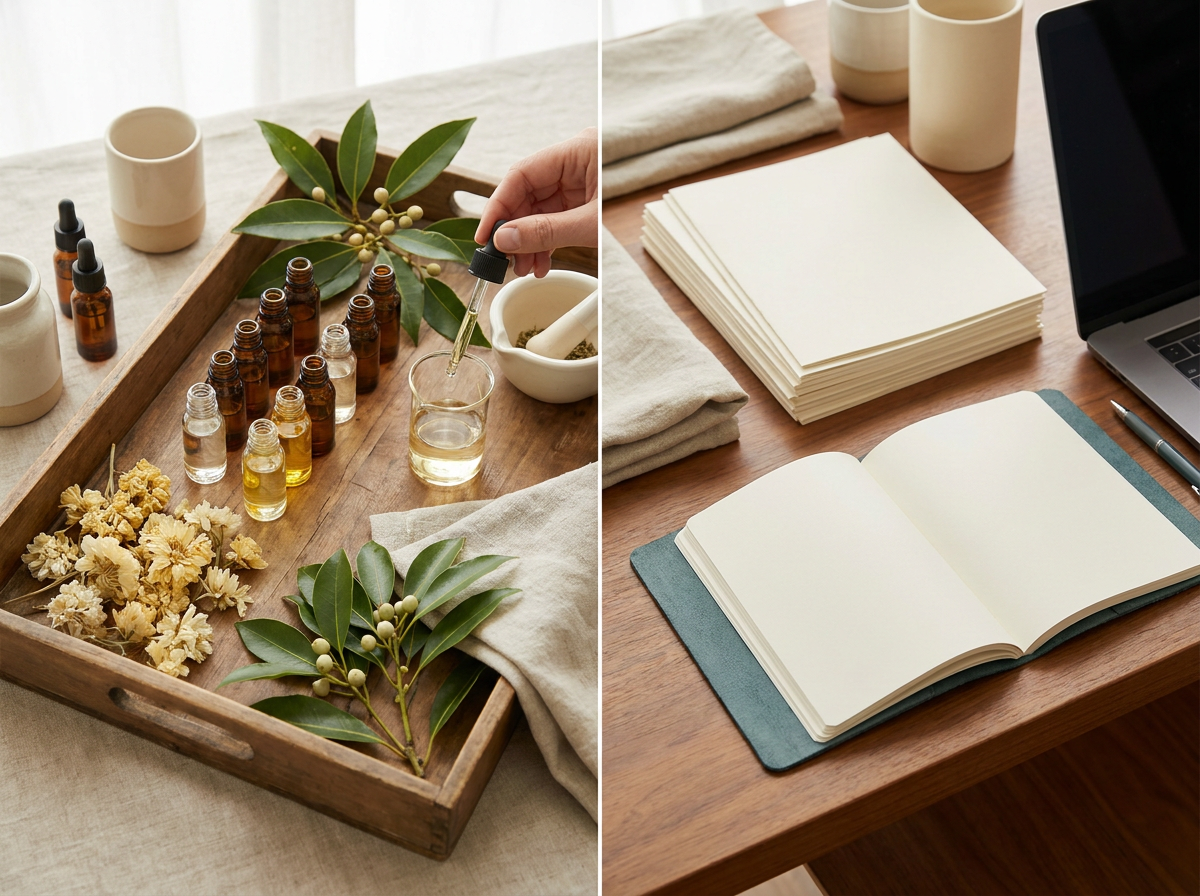
Store your pre-blended concentrate in a dark amber or cobalt glass bottle with a tight-fitting cap. Keep it away from heat and direct light, ideally in a drawer or cabinet. Under these conditions, camphor and eucalyptus oils are quite stable and the blend should remain aromatic for 12 to 18 months. Frankincense serrata has a shelf life of approximately two years unopened, somewhat less once the bottle has been opened and oxygen exposure begins.
Label your bottle with the blend name and the date you mixed it. That small habit makes rotation much easier. If the scent shifts noticeably toward something sharp or sour, the oils have likely oxidized and the batch should be retired.
Variations on the Signature Blend
Variation 1: Glacier Mist (Peppermint Forward)
This version amplifies the cool, clean character of the base blend by adding peppermint. It is well-suited to morning diffusion sessions when you want the room to feel particularly alert and fresh.
| Ingredient | Drops |
|---|---|
| White camphor | 3 |
| Eucalyptus radiata | 3 |
| Peppermint | 3 |
| Frankincense serrata | 3 |
| Lemon | 1 |
Note: Peppermint raises the menthol content of the blend noticeably. The resulting camphor diffuser blend sits firmly in the menthol camphor eucalyptus oil family of scents, with a bright, icy top note. Keep session lengths to 30 to 45 minutes with this version, especially in smaller rooms.
Variation 2: Forest Floor (Cedarwood Grounded)
Where Glacier Mist goes upward and outward, Forest Floor goes deep. Cedarwood Atlas (Cedrus atlantica) or Virginian (Juniperus virginiana) adds a smooth, woody base that makes the camphor feel less airy and more rooted. This version is particularly suited to evening diffusion as part of a bedtime wind-down ritual, when you want the atmosphere of the room to feel settled and quiet.
| Ingredient | Drops |
|---|---|
| White camphor | 3 |
| Eucalyptus radiata | 2 |
| Frankincense serrata | 4 |
| Cedarwood (Atlas or Virginian) | 4 |
The frankincense and cedarwood together create a resinous, woody foundation that the camphor and eucalyptus sit on top of rather than float above. It is a more contemplative scent profile than the base recipe.
Variation 3: Citrus Clearance (Bright and Light)
For days when the base blend feels slightly too cool or heavy, this variation shifts the balance toward brightness by adding sweet orange or bergamot alongside the lemon. The citrus notes soften camphor's sharper edges and make the overall effect feel more welcoming and less bracing.
| Ingredient | Drops |
|---|---|
| White camphor | 3 |
| Eucalyptus radiata | 3 |
| Frankincense serrata | 2 |
| Lemon | 2 |
| Sweet orange or bergamot | 3 |
Bergamot contains a compound called bergapten that can cause photosensitivity in topical applications. In a diffuser blend, this is not a skin concern. However, if you ever adapt this recipe for a topical product, use bergamot FCF (furanocoumarin-free) instead.
Bringing the Blends into Your Home Routine
These camphor diffuser blends fit naturally into several parts of daily life beyond the obvious sitting room session. If you already use camphor oil around the home in other ways, such as for freshening storage spaces and closets, you will find that diffusing in the adjacent room creates a pleasant continuity of scent throughout the house.
There is also something satisfying about layering aromatic rituals on specific days. A diffuser session running during a morning of household tasks, paired with the slightly herbal, crisp scent that camphor brings to freshly laundered linens, creates an atmosphere that feels intentional without being elaborate.
And if you have begun exploring camphor oil for its aromatic qualities more broadly, it is worth knowing that the same clean, cooling character that makes it work so well in a diffuser also makes it a quietly interesting note in scalp-scenting and hair care rituals. The oil moves across different parts of a home routine with unusual versatility.
A Note on Sourcing Quality
The results you get from any of these recipes will depend heavily on the quality of the oils you start with. For camphor, look for white camphor specifically, with a country of origin listed (China and Japan are the primary producers of quality white camphor oil), and a GC/MS report available. For frankincense serrata, the same principle applies. Indian-sourced Boswellia serrata resin should be the listed botanical, and the oil should be steam-distilled rather than solvent-extracted.
An oil that smells flat, sharp, or slightly off before you blend it will not improve inside the diffuser. Start with good materials and the blending process becomes straightforward.
Cool crisp diffuser blends are not complicated to make well. They require attention to proportion, patience with the resting period, and a little honesty about which scents you actually enjoy in a room. The recipes here are starting points. Adjust the ratios by one or two drops in either direction once you have made the base blend a few times, and the variations will start to feel like your own.