Camphor for Cockroaches and Ants: What Actually Works
We found no household trial showing camphor oil controls cockroaches or ants. University extension guidance points to sanitation, sealing entry points and baits instead, and warns that sprays and repellents can scatter pests. Camphor oil is an aromatic material, not a pest control product, so treat any scent as an addition to those steps, never a replacement.
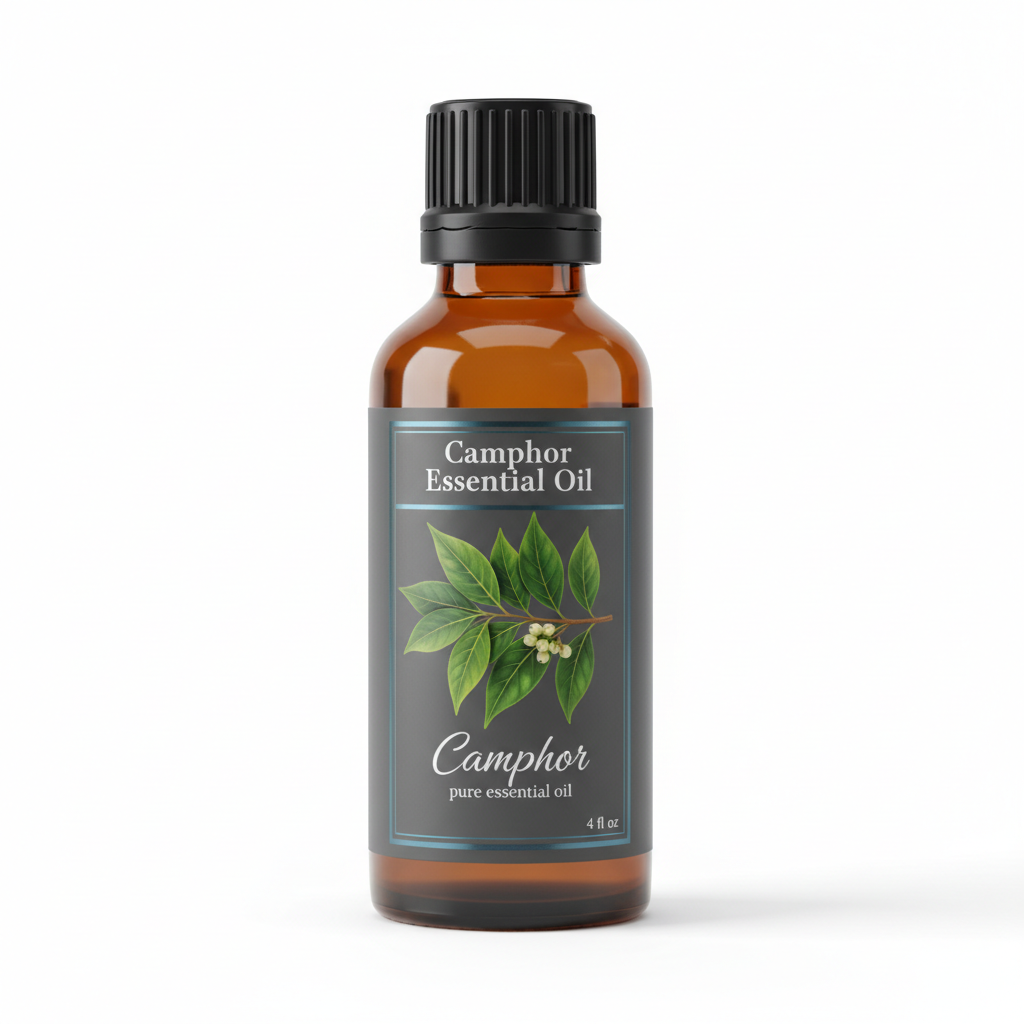
Camphor Essential Oil
Our own Camphor Essential Oil, in sizes from 0.5 oz to bulk.
From $8.69
Shop Now →Identify the pest before you reach for a bottle
Pest advice goes wrong when it skips identification. German cockroaches, American cockroaches and the several household ants differ in where they live and what they eat, so a bait or a seal that suits one may not suit another. We state that as reasoning, and the UC IPM pages linked below are the place to match a species to a method.
So the first useful action is not a scent. It is to work out what you have, where it is entering, and what it is eating. A practitioner asks three questions: where are you seeing them, what time, and what is within reach of food or water? A camphor-scented cupboard answers none of those.

What the extension sources recommend, in order
The order matters, and it is the opposite of how most "natural pest control" pages are written.
| Step | Cockroaches (UC IPM) | Ants (UC IPM) |
|---|---|---|
| 1. Sanitation | Remove food, water and clutter that cockroaches use; store food in sealed containers; fix leaks; vacuum crevices. | Clean up food and water sources; store sweets in sealed containers; clean up spills and grease; fix leaky faucets. |
| 2. Exclusion | Seal cracks and openings; door sweeps and weather stripping; remove hiding places. | Caulk cracks and crevices around foundations; keep plants, grass and mulch away from the foundation. |
| 3. Baits | The primary pesticide tool, slow-acting and may take 7 days or longer; place near hiding spots. | The only type of insecticide recommended in most situations, because workers carry bait back to the nest. |
| 4. Other | Boric acid dust in undisturbed hiding places; sprays not recommended as a long-term solution. | Wipe trails with soapy water or vacuum them; indoor sprays usually are not necessary. |
Camphor oil does not appear in any of these steps, and neither does any essential oil. That absence is a finding. If a scent were part of reliable control, extension programs would have a reason to list it.
What the camphor research actually covers
Here is the whole camphor file as we could open it, with the limits stated.
The nearest ant study is on a different species in a different setting. Fu and colleagues, in the Journal of Insect Science (2015), exposed red imported fire ant workers to a commercial camphor oil in sealed 1 dm3 glass cylinders. The 24 hour LC50 was 1.67 micrograms per millilitre for minor workers and 4.28 for major workers. Five microlitres of oil applied to prey reduced the attack rate by roughly 70 percent in a repellence assay. The oil contained 36.61 percent camphor, about 30 percent cineole and 5.15 percent safrole. The work was done in the laboratory on workers from one colony, with no field trials. Red imported fire ants are outdoor mound-builders and are not the household ants most readers mean.
For cockroaches the closest paper we could open does not test camphor oil. Amjad and colleagues (Journal of the Entomological Society of Iran, 2022) tested the essential oil of Francoeuria undulata on German cockroaches. Camphor was a minor part of that oil, 8.36 percent, alongside 26.02 percent 1,8-cineole. At 15 percent and 30 percent in acetone the oil showed a significant repellent effect and at 5 percent it did not differ from the control. Because it is a whole oil from another plant, the study cannot say what camphor contributed.
What would change our view is ordinary and achievable: a choice-box or field trial of a white-fraction camphor oil against the household species, run in real kitchens against an untreated control, with bait uptake measured alongside. Until that exists, any page that promises a result is describing a hope.
That is the extent of it. We did not find a trial of camphor oil against household ants or cockroaches in a kitchen, a pantry or a wall void. If you have one, we want to read it.
Why a repellent can work against you
This is the part that changes behavior. UC IPM notes about cockroach sprays that they "may also repel and disperse cockroaches to other areas of the building." The same warning applies to anything marketed on its smell. A pest that is pushed out of one cupboard has not been removed, and the colony or harborage it came from is unchanged.
For ants the mechanism is more specific. UC IPM explains that baits work because workers carry the bait back to the colony, so killing foragers with a quick spray leaves the colony intact. Our reasoning from that: any strong scent near a bait station risks reducing the visits that deliver the bait. We have not found a study testing camphor that way, so this is our inference and not a result. It is, however, a reason not to scent the areas where you are baiting.

Seen that way, the sensible role for camphor oil in a pest problem is none. A tidy, sealed, baited kitchen does the work. If you like the smell of camphor in a closed linen cupboard, that is a fragrance choice, covered in our overview of camphor oil uses around the home, and it should stay away from food storage.
What we would do, by situation
You see a few ants in the kitchen
Follow the trail to the entry point. Wipe the trail with soapy water or vacuum it, which UC IPM says removes the scent trail. Then remove the food or water that drew them and caulk the gap. If they keep returning, identify the species before choosing a bait.
You see cockroaches at night
Treat this as a sanitation and exclusion problem first, then a baiting problem. Because baits can take 7 days or longer, patience is part of the method, and sprays can scatter the population. If sightings continue or you see many roaches in daylight, call a licensed pest professional, because a large population in a building is beyond a kitchen fix.
You have children or pets
Choose enclosed bait stations and place them where only the target pest can reach. Keep camphor oil out of the pest conversation altogether. Camphor is dangerous to small children if swallowed, and Pet Poison Helpline states that camphor is readily absorbed across the skin of dogs and cats. Our pet safety article goes through it. For any swallowing exposure, call Poison Help at 1-800-222-1222.
You are comparing it with mice and moths
The same pattern holds across household pests: tradition says scent, extension sources say exclusion and trapping. Our pieces on camphor and mice and camphor and clothes moths apply the same test.
Where camphor oil does belong
We sell one product, camphor essential oil, and it answers a scent question. It does not answer a pest question, and we would rather you spent your money on caulk and a bait station than a bottle that did not solve your problem. If you want a crisp aroma in a closed closet or drawer, our oil is described on our pages as the white fraction, 100 percent pure and undiluted, in dark amber glass from 0.5 oz to 400 lb; see the shop. It is sold as an aromatic and cosmetic material and not as a drug or a pesticide, and our Inside the Still page explains the fraction and the safrole result requested on every lot. The posted certificate for batch CMPQGACCCNC003A lists physical constants only, with no GC/MS or safrole figure.
Quick answers
Will camphor oil keep ants out of the pantry?
We found no study showing it. UC IPM recommends sealed food containers, soapy-water cleanup of trails, caulking and outdoor baits instead. Strong scents in a pantry also raise food-contamination and child-access concerns.
Is camphor a registered cockroach product?
Camphor oil sold as an essential oil is not marketed as a pesticide. Look for an EPA registration number on any product sold to control pests, and read the label.
Does the fire ant study mean it works on roaches?
No. It tested a different insect, outdoors-living workers in sealed glass cylinders, and the authors reported laboratory results only.
Can I use camphor oil near bait stations?
We would not. Baits depend on foragers visiting and carrying the bait back, and a strong scent nearby may interfere. That is our inference, not a tested result, but it costs nothing to keep the two apart.
Last reviewed October 2026. This is an evidence review, not pest-control advice. For a building-wide infestation, call a licensed pest professional.
Sources & Further Reading
- UC IPM: Cockroaches
- UC IPM: Ants
- Fu et al. 2015, Journal of Insect Science: Fumigant toxicity and repellence of camphor essential oil against Solenopsis invicta workers
- Amjad et al., Journal of the Entomological Society of Iran: Francoeuria undulata essential oil on German cockroaches
- Pet Poison Helpline: Camphor
- Poison Help (National Capital Poison Center)