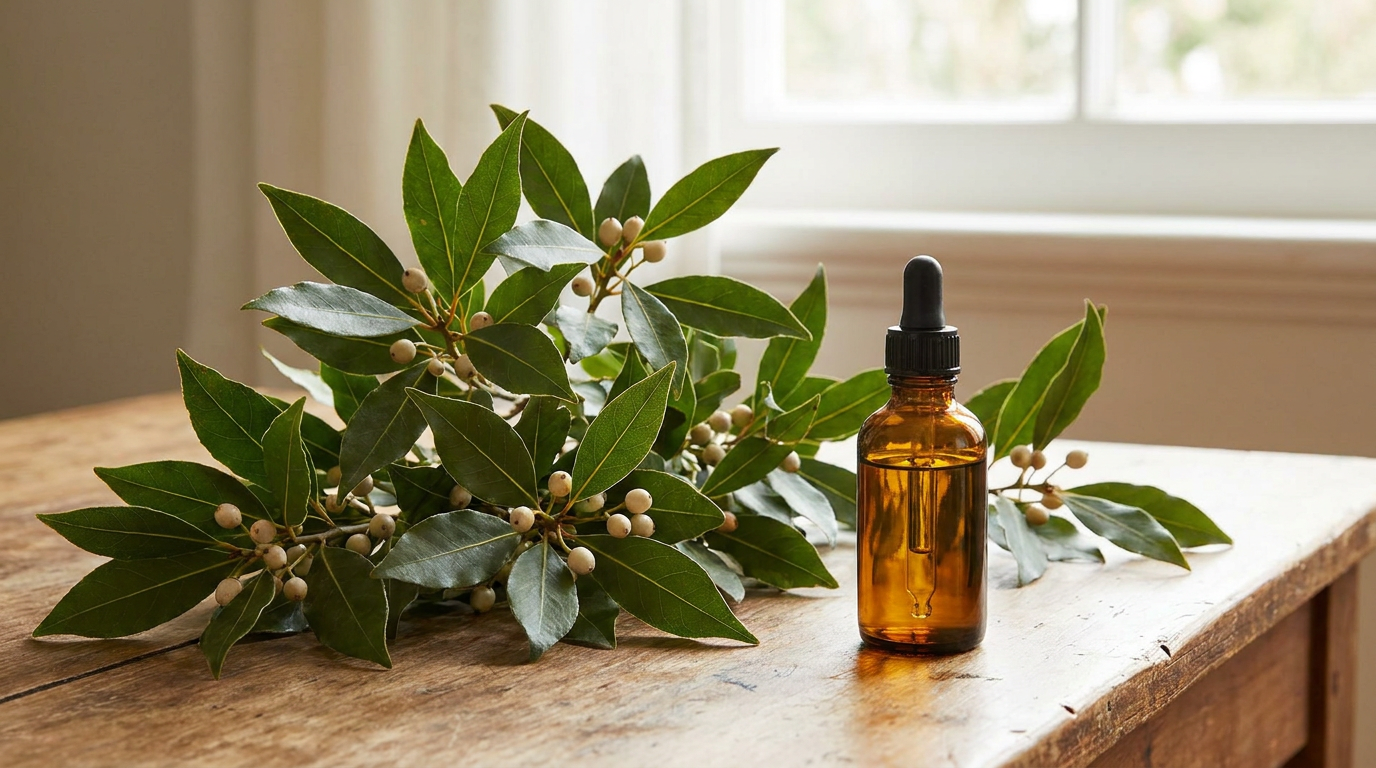
How to Scent Candles with Camphor Oil: A Cold Throw Guide
Camphor oil has a reputation among candle makers as a note that either sings or disappears. Get the fragrance load, pour temperature, and rest time right, and it gives soy wax a crisp, cooling, almost snow-on-pine quality that reads instantly the moment someone lifts the lid. Get any one of those variables wrong, and the jar goes quiet within days, leaving a candle that smells fine while burning but says nothing on the shelf. That gap between a candle's unlit scent and its performance while lit is what candle makers call cold throw versus hot throw, and camphor oil is one of the more demanding notes to get right on the cold side.
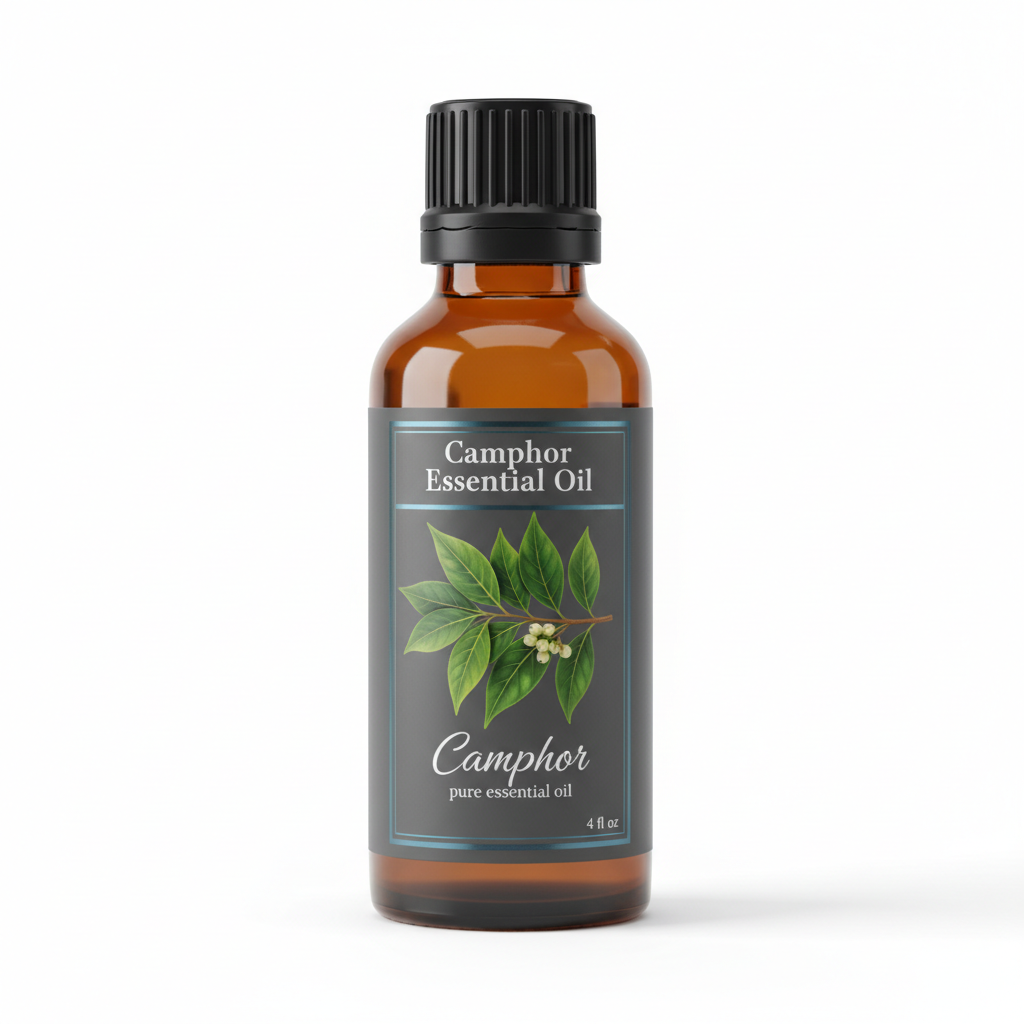
Camphor Essential Oil
Our own Camphor Essential Oil, in sizes from 0.5 oz to bulk.
From $8.69
Shop Now →This guide walks through the full process of scenting candles with camphor oil in soy wax, from picking the right grade of oil to the pour and rest schedule that gives the wax time to hold onto the fragrance instead of losing it to evaporation.
What Cold Throw Means, and Why Camphor Behaves Differently
Cold throw is the scent a candle gives off before it's ever lit, the smell you notice walking past a shelf or opening a gift box. Hot throw is what fills a room once the wick is burning and the wax pool has liquefied. The two are governed by different physics. Hot throw depends on how well the fragrance vaporizes off a heated wax pool. Cold throw depends on how much fragrance oil is sitting at the surface of the cooled wax, held there by the wax's crystal structure, slowly releasing molecules into the air at room temperature.
Camphor oil is a small, volatile molecule with a low boiling point relative to heavier notes like vanilla or sandalwood. That volatility is exactly what gives it that sharp, immediate lift, but it's also why it evaporates out of hot wax faster than it should if you add it too early, stir it too long, or pour above the ideal temperature range. Scenting candles with essential oil in general asks for more attention to timing than working with fragrance oils formulated for wax, and camphor sits toward the fussier end of that spectrum.
What You'll Need
- Natural soy wax, a container blend such as 464 or 415 (soy wax takes fragrance oil at a lower load than paraffin, so don't substitute a paraffin ratio)
- White camphor essential oil, steam-distilled from Cinnamomum camphora
- A digital kitchen or jewelry scale accurate to at least one gram
- A candle-making thermometer (a clip-on or infrared model both work)
- A heat-resistant pouring pitcher
- Cotton wicks sized to your container diameter, plus wick stickers
- A centering tool or two clothespins to hold the wick in place while the wax sets
- Glass candle containers, cleaned and dried
- A silicone spatula or wooden stir stick
- Optional: complementary oils for blending, such as eucalyptus, cedarwood, rosemary, or mint
- A notebook or spreadsheet to log fragrance load, pour temp, and results per batch
A Note on Sourcing Camphor Oil
Camphor oil is sold in three color grades: white, yellow, and brown. White camphor is the grade used in candle and fragrance work. Yellow and brown camphor carry much higher concentrations of safrole, a compound that is restricted in cosmetic and fragrance products in many regions, and they are not intended for scenting anything that will be burned or used around people. When you're shopping for camphor oil for candles, confirm the listing specifies white camphor, and buy from a supplier who publishes a GC/MS report or batch documentation. If a listing doesn't say which grade it is, ask before you buy, or choose a different supplier.
Step-by-Step: Scenting Soy Wax Candles with Camphor Oil
1. Calculate Your Fragrance Load
Weigh your wax before melting it, not after. Fragrance load is calculated as a percentage of wax weight, not total candle weight. For a single 8-ounce pour, that might mean 227 grams of wax. At a 7% load, you'd add roughly 16 grams of camphor oil. Write the exact figures down. Camphor's cold throw is dose-dependent in a way that's easy to notice: a batch at 5% and a batch at 9% can smell like two different candles.
2. Melt the Wax to the Right Temperature
Melt your soy wax to around 175 to 185°F, stirring gently as it liquefies to keep the wax from scorching against the sides of the melting pot. Avoid the temptation to rush this by cranking the heat. Soy wax that overheats can discolor slightly and loses some of its natural ability to hold fragrance once it resolidifies.
3. Cool the Wax Before Adding Camphor Oil
This is the step most new candle makers skip, and it's the one that costs camphor batches the most cold throw. Let the melted wax cool to between 130 and 140°F before adding your camphor oil. Pouring fragrance oil into wax that's still near melting point sends a meaningful percentage of a volatile oil like camphor straight into the air of your workspace instead of into the wax. If your kitchen smells strongly of camphor while you're pouring, that's fragrance you won't get back later.
4. Add the Camphor Oil and Stir
Pour the measured camphor oil into the cooled wax in a slow, steady stream, then stir for a full 60 seconds, scraping the bottom and sides of the pitcher so nothing settles unmixed. Stir thoroughly but don't overdo it. Extended stirring at this stage mostly just gives more volatile oil time to escape into the air rather than blend further into the wax.
5. Pour at the Right Temperature
Most soy wax blends recommend a pour temperature between 120 and 135°F, but check your specific wax manufacturer's guidance since blends vary. Pour steadily down the side of the wick or into the center of the container, leaving a small headspace at the top. A pour that's too hot risks the same fragrance loss described in step three; a pour that's too cool can trap air bubbles and create a rough, pitted top once the wax sets.
6. Let the Candle Rest Undisturbed
Set the poured candle somewhere flat and free of drafts, and leave it alone for 24 hours before touching the wick or moving the container. Soy wax forms its crystal structure as it cools, and that structure is what locks fragrance oil into the wax rather than letting it sit loosely at the surface where it evaporates off within a day or two.
7. Give the Candle a Full Rest Period
Once the candle has fully set, let it sit at room temperature, lid on if you have one, for at least 3 to 5 days before testing cold throw and up to two weeks for the strongest, most stable result. This rest window is when the wax and fragrance oil finish binding together. Testing too early is one of the most common reasons candle makers think a batch failed when it just hadn't finished settling.
8. Test the Cold Throw
After the rest period, trim the wick to a quarter inch, and smell the candle unlit from a normal distance, roughly the distance you'd stand from it on a shelf. Note whether the scent is sharp and immediate or faint and needs to be right at the wax surface to detect. Log the result against your fragrance load and pour temperature so you have a reference for the next batch.
9. Adjust and Repeat
If the cold throw is weak, raise the fragrance load in half-percentage increments on your next batch rather than jumping straight to the maximum your wax supplier allows. If the scent is present but one-dimensional, consider a blend rather than a higher single-note load, covered below.
Fragrance Load Guidelines for Camphor Oil in Soy Wax
These ranges are a starting point, not a fixed rule. Always confirm the maximum safe load recommended by your specific wax and container manufacturer.
| Use Case | Suggested Camphor Load | Notes |
|---|---|---|
| Subtle background note in a blend | 2 to 4% | Camphor plays a supporting role behind a heavier base note |
| Balanced single-note camphor candle | 6 to 8% | Most soy container waxes handle this range well |
| Strong, sharp cold throw | 8 to 10% | Approaches the upper limit for many soy wax blends; test a small batch first |
Common Mistakes to Avoid
- Adding fragrance oil too hot. This is the single biggest cause of weak cold throw with camphor. Wait for the wax to cool to the recommended window before pouring in the oil.
- Testing before the rest period is finished. A camphor candle at day one and the same candle at day ten can smell like different products. Be patient before judging a batch.
- Guessing at fragrance load instead of weighing it. Eyeballing camphor oil by the capful leads to inconsistent batches you can't reproduce.
- Using yellow or brown camphor oil. Stick to white camphor for any candle or fragrance project, and confirm the grade with your supplier before buying.
- Storing finished candles somewhere warm or sunny. Heat and light both accelerate fragrance oil breakdown, and camphor's lighter molecules are especially sensitive to it. Store finished stock somewhere cool and dark until sale or use.
- Skipping a burn test. Cold throw and hot throw don't always move together. Burn a test candle for two to three hours to check that the scent fills a room evenly and the flame stays steady, not just that the unlit jar smells good.
Blending Camphor Oil for a Fuller Cold Throw
Camphor oil on its own reads as clean, cool, and slightly medicinal-green, closer to eucalyptus or menthol than to a floral or gourmand note. Many candle makers find that a small supporting note rounds out the sharpness and gives the scent more depth once it's burning. A few combinations worth testing in small batches:
- Camphor and eucalyptus: leans into the cooling, crisp character for a spa-style candle
- Camphor and cedarwood: adds a woody base that grounds the sharper top note
- Camphor and rosemary: an herbal, apothecary-style pairing that reads as fresh rather than sweet
- Camphor and pine or fir needle: useful for a winter or forest-themed candle
When blending, keep the combined total fragrance load within your wax's recommended maximum. A common starting ratio is 70% camphor to 30% of the supporting note, adjusted by scent testing rather than fixed math, since everyone's nose weighs these notes a little differently.
What to Expect
A well-made camphor candle, given a proper rest period and the right fragrance load, generally produces a noticeably crisp, cool scent when smelled unlit, and some people describe the atmosphere it creates as fresh or invigorating during an evening at home. Results vary by wax brand, container size, and room conditions, and even a well-formulated batch will read differently in a small bathroom than in an open living room. If a batch underperforms, the fragrance load, pour temperature, and rest time are the three variables most likely to be the cause, in roughly that order.
Safety Notes When Working with Camphor Oil
Camphor essential oil is a concentrated, flammable liquid. Keep it away from open flame while measuring and pouring, and work in a ventilated space, since the vapor is noticeably strong even before it's in the wax. Wear gloves if you have sensitive skin, since undiluted essential oils can be irritating on contact. Keep camphor oil, and any wax scented with it, well out of reach of children and pets. If you're formulating for a candle you plan to sell, check your wax supplier's documentation for the maximum recommended fragrance load and any labeling requirements that apply in your area, and keep a record of your fragrance load calculations for every batch.
Troubleshooting Quick Reference
| Problem | Likely Cause | Fix |
|---|---|---|
| Cold throw is faint or absent | Fragrance oil added too hot, or load too low | Cool wax further before adding oil next batch; raise load in small increments |
| Scent fades within a week | Rest period too short, or storage in a warm or sunny spot | Extend rest time to 10 to 14 days; store finished candles in a cool, dark place |
| Scent smells sharp or off unlit | Load too high for the container size | Reduce load by half a percentage point and retest |
| Wax surface looks pitted after setting | Poured too cool, or fragrance oil not fully mixed | Stir for the full 60 seconds and pour within the recommended temperature window |
Scenting candles with camphor oil rewards patience more than any single trick. The oil itself does the work of standing out on a shelf; your job is mostly to stop the wax from losing it before it gets there. Log every batch, change one variable at a time, and within two or three test pours you'll have a fragrance load and pour schedule dialed in for whatever container size you're working with.