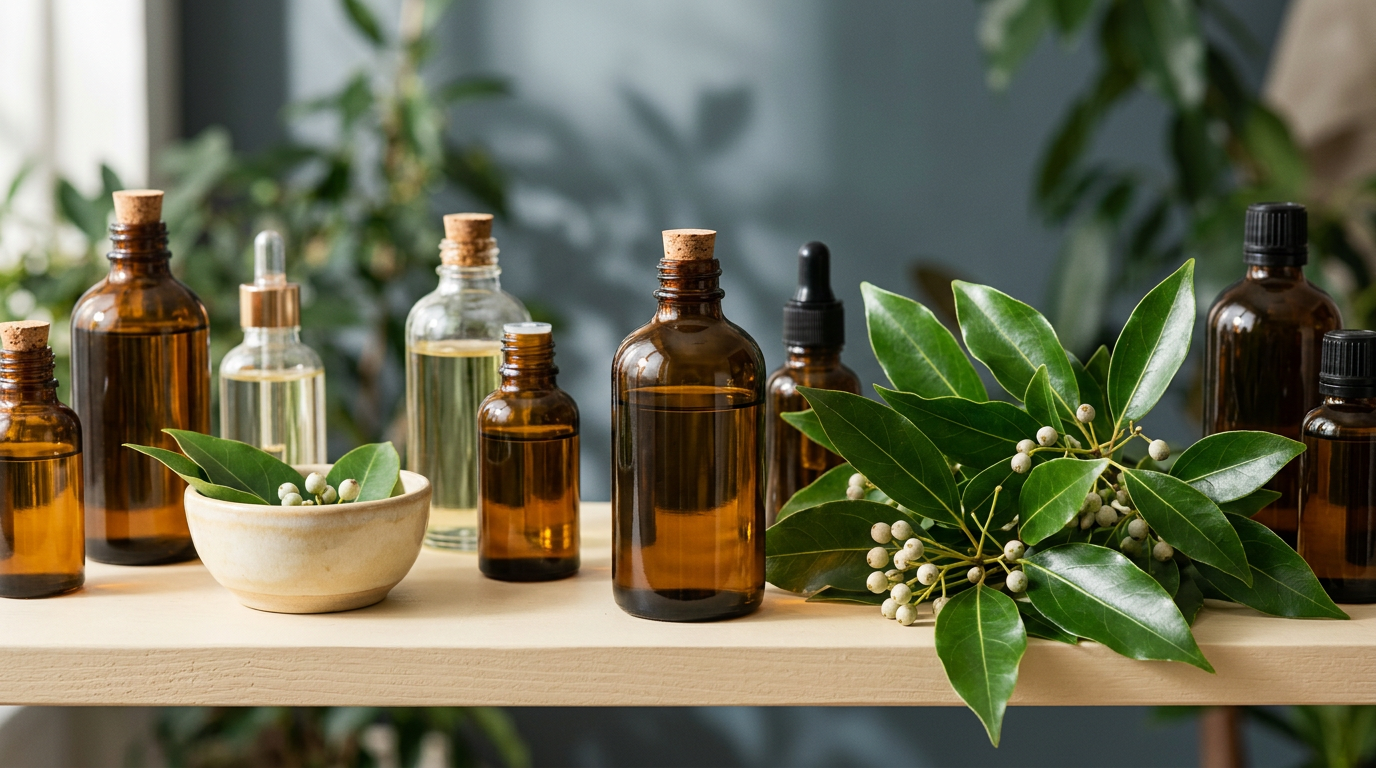
Buying Camphor Oil for Candle and Soap Making: A Craft Guide
Camphor oil brings a crisp, cooling, forest-green note to handmade soap and candles that few other botanicals can match. It layers well against eucalyptus, mint, and cedar, and it has a following among crafters who want their bath and home products to smell like a walk through a cold pine grove rather than a candy aisle. But not all camphor oil sold online is built for craft use, and the bottle that looks like a bargain on a marketplace search can turn out to be the wrong chemotype, poorly distilled, or diluted with a carrier no one bothered to disclose. This guide walks through what actually separates a good camphor oil supplier for makers from a risky one, so you can buy with confidence whether you need a single 4-ounce bottle for a test batch or a bulk drum for a full production run.
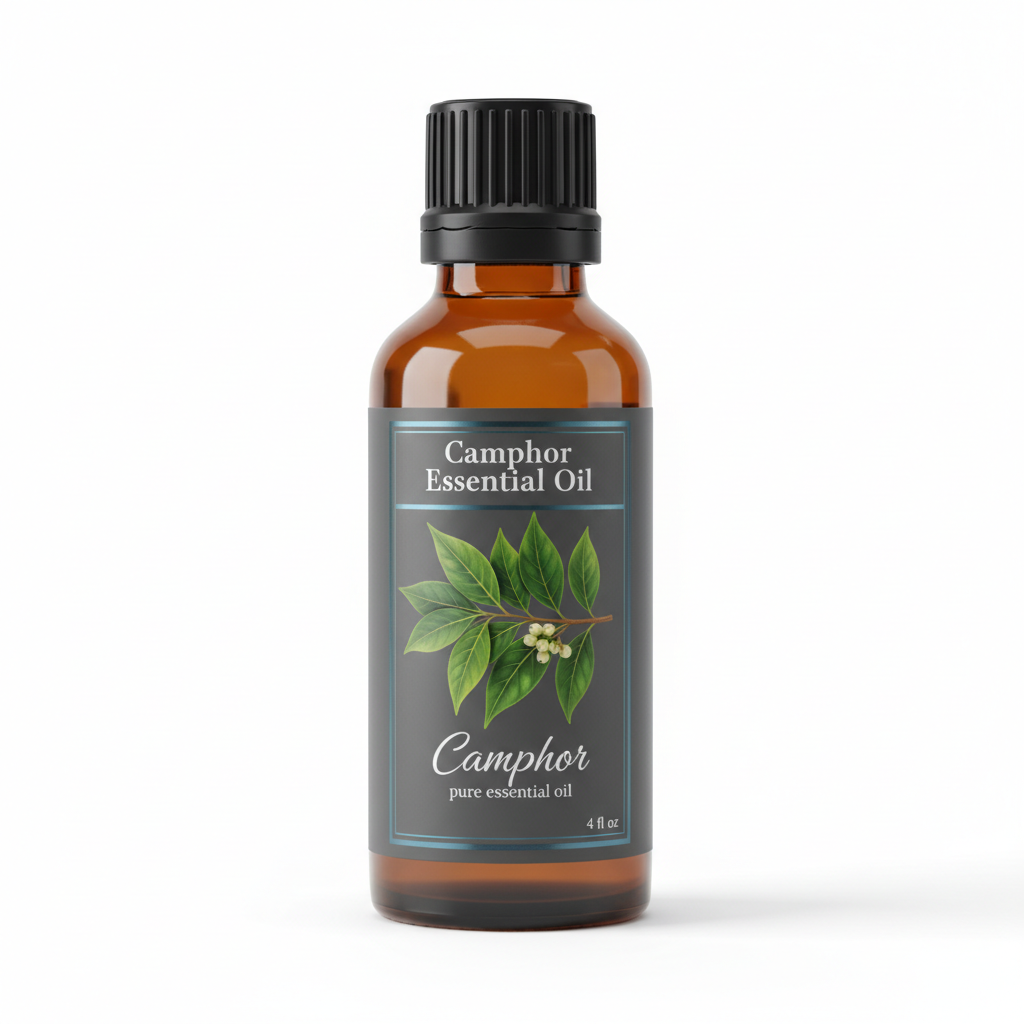
Camphor Essential Oil
Our own Camphor Essential Oil, in sizes from 0.5 oz to bulk.
From $8.69
Shop Now →
What Camphor Oil Actually Is (and Why the Type Matters)
Camphor oil is steam distilled from the wood, bark, or leaves of the camphor tree, Cinnamomum camphora. Depending on which part of the tree and which distillation cut is used, the result is sorted into three broad types, and this sorting matters more for craft buyers than almost any other spec on the label.
- White camphor oil is the first distillation fraction, lightest in color, lowest in safrole content, and the type most commonly recommended for cosmetic and personal care crafting.
- Yellow camphor oil is a later fraction with a higher safrole concentration. Some regions restrict or require labeling for products with elevated safrole levels, so this type is a poor match for anything meant to touch skin.
- Brown camphor oil has the highest safrole content of the three and is generally kept out of the cosmetic supply chain entirely, reserved instead for industrial or fragrance-isolate purposes.
If a listing does not specify which chemotype you are getting, that is your first signal to keep looking. A reputable camphor oil supplier for makers will state the type on the product page, not bury it in a downloadable PDF you have to request by email.
What to Look For: Quality Indicators
Batch-Specific Testing (GC-MS)
Gas chromatography-mass spectrometry (GC-MS) reports break down exactly what compounds are present in a given batch of oil, including the safrole percentage discussed above. Sellers who invest in third-party testing and post the actual report, not a generic one from years ago, are signaling that they take consistency seriously. If you are buying camphor oil for soap making at any real volume, ask for the batch report before you commit to a large order. A supplier who hesitates or stalls on this request is telling you something.
Clear Botanical Sourcing
Camphor trees grow across parts of Asia, and country of origin can influence both aroma profile and price. Sourcing transparency doesn't need to be elaborate, but a listing that names a region and a harvest season reads very differently from one that just says "pure camphor oil" with no other detail.
Color and Clarity
White camphor oil should be clear to very pale, almost water-white. Cloudiness, sediment, or an off-white haze can indicate age, poor filtration, or unwanted blending. Since camphor has a naturally crystalline structure at cooler temperatures, a little solidification in a cold shipment isn't unusual, but it should return to a clear liquid once warmed to room temperature.
Packaging and Light Protection
Camphor oil should arrive in amber or cobalt glass, never clear plastic, since UV exposure degrades the aromatic compounds over time. Bulk buyers should also check that drums or larger containers are lined appropriately and sealed with tamper-evident closures.
Key Features to Compare When Buying in Bulk
Once you've narrowed down a few candidates, put them side by side on the features that actually affect your finished product and your bottom line.
| Feature | Why it matters for crafters | Question to ask the seller |
|---|---|---|
| Chemotype (white/yellow/brown) | Determines whether the oil is appropriate for skin-contact products | "Is this white camphor oil, and can you confirm the safrole percentage?" |
| Minimum order quantity | Bulk pricing tiers often start at 1 liter, 4 liters, or by the kilogram | "What's your price break at 1L, 5L, and 25L?" |
| Lead time and shipping method | Camphor oil is flammable and may ship under hazmat rules, adding cost and delay | "Does this ship ground only, and what's the hazmat fee?" |
| Batch consistency | Scent and performance should not shift noticeably between reorders | "Can I get the same batch or lot number on repeat orders?" |
| Return and sample policy | Lets you test scent throw and behavior before committing to a case | "Do you sell a sample size before the bulk tier?" |
Camphor Oil in Soap Making
Camphor oil holds up reasonably well through cold process saponification, though like most aromatic oils it will mellow somewhat as the bars cure. Crafters commonly blend it at a modest percentage of total oil weight, well under any level that would overwhelm a bar's other notes, and pair it with eucalyptus or peppermint for a spa-style scent profile. It does not typically cause the acceleration or ricing that some heavier resinous oils can trigger, but as with any new ingredient, a small test batch before scaling up to full production is the safer route. Because camphor oil is colorless to pale, it won't interfere with intentional colorants, which makes it a flexible choice for bars where you want the scent to lead without fighting the visual design.
Camphor Oil in Candle Making
For candle makers, the two numbers that matter most are flash point and recommended fragrance load. Camphor oil has a relatively low flash point compared to many carrier and fragrance oils, generally cited in the range of 150 to 155°F (about 65 to 68°C), which means it should be added to wax after it has cooled below that threshold, never poured directly into hot wax near the melting stage. Always follow the specific flash point your supplier publishes for their batch rather than relying on a general figure, since distillation method can shift it slightly. On fragrance load, most soy and paraffin blends handle camphor oil well within a standard 6 to 10 percent range by weight, though scent throw will vary by wax type and wick size, so testing a small batch of pillars or containers before a full production run is worth the extra day it takes.
Top Picks at Different Price Points
Budget Tier (Under $15 for 4oz / small bulk trial)
At this level, look for craft supply cooperatives and smaller online essential oil shops that sell white camphor oil in trial sizes. These are a good way to test a scent profile before committing to a bulk order, and many budget sellers are transparent about sourcing even without a big marketing budget. What you sacrifice at this tier is usually consistency between reorders, so treat a budget purchase as a sample, not a long-term supply line.
Mid-Range Tier ($15 to $40 per 4oz, or per-liter bulk pricing)
This is where most working soap and candle makers land. Mid-range suppliers typically publish GC-MS reports, offer real bulk pricing tiers starting around 1 liter, and have responsive customer service for wholesale questions. This tier tends to offer the best balance of documented quality and workable pricing for a small business scaling production.
Premium Tier ($40+ per 4oz, or specialty single-origin bulk lots)
Premium sellers often offer single-origin or limited-harvest camphor oil with detailed distillation notes, sometimes down to the specific farm or region. This tier makes the most sense for makers building a luxury or single-origin product line where sourcing story is part of the pitch to customers, rather than for high-volume commercial batches where the marginal quality gain may not be noticeable in a finished bar or candle.
Red Flags to Avoid
- No chemotype listed. If a listing just says "camphor oil" with no mention of white, yellow, or brown, assume the seller either doesn't know or isn't telling you, and move on.
- Suspiciously low bulk pricing. Camphor oil that undercuts every other bulk supplier by a wide margin is often cut with a cheap carrier oil or synthetic camphor isolate rather than the real distilled product.
- Clear plastic packaging for bulk orders. Reputable suppliers protect aromatic oils from light. Plastic jugs for anything beyond a temporary shipping container are a sign of corner-cutting.
- No safety data sheet (SDS) available. Any supplier selling to businesses should have an SDS on request. If they can't produce one, that's a serious gap, especially given camphor oil's flammability.
- Vague or copy-pasted product descriptions. Listings that read identically across five different unrelated sellers usually mean the product is being drop-shipped from a common overseas source with no quality oversight at any single point.
- Reviews mentioning inconsistent scent between orders. Batch-to-batch drift is common with natural aromatics, but if buyers are consistently complaining about it, the supplier isn't managing sourcing or blending carefully.
Where to Buy: Sourcing Camphor Oil for Craft Use
There are three general channels worth considering, and most serious makers end up using a mix of them depending on order size.
Specialty Essential Oil Retailers
Small and mid-size retailers that focus specifically on aromatics tend to offer better documentation and smaller minimum orders, which makes them a solid starting point when you're still testing formulas. Expect to pay a bit more per ounce than true bulk pricing.
Wholesale and Bulk Chemical Suppliers
Once you know your formula and volume needs, wholesale suppliers who specialize in soap and candle raw materials will usually beat specialty retailer pricing significantly at the liter and drum level. This channel is where the phrase camphor oil for candle making bulk really applies, since minimum orders and shipping logistics are built around production-scale buyers rather than hobbyists.
Direct from Distillers or Importers
For the most control over sourcing and the best margins at true scale, some makers eventually source directly from a distiller or import broker. This path requires more due diligence on your end, including verifying import documentation and requesting your own third-party testing, but it can be worth it for a business built around camphor oil as a signature ingredient.
Storage and Shelf Life
Store camphor oil in a cool, dark location, away from direct sunlight and heat sources given its low flash point. Properly stored in sealed amber glass, white camphor oil generally holds its aroma and clarity for one to two years, though it's good practice to date each bottle or drum on arrival and rotate stock so older lots get used first. If a batch develops an off odor, unusual color shift, or persistent cloudiness that doesn't clear at room temperature, retire it rather than risk an inconsistent finished product.
Quick checklist before you buy: confirm the chemotype and safrole level, request a current GC-MS report, check the packaging and flash point documentation, order a sample before scaling to bulk, and read recent reviews for mentions of batch consistency.
Buying camphor oil for crafts doesn't need to be complicated once you know which questions to ask. The suppliers worth working with will answer them without hesitation, and the ones who dodge are telling you everything you need to know before you ever place an order.